Best rod for surfperch fishing on the Oregon coast
Standing on the expansive, sandy beaches of the Oregon coast, gazing out at the crashing waves, many anglers feel an immediate surge of excitement – and then, perhaps, a touch of overwhelm. Choosing the right fishing rod for surfperch in this dynamic environment can feel like a daunting task, especially when you consider the powerful currents, the relentless surf, and the need to cast far enough to reach those schooling fish. This guide is designed to cut through the confusion, helping you understand exactly what to look for in a rod that will make your next surfperch adventure a resounding success.
Why the Right Rod Matters for Oregon Surfperch Fishing
It's tempting to think that any old rod will do for "smaller" fish like surfperch, but anyone who's spent time battling the surf knows that's far from the truth. The Oregon coast isn't your average calm lake or gentle river. It's a rugged, beautiful, and often challenging environment that demands specific gear to truly shine. Having the wrong rod can mean missed fish, frustrating casting experiences, and even broken gear.
Understanding Surfperch and Their Habitat
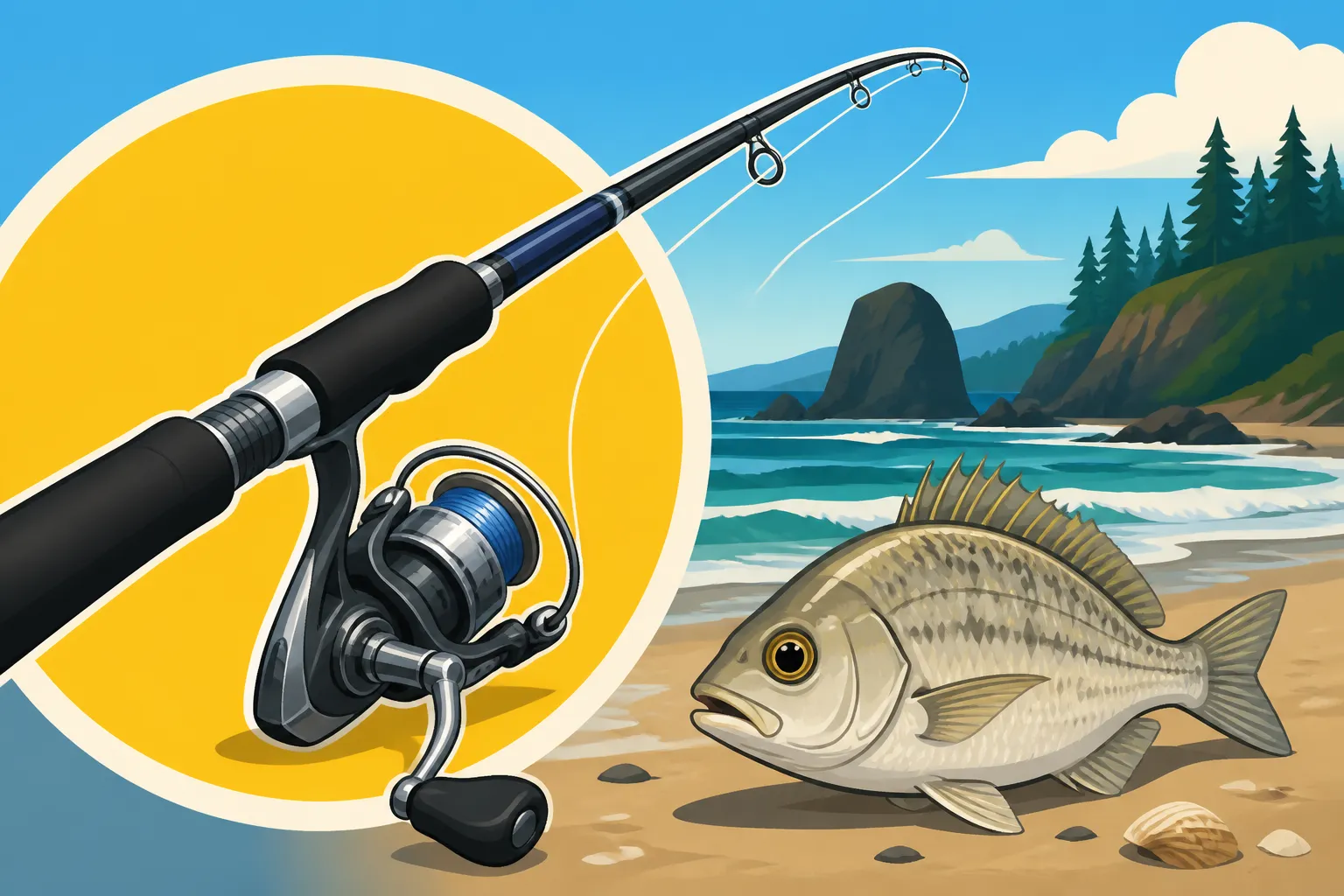
Before we dive into rods, let's briefly consider our target: surfperch. These feisty, plate-shaped fish, primarily redtail surfperch, thrive in the turbulent, oxygen-rich waters just beyond the breaking waves. They often feed on sand crabs, marine worms, and small crustaceans churned up by the surf. This means you need a rod that can cast your bait or lure out into this "feeding zone" effectively, often against a strong onshore breeze. They're not huge fish, but they put up a surprisingly spirited fight, especially when you're dealing with the added drag of waves and current. If you're looking for more details on these particular species, check out our comprehensive Surfperch Fishing from the Beach guide.
The Unique Challenges of Oregon's Beaches
The Oregon coast presents a unique set of challenges that influence rod choice. First, there's the sheer power of the Pacific Ocean. Waves can be significant, and casting into or over them requires a rod with some backbone. Second, the sandy environment means abrasive conditions for all your gear. Sand gets everywhere, into reel gears and rod guides, and you need equipment that can stand up to this constant assault. Third, getting your bait out to where the fish are often means casting a considerable distance. Many surfperch congregate in deeper troughs or near submerged structures that are beyond a short cast from the waterline. A rod designed for distance and resilience will make all the difference.
Key Rod Characteristics for Successful Surfperch Angling
When you're sifting through the seemingly endless options, focusing on a few critical rod characteristics will help narrow down your choices. These aren't just arbitrary numbers; they directly impact your ability to cast, detect bites, and land fish in the dynamic surf environment.
Rod Length: Finding Your Sweet Spot
Rod length is perhaps the most immediately noticeable characteristic, and for good reason. It directly affects your casting distance and leverage. For surfperch fishing on the Oregon coast, you're generally looking at rods anywhere from 7 to 11 feet long.
- Shorter Rods (7-8 feet): These are great for closer-in fishing, especially if you're targeting areas where the fish are right in the first trough or if you prefer a lighter, more nimble setup. They offer excellent sensitivity and are less cumbersome to transport and handle. If you're just starting out and want something manageable, a 7.5-foot medium-light spinning rod can be a fantastic entry point. However, their casting distance is limited.
- Medium Rods (8.5-9.5 feet): This is often the sweet spot for many surfperch anglers. These rods offer a good balance of casting distance and manageability. You can still make decent long casts to reach outer bars or deeper pockets, but they aren't so long that they become unwieldy in windy conditions or when packing them into your vehicle. They also provide better leverage against the waves when you have a fish on.
- Longer Rods (10-11 feet): If maximum casting distance is your priority, especially on wide, flat beaches or when the surf is particularly heavy, a longer rod is your friend. They excel at launching heavier weights and bait rigs far out. The downside is that they are heavier, less sensitive for subtle bites, and can be tiring to cast repeatedly. They also require more space for transport and storage. For a comprehensive overview of how different setups perform, check out our guide on Oregon Fishing Techniques for Beginners.
Ultimately, your ideal length will depend on the specific beaches you fish and your personal casting style. Many anglers start with a medium-length rod and then adjust based on experience.
Rod Power and Action: Matching the Fight
These two terms are often confused, but they describe different, yet equally important, aspects of a fishing rod.
- Rod Power refers to the rod's strength or its ability to handle certain line weights and lure weights. For surfperch, you'll generally want a rod with Medium-Light to Medium-Heavy power.
- Medium-Light: Good for smaller surfperch, lighter lines, and sensitive bite detection. It's often paired with 6-10 lb test line.
- Medium: A versatile choice, capable of handling a good range of surfperch sizes and light to moderate surf conditions. Typically handles 8-15 lb test line.
- Medium-Heavy: Best for heavier surf, larger weights, and when you anticipate hooking into larger perch or incidental catches. This power often handles 10-20 lb test line.
- Rod Action describes where the rod bends when pressure is applied.
- Fast Action: The rod bends mostly in the top third or less. This provides excellent sensitivity for detecting subtle bites and quick, powerful hook sets. Many surfperch anglers prefer fast action for this reason.
- Moderate-Fast Action: The rod bends in the top half. This offers a good balance of sensitivity and casting performance, allowing for a smoother, longer cast.
- Moderate Action: The rod bends more towards the middle. This provides a softer cast, better for protecting lighter lines, and can sometimes aid in keeping a fighting fish pinned.
For surfperch, a medium power, fast to moderate-fast action spinning rod is often considered the ideal combination. This setup offers the backbone to cast effectively and fight fish, along with the sensitivity to feel those light perch nibbles in the waves.
Material and Durability: Battling Salt and Sand
The materials used in your rod's construction are crucial for its longevity, especially in the harsh saltwater environment of the Oregon coast.
- Graphite (Carbon Fiber): Graphite rods are known for being lightweight and incredibly sensitive. This makes them excellent for feeling those subtle bites, even through the noise of the surf. They offer great casting performance and are a joy to fish with. The trade-off is that they can be more brittle than fiberglass and more susceptible to damage from impacts.
- Fiberglass: Fiberglass rods are incredibly durable and flexible, making them very forgiving. They are heavier and generally less sensitive than graphite rods, but they can withstand a lot of abuse. For a beginner or someone prioritizing ruggedness, a fiberglass rod might be a good, albeit less sensitive, option.
- Composites (Graphite/Fiberglass Blend): Many modern rods are made from a composite blend, aiming to combine the best attributes of both materials – the sensitivity and lightness of graphite with some of the durability of fiberglass. This is often an excellent choice for surfperch.
- Corrosion Resistance: Beyond the blank material, pay attention to the components. Look for rods with corrosion-resistant guides (like stainless steel with ceramic inserts) and a durable reel seat. Saltwater is highly corrosive, and cheap components will quickly degrade.
When selecting a rod, consider how often you'll be fishing and how much care you're willing to put into maintenance. A good quality composite or graphite rod will serve you well, but remember to rinse it thoroughly with fresh water after every outing.
Recommended Rod Types and Setups for Oregon Surfperch
Now that we've covered the core characteristics, let's talk about the practical rod types and setups you'll commonly encounter and how they apply to surfperch fishing on the Oregon coast.
The All-Around Spinning Rod Setup
For most surfperch anglers, especially those new to the sport or wanting a versatile setup, a medium power, fast to moderate-fast action spinning rod between 8 and 9.5 feet is the gold standard.
- Why it works: This length provides ample casting distance for most beach conditions without being overly cumbersome. The power and action give you good control over both casting light rigs and fighting fish. Spinning reels are generally easier to learn and manage than baitcasting reels, especially in windy conditions where backlashes can be a nightmare.
- Example Setup: Imagine a 9-foot Okuma Celilo or Ugly Stik GX2 spinning rod. These are popular choices that offer a great balance of performance and affordability. You'd pair this with a 3000-4000 series spinning reel, spooled with 10-15 lb monofilament or braided line. This setup is robust enough to handle the surf, sensitive enough to detect bites, and forgiving enough for a wide range of skill levels. You can often find excellent options on online retailers like Amazon, with plenty of reviews to help guide your choice.
This setup is ideal for fishing various spots along the coast, from the wide expanses of Cannon Beach to the more sheltered coves further south. It's a reliable workhorse for consistently catching surfperch.
Specialized Surf Rods for Longer Casts
If you're an experienced angler who prioritizes maximum casting distance, especially when fishing very wide beaches or needing to reach distant sandbars, a dedicated surf rod might be appealing. These are typically 10 to 12 feet long, often with medium-heavy to heavy power and moderate to moderate-fast action.
- Why they work: The extra length and power allow you to load up heavier weights (1-4 ounces or more) and launch them an incredible distance. This can be crucial on days when fish are holding far out. Many dedicated surf rods are designed to handle specific surfcasting techniques that maximize distance.
- Considerations: While they offer unparalleled distance, these rods are significantly heavier and less sensitive than their shorter counterparts. Detecting the subtle bite of a small surfperch can be difficult. They also require more skill to cast effectively and are much harder to transport. Brands like Penn and Daiwa make excellent surf rods. While a 12-foot rod might be overkill for just surfperch, it certainly excels at getting your bait out there.
These rods are fantastic if you're consistently battling heavy surf and needing to cover vast stretches of water, and if you don't mind sacrificing some sensitivity. For general surfperch angling, however, they're often more rod than you truly need.
Considering Travel and Portability
For those who travel frequently to different parts of the coast or have limited storage space, travel rods offer a fantastic solution. These rods break down into multiple pieces (usually 3 or 4), making them compact and easy to transport in a suitcase or backpack.
- Advantages: Incredible portability. You can easily take them on planes or store them without taking up much space. Many modern travel rods maintain surprisingly good action and sensitivity.
- Disadvantages: Historically, multi-piece rods were known for weaker spots at the ferrules (where the pieces connect) and less sensitive action. While modern manufacturing has largely overcome these issues, a one-piece rod will generally have a more seamless action. However, for the convenience, a good quality travel rod is an excellent compromise.
- What to look for: Seek out travel rods designed specifically for saltwater use, with corrosion-resistant components. Brands like St. Croix and Daiwa offer reputable travel rod options. When browsing for a travel rod, reading reviews on sites like Amazon can give you a good idea of their real-world performance. If you plan to explore many different Oregon Coast Fishing Spots, a travel rod could be invaluable.
A good 3-piece, 8-foot medium power travel spinning rod can be a game-changer for the adventurous angler who doesn't want to compromise on gear for their next coastal trip.
Complementary Gear and Tips for Your Rod Choice
Choosing the perfect rod is just one piece of the puzzle. To truly optimize your surfperch fishing experience on the Oregon coast, you need to consider how your rod integrates with the rest of your setup and how you care for it.
Reel Matching and Line Selection
A great rod needs a great reel to complete the system. For the recommended 8-9.5 foot spinning rods, a 3000 to 4000 series spinning reel is usually ideal.
- Reel Features: Look for a reel specifically rated for saltwater use. This means sealed bearings, corrosion-resistant materials, and a smooth, reliable drag system. A good drag is essential for managing a feisty perch in the waves and preventing line breaks. Brands like Shimano and Penn offer excellent saltwater spinning reels.
- Line Choice:
- Monofilament: Affordable, stretchy, and forgiving. It's easier to tie knots with and acts as a shock absorber against sudden tugs from fish or waves. A good choice for beginners. Use 10-15 lb test.
- Braided Line: Offers superior sensitivity, strength-to-diameter ratio, and casting distance. Its lack of stretch means you'll feel every bump and bite. However, it's less abrasion-resistant against sand and rocks, and requires a monofilament or fluorocarbon leader for stealth and abrasion resistance. Use 15-20 lb test braid with a 10-15 lb fluorocarbon leader.
- For specific advice on what lures or baits to pair with your line, check out our guide on Best Bait for Oregon Trout Fishing which, while trout-focused, often shares principles adaptable to general lure fishing.
Essential Accessories for the Surf Angler
Beyond your rod and reel, a few key accessories will enhance your surfperch adventures:
- Rod Holder: A sand spike or specialized surf rod holder is invaluable. It keeps your rod securely upright in the sand, freeing your hands for baiting, re-tying, or just enjoying the view. It also prevents your reel from getting buried in the sand.
- Surf Bag/Backpack: A durable, waterproof bag to carry tackle, bait, snacks, and extra layers. Oregon weather can change in an instant, so layered clothing is a must.
- Pliers and Line Cutters: Essential for removing hooks and cutting line. Make sure they are saltwater rated.
- Waders and Boots: Depending on how close you want to get to the water, chest waders and sturdy wading boots will keep you dry and comfortable.
- Tackle: For surfperch, a simple Carolina rig or a high-low rig is common. Bring an assortment of pyramid or Sputnik sinkers (1-3 oz depending on current) and small hooks (size 4 to 2). For bait, sand shrimp, razor clams, or Gulp! sandworms are highly effective. You can find many of these items readily available on Amazon.
Rod Care and Maintenance in a Salty Environment
The Oregon coast is beautiful, but it's harsh on gear. Proper care will significantly extend the life of your rod.
- Rinse Immediately: As soon as you finish fishing, rinse your rod (and reel) thoroughly with fresh water. Pay special attention to the guides, reel seat, and any crevices. Don't use harsh detergents; just plain water is fine.
- Dry Completely: Allow your rod to air dry completely before storing it. Storing a damp rod encourages corrosion and mildew.
- Inspect Regularly: Periodically check your rod guides for cracks or damage to the ceramic inserts, which can fray your line. Check the reel seat for tightness and corrosion.
- Storage: Store your rod in a cool, dry place, ideally in a rod sleeve or case to protect it from bumps and scratches.
By taking these simple steps, you'll ensure your chosen surfperch rod remains in top condition for many seasons to come, ready for your next adventure on Oregon's stunning coastline.
Surfperch Rod Comparison Table
| Feature | Shorter Rods (7-8 ft) | Medium Rods (8.5-9.5 ft) | Longer Rods (10-11 ft) |
|---|---|---|---|
| Casting Distance | Limited to Close-Medium Range | Good Medium-Long Range | Excellent Long Range |
| Sensitivity | High | High-Medium | Medium-Low |
| Handling/Weight | Very Maneuverable, Lightweight | Balanced, Moderate Weight | Less Maneuverable, Heavier |
| Target Power | Medium-Light to Medium | Medium to Medium-Heavy | Medium-Heavy to Heavy |
| Action | Fast to Moderate-Fast | Fast to Moderate-Fast | Moderate-Fast to Moderate |
| Best For | Beginners, close-in fishing, light tackle | All-around surfperch, versatile | Max distance, heavy surf, experienced anglers |
| Portability | Easy to transport | Moderate ease | More challenging to transport |
Ultimately, for most anglers pursuing surfperch on the Oregon coast, the 8.5 to 9.5-foot medium power, fast action spinning rod will be your most versatile and effective choice. It balances the need for casting distance with the sensitivity and manageability required to enjoy a productive day of surf fishing.
Disclaimer
This article is for general informational purposes only and does not constitute professional advice. Laws, prices and regulations vary by location and change over time. Consult a qualified professional for guidance on your specific situation.