Oregon Fishing Techniques for Beginners
So you've been thinking about trying your hand at fishing here in Oregon, but the sheer amount of information out there, from licenses to gear to all those different fish, feels totally overwhelming, right? Trust me, you're not alone. This guide is going to strip away all that confusion, breaking down everything a brand-new angler needs to know to get started, feel confident, and actually catch some fish in our beautiful state.
Getting Started with Oregon Fishing Licenses and Regulations
The very first step into the wonderful world of Oregon fishing, and frankly, the one that trips up most newcomers, is navigating the maze of licenses and regulations. It can feel like you need a law degree just to cast a line, but it's really not so bad once you break it down. Understanding these rules isn't just about avoiding a hefty fine; it's about being a responsible steward of our incredible natural resources and ensuring healthy fish populations for generations to come.
Understanding License Requirements for Beginners
Before you even think about buying a rod, you absolutely need an Oregon fishing license if you're 12 years old or older. This isn't just a suggestion; it's the law. The good news is that getting a basic annual angling license is straightforward. For most adult residents, it’s a single purchase that covers you for a full calendar year. Non-residents have options too, from annual to daily or multi-day passes, which can be perfect if you’re just visiting for a short trip. It’s important to remember that these licenses are often just the first step, as certain species or areas might require additional tags or endorsements, but for a beginner, a standard angling license is your starting point. You can easily purchase these online through the Oregon Department of Fish and Wildlife (ODFW) website, or at countless sporting goods stores and license vendors across the state. For a comprehensive overview, check out our Oregon Fishing License Guide.
When you're starting out, a common question pops up: do you need a license even if you're only planning to catch and release? The answer is a resounding yes. Whether you're keeping your catch for dinner or gently sending it back to swim another day, the act of fishing itself requires a valid license. This fee goes directly towards supporting ODFW's conservation efforts, including fish stocking programs, habitat restoration, and enforcing regulations that protect our fisheries. Another frequent concern for families is about younger anglers. The rule here in Oregon is that kids under 12 generally don't need a license to fish. This is a fantastic incentive to get youngsters hooked on fishing early, without the added cost and paperwork. However, if they're targeting certain species that require an additional tag (like salmon or steelhead), those tags might still be necessary even for them. It’s always best to check the current regulations, especially if your little one is an avid angler eyeing specific game fish. You can find more details on this in our guide, Do kids need a fishing license in Oregon?.
Deciphering Basic Fishing Regulations
Once you have your license in hand, the next hurdle is understanding the actual fishing rules, which are laid out in the annual Oregon Sport Fishing Regulations booklet. Don't let its size intimidate you! While it looks thick, most of it won't apply to your typical beginner's fishing trip. The key sections for you will be general statewide regulations, the definitions of common fishing terms, and specific rules for the water body you plan to visit. These rules cover things like open seasons, daily bag limits (how many fish you can keep), size restrictions, and approved methods of take (what kind of gear and bait you can use). For instance, some rivers might be "fly fishing only" or require barbless hooks, while others allow bait.
A really practical tip for beginners is to pick a spot first, then look up the specific regulations for that particular water body. The ODFW website has an excellent online regulation tool that allows you to search by river, lake, or region, making it much easier to find the relevant information. This helps avoid the headache of sifting through pages of rules that don't apply to your planned outing. For example, if you're heading to a local stocked pond like Junction City Pond or Canby Pond, the rules will be much simpler than if you were planning a trip to the mighty Columbia River for salmon. Getting familiar with Oregon Fishing Regulations Explained is a great next step, and always double-check the current Oregon Fishing Season Dates and Limits before you head out, as these can change. Ignoring regulations, even accidentally, can lead to fines and even loss of fishing privileges, so it’s always worth taking a few minutes to be informed.
Essential Gear for Your First Oregon Fishing Trip
Walking into a tackle shop or browsing online for fishing gear can be genuinely overwhelming. There are so many rods, reels, lures, and gadgets that it's easy to think you need to empty your wallet just to get started. The truth is, you don't. For beginners, the goal is simple, affordable, and versatile gear that allows you to learn the basics without feeling bogged down by complexity.
Choosing Your First Rod and Reel
For a beginner, a spin-casting or spinning rod and reel combo is definitely the way to go. These setups are user-friendly, forgiving, and incredibly versatile for catching many of the common fish species in Oregon. A medium-action rod, typically between 6 to 7 feet long, is an excellent choice. This length provides a good balance of casting distance and sensitivity, and it's long enough to handle most freshwater fishing situations without being unwieldy. The "medium action" refers to how much the rod bends when pressure is applied; a medium action gives you enough flex to feel smaller bites but enough backbone to fight a decent-sized fish.
When it comes to the reel, a spinning reel in a 2500 or 3000 size is a fantastic all-around option. These sizes are capable of holding enough line for various species and have a smooth drag system, which is crucial for fighting fish. You'll want to pre-spool your reel with monofilament fishing line, usually 6 to 10-pound test. Monofilament is a good choice for beginners because it's affordable, easy to tie knots with, and has a bit of stretch, which can be forgiving when a fish strikes hard. You can find excellent, budget-friendly rod and reel combos on platforms like Amazon, often from reputable brands like Ugly Stik or Shimano, which are known for their durability and performance. Don't feel pressured to buy the most expensive gear; a solid entry-level combo will serve you well for your initial adventures.
Basic Tackle Box Essentials
Your tackle box doesn't need to be huge or filled with a million different things. For beginners, simplicity is key. Think of it as your portable toolkit, carrying the necessities to rig your line and catch fish. Here’s a basic rundown of what you’ll want:
- Hooks: Start with a variety of sizes, from small (size 8 or 10) for trout to medium (size 2 or 1/0) for larger panfish or small bass. Bait holder hooks are a good all-around choice.
- Weights (Sinkers): A small assortment of split shot weights (easily pinched onto your line) and perhaps a few small egg sinkers will cover most needs. These help your bait sink to the desired depth or cast further.
- Bobbers (Floats): Red and white clip-on bobbers are classic and highly effective for suspended bait. They act as visual indicators when a fish bites.
- Swivels: Small barrel swivels (size 10-12) prevent line twist, especially when using spinning lures.
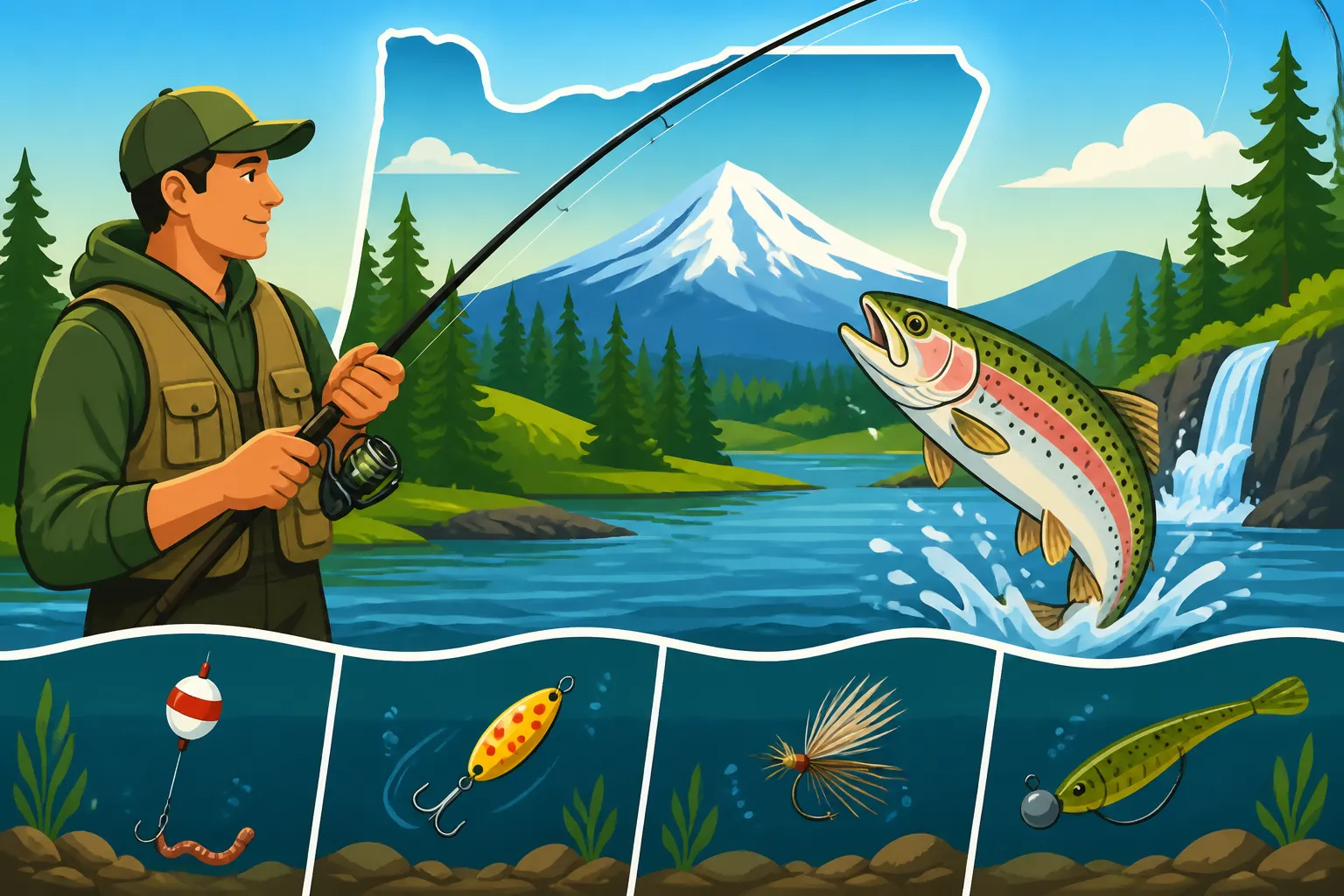
- Lures/Bait: For beginners, live bait (worms, corn, PowerBait) is often the easiest and most effective. For artificials, a few small inline spinners (like Mepps or Rooster Tail) and maybe a couple of small spoons are great for trout and panfish. Our Oregon Bait and Lure Guide offers more specific recommendations.
- Tools: A pair of small pliers (needle-nose are great for hook removal), a line clipper or small scissors, and a measuring tape (to check fish against size limits) are invaluable.
- Basic First-Aid: A small kit for minor cuts from hooks or scrapes is always a good idea.
Having these essentials neatly organized in a small tackle box or bag means you’re prepared for most beginner-friendly fishing scenarios. Many of these items, including pre-made tackle kits that include hooks, weights, and bobbers, are readily available on Amazon, making it easy to stock up without leaving your home.
Top Oregon Fish Species for Beginners
Oregon boasts an incredible diversity of fish, but for those just starting out, some species are much more accessible and forgiving than others. Focusing on these easier-to-catch fish can build confidence and make your initial experiences much more enjoyable.
Catching Stocked Rainbow Trout
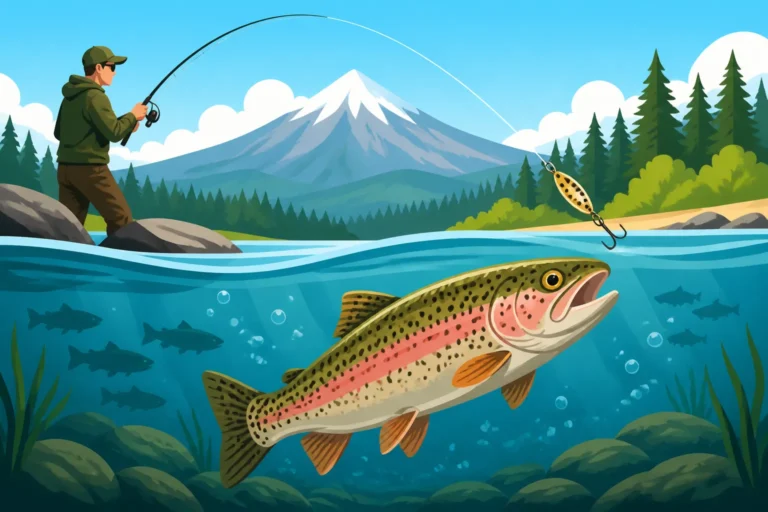
Without a doubt, stocked rainbow trout are the beginner angler’s best friend in Oregon. The ODFW runs an extensive stocking program, releasing millions of hatchery-raised trout into lakes, ponds, and even some rivers throughout the state every year. These fish are generally eager to bite, making them perfect targets for learning the ropes of casting, rigging, and reeling in your first catch. They are often found in easily accessible urban and community ponds, as well as many larger lakes.
The beauty of targeting stocked trout is their predictable behavior and diet. They’re often acclimated to hatchery food, making them receptive to common baits like PowerBait (in various colors and forms), corn, and, of course, the classic worm. You can fish for them using very simple setups: a small hook, a split shot weight, and a bobber to suspend your bait at a few feet deep, or bottom fishing with an egg sinker to let your bait rest on the lakebed. The ODFW even publishes a trout stocking schedule, so you can plan your trip around recent releases for the best chances of success. This strategy is highlighted in our How to Catch Trout in Stocked Oregon Lakes guide. Remember to always check the specific regulations for the water body you're visiting, as bag limits and occasional size restrictions may apply, even for stocked fish.
Targeting Panfish and Warmwater Species
Beyond trout, Oregon's lakes and ponds are also home to a variety of panfish and other warmwater species that are fantastic for beginners. These include bluegill, crappie, and yellow perch, as well as smallmouth and largemouth bass. Panfish are generally smaller but incredibly abundant and aggressive, often providing non-stop action, which is perfect for keeping new anglers, especially kids, engaged. Bass, while requiring a bit more technique, can be a thrilling catch for a beginner with a little guidance.
For bluegill, crappie, and perch, a small hook (size 10-12) baited with a tiny piece of worm, a kernel of corn, or a small piece of PowerBait under a bobber is incredibly effective. They tend to hang out around submerged structures like logs, weeds, or docks, making these areas prime targets. For bass, you can start with soft plastic worms or small spinnerbaits, which are relatively easy to cast and retrieve. Unlike trout, many warmwater species have very generous or even no bag limits in certain areas, as some are considered invasive and ODFW encourages their harvest. This makes them a great option if you're looking to take home a meal. Our Oregon Trout Species Guide and other species-specific guides can provide more in-depth information on these varied fish, but for now, know that these species offer a high probability of success for first-time anglers.
Easy-to-Learn Fishing Techniques
Mastering a few basic fishing techniques will dramatically increase your chances of success and make your time on the water more enjoyable. You don't need to be an expert fly caster or a seasoned troller right away. Simple, effective methods are your best starting point.
Bobber Fishing
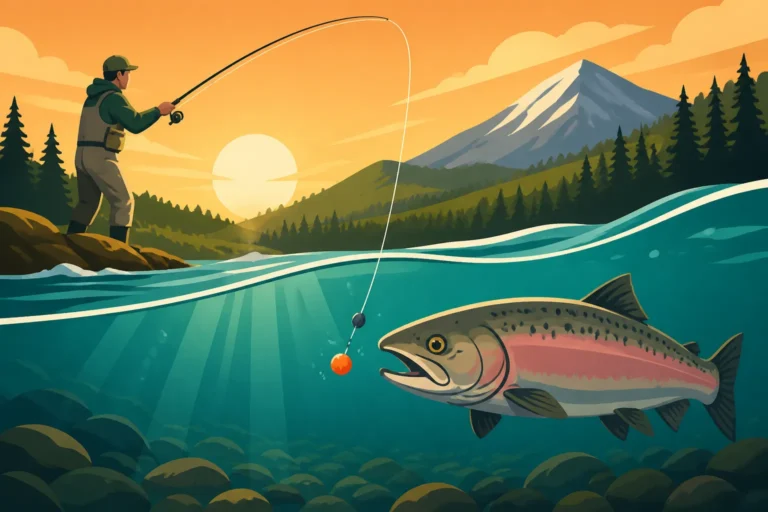
Bobber fishing, also known as float fishing, is arguably the easiest and most visually rewarding technique for beginners. It’s perfect for still or slow-moving water and for targeting fish that are cruising at a specific depth, like trout or panfish. The concept is simple: your bait is suspended at a set depth below a bobber, which acts as a visual indicator. When a fish bites, the bobber dips, twitches, or disappears, signaling a strike.
To set up a bobber rig, you’ll typically attach a bobber to your main line, then a small split shot weight a foot or two below the bobber to help cast and keep your bait down, and finally, your hook at the very end. The distance between your bobber and your hook determines how deep your bait will sit. Experiment with different depths until you find where the fish are biting. For example, if you're fishing a stocked pond for trout, starting at 3-5 feet deep is often a good bet. Just cast your rig out, let it sit, and watch that bobber like a hawk! When it goes down, give a gentle but firm tug upwards with your rod to set the hook, and then reel in your catch. This technique is not only effective but also incredibly engaging, especially for kids, as the visual of the bobber disappearing creates immediate excitement.
Bottom Fishing with Bait
Bottom fishing is another incredibly effective and straightforward technique, especially when you suspect fish are feeding near the lakebed or river bottom. This method is particularly good for species like trout, catfish, or even smaller bass that might be scavenging for food. Unlike bobber fishing, where your bait is suspended, bottom fishing ensures your bait is right where these ground-feeders are looking.
To set up a basic bottom fishing rig, you'll thread an egg sinker onto your main line, followed by a small bead (to protect your knot), and then tie on a barrel swivel. To the other end of the swivel, tie a leader line (a piece of fishing line, usually 12-18 inches long, of the same or slightly lighter pound test than your main line) and then your hook. This setup is called a "sliding sinker rig." The sinker rests on the bottom, but your line can slide freely through it, allowing the fish to take the bait without feeling the weight of the sinker, which can make them drop the bait. Popular baits for bottom fishing include worms, PowerBait (often molded around the hook), or even dough balls. Cast your bait out, let it sink to the bottom, and then reel in any slack until your line is relatively taut. Watch your rod tip for a subtle twitch or bend, which indicates a bite. This technique is often more passive than bobber fishing, allowing you to relax while waiting for the fish to find your offering.
Picking Your First Fishing Spot in Oregon
One of the biggest hurdles for new anglers is simply deciding where to go. Oregon is massive and beautiful, with fishing opportunities ranging from high mountain lakes to expansive ocean waters. For your first few trips, focusing on easily accessible, well-stocked, and beginner-friendly locations is crucial.
Exploring Stocked Community Ponds and Lakes
Oregon is blessed with an abundance of community ponds and smaller lakes that are regularly stocked with hatchery trout by ODFW, specifically designed to introduce people to fishing. These locations are often close to urban areas, have good bank access, and sometimes even feature fishing docks or picnic areas, making them perfect for a family outing. Think of places like Henry Hagg Lake near Forest Grove, Timber Linn Park Pond in Albany, or numerous smaller ponds around the Portland Metro area. These spots are fantastic because the stocked trout are usually quite eager to bite, increasing your chances of success.
Before you head out, do a quick search on the ODFW website for "stocked ponds near me" or check their weekly recreation report. This report provides up-to-date information on recent stockings, fishing conditions, and any special regulations for specific bodies of water. The calm, often clear waters of these ponds also make it easier to practice casting and observe how your bait behaves. You're less likely to get snagged, and the fish are generally less wary than their wild counterparts. These locations are the perfect training grounds to get comfortable with your gear and techniques without the added challenges of strong currents or complex fish behavior. They’re truly among the Best Places to Fish in Oregon for a beginner.
Beginner-Friendly River and Estuary Access
While lakes and ponds are great, don't shy away from rivers and estuaries entirely. Many of Oregon's smaller rivers and coastal bays offer fantastic, accessible fishing opportunities, especially for species like coastal cutthroat trout or abundant panfish. Look for state parks, county parks, or designated public access points along rivers like the lower Willamette River, the Sandy River, or the coastal rivers like the Alsea or Siletz. These spots often have established bank access, sometimes even paved trails, making it easy to bring your gear.
When venturing to a river, choose areas with slower currents, such as eddies, slackwater seams behind obstacles, or deeper pools. These are typically where fish will hold, conserve energy, and look for food. Estuaries, where freshwater meets saltwater, can also be productive, offering opportunities for surf perch or even small salmon or steelhead jacks during certain seasons. Always be mindful of your surroundings, especially if the current picks up, and wear appropriate footwear for potentially slippery banks. While the fish in rivers might be a bit warier than those in stocked ponds, the reward of catching a wild trout in a beautiful river setting is unparalleled. Just be sure to double-check the specific regulations for any river or estuary you visit, as rules can vary greatly from one section to another.
Reading the Water and Basic Fish Behavior
Learning to "read the water" is a skill that separates successful anglers from those who merely cast and hope. It’s about understanding where fish might be hiding, what they’re doing, and how environmental factors influence their behavior. For beginners, this doesn't need to be complicated; just a few basic observations can make a huge difference.
Identifying Productive Fishing Zones
Fish, much like us, seek comfort, food, and safety. When you look at a body of water, whether it's a lake, pond, or river, try to identify features that would offer these things. In lakes and ponds, look for structures. This could be a fallen tree, a patch of lily pads, a rock pile, or even a dock. These structures provide cover from predators, shade from the sun, and ambush points for fish to catch prey. The edges of weed beds are also prime locations, as they hold insects and baitfish, attracting larger fish. Changes in depth, often visible by variations in water color or by using a simple depth finder if you're in a boat, can also indicate productive zones where fish transition between deep safety and shallow feeding areas.
In rivers, the concept of "current seams" is incredibly important. These are areas where fast-moving water meets slower water. Fish will often hold in the slower water, conserving energy, while waiting for food to be carried past in the faster current. Look for the "tail-outs" of pools (the downstream end where the water shallows and speeds up), eddies behind large rocks, or deep pockets alongside the main current. Undercut banks, where the river has eroded beneath the shoreline, also provide excellent cover and can hold fish. Paying attention to these subtle details can guide your casts to where the fish are most likely to be, rather than just randomly throwing your line into open water.
Understanding Basic Fish Behavior and Timing
Fish behavior is heavily influenced by factors like water temperature, light conditions, and time of day. For most common species like trout and bass, early morning and late evening are often the most productive times to fish. During these periods, the sun is lower, water temperatures are cooler (especially in summer), and many baitfish and insects are more active, prompting larger fish to feed more aggressively. Mid-day, especially on bright, hot days, fish tend to move to deeper, cooler water or seek dense cover.
Water temperature plays a critical role in fish metabolism and activity levels. Each species has an optimal temperature range for feeding. For example, trout prefer cooler water, generally below 65°F (18°C), which is why they become less active in hot summer afternoons. Bass, on the other hand, are warmwater species and are more active in warmer temperatures, though still preferring the cooler parts of the day. Observing what’s happening around you can also provide clues: Are there insects hatching on the water? Are baitfish schooling near the surface? Are birds diving for fish? These are all indicators of feeding activity. Patience is a virtue in fishing, but understanding these basic patterns can help you time your trips for maximum success. Don't forget to check the Oregon Fishing Season Dates and Limits for specific species, as timing is everything.
Safety First: What Every Beginner Needs to Know
Fishing is an incredibly relaxing and rewarding pastime, but like any outdoor activity, it comes with inherent risks. For beginners, being aware of and prepared for potential hazards is paramount to ensuring a safe and enjoyable experience on the water.
Prioritizing Personal Safety
Your personal safety should always be your top concern. When fishing near or in water, a properly fitting personal flotation device (PFD) is non-negotiable, especially if you're on a boat, kayak, or wading in unfamiliar waters. Even experienced anglers can stumble, and a PFD provides invaluable buoyancy. Think about the conditions: if you’re fishing a river with a strong current, sturdy wading boots with good grip are essential to prevent slips. If you're on the coast, rogue waves can be a danger. Always let someone know where you're going and when you expect to return, especially if you're heading to a remote spot.
Beyond the water itself, be mindful of your surroundings. Sharp hooks are a constant danger; use caution when handling them and always keep them away from your face and eyes. A wide-brimmed hat and polarized sunglasses aren't just for looking cool; they protect you from the sun's harmful UV rays and help you see into the water, respectively. Sunscreen is also a must, even on cloudy days. Pack plenty of water and some snacks, as spending hours outdoors can quickly lead to dehydration and fatigue. Always be aware of wildlife, too; Oregon is home to various animals, some of which can be dangerous if approached too closely. Carrying a basic first-aid kit in your tackle box or backpack can handle minor cuts, scrapes, or insect bites, ensuring small incidents don't ruin your trip.
Understanding Weather and Water Conditions
Oregon weather, especially along the coast and in the mountains, can be notoriously unpredictable. A sunny morning can quickly turn into a rainy, windy afternoon. Always check the local weather forecast before you head out, and be prepared for changing conditions. Layers of clothing are your best friend, allowing you to adapt to temperature fluctuations. Waterproof outer layers, even just a light rain jacket, can save your day.
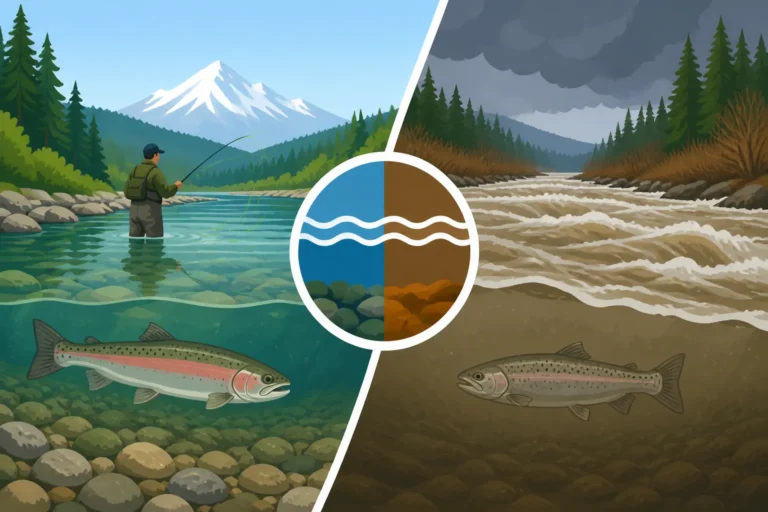
Beyond the sky, pay close attention to the water itself. River levels can rise rapidly after heavy rainfall, creating dangerous currents and making wading unsafe. Check river flow reports, often available through local fishing shops or online, before venturing out. In lakes and ponds, strong winds can make casting difficult and create choppy conditions that are unpleasant, or even dangerous, for small boats. On the coast, tides are a critical factor; an incoming tide can quickly cut off access to a fishing spot, and sneaker waves can catch you off guard. Familiarize yourself with tide charts if you're fishing near the ocean or in an estuary. If conditions turn unfavorable, don't hesitate to pack up and head home. A day of fishing should be enjoyable, not a test of survival.
Conservation and Ethics for New Anglers
Becoming an angler means becoming a steward of our natural environment. Learning to fish isn't just about catching fish; it's about respecting the fish, their habitat, and the outdoors. Practicing good conservation and ethical angling ensures that Oregon's incredible fishing opportunities remain vibrant for everyone, now and in the future.
Practicing Catch-and-Release Responsibly
For many beginners, the thrill of catching a fish is often more important than keeping it. When you decide to release a fish, doing it properly is crucial for its survival. This practice, known as catch-and-release, minimizes stress and injury to the fish, allowing it to swim away healthy and potentially be caught again, or contribute to spawning. Start by using barbless hooks, or simply crimp down the barb on your existing hooks with a pair of pliers. Barbless hooks are much easier to remove and cause less damage to the fish's mouth.
When you land a fish you intend to release, handle it as little as possible. If you must handle it, wet your hands first to protect the fish's delicate slime coat, which is its primary defense against infection. Avoid touching the gills or eyes. If you can, use a pair of needle-nose pliers or a dehooking tool to gently remove the hook while the fish is still in the water or quickly brought to a soft, wet surface for a moment. If the fish is deeply hooked, it's sometimes better to cut the line as close to the hook as possible, as attempting to remove a deeply set hook can cause more harm. Allow the fish to recover in the water, supporting it upright if necessary, until it swims away under its own power. You can learn more about this in our Oregon Catch-and-Release Rules guide.
Respecting the Environment and Other Anglers
A fundamental part of ethical angling is leaving no trace. This means packing out everything you pack in, and perhaps even picking up some trash left by others. Discarded fishing line, hooks, and bait containers are not only unsightly but also pose serious threats to wildlife. Always dispose of your waste properly, ideally in designated receptacles or by taking it home with you. Being mindful of your impact extends to bait as well; never introduce non-native species into a water body, as this can disrupt the delicate ecosystem.
Beyond your ecological footprint, showing respect for other anglers is equally important. Popular fishing spots can get crowded, so maintaining a reasonable distance from others and being courteous goes a long way. Avoid making excessive noise or casting directly into another angler's fishing lane. If you're on a boat, be aware of your wake near shore anglers or other boats. Learning the Oregon Daily Bag Limits Explained and adhering strictly to them demonstrates respect for the resource and the laws governing it. Asking for advice or sharing tips can also foster a positive atmosphere on the water. By following these simple ethical guidelines, you contribute to a positive experience for everyone and ensure that Oregon's fishing grounds remain pristine and enjoyable for all who seek their quiet solace.
| Aspect | Beginner-Friendly Approach | More Advanced Considerations |
|---|---|---|
| Licenses/Regulations | Basic annual angling license; focus on local pond rules. | Species-specific tags, endorsements, zone regulations. |
| Rod/Reel | Medium-action spin combo, 6-7 ft, 2500-3000 reel, 6-10lb mono. | Specialized rods (fly, baitcasting), different line types. |
| Tackle Box | Small assortment of hooks, weights, bobbers, pliers. | Wide array of lures, tools, specific leader materials. |
| Bait/Lures | Worms, PowerBait, corn, simple inline spinners. | Live minnows, complex crankbaits, jigs, fly patterns. |
| Target Species | Stocked Rainbow Trout, Panfish (Bluegill, Perch). | Salmon, Steelhead, Sturgeon, Halibut, Tuna. |
| Techniques | Bobber fishing, bottom fishing. | Drift fishing, trolling, fly casting, jigging. |
| Fishing Spots | Stocked community ponds, accessible park banks. | Remote high lakes, challenging river sections, ocean. |
| Safety | PFD, basic first aid, weather check, sun protection. | Wading safety, navigation, VHF radio, emergency beacons. |
| Ethics | Catch-and-release best practices, leave no trace, courtesy. | Deeper understanding of aquatic ecosystems, advocacy. |
Disclaimer
Please note that fishing regulations in Oregon can change. While this guide provides general information, it is crucial to consult the most current Oregon Department of Fish and Wildlife (ODFW) Sport Fishing Regulations booklet or their official website before each fishing trip. This information is for educational purposes only and should not be considered legal advice.