Can you keep a sturgeon over 54 inches in Oregon?
There's nothing quite like hooking into a powerful sturgeon on an Oregon river, feeling that primal tug that lets you know you're connected to a true river monster. The sheer thrill is undeniable, but then comes the crucial moment: can I keep this magnificent catch? It’s a question many anglers ponder, especially when faced with a fish that looks like it could feed a small army. Navigating the specific regulations for white sturgeon in Oregon can feel like trying to solve a puzzle, especially when it comes to those crucial size restrictions. This guide will cut through the confusion and explain exactly why, in most cases, you cannot keep a sturgeon over 54 inches in Oregon and what you need to know to fish legally and responsibly.
The Golden Rule of Oregon Sturgeon Fishing: Slot Limits Are King
When it comes to fishing for white sturgeon in Oregon, especially in the larger river systems, the biggest takeaway is this: regulations are designed with conservation in mind. Unlike some species where bigger is always better for the dinner table, sturgeon management relies heavily on what's called a "slot limit." This means there’s a specific size window, a "slot," within which you are allowed to keep a fish. Anything smaller than the lower end of the slot, or larger than the upper end, must be released immediately and unharmed.
Understanding the "Keep" Window for Sturgeon
The idea behind the slot limit is really quite brilliant and critical for the long-term health of the sturgeon population. Juvenile sturgeon, those under the legal slot, are often numerous but still growing. Protecting them ensures they have a chance to mature and reproduce. On the other end of the spectrum, the really big sturgeon – those magnificent giants that often stretch well over the 54-inch mark – are the prime breeding stock. These older, larger fish are incredibly valuable to the population, producing a huge number of eggs, and their genetic legacy is vital. Allowing them to continue their life cycle, sometimes for decades, is paramount to sustaining the fishery.
So, when we talk about a 54-inch sturgeon, you're looking at a fish that's often a mature, highly productive breeder, or at least well on its way to becoming one of the most important fish in the river. Releasing these giants ensures they can pass on their genes and help future generations of sturgeon thrive. This protective measure is a cornerstone of why Oregon has some of the best sturgeon fishing opportunities in the Pacific Northwest.
The Rationale Behind Sturgeon Slot Limits
It can sometimes feel frustrating when you hook into a truly massive sturgeon, wrestle it to the boat, and then realize you have to let it go. However, understanding the why behind these regulations can make the release a more meaningful act. White sturgeon are one of the longest-lived and slowest-maturing fish species in North America. A sturgeon can live for over 100 years, and females don't typically start reproducing until they are 15-20 years old, sometimes even older, especially for the really large ones.
Protecting these older, larger fish is essentially an investment in the future. Imagine a 54-inch sturgeon; it has likely survived countless challenges, avoided predators, and navigated changing river conditions for many, many years. It has a proven track record of survival and the genetic makeup to prove it. These are the fish we need in the ecosystem to ensure there are baby sturgeon for our kids and grandkids to fish for. It's not just about today's catch; it's about sustaining a legacy. This conservation strategy is clearly outlined in the larger Oregon Fishing Regulations Explained.
Where the Rules Apply: Regional Sturgeon Regulations in Oregon
Oregon's fishing regulations can sometimes feel like a patchwork quilt, with different rules applying to different bodies of water. Sturgeon regulations are no exception. The most popular and regulated sturgeon fisheries are found in the Columbia River and its tributaries, particularly the Willamette River.
Columbia River Specifics: A Tightly Regulated Fishery
The Columbia River is arguably the most famous sturgeon fishery in Oregon, attracting anglers from all over the world. Because of its popularity and the historical importance of sturgeon in this system, the regulations here are particularly dynamic and precise. For instance, the Lower Columbia River (downstream from Bonneville Dam) often has a retention season for white sturgeon, but the slot limit for keeping these fish is usually much smaller than 54 inches.
Historically, the retention slot for the Lower Columbia River has been in the range of 44 to 50 inches fork length. It is absolutely critical to check the very latest Oregon Department of Fish and Wildlife (ODFW) regulations before you head out, as these limits can change annually, seasonally, or even be closed entirely based on population assessments and harvest quotas. For example, in recent years, the lower Columbia has seen very limited retention opportunities, if any, with many areas being strictly catch-and-release only. This is a prime example of how quickly conditions and regulations can shift.
When retention is allowed, you'll also need to make sure you have the proper endorsements and tags. For instance, an Oregon Sturgeon Tag Requirements is typically mandatory in addition to your standard Oregon Fishing License Guide. Furthermore, if you’re fishing in the Columbia River Basin, you may also need a Columbia River Basin Endorsement to legally fish for anadromous species like salmon and steelhead, which can sometimes overlap with sturgeon fisheries.
Willamette River and Other Oregon Waters: Often Catch-and-Release Only
While the Columbia River sometimes allows for retention, the Willamette River is a different story for sturgeon anglers. For many years, the Willamette River, along with many other inland Oregon waters, has been designated as catch-and-release only for white sturgeon. This means that any sturgeon you catch in the Willamette, regardless of its size, must be immediately and carefully released. There is simply no legal slot for retention.
If you’ve ever wondered, Is Willamette River sturgeon catch-and-release only?, the answer is almost always a resounding yes. This rule extends to many other rivers and bays throughout the state that host sturgeon populations. The ODFW website is your best friend for checking these highly localized regulations. Don't rely on old information or what someone told you last year – the rules are updated for a reason. Always consult the official ODFW fishing regulations booklet or their online recreational fishing regulations updates for the specific zone you plan to fish.
The Unfortunate Reality: No, You Cannot Keep a Sturgeon Over 54 Inches in Oregon
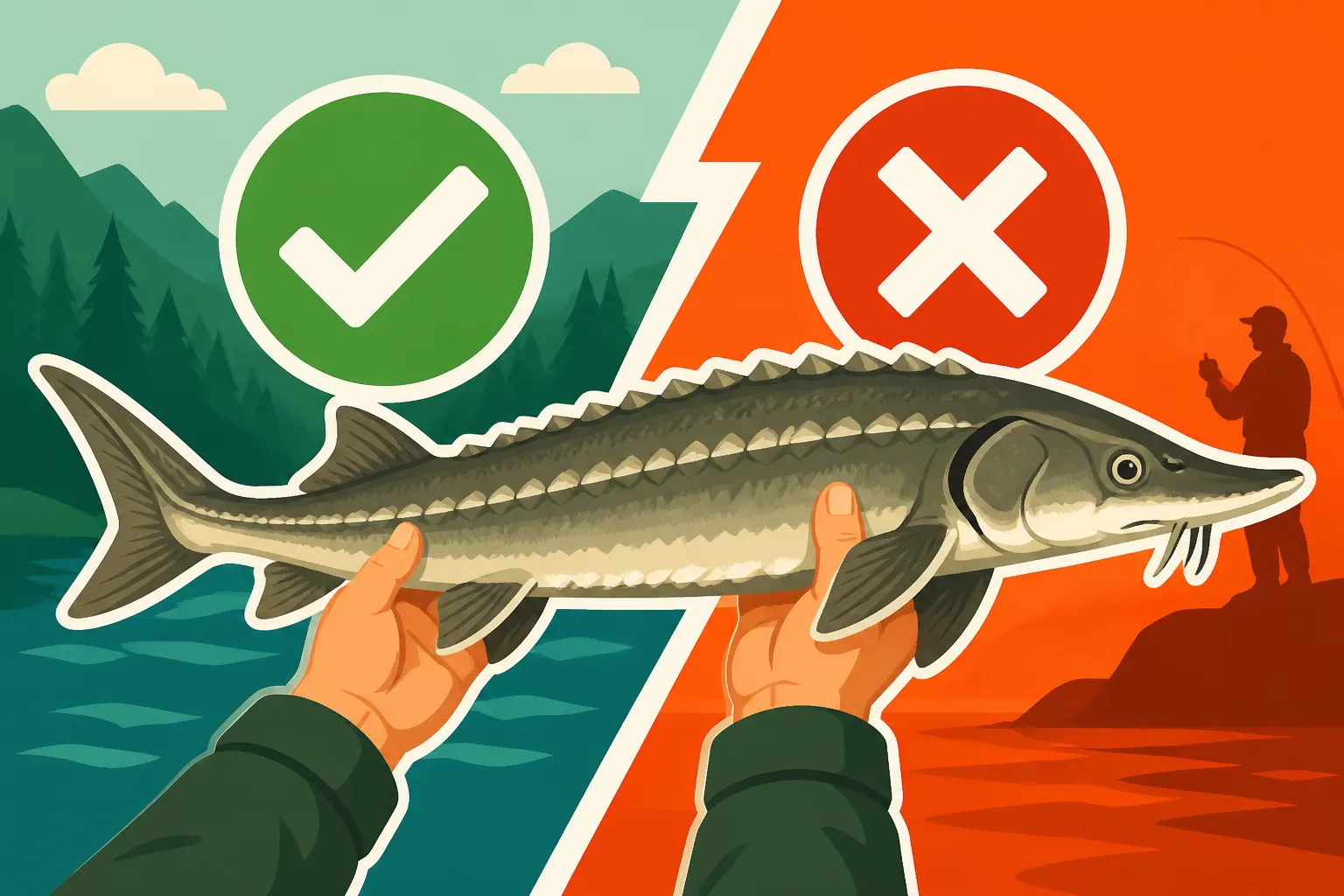
To directly answer the burning question: No, you cannot keep a sturgeon over 54 inches in Oregon. In fact, in most retention fisheries for white sturgeon in Oregon, the upper limit of the legal slot is typically 50 inches fork length, and often even smaller. A sturgeon over 54 inches is well outside any legal retention slot currently in place and falls squarely into the protected category. These are the "brood stock" – the large, mature, egg-laying females and powerful males that are absolutely vital for sustaining the species.
It's natural to feel a rush of excitement when you battle and land a truly impressive fish. However, that excitement must be tempered with responsibility and a deep respect for the regulations designed to protect these incredible creatures. Keeping a sturgeon outside the legal slot is not only harmful to the fishery but also carries significant legal consequences.
What to Do When You Catch an Oversized Sturgeon
So, you've hooked into a magnificent sturgeon that measures well over the 54-inch mark (or outside whatever the current legal slot may be). Your next steps are crucial for the fish's survival. The priority is to ensure a quick and safe release.
- Minimize Fight Time: While thrilling, a prolonged fight can exhaust the fish. Use appropriate heavy tackle to bring the fish in as efficiently as possible.
- Keep it Wet: Try to keep the sturgeon in the water as much as possible, especially if it's a large one. If you must bring it aboard a boat for a quick measurement or photo, do so gently on a wet surface. Avoid dragging it over abrasive surfaces. For bank anglers, if you can measure and unhook it at the water's edge, that’s ideal.
- Proper Handling: Support the fish horizontally. Avoid lifting a large sturgeon by the tail or head, as this can injure its spine and internal organs. Use heavy-duty gloves for a better grip and protection from their rough skin and sharp scutes.
- Unhooking: Use long-nose pliers or a dehooker (many reputable brands are available on Amazon) to remove the hook quickly. If the hook is deeply swallowed, cut the line as close to the hook as possible rather than tearing at the fish's throat. Barbless hooks are highly recommended for sturgeon fishing, as they make release much easier and less damaging.
- Revival: If the fish seems stressed or tired, hold it gently in the current, facing upstream, until it regains strength and swims away on its own. Don't just toss it back; make sure it's ready.
- Quick Photo (Optional): If you want a photo, make it quick, keeping the fish mostly in the water. Remember, the fish's health is always the top priority.
For more detailed instructions, you might find guides like How to catch and release sturgeon safely incredibly helpful.
Consequences of Violating Sturgeon Regulations
Fishing regulations aren't just suggestions; they are laws designed to protect natural resources. Violating sturgeon regulations, especially keeping an oversized or out-of-slot fish, can lead to serious penalties. These can include:
- Significant Fines: Fines for fishing violations in Oregon can be steep, often ranging from hundreds to thousands of dollars, depending on the severity and specific violation.
- Forfeiture of Gear: Game wardens have the authority to confiscate your fishing gear, including rods, reels, boats, and even vehicles used in the commission of a crime.
- License Suspension/Revocation: Your fishing license could be suspended or permanently revoked, meaning you wouldn't be able to fish in Oregon for a period of time, or ever again.
- Criminal Charges: In severe cases, particularly for repeat offenders or large-scale poaching, criminal charges could be filed, leading to jail time.
It's not worth the risk, both for your wallet and your freedom, or more importantly, for the health of the sturgeon population. Always err on the side of caution and release any questionable fish. The ODFW takes these regulations very seriously, and game wardens are highly effective at enforcing them. For a deeper dive into the repercussions, check out Oregon Fishing Violations and Penalties.
Measuring Up: Ensuring You're Within the Legal Slot
Accurate measurement is perhaps the most critical skill for a sturgeon angler, besides actually catching them! There's no room for "close enough" when it comes to legal slot limits. A small error could mean the difference between a legal catch and a hefty fine.
Accurate Measurement Techniques
When ODFW states a size limit for sturgeon, they almost always refer to fork length. Fork length is measured from the tip of the fish's nose (snout) to the tip of the shortest ray in the fork of its tail. It's not a total length measurement (which goes to the end of the longest tail ray), and it's not a girth measurement.
Here's how to measure accurately:
- Use a Flat Surface: If possible, lay the fish flat on a measuring board or a flat, wet surface (like the bottom of a boat or a wet tarp on the bank). This prevents stretching or curling that can skew measurements.
- Nose to Fork: Place the tip of the fish's nose at the zero mark of your measuring device. Extend the tape or board along the side of the fish's body.
- Tail Position: Gently pinch the tail lobes together so the fork is clearly visible. Read the measurement at the shortest point of the fork.
- Double Check: It's always a good idea to measure twice to ensure accuracy, especially if the fish is squirming a bit.
Remember, the fish is considered "your responsibility" once hooked. If it's too big to retain, you need to know immediately to minimize its stress and ensure a swift release.
Essential Gear for Responsible Sturgeon Angling
Having the right gear isn't just about catching fish; it's about doing it responsibly, especially with a powerful species like sturgeon.
- Heavy-Duty Rod and Reel: Sturgeon can grow incredibly large and put up a tremendous fight. You'll need a stout rod (often a heavy action, 7-10 feet) and a strong reel with a reliable drag system, spooled with heavy braided line (e.g., 60-100 lb test). Brands like Penn, Shimano, or Abu Garcia offer excellent options.
- Measuring Device: A good, clear measuring tape or a dedicated sturgeon measuring board is essential. You can find durable, flexible measuring tapes that unroll easily on many outdoor retail sites, including Amazon. Look for ones that are at least 60 inches long and waterproof. A dedicated measuring board (often marked with legal slots) is even better if you have the space in your boat.
- Gloves: Heavy-duty gloves (e.g., K-Drill or regular work gloves) are crucial for handling sturgeon. Their skin is rough, and they have sharp bony plates called scutes that can easily cut unprotected hands.
- Pliers/Dehooker: Long-nose pliers or a specialized dehooker (again, Amazon has a wide selection) are invaluable for safely removing hooks, especially if the fish is large or hooked awkwardly.
- Net/Tailing Device (Optional): For larger fish you intend to release, a large, knotless rubber landing net can help cradle the fish safely. Some anglers use a specialized tailing glove or rope for added control during measurement and release, though this requires practice.
Here’s a quick overview of typical sturgeon slot limits, but always verify with current ODFW regulations:
| Waterbody | General Retention Slot (Fork Length) | General Status | Key Considerations |
|---|---|---|---|
| Lower Columbia River | ~44-50 inches (highly variable) | Seasonal, limited retention | Check specific zones & dates, Oregon Catch Record Card Requirements may apply |
| Upper Columbia River | Catch & Release Only | Protected Species, no retention | All sturgeon must be released immediately |
| Willamette River | Catch & Release Only | Protected Species, no retention | All sturgeon must be released immediately |
| Other Coastal Rivers/Bays | Varies, often Catch & Release Only | Highly localized, check specific regulations | Always confirm local rules before fishing |
Remember, the information in this table is for general guidance. Always, always consult the official ODFW regulations for the most up-to-date and specific rules for your intended fishing location and date. Regulations can change quickly and without prior warning due to biological assessments or harvest quotas. You can often find a current ODFW fishing summary pamphlet at local sporting goods stores like Fishermen's Marine & Outdoor, or online.
Disclaimer
Please remember that fishing regulations are subject to change. Always consult the most current Oregon Department of Fish and Wildlife (ODFW) regulations before heading out on the water. This article is intended for informational purposes only and does not constitute legal advice.