How can you tell male and female salmon apart
Figuring out whether that chrome bright salmon you've just landed from the mighty Columbia River, or perhaps a colorful fall fish from a coastal stream, is a male or a female can feel like a real head-scratcher. It’s not always obvious, especially to the untrained eye, and the differences can change dramatically depending on the species and time of year. This guide is here to unravel those mysteries, helping you confidently distinguish between male and female salmon so you can better understand these incredible fish and comply with any specific regulations in Oregon.
Why Differentiating Salmon Matters for Anglers
Understanding the sex of the salmon you’re encountering or catching isn't just about satisfying curiosity; it holds practical importance for several reasons, from conservation efforts to your own angling experience. It helps you become a more informed and responsible angler, which is something we all strive for in the Oregon fishing community.
Conservation and Regulations
While most general fishing regulations in Oregon focus on species, size, and hatchery versus wild status, knowing the sex of a fish can sometimes be relevant. For instance, in certain specific conservation scenarios or research projects, there might be particular guidelines related to males or females, though these are less common for recreational anglers. More broadly, understanding the different stages of male and female salmon helps us appreciate their incredible lifecycle and the importance of healthy spawning populations. When you know what a male Chinook looks like as it prepares to spawn versus a female, you gain a deeper appreciation for the journey these fish undertake. This knowledge contributes to a greater respect for the resource, reinforcing the 'leave it better than you found it' ethos. Always consult the Oregon Fishing Regulations Explained booklet to ensure you're up-to-date on any specific rules that might pertain to your fishing location and target species.
Culinary Preferences and Lifecycle Insights
Believe it or not, some anglers have a preference for either male or female salmon for culinary reasons, particularly regarding egg production. Female salmon (hens) are highly prized for their roe (eggs) when they are close to spawning, which is considered a delicacy by many. While not everyone is after the roe, understanding a fish's sex gives you insight into its life stage and potential condition. A male salmon, especially one close to spawning, might have different flesh quality compared to a female, or vice-versa, depending on how much energy they've expended on their journey. It adds another layer to the story of the fish you've caught, connecting you more deeply to the natural processes unfolding in our rivers and oceans. For those exploring new species or locations, knowing these details can enrich the entire fishing experience.
Key Visual Differences Between Male and Female Salmon
Salmon undergo remarkable transformations throughout their lives, especially as they approach their freshwater spawning grounds. These changes are often the most telling indicators of their sex, making it easier to distinguish between males (bucks) and females (hens).
Physical Changes During Spawning Season
This is when the differences become most pronounced, almost like they're putting on their final, dramatic performance. As salmon leave the ocean and enter rivers to spawn, their bodies adapt in incredible ways.
Kype Development
One of the most iconic and easily identifiable features of a male salmon during the spawning season is the development of a "kype." This is a distinctive, pronounced hook that forms on the snout and lower jaw. It essentially looks like a dramatically elongated, upward-curving jaw. The kype is used by males for fighting other males for access to spawning females and redds (nests). It can range from a subtle curve to an incredibly exaggerated hook, making the male’s head appear much larger and more formidable than a female’s. Females, on the other hand, retain a more rounded and less aggressive jawline, even as they approach spawning. You'll often see this kype develop most prominently in Chinook and Coho salmon as they transition from their silver ocean phase to their spawning colors.
Coloration Changes
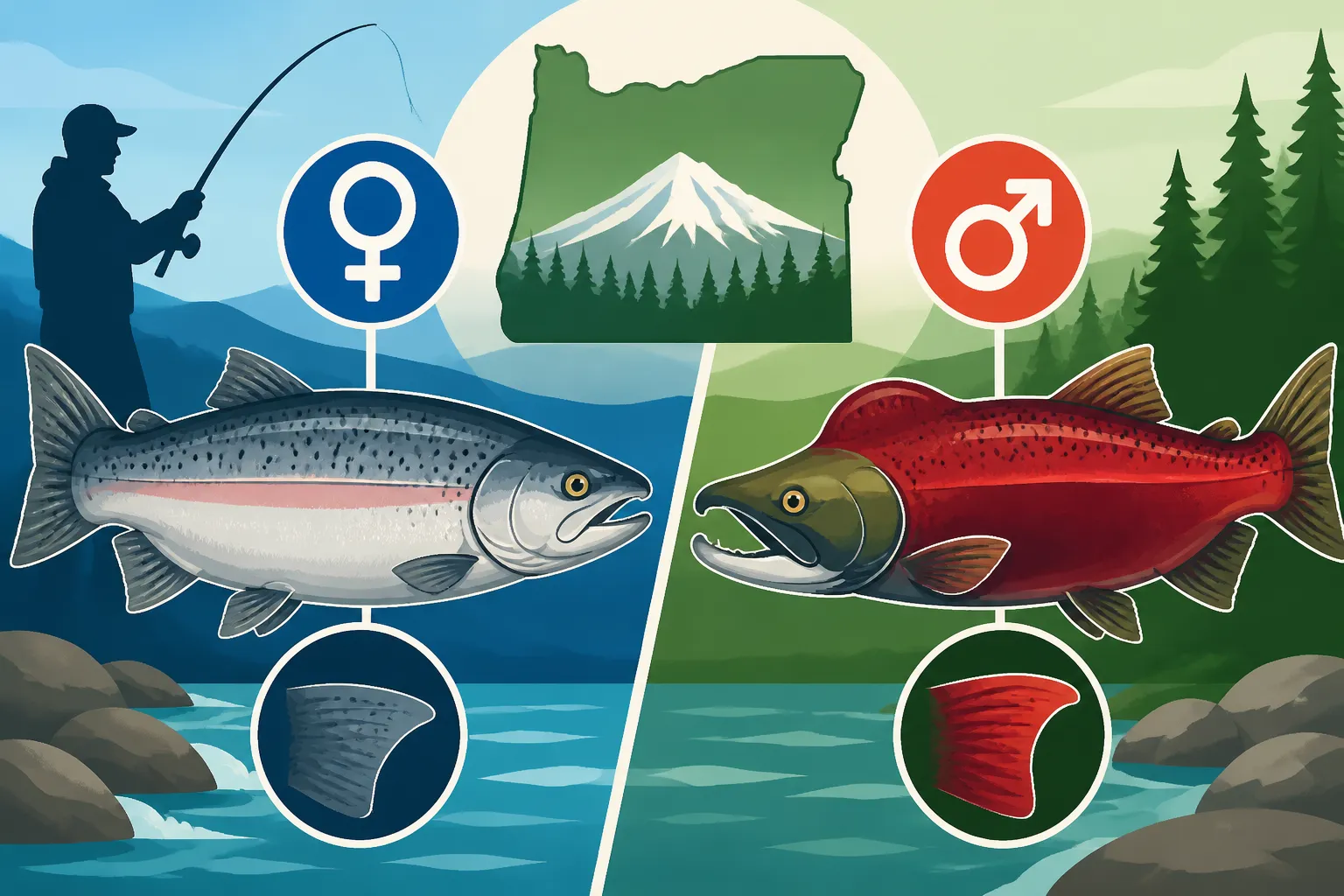
Salmon undergo stunning color transformations as they move from saltwater to freshwater and prepare to spawn. While both sexes change color, males often display more vibrant and intense hues. For example, a male Sockeye salmon turns a brilliant, almost shocking, red with a green head, while the female might also turn red but often with less intensity. Male Coho salmon frequently develop deep crimson sides, often with mottled patterns, that are more striking than the females, which might be a more subdued brick red or reddish-brown. These colors serve as visual signals, both for attracting mates and for establishing dominance among other males. Watching these colors develop is one of the most fascinating aspects of observing salmon in their native habitat.
Body Shape and Depth
Beyond the kype and color, the overall body shape and depth can offer clues. Male salmon, especially as they get closer to spawning, tend to develop a deeper body profile, particularly around the shoulders and back, giving them a more robust and powerful appearance. This is partly due to the energy they put into muscle development for fighting and partly a visual display of strength. Females, while still strong and often carrying a large amount of eggs, tend to maintain a more streamlined, torpedo-like shape, though their bellies will often appear noticeably swollen and distended with roe. Imagine the difference between a heavyweight boxer and a marathon runner – both powerful, but built differently for their specific tasks. This deeper body and thicker shoulder often translates to a more imposing presence in the water, a key element in male-on-male competition.
Subtler Cues Outside of Spawning
Catching salmon in the ocean or during their early river runs, before the full onset of spawning changes, can make sexing them a bit trickier. However, there are still some subtle indicators you can look for if you know what to observe.
Head Size and Shape
Even outside of full spawning coloration and kype development, male salmon often have a slightly larger, more robust head in proportion to their body compared to females of the same size. Their snouts might appear a bit broader and less tapered. Females generally maintain a more delicate, slender head profile, even when they are large fish. This difference can be very subtle, especially in pristine, ocean-bright fish, and might require you to compare several fish side-by-side or rely on experience. Think of it like comparing the faces of different dog breeds – some have naturally broader, more powerful snouts, while others are more refined.
Vent Area Examination
This is perhaps the most reliable physical indicator when other visual cues are absent, but it requires careful, respectful handling of the fish. The vent, or anal opening, on a female salmon will typically appear more rounded and swollen, sometimes even slightly protruding, as it prepares to release eggs. On a male, the vent area will be more slit-like and less prominent. For safety and the health of the fish, especially if you intend to release it, observe this area quickly and gently. Always keep the fish in the water as much as possible during inspection. You might find a good waterproof fishing guide or a quality set of fish grippers on Amazon to aid in safe handling and identification.
Overall Aggressiveness and Behavior
While not a physical trait, male salmon tend to be more aggressive, especially as they near spawning. They will often strike at lures or flies with more ferocity, driven by territorial instincts. You might notice them actively chasing or nudging other fish in the water. Females are more focused on preserving energy for egg development and finding suitable redd locations. This is, of course, a generalization, and any salmon can be aggressive when hungry or provoked. However, when observing fish in a river, especially those clearly staging for spawning, behavioral differences can sometimes provide an additional clue to their sex. For tips on how to safely handle and release fish, check out our guide on Oregon Catch-and-Release Rules.
Species-Specific Distinctions in Oregon Salmon
While the general characteristics like kype and coloration apply across salmon species, each type of salmon found in Oregon waters has its own unique way of displaying these sexual dimorphisms. Knowing these nuances can significantly improve your identification skills, whether you're targeting Chinook on the Willamette or Coho along the coast.
Chinook (King) Salmon
Chinook salmon, often called King salmon, are the largest and one of the most prized salmon species in Oregon. When they are ocean-bright, both sexes are typically silver with black spots on their backs and tails. As they enter freshwater for spawning, the distinctions become pronounced.
- Males: Male Chinook develop a very prominent, almost grotesque, kype – a powerfully hooked jaw that gives them a truly formidable appearance. Their bodies darken significantly, often turning to a deep olive, brown, or even reddish-black, sometimes with mottled blotches. Their backs become heavily humped, and their shoulders appear massive. The head, already large, seems even more so due to the kype. You can often see them posturing and jaw-locking with other males. Learning to spot these powerful fish is key to understanding the full scope of Chinook Salmon in Oregon.
- Females: Female Chinook also darken, but usually to a more uniform bronze or brownish-black. Their jaws remain straighter, without the dramatic kype. Their bellies will swell noticeably as they carry thousands of eggs, and their overall body shape, while still robust, is more elongated and less "humped" than a male's. Their focus is clearly on egg development and seeking out suitable gravel beds for their redds.
Coho (Silver) Salmon
Coho salmon, known for their acrobatic fights and vibrant colors, are another popular target in Oregon. Like Chinooks, they are silvery in the ocean but transform dramatically as they move upstream.
- Males: Male Coho salmon are incredibly striking during spawning. They develop a significantly hooked snout and jaw (though usually less exaggerated than a Chinook's kype), and their bodies explode with color, turning a brilliant crimson or fiery red on their sides, often with darker backs and heads. Their backs become slightly humped, and their overall appearance is aggressive and ready for battle. Catching one of these vibrant fish is a highlight of Coho Salmon in Oregon season.
- Females: Female Coho also turn red, but their coloration is often a more subdued brick red or reddish-brown, sometimes with a grayish-green back. Their jaws remain relatively straight. Their bellies become distended with eggs, and they retain a more streamlined body shape compared to the humped males. Their focus is clearly on the mission of perpetuating the next generation.
Sockeye (Red) Salmon
While not as common for recreational harvest in many parts of Oregon as Chinook or Coho, Sockeye salmon are perhaps the most visually distinct when spawning.
- Males: Male Sockeye salmon undergo one of the most spectacular color changes. Their bodies turn an incandescent, almost neon, red, and their heads become a vibrant green. They develop a pronounced humped back and a significant, hooked jaw (kype), though it's typically more slender than a Chinook's. They are truly a sight to behold in their spawning glory.
- Females: Female Sockeye also turn red, but often a slightly duller shade, and their heads may be green or a darker olive. Their backs are less humped, and their jaws are straight. Their bellies, of course, will be swollen with roe, but they don't develop the extreme physical exaggerations of the males.
Chum (Dog) Salmon and Pink (Humpy) Salmon
These species have more restricted distributions and seasons in Oregon but still display clear sexual dimorphism.
- Chum Salmon: Males develop incredible vertical bars or "tiger stripes" of green and purple on their flanks, along with massive canine-like teeth (hence "dog salmon") and a greatly hooked snout. Their backs are also very humped. Females are less colorful, with straighter jaws and distended bellies.
- Pink Salmon: Males are known for their extremely pronounced humpbacks (leading to "humpy"), especially in the north. They also develop a strongly hooked jaw. Females have smaller humps and straighter jaws. Pinks are smaller, typically caught in odd-numbered years in some parts of the Pacific Northwest, but less common for consistent angling in Oregon compared to other species.
Practical Tips for Anglers in Oregon
Knowing the theory behind salmon identification is one thing, but applying it on the water is another. Here are some practical tips to help you confidently tell male and female salmon apart during your next fishing adventure in Oregon.
Observing Behavior on the Water
Sometimes, observing how a fish behaves even before you get it to the boat or bank can offer clues. This is especially true when you're watching salmon stage or move upstream.
Spawning Aggression vs. Nesting Activity
Male salmon, particularly as they approach spawning grounds, often exhibit highly aggressive and territorial behavior. You might see them chasing, nipping, or even jaw-locking with other males in the river. They are constantly vying for dominance and access to females. If you observe a salmon repeatedly charging at others or vigorously defending a specific patch of water, there's a good chance it's a male. Females, on the other hand, will be more focused on searching for suitable gravel beds to dig their redds. You might see them fanning their tails near the bottom, testing the substrate, or actively digging. While both sexes are driven, their specific behaviors often align with their roles in the spawning process. This behavioral insight can be particularly useful if you are bank fishing on a river like the Deschutes or Rogue, where you can observe fish staging.
General Physical Presence
When you spot a large salmon in the water, take a moment to assess its overall physical presence. Males, especially those further along in their spawning transformation, tend to appear more "brutish" or heavily built, with a noticeably deeper body and a powerful, almost menacing head. Females, even large ones heavy with eggs, often retain a sleeker, more graceful profile until they are ready to drop their eggs. It's a subtle difference at times, but with practice, you'll start to recognize that characteristic bulk and aggressive posture of a male. This is true whether you're observing Summer Steelhead in Oregon or a trophy Chinook.
Gear and Techniques for Closer Inspection
While you want to be quick and gentle with any fish you intend to release, having the right gear can make the identification process easier and safer for both you and the salmon.
Utilizing Fish-Friendly Handling Tools
When you bring a salmon to hand or into the boat, always prioritize its well-being. Using a net with rubberized mesh can reduce scale and slime coat damage. If you need to lift the fish for a quick photo or inspection, cradle it gently, supporting its belly, and keep it as low to the water as possible. For quick identification, tools like specialized fish grippers can help you secure the fish without harming its jaw or body, allowing for a safer, quicker peek at the vent area or head shape. You can find many options for these essential tools on Amazon. Remember, a fish that is released unharmed has a chance to complete its life cycle.
Waterproof Field Guides and Apps
Modern technology and good old-fashioned books can be invaluable. Consider carrying a waterproof field guide that specifically illustrates the differences between male and female salmon of various species in different life stages. Many of these guides are species-specific to regions like the Pacific Northwest. There are even fishing apps available on smartphones that can help with fish identification, often with clear photos. A quick glance at a reliable reference can confirm your suspicions about a fish’s sex. This is particularly helpful for less common species or when you're still developing your eye for the subtle distinctions. A quick reference can make all the difference when you're trying to figure out if you've got a Mackinaw (Lake Trout) Fishing or a bull trout on your hands, for example.
When in Doubt: Release
This is perhaps the most important rule of thumb when fishing in Oregon's diverse waters. If you are ever uncertain about a fish's species, size, hatchery vs. wild status, or sex (if it somehow pertains to a specific regulation), the safest and most ethical course of action is to release it.
Prioritizing Conservation
Releasing a fish when you're unsure ensures that you're not inadvertently violating regulations or harming a vulnerable population. Many of Oregon's salmon and steelhead populations face significant challenges, and every fish counts. It's far better to err on the side of caution and let the fish go, allowing it to continue its journey, than to risk a fine or contribute to conservation issues. Responsible angling means protecting the resource for future generations. This mindset is especially crucial when fishing for species like Bull Trout in Oregon, which are protected.
Understanding Complex Regulations
Oregon's fishing regulations can be complex, with specific rules varying by river, season, and even specific sections of a river. These regulations are designed to manage fish populations sustainably. Trying to distinguish between a male and female salmon, especially an early run fish, can be challenging even for experienced anglers. If you're not 100% confident in your identification, particularly if the sex might influence whether you can retain the fish, releasing it takes away all doubt and ensures you are compliant. Always carry a copy of the current Oregon Fishing Regulations Explained or have access to the digital version on your phone.
Comparison Table: Male vs. Female Salmon Characteristics (Spawning Phase)
To help you visualize the key differences, here's a quick comparison of male and female salmon during their most distinct, spawning-phase transformations:
| Characteristic | Male Salmon (Buck) | Female Salmon (Hen) |
|---|---|---|
| Jaw/Snout | Pronounced kype (hooked snout/lower jaw) | Straighter, more rounded jawline |
| Coloration | More vibrant, intense, or mottled colors | Often more subdued or uniform coloration |
| Body Shape | Deeper body, often with humped back, robust shoulders | More streamlined, torpedo-like; distended belly (with eggs) |
| Head Size | Proportionally larger, broader head | Proportionally smaller, more delicate head |
| Vent Area | Slit-like, less prominent | More rounded, swollen, sometimes protruding |
| Behavior | More aggressive, territorial, fights for dominance | Focus on digging redds, energy conservation |
This table serves as a general guide, and remember that individual fish and species can vary. The best way to get proficient at distinguishing between them is through experience on the water, observing many salmon across different seasons. The more time you spend on the water, whether it's fly fishing the Metolius or chasing fall Chinook on the Columbia, the better you'll become at picking up these subtle, yet fascinating, differences.
Disclaimer
This article is for general informational purposes only and does not constitute professional advice. Laws, prices and regulations vary by location and change over time. Consult a qualified professional for guidance on your specific situation.