Why do salmon turn red before they die
If you've spent any time along Oregon's rivers during the salmon runs, you've likely witnessed a truly striking and, let's be honest, somewhat heartbreaking phenomenon: the vibrant transformation of salmon from their sleek, silver ocean phase to a deep, often brilliant red. It’s a sight that sparks curiosity and a touch of melancholy, as we instinctively know this dramatic change signals the end of their incredible journey. This guide will dive deep into the fascinating biological reasons behind why salmon turn red before they die, shedding light on the intricate processes that drive this final, majestic display.
The Incredible Journey and the Biological Toll
Watching a salmon push against a powerful current, its body now a fiery hue, you can't help but marvel at the sheer will of the creature. This isn't just a simple color change; it's a profound physiological shift that marks the culmination of their entire life's purpose. The transition to red is a visual cue of the immense energy demands and irreversible changes happening within their bodies as they prepare for their final act.
The Salmon Life Cycle: A Marathon to Spawning Grounds
Salmon are what we call "anadromous" fish, meaning they hatch in freshwater, migrate to the ocean to grow and mature, and then, with an almost unbelievable instinct, return to their natal rivers to spawn. This entire journey is a grueling marathon, often covering hundreds, even thousands, of miles against incredible odds. Think of a spring Chinook leaving the Pacific and swimming all the way up the Columbia River, then a tributary like the Willamette, just to find the gravel bed where it was born. Chinook Salmon in Oregon are known for these epic migrations.
During this upstream migration, salmon stop feeding. Every ounce of energy they need to fight currents, leap waterfalls, and escape predators must come from the fat reserves they built up in the ocean. They are literally running on fumes, pushing their bodies to the absolute limit. This intense physical exertion, coupled with the cessation of feeding, is the initial stressor that sets the stage for the dramatic changes to come. Their bodies begin to prioritize reproductive functions over maintenance, leading to significant muscle and tissue degradation long before they reach their final destination.
Hormonal Changes and Energy Depletion: The True Drivers
The striking color change isn't just about appearance; it's a direct consequence of internal biological processes, primarily driven by a surge in hormones and the depletion of their vital energy stores. As salmon transition from saltwater to freshwater, their endocrine system undergoes a massive shift, releasing hormones that trigger a cascade of changes in their bodies. These hormones, especially sex hormones and corticosteroids, signal the body to redirect its resources towards reproductive development, prioritizing the maturation of eggs and milt.
Simultaneously, the salmon's body is rapidly burning through its stored fats and proteins. Without new food sources, their muscle tissue, which once powered their ocean life, begins to break down to fuel their arduous upstream swim and gonad development. This internal breakdown not only weakens the fish but also alters its physiology in ways that make the skin color change possible. It's a bittersweet trade-off: all energy is dedicated to ensuring the next generation, even at the cost of their own survival. This relentless expenditure is why, once these changes begin, there's no turning back for the salmon.
The Vibrant Red and Other Hues: A Spawning Display
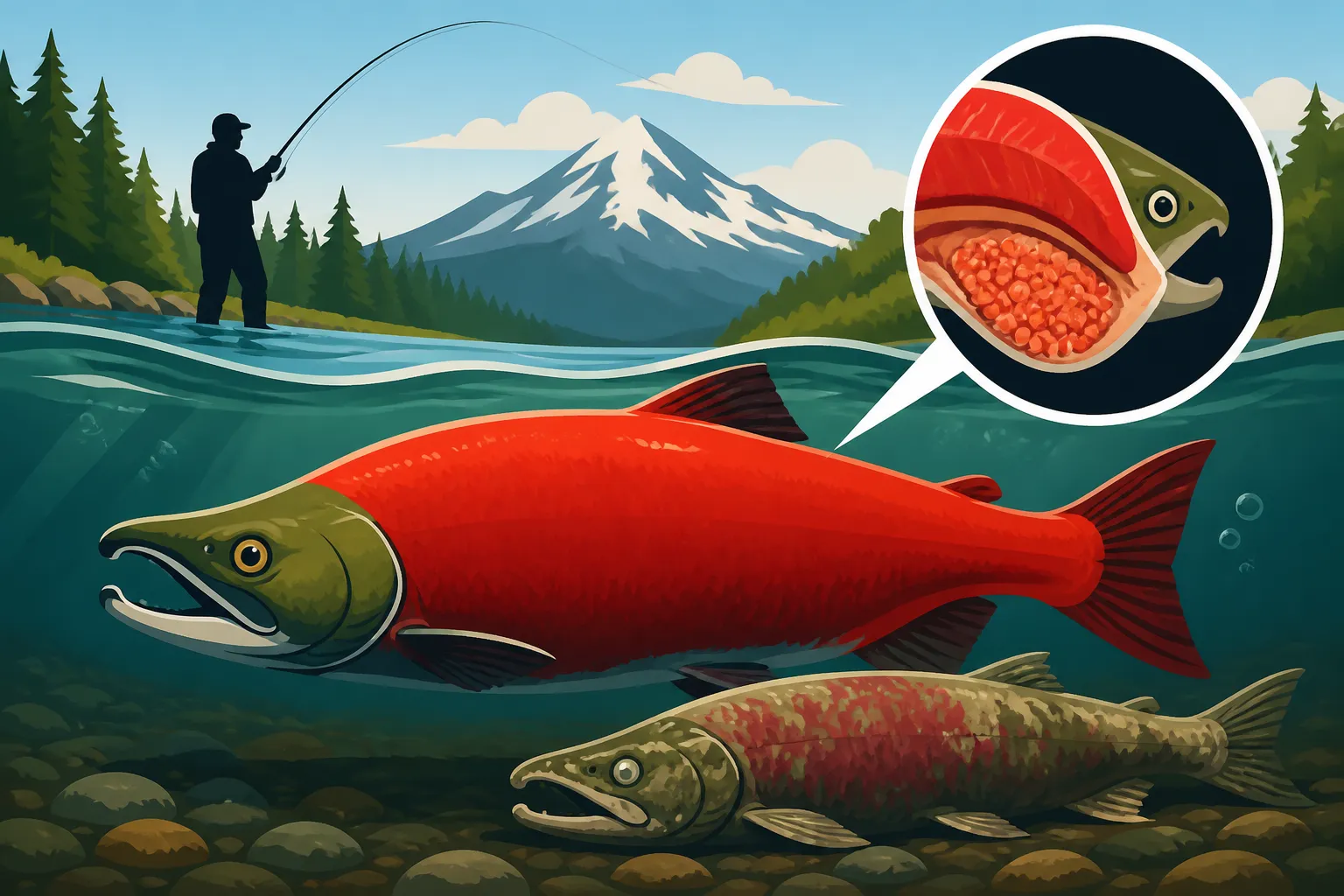
The brilliance of a spawning salmon, particularly a Sockeye, can take your breath away. It’s a temporary but powerful transformation, a final burst of color before their life cycle concludes. While red is the most famous, other species display a range of fascinating hues.
Carotenoids: The Pigments Behind the Red
So, what exactly makes them turn red? The answer lies in pigments called carotenoids. These are the same compounds that give carrots their orange color, tomatoes their red, and even flamingos their pink. Salmon don't produce carotenoids themselves; they get them from their diet in the ocean. Think krill and other small crustaceans they feast on in the vast marine environment. These tiny organisms are rich in carotenoids, particularly astaxanthin.
When salmon are in the ocean, these carotenoids are largely stored in their muscle tissue, contributing to the rich orange-red color of their flesh that we value so much. However, as the salmon migrate upstream and stop feeding, their bodies begin to mobilize these stored pigments. Hormonal signals redirect these carotenoids from the muscles to the skin, bones, and reproductive organs. The vibrant red you see is essentially a concentration of these dietary pigments in the outer layers of their skin, becoming more visible as their skin thins and other tissues break down. It's a biological marvel, a visible sign of their dedicated journey. If you're looking for a good book on fish biology, you might find some excellent resources on Amazon that delve into these intricate processes.
Species-Specific Color Variations
While "red salmon" often brings to mind the iconic Sockeye, it's important to remember that not all salmon turn the same shade of crimson, and some don't even turn primarily red. Each species has its own distinctive spawning coloration, often influenced by their genetics and specific diet. Observing these differences can be a real treat for any angler who appreciates the beauty of nature. You can learn more about these different fish in our Oregon Salmon Species Guide.
| Salmon Species | Primary Spawning Colors (Males) | Key Visual Features |
|---|---|---|
| Sockeye Salmon | Brilliant Red body, Green head | Most vivid, intense red |
| Coho Salmon | Bright Red/Maroon, Dark head/back | Deepening red, can be quite striking |
| Chinook Salmon | Olive-brown, copper, dull red, mottled | Often darker, can appear blackish-brown |
| Chum Salmon | Dark blotches, purple/red vertical bars | Distinctive "tiger stripes" |
| Pink Salmon | Pale grey to reddish-brown, pronounced hump | Smallest, often with a large dorsal hump |
For example, Sockeye salmon are renowned for their almost shockingly brilliant red bodies and green heads, a truly unmistakable sight. Coho salmon often develop a deep maroon to reddish hue, especially the males, with a darker head and back. Chinook salmon, sometimes called "Kings," tend to have a more subdued transformation, often appearing olive-brown, coppery, or even a dull, mottled reddish-brown as they darken. Chum salmon males develop incredible vertical purple and red bars on their sides, earning them the nickname "dog salmon" due to their canine-like teeth. Pink salmon, the smallest of the Pacific species, are typically paler, turning a greyish-brown with some reddish tones, but are easily identified by the pronounced hump on the male's back. These varying hues serve not just as a visual spectacle for us, but as crucial signals within their own species during the intense period of courtship and spawning.
The Purpose of the Transformation: Reproductive Success
It might seem counterintuitive to spend so much energy on a dramatic color change just before death. However, in the cutthroat world of salmon reproduction, every signal, every display, serves a vital purpose: ensuring the successful continuation of their species. The color change is not just a side effect; it's a key part of their final, most important mission.
Attracting Mates and Signaling Vigor
In the competitive world of spawning salmon, a vibrant, healthy-looking coloration is a powerful signal. For male salmon, particularly, a bright red hue can communicate genetic fitness, strength, and an ability to successfully complete the arduous journey. It's a visual advertisement, saying "Look at me, I'm strong and ready to spawn!" Females will often select mates based on these visual cues, choosing the most vibrant males in the belief that they carry the best genes for their offspring. Imagine trying to stand out in a crowded river; a brilliant red coat certainly helps!
Beyond just attracting mates, these colors are also crucial during the actual courtship and nesting process. As males compete for prime spawning gravel and females meticulously construct their "redds" (nests), the visual contrast provided by their spawning colors helps with recognition and hierarchy. The urgency of their mission becomes palpable once these colors emerge, as their time is short, and every moment counts towards propagating the next generation. Anglers looking to observe this spectacle should also be aware of Oregon Daily Bag Limits Explained to ensure ethical fishing practices are followed.
The Inevitable Sacrifice: Semelparity
The tragic beauty of the salmon's life cycle is encapsulated in the concept of semelparity. This biological strategy means that an organism reproduces only once in its lifetime before dying. For Pacific salmon, this one-time, all-out reproductive effort is their entire raison d'être. Every ounce of energy, every physiological change, every vibrant display, leads to this single, monumental event. There's no energy left, no reserves to rebuild; their bodies simply shut down.
After spawning, exhausted and depleted, the salmon's immune system collapses, making them highly susceptible to disease and injury. Their bodies, having performed the ultimate sacrifice, slowly give way. These post-spawn salmon, often called "spent" or "dark" fish, then die, their carcasses returning vital marine nutrients to the freshwater ecosystem, feeding insects, birds, and other animals. It’s a full-circle contribution, enriching the very waters that will nurture their offspring. It’s a profound testament to the interconnectedness of nature, a cycle of life, death, and renewal. You might find resources on Amazon detailing the ecological impacts of salmon carcasses on river systems.
Observing the Cycle: What Anglers See
For those of us who love to fish or simply enjoy the outdoors, witnessing the salmon run and their incredible transformation is a deeply moving experience. It connects us to the wildness of Oregon's rivers and the tireless perseverance of these fish. But observing comes with responsibilities.
Timing and Location: When and Where to Witness the Change
The timing of salmon returning to freshwater and beginning their color change varies significantly by species and even by specific river systems. For instance, you might see spring Chinook starting to color up in the middle Willamette River in late summer, while fall Chinook on the lower Columbia might show their deep hues in September and October. Sockeye, though less common in many Oregon rivers, put on their spectacular show in specific lakes and tributaries during late summer. Rivers like the Deschutes, Rogue, and coastal streams are all prime locations for observing various salmon and steelhead runs. Best Rivers to Fish in Oregon can provide more specific insights.
When observing, look for shallower sections of rivers or tributaries, especially areas with gravel beds. This is where females will be cutting their redds and males will be jockeying for position. It's truly a sight to behold, a final, dramatic chapter unfolding before your eyes. Many anglers like to grab a pair of polarized sunglasses, perhaps even a waterproof camera found on Amazon, to get a clearer view into the water and capture the incredible spectacle. Just remember to give the fish their space and observe respectfully.
Ethical Angling Considerations
As anglers, our interaction with these fish during their spawning phase requires particular thought and ethical practice. Once salmon begin to change color, their flesh quality rapidly deteriorates. Their bodies are no longer storing fat; they are burning through it and breaking down muscle, making them less desirable for eating. Many experienced anglers will choose not to target heavily colored, "dark" or "spent" fish, opting instead for the brighter, ocean-fresh fish earlier in the run.
Furthermore, these fish are at their most vulnerable. Catching a heavily colored, pre-spawn salmon means interrupting its final, crucial mission. While some regulations might allow retention, many anglers choose to practice catch-and-release with these fish, especially if they are wild salmon, which are often protected. It’s important to know your Oregon Fishing Regulations Explained and follow Oregon Catch-and-Release Rules to minimize stress on these fish. If you do accidentally hook a colored-up salmon, land it quickly, handle it gently, and release it without taking it out of the water if possible, allowing it to complete its life’s journey. This respect for the natural cycle is a cornerstone of responsible angling. Understanding Can you keep a wild salmon in Oregon? is also vital, as many wild fish are protected and must be released.
Disclaimer
This article is for general informational purposes only and does not constitute professional advice. Laws, prices and regulations vary by location and change over time. Consult a qualified professional for guidance on your specific situation.