What water temperature is best for salmon fishing
Oregon salmon thermal comfort zones dictate fish metabolism, migration, and feeding behavior during freshwater fishing trips.
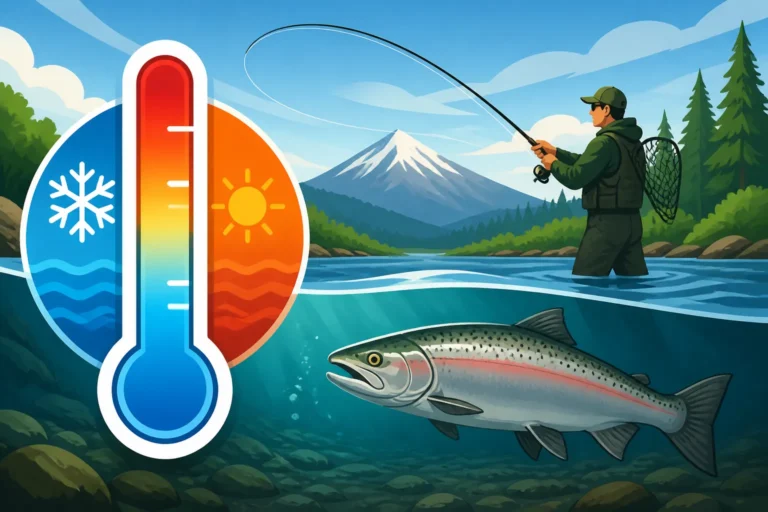
Oregon salmon thermal comfort zones dictate fish metabolism, migration, and feeding behavior during freshwater fishing trips.
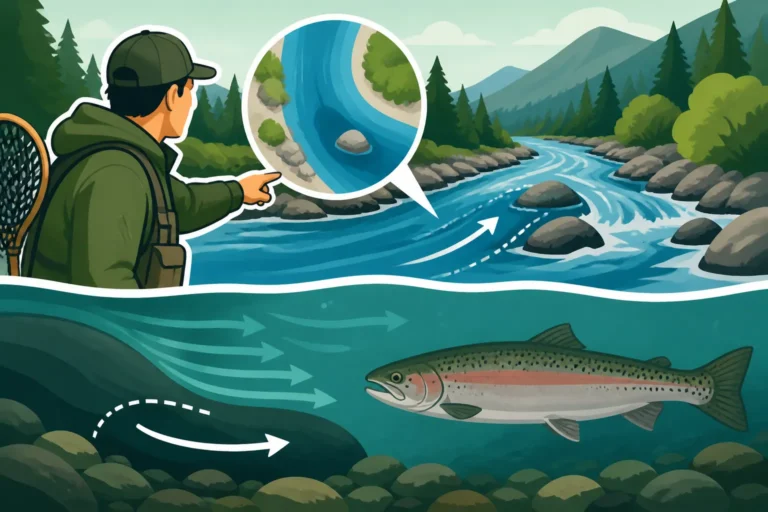
Steelhead holding water identification helps anglers locate resting fish in Oregon rivers using current seams and river structures.
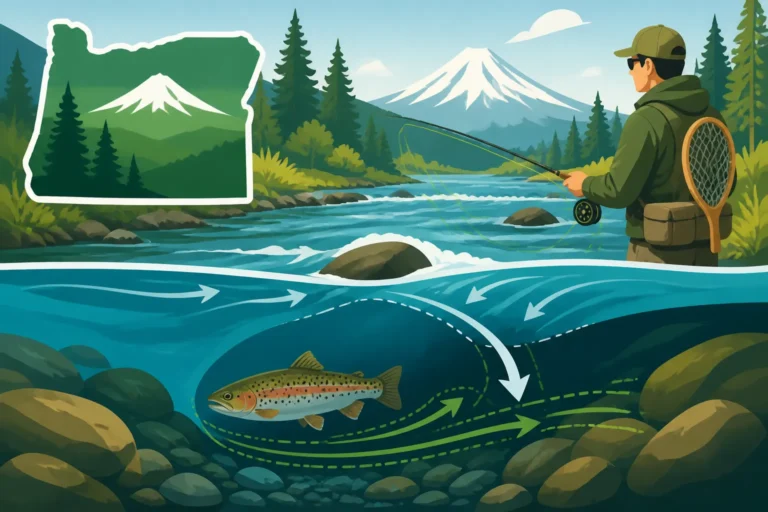
Reading water for trout involves observing river currents, ripples, structures, and depth changes to pinpoint fish holding lies.
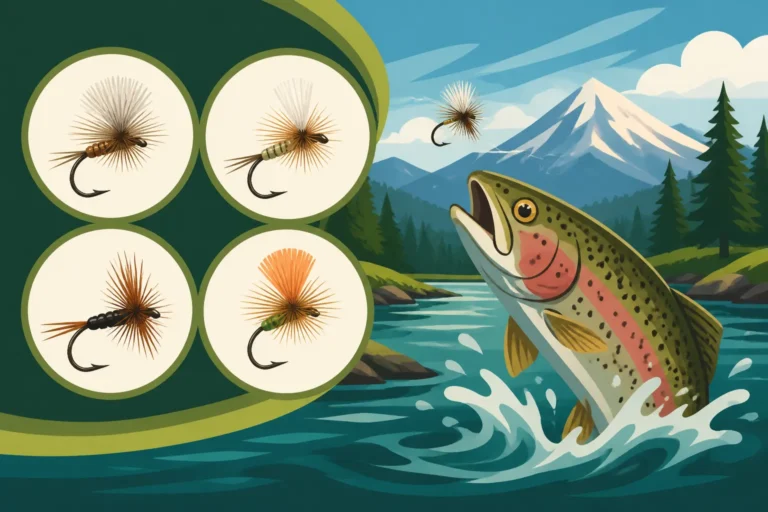
Oregon trout dry fly patterns and matching hatch techniques help anglers catch coastal cutthroat and rainbows in rivers.
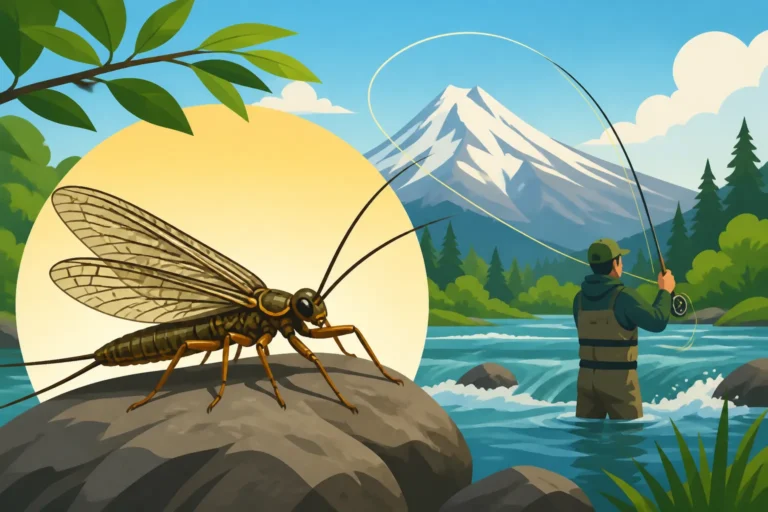
Oregon salmonfly hatches depend on water temperatures reaching fifty to sixty degrees Fahrenheit and favorable river flows.
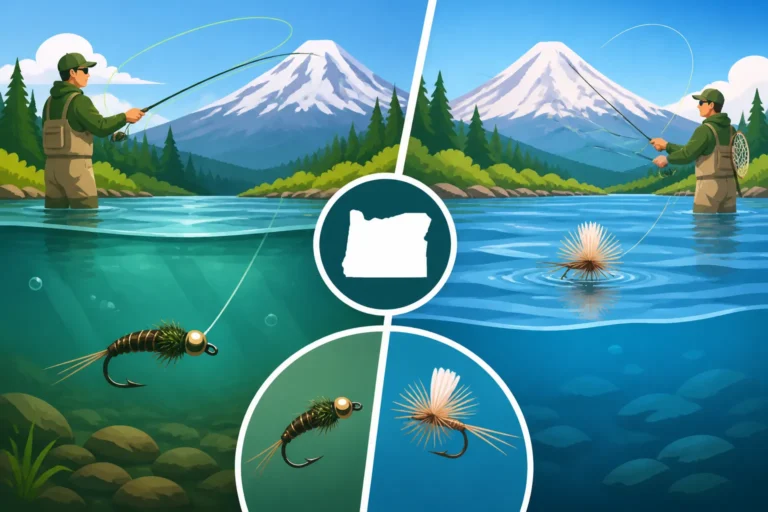
Oregon fly anglers learn differences, ideal conditions, and techniques for fishing nymphs and dry flies in rivers.
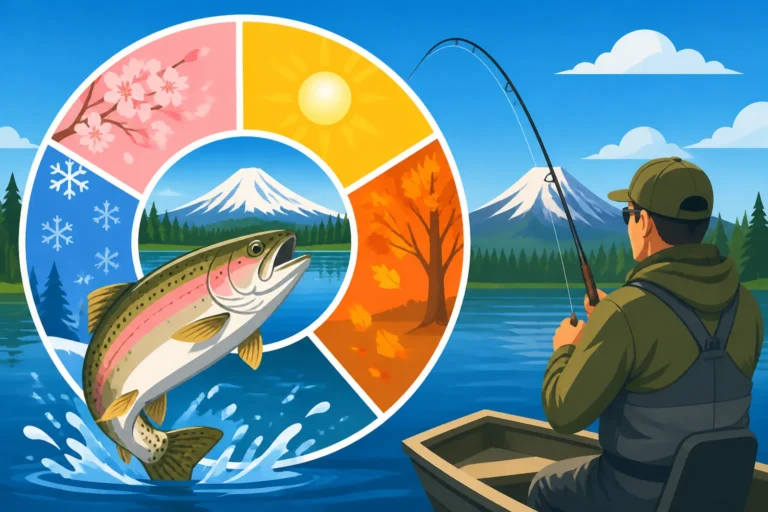
Crane Prairie Reservoir fishing months and species habits, including rainbow trout, brook trout, kokanee salmon, and largemouth bass.
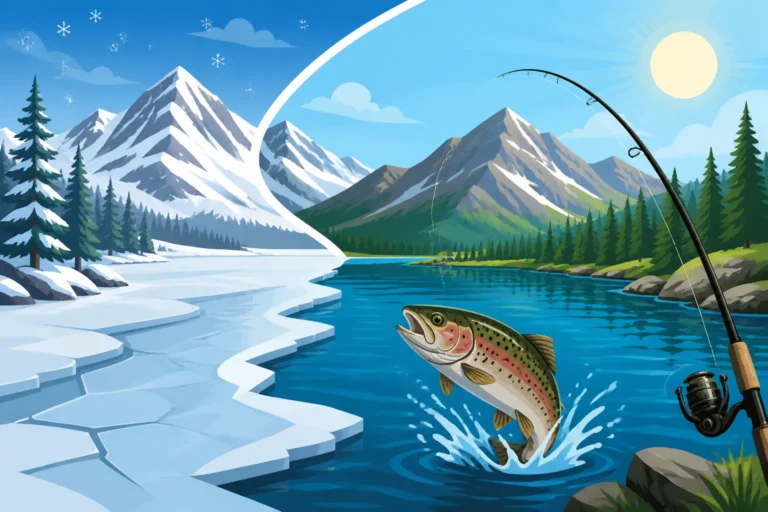
High Cascade lakes ice-off timing depends on elevation, winter snowpack depth, spring temperatures, and physical characteristics.

Oregon mountain lake fishing seasons run from late spring through early fall, depending on winter snowpack and elevation above 4,000 feet.
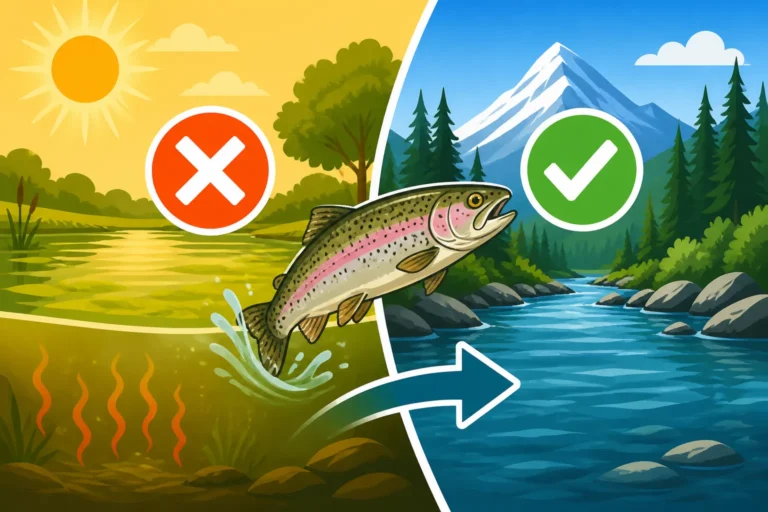
Oregon summer pond temperatures exceed trout survival limits because warm water holds less oxygen and increases fish stress.