Best trolling speed for kokanee
Oh, the elusive kokanee! You spend hours on the water, meticulously setting up your gear, dropping those downriggers, and then… nothing. It’s frustrating, isn't it? You know they're down there, but getting them to commit can feel like trying to solve a cryptic puzzle. Often, the missing piece isn't your lure color or depth, but simply your trolling speed. This guide is here to unravel the mystery of the best trolling speed for kokanee, helping you dial in that perfect pace to turn those missed bites into fish in the cooler.
Cracking the Code on Kokanee Trolling: Why Speed is Your Secret Weapon
Kokanee salmon, landlocked sockeye, are notoriously picky eaters. They don't just lunge at anything that crosses their path; they're often attracted by a specific presentation. This is where trolling speed becomes absolutely critical. It’s not just about covering water; it’s about making your lure dance in a way that screams "easy meal" to these discerning fish.
Understanding the Elusive Kokanee and Their Feeding Habits
Kokanee are plankton eaters by nature, but when they're feeding on small invertebrates or getting ready to spawn, they become opportunistic predators. They're visual hunters, often schooling in clear, deep water in lakes like Wallowa Lake or Lake Billy Chinook. Their strikes are typically subtle, more of a "thump" or a gentle pull, rather than the aggressive rip of a steelhead. Because they often feed in schools, if you find one, there are likely many more. Their feeding behavior is directly influenced by water temperature, light conditions, and the availability of their food sources. When the conditions are right, they become more active, and your trolling speed can be the deciding factor in triggering a strike. If you want to learn more about these fascinating fish, check out our comprehensive guide on Kokanee Salmon in Oregon.
The Dance Between Trolling Speed and Lure Presentation
Think about your lure under the water. Is it fluttering enticingly? Is it darting erratically? Or is it just dragging lifelessly? Your trolling speed dictates this entire performance. Too slow, and your lure might not have enough action, looking stagnant and uninteresting. Too fast, and it might spin unnaturally, or look so frantic that the kokanee perceive it as a threat or simply too much effort to chase down. The goal is to achieve a natural, enticing action that mimics injured baitfish or active invertebrates, without appearing unnatural or intimidating. This subtle balance is what makes finding the "sweet spot" so crucial.
The Golden Rule: Finding Your Kokanee Trolling Speed Sweet Spot
While there's no single magic number, experienced kokanee anglers have discovered a general range that consistently produces results. This "golden rule" is your starting point, but remember, every day on the water brings unique challenges and opportunities.
The Core Speed Range: A Starting Point for Success
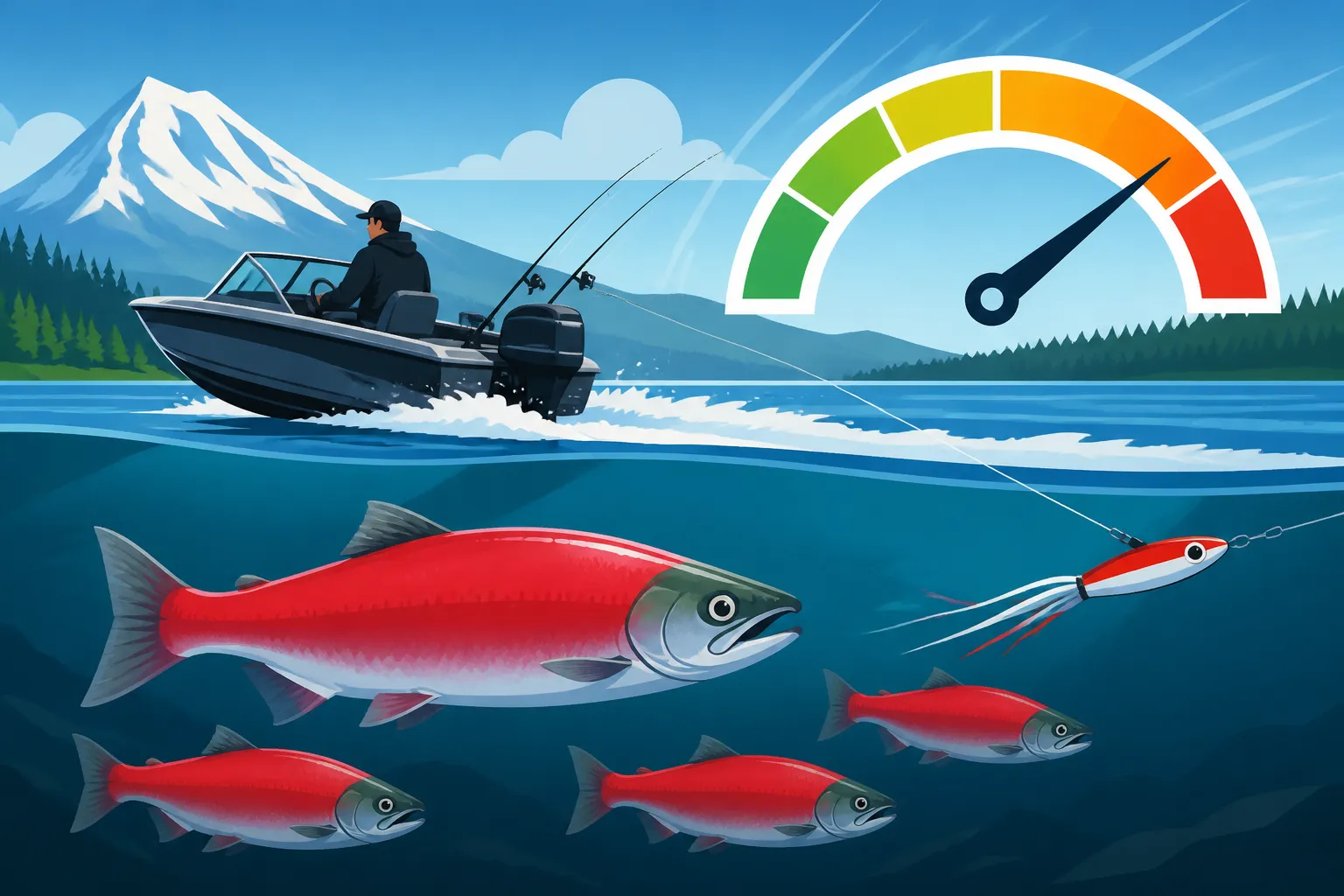
For most kokanee fishing scenarios in Oregon, a trolling speed between 0.8 to 1.8 miles per hour (mph) is considered the prime zone. This speed range allows most common kokanee lures and attractors to achieve their optimal action. Within this range, you're looking for that perfect wobble or dart that appeals to kokanee.
- 0.8 to 1.2 mph: This slower end of the spectrum is often deadly when kokanee are less active, perhaps in colder water, during midday lulls, or when they're holding tight to structure. It gives them more time to inspect the lure and decide to strike. Many experienced anglers start here, especially on lakes like Detroit Lake in the early spring or late fall.
- 1.2 to 1.8 mph: As kokanee become more active, or if you're trying to cover more water and provoke a reaction strike, bumping up your speed into this range can be incredibly effective. This faster pace makes lures flash and dart with more urgency, often triggering aggressive responses from hungry fish.
It's absolutely essential to have a reliable GPS or a boat with a good speedometer. Many fish finders, including popular models you can find on Amazon, integrate GPS, giving you precise speed over ground readings. Don't rely solely on your motor's RPMs, as current and wind can significantly alter your actual speed through the water.
Fine-Tuning Your Speed for Different Lures and Conditions
Not all lures are created equal, and neither are all fishing days. Your trolling speed will need to be adjusted based on what you're dragging behind your boat.
- Hoochies and Squids: These soft plastic lures, especially when paired with a dodger or flasher, often perform best at the slower end of the spectrum, around 0.8 to 1.2 mph. The dodger's job is to create erratic movement, and a slower speed allows the hoochie to "dance" behind it naturally, rather than just dragging in a straight line.
- Wedding Rings and Small Spinners: These classic kokanee lures often have built-in rotation and flash. They tend to shine in the 1.0 to 1.5 mph range, where their blades can spin consistently without binding up or over-rotating.
- Small Spoons (like Needlefish or Kokanee Killers): Spoons are designed for wobbling action. They can handle a bit more speed, often performing well from 1.2 to 1.8 mph. The faster speed enhances their erratic, wounded-baitfish presentation.
Beyond lures, consider the conditions. On bright, sunny days, kokanee might be deeper and require a slightly faster presentation to grab their attention. On overcast days or during low light, a slower, more subtle approach might be better. Water clarity also plays a role; in murkier water, a faster, more aggressive lure might be needed to create enough vibration and flash to be noticed. For a deeper dive into lure choices, check out our Oregon Bait and Lure Guide.
The Art of Varying Your Pace to Trigger Bites
Even when you find the "perfect" speed, sticking to it rigidly can sometimes lead to fewer bites. Kokanee, like many fish, are often triggered by a change in pace. Think about it: a baitfish swimming along steadily might be ignored, but one that suddenly darts, pauses, or changes direction often gets a reaction.
- The S-Turn: This is a tried-and-true technique. Instead of trolling in a straight line, make gradual, sweeping S-turns with your boat. As you turn, the lures on the inside of the turn will slow down, while those on the outside will speed up. This momentary change in speed and direction can be exactly what it takes to provoke a strike. Pay attention to which side of the boat gets hit – it gives you clues about whether the kokanee are preferring faster or slower presentations that day.
- Momentary Accelerations/Decelerations: If you're using a kicker motor or electric trolling motor, try briefly speeding up or slowing down by 0.2-0.3 mph for 10-15 seconds, then returning to your base speed. These subtle changes can make your lure look like it's trying to escape, or hesitating, which can be irresistible to a waiting kokanee. This is particularly effective when you mark fish on your sonar but aren't getting bites.
Essential Gear and Techniques for Precision Trolling
Achieving and maintaining the ideal trolling speed for kokanee isn't just about guessing. It requires the right tools and a solid understanding of how your gear interacts with the water.
Tools for Accurate Speed Measurement and Control
The most crucial piece of equipment for precise kokanee trolling speed control is a reliable GPS speedometer. Many modern fish finders and chartplotters, readily available on platforms like Amazon, incorporate GPS, giving you an accurate "speed over ground" reading. This is superior to paddlewheel-based speedometers, which can be affected by debris or current, or engine RPMs, which don't account for wind and water movement.
For boats with larger outboard motors, a dedicated kicker motor (a smaller outboard, often 9.9 HP or less) or a powerful electric trolling motor (like a bow-mount Minn Kota or Motorguide) is almost essential for fine-tuning your speed. These motors allow you to creep along at those sub-2 mph speeds without constantly adjusting your main engine, which can lead to jerky movements and inconsistent lure action. Autopilot features on electric trolling motors are particularly useful, as they can maintain a precise heading and speed, freeing you up to focus on your rods.
Downriggers are also paramount for kokanee fishing, not just for reaching specific depths but also for how they influence your lure presentation at speed. By holding your line at a consistent depth, they ensure your lures are in the strike zone regardless of subtle speed variations or turns. Learning the nuances of how to use them can significantly improve your success, and our article on Trolling Techniques for Oregon Reservoirs offers some great advice.
Pairing Lures and Attractors with Your Trolling Speed
The magic in kokanee fishing often happens in the interaction between an attractor (like a dodger or flasher) and the lure itself. Your trolling speed dictates how these components work together.
Dodgers (like the popular Kokanee Kicker or Sling Blade dodgers) and Flashers are designed to create a specific action at certain speeds. A dodger, for instance, has a side-to-side rocking motion that imparts action to the trailing lure. If you troll too fast, the dodger might spin or "wash out," losing its fish-attracting wobble. If too slow, it might not move enough. Similarly, flashers rely on water flow to rotate and create flash. Experimentation is key to finding the right combination for your speed.
Lure-to-Attractor Leader Length: This is a detail often overlooked. A shorter leader (6-12 inches) generally works better with dodgers, as it directly transfers the dodger's action to the lure. A longer leader (18-36 inches) might be necessary if the kokanee are shy and prefer a lure that moves more independently, or if you're using a flasher that requires more distance for its rotational action. The optimal leader length can even change day by day, depending on how aggressive the fish are.
| Lure Type | Optimal Speed Range (mph) | Attractor Pairing | Notes |
|---|---|---|---|
| Hoochies/Squids | 0.8 – 1.2 | Dodgers | Slower speeds enhance soft plastic "dance" behind dodger. |
| Wedding Rings/Spinners | 1.0 – 1.5 | Dodgers or Flashers | Moderate speed for consistent blade spin and flash. |
| Small Spoons | 1.2 – 1.8 | Small Flashers | Higher speed creates erratic, wounded-baitfish wobble. |
| Flies (e.g., Bugs) | 0.8 – 1.0 | Dodgers | Very slow speed for subtle jigging action from dodger. |
| Apex/Needlefish | 1.2 – 1.8 | None or small flasher | Designed for self-generated wobble at moderate to faster speeds. |
When selecting your lures, remember that kokanee have small mouths, so small sizes are generally preferred (1-2 inches). Bright, flashy colors like pink, orange, chartreuse, and sometimes even red or green, are often very effective, especially in the clear waters kokanee prefer. Don't be afraid to try different combinations until you find what's working on a given day.
Beyond the Basics: Troubleshooting and Advanced Strategies
Even with the right gear and a good understanding of optimal speeds, kokanee can still be a challenge. Sometimes, you need to think outside the box or lean heavily on your electronics to crack the code.
What to Do When the Bite Turns Off
You've been catching fish, then suddenly, the lines go quiet. It happens to the best of us. Instead of getting discouraged, view this as an opportunity to experiment and learn.
- Change Speed (Immediately!): Your first reaction should be to adjust your speed. If you were going 1.5 mph, try dropping to 1.0 mph. If still nothing, bump it up to 1.8 mph. Sometimes a tiny change, as little as 0.1 mph, can make all the difference. This is where those S-turns and speed bursts come in handy – they introduce variations without a major re-rigging effort.
- Change Depth: Kokanee are notorious for moving vertically throughout the day. If they disappear from your screen or stop biting, they might have moved deeper or shallower. Incrementally adjust your downrigger depths by 5-10 feet in each direction. For more on this, our Oregon Fishing Season Dates and Limits guide might shed some light on seasonal depth changes.
- Change Lure Color/Pattern: If speed and depth aren't producing, cycle through your tackle box. Sometimes, a subtle shift from pink to orange, or adding a bit of scent to your lure, can reignite the bite. Products like Pro-Cure scents are widely used and can be found on Amazon.
- The "Dope Slap" Technique: This is an aggressive move often used when kokanee are present but lethargic. While trolling, quickly put your boat into reverse for a second or two, causing your dodger and lure to suddenly lunge forward and then fall back. Then, quickly resume your forward troll. This erratic, almost panicked motion can trigger a violent reaction strike from a fish that was otherwise ignoring your presentation.
Leveraging Electronics for Real-time Speed Adjustments
Your fish finder isn't just for locating fish; it's a powerful tool for understanding their behavior and fine-tuning your trolling speed.
- Observe Fish Reaction: Watch your sonar screen. Are the kokanee scattered and actively chasing your lures (indicated by fish symbols moving rapidly)? Or are they tightly schooled and stationary? If they're stationary and you're not getting bites, a slower pass might be warranted to give them time to react. If they're scattered, a slightly faster speed might cover more ground and trigger more strikes.
- Look for Bait Balls: Kokanee often feed on zooplankton, which appears as cloudy masses or dense schools of small bait on your sonar. If you see these bait balls, try to troll through or around them. Adjust your speed to mimic how a kokanee might attack such a school – sometimes a swift pass, other times a slower, more deliberate approach.
- Thermocline Detection: Many fish finders can help you identify the thermocline – the layer of water where temperature changes rapidly. Kokanee often suspend near the thermocline, as it can concentrate their food sources. Your depth, and thus your speed, should be adjusted to keep your lures in this productive zone.
By combining your understanding of kokanee behavior with precise speed control and smart use of your electronics, you’ll be well on your way to more successful and rewarding kokanee fishing adventures in Oregon. Just remember, consistency and a willingness to experiment are your best friends out there!
Disclaimer
Fishing conditions and regulations in Oregon can change. Always consult the latest Oregon Department of Fish and Wildlife (ODFW) regulations before heading out. This guide is for informational purposes only and should not replace official regulations.