Tillamook Bay salmon fishing spots
For many anglers, the thought of landing a chrome-bright salmon fresh from the Pacific is the stuff of dreams. But figuring out where these elusive fish gather, especially in a vast and complex estuary like Tillamook Bay, can feel like trying to solve a puzzle with missing pieces. This guide will cut through the confusion, revealing the prime salmon fishing spots in Tillamook Bay and its contributing rivers, along with the techniques and tips you need to turn those dreams into a magnificent catch.
Why Tillamook Bay is a Premier Destination for Salmon Fishing
Tillamook Bay isn't just a pretty face on the Oregon Coast; it's a vibrant, productive estuary renowned for its incredible salmon fishing. This isn't by accident. The unique geography and hydrological features of the bay create an ideal environment for multiple salmon runs, drawing anglers from all over the Pacific Northwest and beyond.
The Confluence of Five Productive Salmon Rivers
What truly sets Tillamook Bay apart is its remarkable convergence of five major salmon-bearing rivers: the Wilson, Trask, Tillamook, Kilchis, and Miami Rivers. Each of these rivers acts as a highway for salmon migrating from the ocean to their spawning grounds, and the bay itself becomes a crucial staging area where these fish pause, feed, and acclimate to freshwater before continuing their journey upstream.
Think of it like a bustling airport hub for fish. Spring Chinook salmon start making their appearance as early as April and May, though the peak action usually occurs in summer. These incredible fish, often called "kings," are prized for their size and fighting ability. As summer gives way to fall, the bay explodes with activity as Fall Chinook and Coho salmon begin to stack up. Fall Chinook are often abundant, providing thrilling action, while Coho salmon (sometimes called "silvers") are known for their acrobatic fights and willingness to chase lures. The sheer volume of fish entering the system across these different runs means there's almost always some type of salmon fishing opportunity available in or around Tillamook Bay for a significant portion of the year. This diverse fishery means you can target different species with varied techniques, keeping things exciting and offering something for every angler.
Understanding the Tidal Rhythms and Their Impact on Salmon Movement
Fishing Tillamook Bay effectively means having a deep respect for, and understanding of, the tides. This massive estuary is directly influenced by the ocean's ebb and flow, and these tidal currents dictate when and where salmon move. When the tide comes in (the flood tide), it brings cooler, saltier ocean water into the bay, often energizing salmon and encouraging them to push further upstream. This is a prime time for fish to enter the bay and move into the lower river sections.
Conversely, as the tide recedes (the ebb tide), it draws fish back out or concentrates them in deeper channels and holes. Salmon often use the outgoing tide to drop back from the shallower river sections, or they might simply hold in deeper water, waiting for the next push of incoming water. Understanding this rhythm is paramount. Many experienced anglers will plan their trips to coincide with the changing tides, focusing on the last few hours of the incoming tide and the first few hours of the outgoing tide, as these periods often see the most active feeding and movement. The currents created by the tides can also be leveraged for certain fishing techniques, like drift fishing or anchoring with bait. Paying attention to tide charts isn't just a suggestion; it's a necessity for successful salmon fishing in Tillamook Bay.
Unveiling the Top Salmon Fishing Hotspots in Tillamook Bay
Tillamook Bay offers a diverse range of fishing environments, from the wide-open waters near the ocean to the intimate stretches of its feeder rivers. Knowing where to focus your efforts based on the season, tide, and target species can make all the difference.
Lower Bay Action: From the Jaws to the Tillamook Bar
When salmon first enter Tillamook Bay from the Pacific Ocean, they congregate in the lower bay, often referred to as "The Jaws" or near the Tillamook Bar. This area, stretching from the entrance of the bay inward towards Kincheloe Point and the Ghost Hole, is an absolute hotspot, especially during peak Fall Chinook and Coho runs. These fresh, aggressive fish are still carrying their ocean vigor, making for incredibly powerful fights.
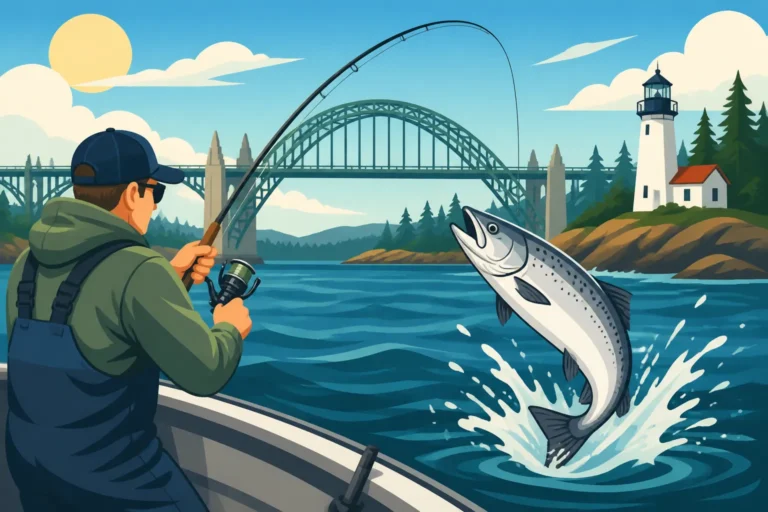
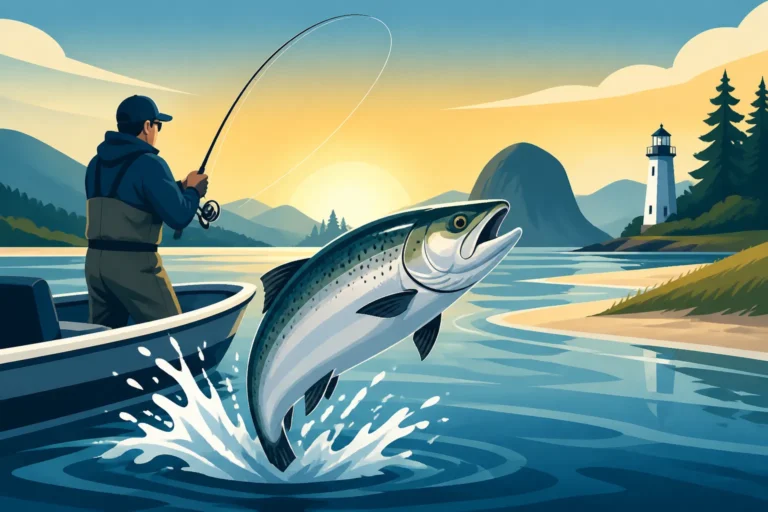
Many anglers compare the lower Tillamook Bay during the Fall Chinook run to the famous Buoy 10 fishery on the Columbia River, albeit on a slightly smaller scale. This is primarily a boat fishery, where anglers typically troll with various presentations. Cut-plug herring, whole anchovies, or large spinners behind flashers are standard offerings. The key is to match your depth to where the fish are holding, often suspending in the water column as they wait for the tides to push them further into the bay or up a specific river. Popular trolling lanes include the area just inside the jetties, the Ghost Hole, and across the main channel towards Garibaldi. Drifting bait or jigs near structure or deep holes can also be effective, especially when tides are slack. For those looking for a truly epic experience, hiring a local guide through platforms like FishingBooker can provide invaluable local knowledge and gear, increasing your chances of success significantly in these expansive waters.
Productive River Mouths and Lower Stretches: Wilson, Trask, and Tillamook Rivers
As salmon move further into the bay, they begin to stage near the mouths of their natal rivers. The Wilson, Trask, and Tillamook Rivers are particularly well-known for their strong salmon runs and offer fantastic opportunities for both boat and bank anglers.
The Wilson River is arguably the most famous of the Tillamook Bay tributaries for salmon and steelhead. Its lower tidal section, from the mouth up to the Memaloose boat ramp, is prime for both Spring and Fall Chinook, as well as Coho. Boat anglers will often troll or drift bait through the deeper holes and channels. Bank access can be found at various points, including the Wilson River Loop Road. Techniques like drift fishing with cured roe or bobber and jig fishing are highly effective here. Knowing the Oregon Fishing Regulations Explained for specific river sections is crucial, as some areas might have different rules regarding bait or gear.
The Trask River also boasts excellent salmon runs and flows into the bay just south of the Wilson. Similar to the Wilson, the lower tidal section of the Trask, particularly around the mouth and up to the hatchery, can be incredibly productive. Boat anglers work the channels, while bank anglers can find success near the hatchery and various public access points. This river is known for strong Fall Chinook and Coho returns, making it a busy spot in late summer and fall.
The Tillamook River enters the bay from the south and provides another great option. While perhaps not as famed as the Wilson, it offers solid fishing, especially for Fall Chinook and Coho. Access is often found around the Highway 101 bridge and further upstream near public lands. Again, bobber and jig, drift fishing, and even fly fishing in the quieter upper tidal sections can produce fish. Always check the Oregon Fishing Season Dates and Limits for each specific river, as they can vary.
Exploring the Quieter, Yet Rewarding, Kilchis and Miami Rivers
For anglers who prefer a slightly less crowded experience without sacrificing the chance at salmon, the Kilchis and Miami Rivers offer fantastic alternatives. These rivers are generally smaller than the Wilson, Trask, and Tillamook, but they consistently host strong runs of Fall Chinook and Coho.
The Kilchis River, located north of the Wilson, is a beautiful, intimate river that still sees impressive numbers of salmon. Its lower tidal stretches and confluence with the bay are prime areas. Due to its size, it’s often more accessible to smaller boats, kayaks, or bank anglers. Drift fishing with roe, spinners, or spoons is a common and effective technique here. Fly fishing can also be productive for Coho in the upper tidal reaches. You might not encounter the same fleet of boats as on the Wilson, offering a more serene angling experience.
The Miami River, the northernmost of the five main tributaries, is the smallest but can be a hidden gem, especially for Coho. Its narrow channels and shallower waters make it a great option for those with smaller boats, drift boats, or for wading anglers. Fishing near its mouth where it meets the bay can be excellent, particularly during an incoming tide. While it may not produce the sheer numbers of some of the larger rivers, the Miami often yields aggressive, fresh Coho that provide exciting action. For those planning a trip, considering a guided experience on one of these smaller rivers through a service like FishingBooker can sometimes lead to uncovering lesser-known honey holes and personalized instruction. These quieter rivers truly embody the charm of Oregon river fishing.
Mastering Techniques and Gearing Up for Tillamook Bay Salmon
Catching salmon in Tillamook Bay isn't just about finding the fish; it's about presenting your bait or lure in a way that entices them to bite. Different areas of the bay and its rivers, as well as the specific salmon species, often call for different techniques and gear.
Effective Trolling Strategies for Boat Anglers
Trolling is undeniably one of the most effective methods for salmon fishing in the open waters of Tillamook Bay, especially in the lower bay and larger channels. This technique involves dragging lures or bait behind a slowly moving boat, covering a lot of water and presenting your offering at a consistent depth.
For Chinook salmon, whether spring or fall, popular choices include cut-plug herring or whole anchovies rigged to spin, often behind an inline flasher or dodger. Flashers create vibration and flash that attract fish, while the cut-plug or anchovy provides the natural scent and action. Depths can vary widely, from 15 to 60 feet or more, depending on where the fish are holding in the water column. Using a good fish finder is critical to identify bait balls, schools of salmon, and the contour of the bay floor. For Coho salmon, smaller flashers paired with hoochies (squid skirts), small spinners (like a "Coho killer"), or even Brad's Super Bait Cut Plugs (which can be stuffed with scent) are highly effective. The key is to experiment with different depths, trolling speeds, and colors until you find what the fish are keying in on that day. A typical setup involves a medium-heavy salmon trolling rod (8.5-10.5 feet), a level-wind reel spooled with 30-50 lb braided line, and a strong leader (25-40 lb fluorocarbon) to your lure. Don't forget to review the Oregon Bait and Lure Guide for any specific restrictions in certain areas.
Essential Bank and Anchoring Techniques
While boat fishing dominates the lower bay, bank and anchoring techniques shine in the tidal river sections and specific bay points, offering accessible and often highly productive alternatives.
Bank Fishing: For anglers without a boat, targeting the bankside eddies, deeper holes, and seams in the lower reaches of the Wilson, Trask, and Tillamook Rivers can be incredibly rewarding. One of the most popular and effective bank techniques is drift fishing. This involves using a drift fishing setup (e.g., a "slinky" weight, barrel swivel, and leader with bait) to bounce your offering along the river bottom, imitating a natural presentation. Cured salmon roe, sand shrimp, or small Spin-N-Glos are excellent choices. Another potent bank technique is bobber and jig fishing. A brightly colored yarn or marabou jig is suspended beneath a float, allowing it to drift naturally with the current. This method is particularly deadly for Coho and can also entice aggressive Chinook. Key access points can be found along state parks and public easements.
Anchoring from a Boat: When the tides are strong, or when fish are holding in specific holes, anchoring your boat can be more effective than trolling. This allows you to present bait or lures directly to holding fish for an extended period. Anglers often deploy multiple rods with different baits, such as chunks of herring, anchovies, or cured roe, fished on the bottom or suspended under a bobber. This is particularly effective during the last hour of an incoming tide and the first hour of an outgoing tide, when salmon are actively moving or staged in current breaks. Keep a close eye on your rod tips for those subtle salmon bites!
Bait and Lure Selection for Different Salmon Runs
Choosing the right bait or lure can make all the difference in connecting with a Tillamook Bay salmon. The preference often shifts depending on the species, the time of year, and even the clarity of the water.
For Spring Chinook, which are typically less abundant and often found holding deeper, natural baits are frequently preferred. Cured sardine wraps on Kwikfish or FlatFish plugs are classic choices, as are large cut-plug herring. These fish are often focused on protein as they prepare for their long journey upstream.
Fall Chinook, known for their aggressive nature and sheer size, will strike a wide variety of offerings. Cut-plug herring and whole anchovies remain top baits for trolling. Large spinners (like Blue Fox Vibrax or Mepps Aglia), spoons (e.g., Little Cleo, Pixee), and wobblers are also incredibly effective. For bank or anchored fishing, cured roe is king, often fished alongside a brightly colored Cheater or a Spin-N-Glo. The flash and vibration from hardware, combined with scent from bait, is often irresistible. If you're wondering How to Fish for Fall Chinook on the Columbia, many of those techniques translate directly to Tillamook Bay.
Coho Salmon are notoriously aggressive and often target faster-moving, brighter presentations. Small spinners, flashy spoons, Brad's Super Bait Cut Plugs, and colorful hoochies behind a flasher are all highly effective for trolling. For bobber and jig fishing, bright pink, chartreuse, or orange jigs are irresistible to Coho, particularly when tipped with a small piece of prawn or roe. They're visual hunters, and a flashy, darting lure can trigger an immediate strike. Remember to consider the water clarity; brighter colors on clear days, and darker or more fluorescent colors on overcast days or in murky water.
Navigating Regulations and Ensuring a Successful Tillamook Bay Salmon Trip
A truly successful fishing trip isn't just about catching fish; it's about doing it legally, safely, and responsibly. Tillamook Bay, like all of Oregon's fisheries, operates under specific rules designed to protect fish populations and ensure healthy angling opportunities for everyone.
Licensing, Tags, and Understanding Daily Catch Limits
Before you even think about casting a line in Tillamook Bay, you absolutely need to make sure you're properly licensed and tagged. Fishing without the correct paperwork can lead to hefty fines and a ruined trip. Every angler 12 years and older needs an Oregon Fishing License Guide. Beyond the basic angling license, you'll almost certainly need additional endorsements or tags for salmon. The Oregon Combined Angling Tag Guide is a mandatory purchase for anyone wanting to harvest salmon, steelhead, or sturgeon. Furthermore, specific tags like the Oregon Salmon and Steelhead Tag Requirements are crucial for recording your catch, which helps ODFW manage fish populations.
It's vital to familiarize yourself with the current Oregon Daily Bag Limits Explained and possession limits. These can vary not only by species (Chinook, Coho, hatchery vs. wild) but also by specific water body and time of year. For instance, the bag limit for Chinook might be different from Coho, and there are often rules about whether you can keep wild (unclipped) salmon. Always check the latest Oregon Sport Fishing Regulations booklet or the ODFW website before each trip, as regulations can change year-to-year or even mid-season based on run forecasts. Also, remember your Oregon Catch Record Card Requirements, as accurately filling it out for salmon and steelhead is a legal necessity.
Best Timing and Adapting to Environmental Conditions
Timing is everything when it comes to salmon fishing. While Tillamook Bay offers opportunities throughout much of the year, understanding the peak runs for each species and how environmental factors influence fish behavior will dramatically improve your success.
Spring Chinook: These fish typically start entering the bay in April and May, with the best fishing often occurring from June through early August. They are less numerous than Fall Chinook but are highly prized. Focus on the lower bay and the main river channels during incoming tides.
Fall Chinook: This is the most popular and often the most productive salmon fishery in Tillamook Bay. The main run typically begins in late August, peaks in September, and can extend into October. This is when the lower bay truly shines, followed by excellent fishing in the tidal river sections.
Coho Salmon: Coho generally show up a bit later than Fall Chinook, with their peak runs usually from September through October, often extending into November. They are abundant and eager biters.
Beyond these general timelines, pay close attention to environmental conditions. Strong incoming tides often bring fresh fish into the bay and encourage upstream movement. River flows are also critical; after a prolonged dry spell, the first significant rains of fall can trigger massive pushes of salmon from the bay into the rivers. Conversely, extremely high, muddy water can make fishing difficult. Water temperature also plays a role; cooler water typically means more active fish. Always consult the Oregon Fishing Season Dates and Limits for precise, up-to-date information, and don't hesitate to check local fishing reports or talk to tackle shop owners for real-time insights into specific conditions.
Practicing Responsible Angling and Utilizing Local Resources
Being a responsible angler goes beyond just following the rules; it's about ensuring the health of the fishery for future generations and contributing positively to the angling community. This includes safe boating practices, conservation efforts, and knowing where to turn for assistance.
Safety First: When fishing Tillamook Bay, especially in a boat, safety is paramount. The bar can be dangerous in rough weather, and tides create strong currents. Always check marine forecasts before heading out, ensure you have all required safety gear (life jackets, signaling devices, etc.), and never exceed your boat's capacity. If you're new to the bay, consider sticking to the inner, calmer areas or booking a trip with a professional guide found on platforms like FishingBooker.
Conservation and Best Practices: Practice ethical catch-and-release, especially for wild salmon or any fish you don't intend to keep. Handle fish gently, minimize their time out of water, and use appropriate tools like knotless nets. Familiarize yourself with Oregon Catch-and-Release Rules. Report any poaching or illegal activity to Oregon State Police or ODFW. Also, be aware of any How to check Oregon emergency fishing closures which can occur due to low water, high temperatures, or other environmental factors impacting fish.
Local Resources: Don't underestimate the value of local resources. Tackle shops in Tillamook, such as Tillamook Sporting Goods, are goldmines of information. They often have the most up-to-date reports, know what baits are working, and can provide invaluable local tips. The Oregon Department of Fish and Wildlife (ODFW) website is another excellent resource for regulations, stocking schedules, and weekly recreation reports. Engaging with these resources not only makes your trip more successful but also connects you with the vibrant Tillamook Bay fishing community.
| Salmon Species | Peak Season (General) | Primary Locations | Preferred Techniques |
|---|---|---|---|
| Spring Chinook | June – Early August | Lower Bay, Main River Channels (Wilson, Trask) | Trolling (cut-plug herring, sardine plugs), Anchoring (roe) |
| Fall Chinook | Late August – October | Lower Bay, All River Mouths & Tidal Sections | Trolling (cut-plug herring, anchovies, large spinners), Drift Fishing (roe), Bobber & Jig |
| Coho Salmon | September – November | Lower Bay, All River Mouths & Tidal Sections | Trolling (hoochies, small spinners, Brad's Super Baits), Bobber & Jig (bright jigs, prawn) |
Disclaimer
Fishing conditions and regulations in Oregon can change rapidly. Always consult the most current Oregon Department of Fish and Wildlife (ODFW) regulations before heading out. This guide provides general information and should not be considered a substitute for official ODFW publications or expert local advice. Fishing inherently carries risks; always prioritize safety and adhere to all local, state, and federal laws.