Fishing Without a License Penalties in Oregon
There’s nothing quite like the feeling of anticipation as you head out to your favorite fishing spot in Oregon, rod in hand, ready to cast your line into the pristine rivers or the vast Pacific Ocean. But imagine that perfect day being interrupted by a game warden, and suddenly you realize you've overlooked a crucial detail: your fishing license. It's a common, often innocent, mistake that can quickly turn a relaxing outing into a costly and frustrating experience. This comprehensive guide will walk you through everything you need to know about fishing license requirements in Oregon, the real-world penalties for non-compliance, and, most importantly, how to ensure you're always fishing legally and responsibly.
Understanding the "Why" Behind Fishing Licenses in Oregon
It’s easy to feel like fishing licenses are just another hoop to jump through, another fee to pay. But in Oregon, these licenses are the backbone of a robust system designed to protect our precious natural resources and ensure that generations to come can enjoy the same incredible fishing opportunities we do today. It's more than just a piece of paper; it's an investment in the future of our fisheries.
The Importance of Conservation and Management
When you purchase an Oregon fishing license, you're directly contributing to the health and sustainability of our diverse fish populations and their habitats. The funds generated from license sales are absolutely critical. They don't just disappear into some government black hole; they primarily go to the Oregon Department of Fish and Wildlife (ODFW). Think about it: without these funds, who would be responsible for maintaining fish hatcheries that stock our lakes and rivers with trout, or working on vital habitat restoration projects that help salmon and steelhead thrive?
These dollars pay for critical scientific research that monitors fish populations, helps identify areas needing intervention, and sets sustainable catch limits. They also fund enforcement efforts, ensuring that everyone plays by the rules, which in turn protects against overfishing and illegal practices. So, while it might feel like a minor transaction when you're buying your license, you're actually becoming a direct participant in a massive, collaborative conservation effort that keeps Oregon's natural waterways vibrant and teeming with life.
Legal Requirement and Fair Play
Beyond conservation, having a fishing license is a fundamental legal requirement in Oregon for anyone 14 years or older. It's the law, plain and simple, and it applies whether you're targeting a trophy Chinook salmon or simply enjoying a relaxing afternoon catching sunfish with the kids. This isn't about bureaucracy for bureaucracy's sake; it's about establishing a baseline of accountability. Every angler needs to contribute their fair share, and the license system ensures that.
Imagine if there were no licenses. How would the state regulate how many people are fishing, or how many fish are being harvested? It would be a free-for-all, leading to rapid depletion of resources and unfair access for those who follow the rules. Licenses help manage angler effort, and they also foster a sense of community among those who value Oregon's fisheries. When you have an Oregon fishing license, you're part of a collective understanding that these resources are shared and must be treated with respect. It creates a level playing field, ensuring that everyone who partakes in the joy of fishing is also contributing to its preservation.
What Constitutes "Fishing Without a License" in Oregon
It might seem straightforward, but "fishing without a license" can actually mean a few different things in Oregon, and it's not always as simple as just not having any license at all. Anglers often get into hot water because they miss a specific endorsement or tag, assuming their general fishing license covers everything. Understanding the nuances here is key to staying out of trouble.
The Basic License Requirement
First and foremost, if you are 14 years of age or older and plan to fish, crab, or clam in any public waters in Oregon, you absolutely need a valid Oregon fishing license. This rule applies whether you intend to keep your catch or are strictly practicing catch-and-release fishing. The fish don't care if you're putting them back; the act of attempting to catch them is what triggers the license requirement. It’s a common misconception that if you're not harvesting, you don't need a license, but that simply isn't true.
There are a few key exceptions to this general rule. Children under the age of 14 do not need a license to fish. This is a fantastic way to introduce youngsters to the sport without the added expense or hassle. Additionally, Oregon offers specific Oregon Free Fishing Days each year, during which residents and non-residents alike can fish without a license. It's a great opportunity to try fishing or introduce friends to it. However, it’s crucial to remember that all other regulations, such as bag limits and species restrictions, still apply on these days. Lastly, if you are fishing on genuinely private ponds or lakes that are entirely self-contained and have no inlet or outlet to public waters, a license is generally not required. However, such scenarios are rare and often misunderstood, so it's always safer to assume a license is needed unless you're absolutely certain. You can find detailed information on age requirements in our Oregon Fishing License Age Requirements guide.
Beyond the Basic License: Endorsements and Tags
Here’s where it can get a little trickier and where many anglers inadvertently fall afoul of the regulations. Having a basic angling license is often just the starting point. Depending on what you’re fishing for and where you’re fishing, you might need additional endorsements or tags. For example, if you plan to fish for salmon, steelhead, or sturgeon, you'll need an Oregon Combined Angling Tag Guide in addition to your annual angling license. This tag is vital for tracking harvest numbers for these highly regulated species.
Likewise, if you’re fishing in the mainstem Columbia River between Oregon and Washington, you'll need a Columbia River Basin Endorsement, regardless of whether you’re fishing from an Oregon or Washington bank, or from a boat. This endorsement helps fund management efforts specific to that shared fishery. If your angling adventures take you to the coast for crabbing or clamming, you’ll also need an Oregon Shellfish License in addition to your general fishing license. Failure to possess these specific endorsements or tags, even if you have a valid general angling license, can still result in a citation for fishing illegally. It's a bit like having a driver's license but forgetting your motorcycle endorsement when you're on your bike – you're still not fully legal for that specific activity. The Oregon Department of Fish and Wildlife's website and annual regulation booklet are your best friends for deciphering these specific requirements, which are often covered in our more detailed guide to Oregon Fishing License Types Explained.
The Immediate Repercussions: What Happens When You're Caught
The moment a game warden approaches you can be intimidating, even if you’re perfectly legal. But if you’re fishing without a license, that feeling quickly escalates to dread. Understanding what to expect during this interaction can help you remain calm and navigate the situation as smoothly as possible, though the outcome will still involve consequences.
The Game Warden Encounter
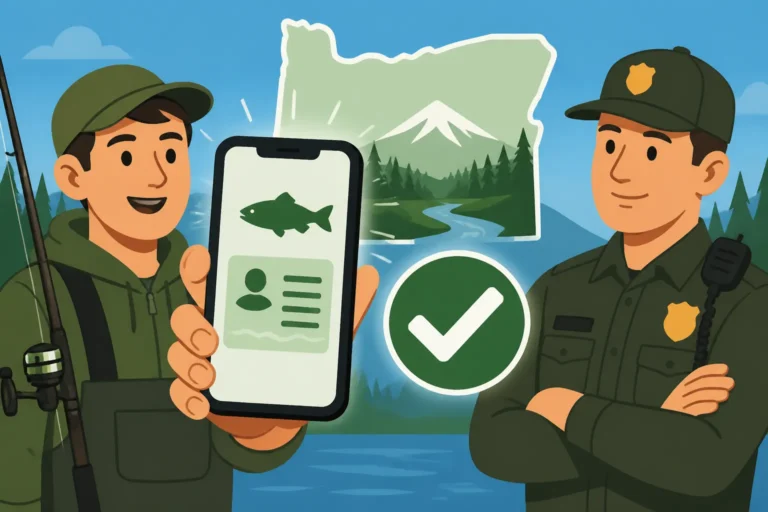
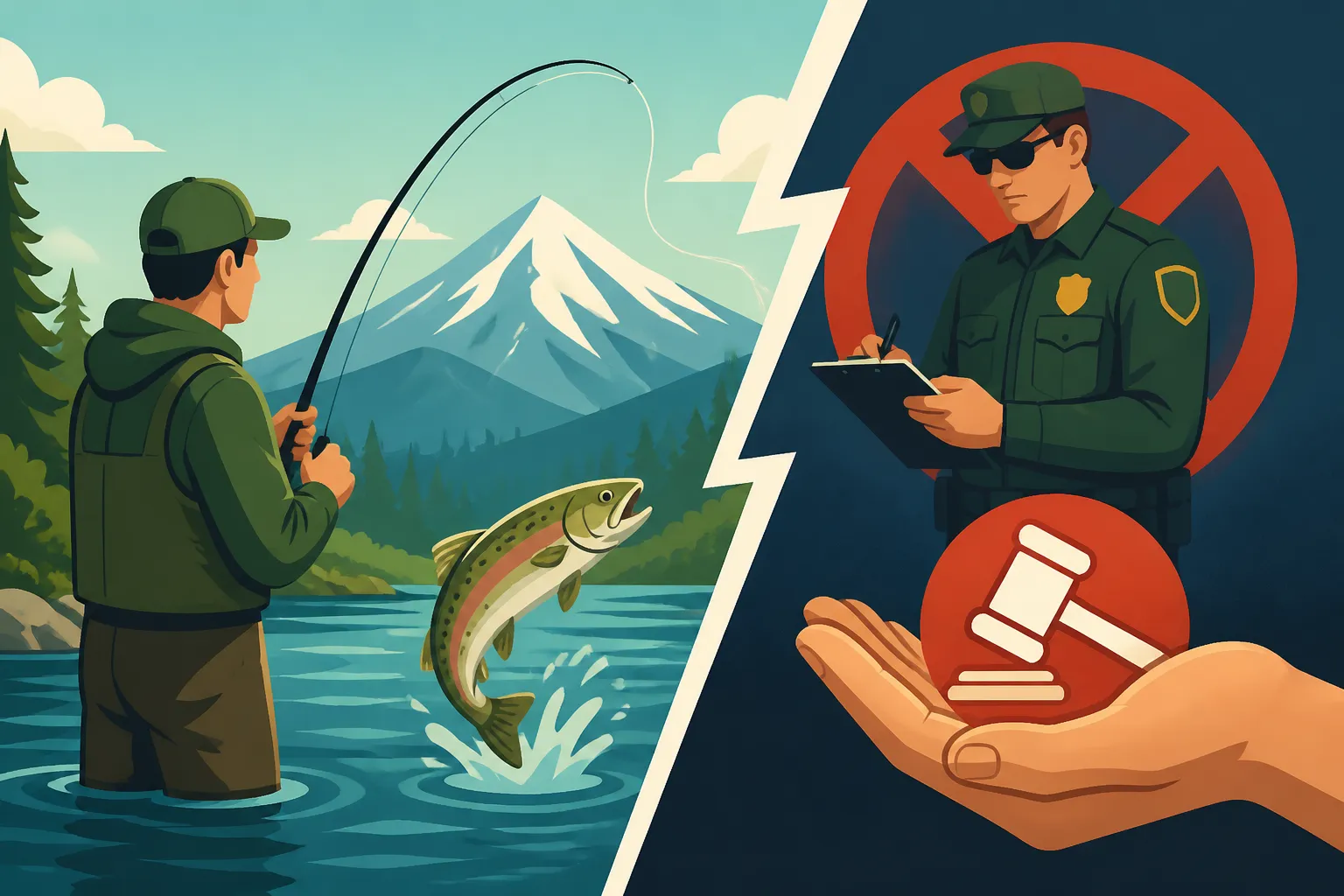
Picture this: you're enjoying the tranquility of the Deschutes River, perhaps near Maupin, when a uniformed individual approaches. This is an Oregon State Police Trooper, specifically assigned to Fish and Wildlife enforcement, often referred to as a game warden. Their presence is part of their duty to ensure compliance with fishing and hunting regulations across the state. They have the authority to stop and inspect anyone engaged in fishing activities. When a game warden approaches, their first request will almost always be for your fishing license and identification. It's crucial to remain calm, respectful, and cooperative.
The warden might also ask to inspect your catch, fishing gear, and tackle. This is standard procedure to ensure you're adhering to bag limits, size restrictions, and approved fishing methods for the area and species you're targeting. They are not trying to ruin your day, but rather uphold the regulations that protect the resource for everyone. Arguing, becoming belligerent, or attempting to flee will only escalate the situation and can lead to more severe charges, including resisting arrest. It’s always best to be polite and comply with their requests. Remember, these officers are trained professionals, and their job is to enforce the law, not to make exceptions. For more on this, you might find our guide, Can a game warden check your fishing license in Oregon?, helpful.
Receiving a Citation or Warning
In most instances of fishing without a license, if caught, you will receive a citation, which is essentially a ticket. While warnings can be issued for minor, non-egregious infractions or for first-time offenders in very specific, less impactful situations, fishing without a required license is generally considered a clear-cut violation that warrants a citation. The citation will outline the specific charge (e.g., "Fishing Without a Valid Angling License," "Failure to Possess a Combined Angling Tag"), the date, time, and location of the offense, and instructions on how to proceed.
Often, you'll have the option to simply pay the fine by mail or online before a specified due date, similar to how you'd handle a traffic ticket. However, depending on the severity of the offense, the officer might require a mandatory court appearance. This is more common if there are additional violations involved, such as catching over the bag limit, using illegal methods, or if it's a repeat offense. It's vital to read your citation carefully to understand whether you need to appear in court or if you can resolve it by paying the fine. Ignoring a citation is never a good idea, as it can lead to further legal complications, including warrants for your arrest and increased fines.
Penalties and Fines for Fishing Without a License in Oregon
Nobody wants a fishing trip to end with a hefty fine or legal troubles. The penalties for fishing without a license in Oregon can range from a few hundred dollars to significantly more, especially if other violations are involved. It's a steep price to pay for what is often an easily avoidable oversight.
Understanding the Monetary Fines
The financial penalty for fishing without a license in Oregon can vary, but generally, you're looking at a base fine starting in the range of $100 to $200 for a first offense. However, this is often just the starting point. When court fees, assessments, and other surcharges are added, the total cost can easily climb to $260 or more for a single citation. These fines are set by the Oregon State Legislature and local courts, and they are not arbitrary. They reflect the state's commitment to protecting its natural resources and ensuring that those who violate the rules contribute to the system they've circumvented.
The severity of the fine can also increase significantly if you're caught violating multiple regulations at once. For example, if you're fishing without a license AND you're over the bag limit for a particular species, or you're using illegal gear, the fines will stack up. Repeat offenders face even harsher penalties, as the courts view these as deliberate disregard for conservation laws. It’s not just a slap on the wrist; it's a financial deterrent to ensure compliance. Just imagine the cost of an annual license versus a fine that could be several times that amount – it quickly makes the license seem like a bargain.
| Violation Type | Common Base Fine Range | Estimated Total with Fees (First Offense) | Notes |
|---|---|---|---|
| Fishing Without Valid License (Resident) | $100 – $150 | $260 – $350 | Applies to angling, crabbing, clamming if no license. |
| Fishing Without Valid License (Non-Resident) | $150 – $200 | $350 – $450 | Non-resident fines are often slightly higher. |
| Failure to Possess Combined Angling Tag | $100 – $150 | $260 – $350 | If fishing for salmon, steelhead, sturgeon without the required tag. |
| Failure to Possess Ocean Endorsement | $100 – $150 | $260 – $350 | Required for certain ocean-caught species. |
| Failure to Possess Shellfish License | $100 – $150 | $260 – $350 | Required for crabbing and clamming. |
| Repeat Offense | Increased | Significantly Higher | Fines can double or triple, potential jail time, license revocation. |
Note: These are estimated ranges and actual fines may vary based on specific circumstances, local court jurisdiction, and changes in state law. Always refer to the official ODFW regulations or your citation for exact amounts.
Additional Legal Consequences
Beyond the immediate financial hit, fishing without a license can lead to other, often more disruptive, legal ramifications. One of the most significant is the potential for license suspension or revocation. This means that not only will you have paid a substantial fine, but you could also lose your privilege to fish in Oregon for a period of time, or even permanently in extreme cases of repeated offenses. This consequence can be particularly painful for avid anglers who cherish their time on the water.
In more severe cases, especially those involving multiple or serious violations (e.g., poaching protected species, gross over-limits), game wardens have the authority to confiscate your fishing gear. This could include your rods, reels, tackle, and even your boat. While this is less common for a simple "no license" infraction, it's a very real possibility if the situation escalates or if it's tied to more egregious wildlife crimes. Furthermore, serious and repeat violations can sometimes lead to misdemeanor charges, which carry the potential for jail time, though this is rare for a first-time license violation. The impact of such charges can extend beyond the court, affecting background checks for employment or other opportunities. You can learn more about these broader consequences in our general guide to Oregon Fishing Violations and Penalties.
Civil Penalties and Restitution
The financial penalties don't always end with the criminal citation. If you are caught fishing without a license and have illegally harvested fish, you could also be subject to civil penalties and ordered to pay restitution to the state. This is separate from the fine you pay for the violation itself. Restitution aims to compensate the state for the value of the illegally taken wildlife.
The ODFW has established monetary values for various fish species, particularly those that are highly managed or have significant conservation status, like salmon, steelhead, and sturgeon. For example, a single illegally caught Chinook salmon could carry a restitution value of several hundred dollars or more, far exceeding the market value of the fish. These restitution values are designed to act as a significant deterrent against poaching and unauthorized take. It's a way for the state to recoup the costs associated with managing and sustaining these populations, effectively making the poacher pay for the resource they unlawfully exploited. The combination of criminal fines and civil restitution can quickly turn a seemingly minor offense into a financially crippling experience.
Avoiding the Pitfalls: Ensuring You're Always Legal
Nobody wants to face fines or lose their fishing privileges. The good news is that avoiding these penalties is incredibly simple: be informed and prepared. A little bit of proactive effort can save you a world of trouble and ensure your fishing trips remain enjoyable and stress-free.
How and Where to Get Your License
Gone are the days when buying a fishing license meant a trip to a dusty old tackle shop. Today, getting your Oregon fishing license is easier than ever, with several convenient options available. The most popular method is to purchase your license online directly through the Oregon Department of Fish and Wildlife (ODFW) website. This is my personal go-to because it's available 24/7, allows for immediate purchase, and you can even print a temporary license or store it digitally on your phone for instant proof. It’s incredibly convenient, especially if you suddenly decide to head out for a last-minute fishing adventure. Our guide to How to Renew an Oregon Fishing License Online offers a step-by-step walkthrough.
If you prefer a more traditional approach, you can always purchase your license in person at a wide variety of license agents across the state. These often include sporting goods stores like Bi-Mart, Fred Meyer, and even some smaller tackle shops. These locations can provide helpful advice and often have physical copies of the regulations booklet. Whether you choose to buy your Oregon fishing license online vs in person is a matter of personal preference, but the key is to ensure you do it before you even wet a line. A comprehensive list of vendors is typically available on the ODFW site.
Knowing Your Regulations Inside and Out
Simply having a license isn't always enough; you also need to know the rules that govern where and what you're fishing for. Oregon's fishing regulations can be complex, with specific rules for different zones, rivers, lakes, and even different species within the same water body. The single most important resource for every angler in Oregon is the annual Oregon Sport Fishing Regulations booklet. This free publication, available both in print at license agents and online as a PDF on the ODFW website, outlines all the current rules, bag limits, open seasons, and specific exceptions.
I can't stress this enough: read this booklet from cover to cover at the beginning of each year. Pay particular attention to the sections pertaining to the areas you plan to fish and the species you intend to target. Additionally, regulations can change throughout the year, especially for sensitive fisheries or in response to biological conditions or emergency closures. Always check the ODFW website for any in-season regulation updates or emergency closures before heading out. A quick search online, or checking the ODFW "Recreational Fisheries News" feed, can save you a lot of grief. Even consider picking up a waterproof case for your phone or a laminated copy if you're prone to losing things, because being informed is your best defense. You can find comprehensive details in our Oregon Fishing Regulations Explained article.
Double-Checking Before You Cast
Before you even think about casting that first line, make it a habit to perform a quick "license and regulations" checklist. This simple routine can prevent a lot of headaches. First, verify the expiration date of your Oregon fishing license. Licenses typically run on a calendar year, expiring on December 31st, regardless of when you purchased them during the year. It's easy to forget if you bought it late in the previous season.
Next, confirm you have all necessary endorsements and tags for your target species and location. Are you targeting salmon? Do you have your Oregon Combined Angling Tag? Are you crabbing on the coast? Is your shellfish license valid? If you're fishing in the Columbia River, do you have that endorsement? A quick mental run-through, or even a literal checklist you keep with your fishing gear, can be a game-changer. For example, I keep a small laminated card I made myself, clipped to my tackle box, listing what I need for different scenarios. You can also quickly verify your license status through the ODFW's online portal. Companies like Amazon also sell small, water-resistant pouches where you can keep a printed copy of your license and any special tags, ensuring they are always on hand and protected from the elements. This little bit of preparation ensures your focus stays on the fish, not on worrying about legalities. For general guidance on Oregon Fishing License Guide, make sure to check out our complete resource.
Disclaimer
The information provided in this guide is for general informational purposes only and does not constitute legal advice. While we strive to provide accurate and up-to-date information, fishing regulations in Oregon can change. Always consult the official Oregon Department of Fish and Wildlife (ODFW) website and their most current Sport Fishing Regulations booklet for the definitive and most recent rules before engaging in any fishing activities. Compliance with all applicable laws and regulations is the sole responsibility of the individual angler.