How does a shared charter differ from a private charter
When you're dreaming of an incredible fishing trip on Oregon's stunning coast or its bountiful rivers, one of the first big decisions you'll face is whether to book a shared charter or a private charter. It's a common dilemma, weighing the desire for a personalized experience against the practicalities of budget and group size. This guide will meticulously break down the core differences between these two popular options, helping you understand what each offers so you can confidently choose the best fit for your next Oregon fishing adventure.
Understanding the Basics: Shared vs. Private Fishing Charters
Before diving into the nitty-gritty, let's establish a clear understanding of what "shared" and "private" truly mean in the world of fishing charters. It's more than just who's on the boat; it's about the entire experience, from booking to fish cleaning. Getting this distinction right from the start will set you up for success, whether you're targeting salmon in Astoria or halibut off Newport.
What is a Shared Charter?
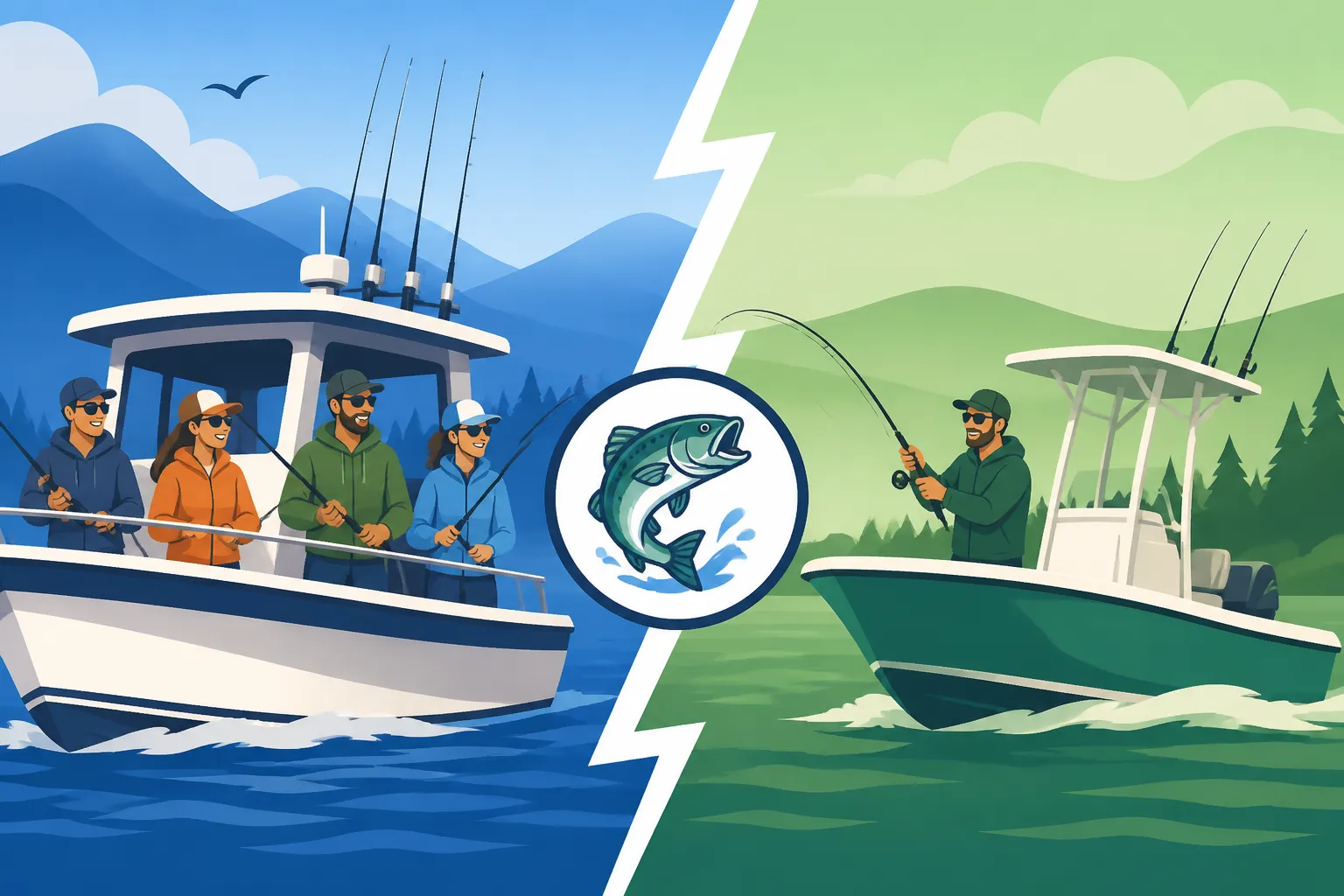
A shared charter, often called an "open party" or "head boat" trip, is exactly what it sounds like: you book a spot (or a few spots) on a boat that will be filled with other anglers you likely don't know. Think of it like booking a seat on an airplane; you're sharing the space and the journey with other travelers. The captain and crew will have a general plan for the day's fishing, typically targeting a specific species or type of fishing that suits the season and conditions. This could mean a bottom fishing trip for rockfish and lingcod, or perhaps a salmon trolling excursion.
The beauty of a shared charter lies in its accessibility and often, its cost-effectiveness. It's perfect for solo anglers, couples, or small groups who want to experience the thrill of ocean fishing without the expense of booking an entire vessel. You're essentially pooling resources with other passionate fishers, and sometimes, those shared experiences lead to new friendships and fantastic memories. You might find listings for these types of trips readily available on platforms like FishingBooker, making it easy to see what's available and compare options.
What is a Private Charter?
A private charter, on the other hand, means you're booking the entire boat for your group alone. This is your personal fishing vessel for the day, and you get to decide who comes along. Whether it's your family, a group of close friends, or corporate colleagues, the boat and crew are dedicated exclusively to your party. This exclusivity comes with a significant degree of flexibility and customization that shared charters simply can't offer.
With a private charter, you often have a say in the target species (within reason, considering the season and regulations), the duration of the trip, and even the general style of fishing. Want to spend more time casting for big spring Chinook on the Willamette River Guide Trips? Or perhaps dedicate the entire day to searching for elusive halibut further offshore? A private charter makes these kinds of tailored experiences possible. It's an investment in a highly personalized adventure, offering a more intimate and controlled environment for your fishing goals.
The Shared Charter Experience: Unpacking the Pros and Cons
For many anglers, the shared charter is the gateway to Oregon's fantastic fisheries. It offers a unique blend of affordability and social interaction. However, like any experience, it comes with its own set of advantages and potential drawbacks that are crucial to consider before you commit.
Advantages of a Shared Charter
The most obvious advantage of a shared charter is the cost. Since the expense of the boat, crew, fuel, and gear is divided among several paying customers, the per-person price is significantly lower than booking a private trip. This makes ocean or river fishing accessible to a broader range of budgets, allowing more people to enjoy Oregon's incredible angling opportunities. For individuals or small parties, it can be the only practical way to get offshore or onto a large river system with a professional guide.
Beyond the financial aspect, shared charters offer a vibrant social environment. You'll be spending several hours with fellow fishing enthusiasts, which can lead to lively conversations, shared tips, and perhaps even some friendly competition. Imagine swapping stories with someone who has fished the Columbia River Fishing Guide for decades, or learning a new trick from a seasoned angler on your way to the fishing grounds. This camaraderie can be a really enjoyable part of the experience, especially if you're an outgoing person who loves meeting new people. Plus, it's a great way to learn! Many experienced anglers are happy to share their knowledge, and observing others can quickly improve your own technique.
Disadvantages of a Shared Charter
While the social aspect can be a pro, it can also be a con depending on your personality and expectations. You're essentially sharing the boat with strangers, and that means you don't control the group dynamic. You might end up with someone who is less considerate, or perhaps a group that's more boisterous than you'd prefer. This can sometimes detract from the peaceful experience you might be seeking. The common complaint from anglers on shared trips often centers around feeling crowded or having limited space to cast, especially when the boat is full.
Another significant drawback is the lack of flexibility. The captain of a shared charter has to cater to the general consensus or, more often, to the most efficient way to get everyone on fish. This means less input from individual passengers on where to go, what to target, or how long to stay in a particular spot. If you've always dreamed of fishing for spring Chinook on the Willamette but the group decides on bottom fish, you might be out of luck. The itinerary is usually set, and deviations are rare. Furthermore, if the bite is slow, a shared charter might move on quicker to another spot to try and ensure everyone gets a chance, which might not be ideal if you prefer to really work a promising area.
| Feature / Aspect | Shared Charter | Private Charter |
|---|---|---|
| Cost | Per person, generally much lower | Flat rate for the boat, generally higher overall |
| Group Size | Open to individuals/small groups, mixed party | Your exclusive group only |
| Flexibility | Limited; captain sets itinerary & target | High; customizable targets, spots, and trip duration |
| Privacy | Minimal; shared with strangers | High; intimate experience with your chosen companions |
| Learning | Opportunity to learn from other anglers | Direct, focused attention from the guide |
| Comfort/Space | Can feel crowded, less personal space | Ample space, comfortable for your group |
| Target Species | General; chosen by captain for overall success | Specific to your group's preference (seasonal limits) |
| Personalization | Low | High |
The Private Charter Experience: Exploring its Unique Offerings
For those who prioritize personalization, control, and an exclusive adventure, a private charter holds immense appeal. It's often seen as the premium option, offering a bespoke fishing journey tailored precisely to your group's desires. However, this elevated experience naturally comes with a different set of considerations.
Advantages of a Private Charter
The primary advantage of a private charter is unparalleled control and customization. Since you've booked the entire boat, you and your group get to dictate many aspects of the trip. Want to focus solely on Oregon Salmon Fishing Techniques for Chinook on the Columbia? Or perhaps spend extra time teaching the kids Oregon Fishing Techniques for Beginners at a specific, calmer spot? You can often discuss these preferences with the captain beforehand, and they'll do their best to accommodate within the bounds of safety, regulations, and productive fishing. This level of personalization means you're much more likely to have the specific fishing experience you envisioned.
Privacy and comfort are also huge draws. Imagine having ample space to move around, cast, and relax without bumping elbows with strangers. It's a much more intimate setting, allowing for deeper conversations and uninterrupted enjoyment with your friends or family. For families with young children, a private charter can be a godsend. It provides a safer, less stressful environment where the kids can be themselves without worrying about disturbing other anglers. The guide can also dedicate more one-on-one time to teaching your group specific skills, whether it's bait rigging or proper catch and release techniques. Many operators, including those listed on platforms like FishingBooker, specialize in these types of personalized experiences.
Disadvantages of a Private Charter
The most significant disadvantage of a private charter is the cost. Since you're covering the entire operational expense of the boat, crew, and fuel, the upfront price tag is considerably higher than a per-person shared trip. While the per-person cost might actually become quite reasonable if you fill the boat with a large group (say, six people), the initial investment can be a deterrent for smaller parties or those on a tighter budget. This often means carefully considering if the added value of customization and privacy justifies the expense for your particular situation. Oregon Fishing Charter Costs vary widely, so it's always worth looking into.
Another potential drawback, though less common, can be the pressure. When you're paying a premium for a private experience, there can sometimes be an unspoken expectation for a banner day, even if fishing success is never guaranteed. If the fish aren't biting, the disappointment might feel more pronounced than on a shared trip where you're just one of many. It's important to remember that fishing is fishing, and even the best guides can't make fish bite. Setting realistic expectations is key, regardless of the charter type you choose.
Deciding Which is Right for Your Oregon Adventure
Choosing between a shared and a private charter ultimately comes down to your priorities, budget, and the specific kind of experience you're hoping for. There's no single "better" option; there's only the option that's best for you and your group on any given day.
Consider Your Group Size and Dynamics
Think about who you're fishing with. Are you a solo angler or a couple looking for an affordable way to get out on the water? A shared charter is likely your best bet. It allows you to participate in a guided experience without having to bear the full cost yourself. You might even enjoy the social aspect of meeting other passionate anglers.
However, if you're a family with kids, especially younger ones, or a group of close friends who want to create their own unique memories, a private charter often makes more sense. The ability to control the environment, dictate the pace, and have the guide's undivided attention can be invaluable. Imagine taking your grandkids out for their first salmon trip on a private boat near Newport Oregon Fishing Charters, where the captain can teach them how to bait a hook and reel in their catch without any distractions or pressure from other passengers. This intimacy makes the experience truly special.
What Are Your Fishing Goals?
What do you truly want to achieve on your trip? Is your main goal simply to experience fishing on the Oregon coast or a major river like the Deschutes, perhaps targeting whatever is biting well that day? If so, a shared charter can perfectly fulfill that desire. You'll get out on the water, you'll fish, and you'll likely have a good time.
But if you have very specific targets in mind – perhaps you're determined to land a trophy sturgeon on the Columbia, or you want to practice certain Oregon fly fishing techniques with a dedicated instructor – a private charter will give you the focus and flexibility you need. A private guide can dedicate time to explaining nuances, moving to specific spots, and adapting the trip in real-time based on your group's interest and the fish activity. This is particularly true if you're looking to explore niche fishing, or perhaps even combine activities like Crabbing Charter Trips in Oregon with some light fishing.
Budget and Value Proposition
Finally, your budget is a key factor. Shared charters are undeniably more budget-friendly on a per-person basis. They offer fantastic value for money if you're comfortable with the trade-offs in flexibility and privacy. It's a great way to access quality guided fishing without breaking the bank.
A private charter represents a higher investment. However, if you have enough people to split the cost, or if the personalized experience, privacy, and control are paramount to you, then the value proposition of a private charter can far outweigh the increased expense. Consider it an investment in a tailor-made memory rather than just a fishing trip. Platforms like FishingBooker can help you compare prices and availability for both options across different Oregon locations, allowing you to weigh the costs against the benefits for your group. Ultimately, both options offer incredible opportunities to enjoy the Best Places to Fish in Oregon, it's just a matter of matching the experience to your personal angling style.
Disclaimer
This article is for general informational purposes only and does not constitute professional advice. Laws, prices and regulations vary by location and change over time. Consult a qualified professional for guidance on your specific situation.