Beginner-Friendly Guided Fishing Trips in Oregon
Oregon offers an incredible array of fishing opportunities, from serene mountain lakes to powerful coastal rivers and the vast Pacific Ocean. But if you're new to fishing, or new to fishing in Oregon, the sheer volume of information on licenses, regulations, gear, and techniques can feel utterly overwhelming, often sidelining a potential adventure before it even begins. This comprehensive guide is here to cut through that noise and show you why a guided fishing trip is not just an option, but often the very best way to dip your toes into the exhilarating world of Oregon angling, especially for beginners.
Why a Guided Trip is Perfect for Oregon Fishing Beginners
Let's be real: trying to figure out Oregon fishing on your own can feel like deciphering an ancient scroll written in a foreign language. You might spend hours online researching regulations, buying expensive gear that may or may not be right, and then still feel completely lost once you're on the water. This is precisely where a guided trip shines, transforming potential frustration into a truly enjoyable and educational experience.
Overcoming the Intimidation Factor
For many, the biggest hurdle to getting into fishing is simply the unknown. You see seasoned anglers casting effortlessly, landing fish, and navigating river currents, and it's easy to think you could never do that. The idea of investing in a full setup – rods, reels, tackle, waders – only to feel inept can be a huge deterrent. Then there's the etiquette, the unwritten rules of the water, and the fear of doing something wrong. A guided trip completely removes this intimidation. You show up, often with little more than a desire to learn, and everything else is handled. The guide is there to teach, not to judge, creating a low-pressure environment where mistakes are just part of the learning process. They’ve seen it all, and they’re experts at making novices feel comfortable and confident, even if it's your very first cast.
Imagine you're standing on the banks of a river, gear in hand, but you have no idea where the fish might be hiding. The current looks fast, and every rock seems to hold a secret. A guide, however, can point out exactly where fish are likely holding, explain why they're there, and help you strategize your approach. This immediate access to expert knowledge makes the sport accessible and fun from the get-go, rather than a frustrating guessing game. It's about empowering you to enjoy the process, not just the outcome.
Learning the Ropes from a Pro
One of the most valuable aspects of a guided trip for beginners is the hands-on education you receive. A good guide isn't just there to put you on fish; they're passionate teachers who want you to understand the "how" and "why." They can explain everything from basic knot tying to reading the water, understanding fish behavior, and selecting the right bait or lure. This isn't theoretical knowledge from a book; it's practical, real-time instruction tailored to your learning style.
Think about trying to learn Oregon Salmon Fishing Techniques or Oregon Steelhead Fishing Techniques from YouTube videos alone. It's tough! You don't have anyone there to correct your casting form, explain why your drift isn't quite right, or point out that subtle bite you just missed. With a guide, you get instant feedback. They'll show you how to mend your line, how to set the hook, and what to look for when a fish strikes. This personalized coaching is invaluable and accelerates your learning curve dramatically. You'll finish the day with not just memories, but a foundational understanding that will serve you well in future fishing endeavors.
Access to Prime Spots and Gear
Another huge benefit for beginners is gaining access to prime fishing locations and high-quality, specialized gear that you might not otherwise have. Guides spend countless hours scouting the best spots, understanding seasonal patterns, and knowing exactly where the fish are biting. They have the local knowledge that takes years, if not decades, to acquire. This means less time wasted searching and more time with a line in the water.
Furthermore, guides provide all the necessary equipment. This means you don't have to break the bank buying rods, reels, tackle boxes, and specialized lures before you even know if fishing is for you. They'll have top-notch gear appropriate for the species and conditions, all meticulously maintained. This also often includes safety equipment, like life vests, and specialized boats that can navigate specific waters, whether it's a drift boat for a river or an ocean-going charter vessel. This all-inclusive approach makes your first foray into fishing seamless and stress-free. It's a fantastic way to try out different types of fishing and equipment without the upfront investment, helping you decide what kind of angling truly sparks your interest before committing to your own purchases.
Choosing Your Beginner-Friendly Oregon Fishing Adventure
Oregon is a land of incredible diversity, and its fishing opportunities reflect that. Deciding where and how to go can be part of the fun, but for beginners, it's wise to consider what kind of experience will be most enjoyable and conducive to learning.
River vs. Lake vs. Ocean: What's Right for You?
Each type of water body offers a distinct fishing experience, and some are inherently more beginner-friendly than others.
- Lakes: Often the most accessible and calmest option, especially for younger anglers or those prone to motion sickness. Many Oregon lakes, particularly those frequently stocked with Oregon Trout Species Guide like rainbow trout, offer consistent action and relatively straightforward techniques. You might fish from the shore, a dock, or a small boat. Places like Henry Hagg Lake or Diamond Lake are known for their accessibility and family-friendly atmosphere. A guided lake trip might involve trolling, still fishing with bait, or even learning basic spin casting.
- Rivers: River fishing can be incredibly rewarding but also more technically challenging due to currents, varied depths, and obstructions. However, many guides specialize in drift boat trips on rivers like the Deschutes, Rogue, or Willamette, which are excellent for beginners. The guide handles the boat, navigating the river, while you focus on casting and presentation. These trips offer a constant change of scenery and the excitement of moving water. This is a great way to learn Oregon Trout Fishing Techniques or even chase Oregon Steelhead Guide if conditions are right.
- Ocean: Ocean fishing charters are exhilarating and offer the chance to catch larger, hard-fighting fish like halibut, salmon, or various rockfish. While the boats are substantial, the open ocean can be choppy, which is a consideration for those sensitive to seasickness. Many charters out of coastal towns like Newport, Astoria, or Depoe Bay are very experienced with first-timers, providing sturdy boats and all the heavy-duty gear needed. The focus is often on bottom fishing or trolling, which can be fairly straightforward for beginners once the boat is positioned over a good spot. You can explore Oregon Ocean Charter Fishing options easily through platforms like FishingBooker.
Targeting Specific Species for Success
For beginners, the goal isn't necessarily to catch the biggest or rarest fish, but rather to have consistent action and a positive experience. Therefore, choosing a trip that targets a species known for being cooperative can be a smart move.
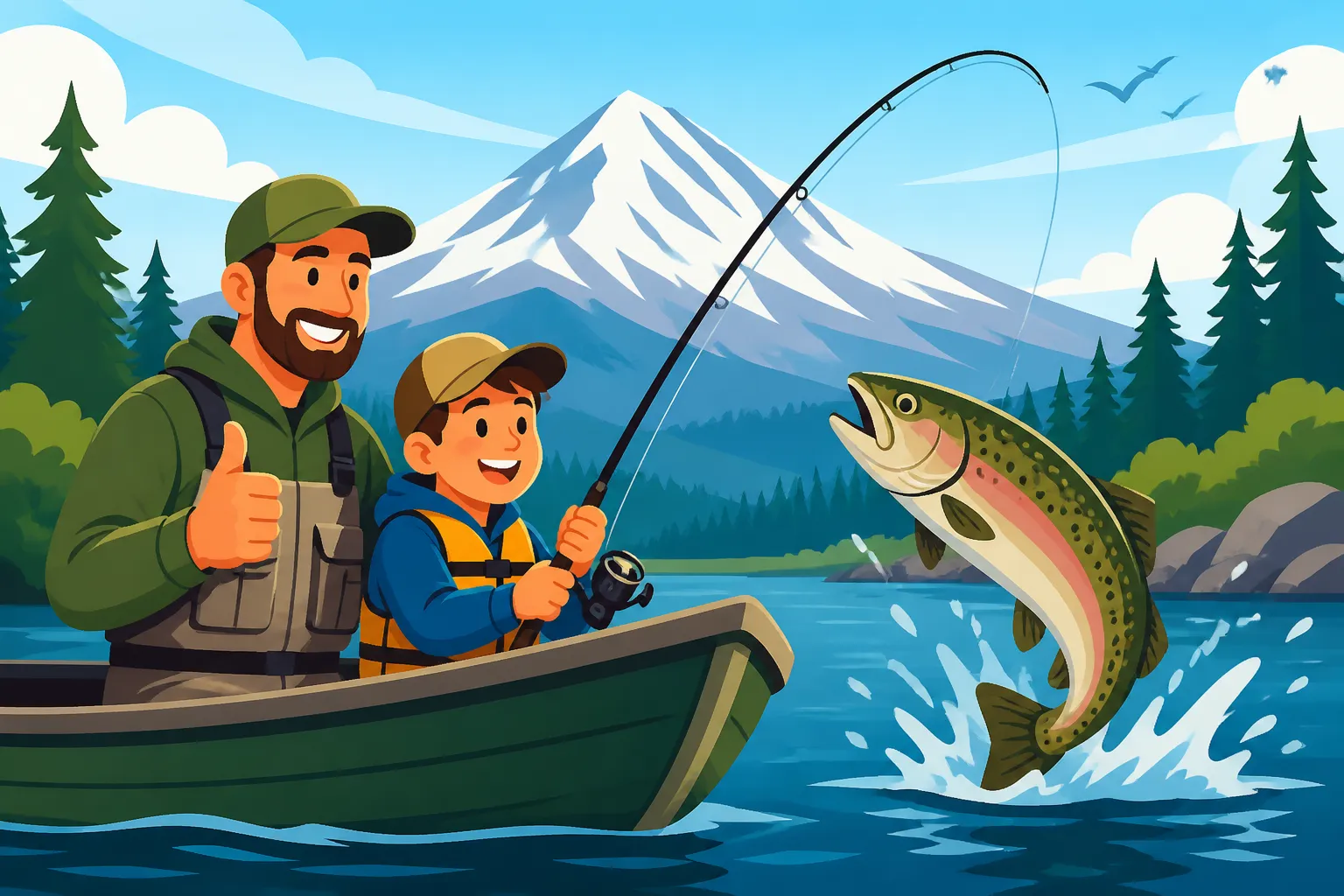
- Trout: Stocked rainbow trout in lakes and ponds are perhaps the quintessential beginner fish. They're often eager to bite, fight well for their size, and can be caught using simple techniques. Many family-friendly guide services focus on these waters, providing a fantastic introduction to the sport. Oregon Trout Fishing Techniques are often simpler to grasp than those for more elusive species.
- Panfish (Crappie, Bluegill, Perch): These smaller, prolific fish found in many Oregon lakes and reservoirs are fantastic for beginners, especially kids. They bite readily, provide steady action, and teach the fundamentals of detecting bites and reeling in fish. These trips are typically relaxed and focused on fun.
- Smallmouth Bass: While a bit more challenging than trout or panfish, smallmouth bass in rivers like the John Day or Umpqua can offer thrilling action with lures. Guides specializing in bass can teach casting accuracy and reading river structure, providing a dynamic learning experience that is still very achievable for a novice.
- Salmon/Steelhead (with caveats): While highly sought-after, salmon and steelhead can be notoriously difficult to catch consistently, even for experienced anglers. If your heart is set on them, definitely go with a guide, but manage expectations. A guide will significantly increase your chances and teach you specialized Oregon Salmon Fishing Techniques or Oregon Steelhead Fishing Techniques, but these fish can still be elusive. Some guides specialize in Best guide service for first-time steelhead anglers and understand the patience and instruction required.
Trip Duration and Group Size Considerations
The length of your trip and how many people are in your group can significantly impact a beginner's experience.
- Trip Duration: For your very first outing, a half-day trip (4-6 hours) might be ideal. It's enough time to learn the basics, get some bites, and enjoy the scenery without becoming overly tired or cold. Full-day trips (8+ hours) are fantastic for more immersion, but if you're unsure how you'll handle motion, weather, or simply the sustained activity, a shorter trip is a safe bet. Talk to your guide or check platforms like FishingBooker to see what durations are offered.
- Group Size: A smaller group, especially a private trip for just your family or a couple of friends, will allow for more personalized instruction and attention from the guide. This is often worth the extra cost for beginners who need more one-on-one coaching. Larger party boats for ocean fishing are more economical per person but offer less individual attention. Oregon Family-Friendly Fishing Charters often cater to smaller, private groups to ensure a more intimate and tailored experience. Consider a private trip if you want the most dedicated teaching environment possible.
What to Expect on a Guided Fishing Trip
So, you’ve decided to book that beginner-friendly guided fishing trip in Oregon – excellent choice! Knowing what to expect before, during, and after your trip can help you relax and make the most of every moment. It’s an adventure, but a well-orchestrated one with your guide leading the way.
Before You Go: Preparation and Packing
Preparation for a guided trip is refreshingly minimal for you, the angler, but a few key things will ensure comfort and compliance.
First and foremost, you will need an Oregon Fishing License Guide and any necessary tags or endorsements for the species you plan to target. Your guide can advise you on exactly what you’ll need, but it's your responsibility to purchase these beforehand. Many can be bought online, ensuring you're legal to fish as soon as you step on the boat or into the drift boat. It's easy to overlook, but absolutely essential.
Next, think about what to wear and bring. Dress in layers! Oregon weather, especially on the coast or in the mountains, can change dramatically throughout the day. A waterproof outer shell is always a good idea, even if rain isn’t in the forecast. Comfortable, non-slip shoes are critical, especially on a boat deck. Don't forget essentials like sunglasses (polarized are a huge advantage for spotting fish and reducing glare), sunscreen, a hat for sun protection, and any personal medications. Many guides provide snacks and drinks, but it's always smart to confirm and bring your own if you have specific preferences or dietary needs. Think about packing light, but being prepared for the elements. For a comprehensive list, you might find What should I bring on an Oregon fishing charter helpful.
On the Water: Learning and Doing
This is where the magic happens! When you meet your guide, they'll usually start with a brief orientation, covering safety procedures, the plan for the day, and what species you’ll be targeting. Don't be shy about reiterating that you're a beginner and eager to learn; this helps them tailor their instruction.
Throughout the trip, your guide will be your hands-on teacher. They’ll likely rig your rods, demonstrate casting techniques, explain how to retrieve lures or present bait, and show you how to read the water for signs of fish. Expect to try, fail, and try again – that's part of learning! A good guide will be patient, encouraging, and quick to offer constructive feedback. They'll also handle the boat, whether it's navigating river rapids or positioning the charter over a productive reef, allowing you to focus entirely on fishing.
When you hook a fish, the excitement is palpable! Your guide will talk you through fighting the fish, explaining how to set the hook firmly and play it efficiently to bring it in. They’ll also handle the landing of the fish, whether it's with a net or by hand, ensuring both your safety and the well-being of the fish. This entire process is a prime opportunity to learn the intricacies of angling in a real-world setting, with immediate expert assistance.
After the Trip: Fish Handling and Memories
Once the fishing is done, the experience isn't over. If you've been successful in catching fish that are within the Oregon Fishing Regulations Explained and bag limits, your guide will typically assist with the ethical handling of your catch. This often includes teaching you how to properly unhook, measure, and if you choose to keep them, bleed and store your fish to preserve their quality. Many guides will also offer to clean and fillet your catch for you at the end of the day, making it easy to take home ready-to-cook fillets. This is a huge bonus, especially for beginners who might be unsure about the cleaning process.
Beyond the fish itself, guided trips are about creating lasting memories and fostering a love for the outdoors. Take the time to chat with your guide about the day, ask any lingering questions, and reflect on what you learned. Most guides love sharing stories and insights. Don't forget to consider showing your appreciation for their hard work and expertise; it's customary to tip your guide, especially if you had a great experience and they went above and beyond. How much do you tip an Oregon fishing guide is a common question, and generally, a gratuity is very much appreciated for their efforts.
Key Questions to Ask When Booking a Beginner-Friendly Guide
Booking a guided trip, especially as a beginner, means you're putting your trust and your experience into someone else's hands. Asking the right questions upfront can help ensure you select the perfect guide for your needs and set clear expectations for the day. Platforms like FishingBooker often allow you to read reviews and contact guides directly to ask these questions.
Licensing, Safety, and Inclusions
These are the non-negotiables. You want to make sure your guide is legitimate, safe, and that you understand what's covered in the trip cost.
- Licensing and Insurance: "Are you a licensed and insured fishing guide in Oregon?" This is paramount. Reputable guides will be happy to confirm their credentials. Licensing ensures they meet state requirements for operating a business and guiding clients, and insurance protects everyone in case of an unforeseen incident. Don't assume; always ask.
- Safety Protocols: "What safety measures do you have in place, especially for new anglers or kids?" A good guide will outline their safety equipment (life jackets, first aid, communication devices), emergency procedures, and how they manage risks on the water. For ocean charters, understanding their vessel’s safety features is important.
- What's Included?: "What exactly is included in the trip price?" Confirm if rods, reels, bait, tackle, and any specialized equipment (like waders for river trips) are provided. Ask about snacks, drinks, and if fish cleaning/filleting services are part of the deal. Does the fee include required endorsements, or just the base trip? Typically, your personal Oregon Fishing License Costs and tags (like an Oregon Combined Angling Tag Guide for salmon/steelhead) are not included and are your responsibility. Clarity here avoids surprises.
Guide's Approach to Novice Anglers
This is particularly important for beginners. You don't want a guide who caters only to seasoned pros.
- Experience with Beginners: "Do you frequently guide beginner anglers or families with kids?" Listen for enthusiasm and specific examples of how they teach. A guide who genuinely enjoys introducing newcomers to the sport will likely be more patient and a better instructor. Someone who primarily works with experienced anglers might have less patience for basic instruction.
- Teaching Style: "What's your teaching philosophy for first-time anglers?" Some guides are very hands-on, showing you every step; others might offer more verbal instruction and let you figure things out. Understand their style to see if it aligns with how you best learn. If you're looking for Kids and Family Charter Trips in Oregon, ensure their approach is patient and fun-focused.
- Patience and Expectations: "How do you manage expectations for beginners, especially regarding catching fish?" It’s important to acknowledge that fishing isn't always about catching, especially for beginners. A good guide will emphasize the learning experience and the joy of being outdoors, rather than guaranteeing a full cooler, while still working hard to get you on fish.
Understanding Cancellation and Weather Policies
Mother Nature doesn't always cooperate, and sometimes life happens. Knowing the guide's policies upfront is crucial.
- Weather Cancellations: "What is your policy for cancellations due to bad weather?" Reputable guides prioritize safety. They should have a clear policy for rescheduling or refunds if conditions are unsafe or truly unpleasant for fishing. For example, ocean charters will often cancel for high seas or strong winds.
- Client Cancellations: "What is your cancellation policy if I need to reschedule or cancel my trip?" Life happens, and you might need to change plans. Understand their refund policy, deposit requirements, and how much notice they need. This protects both you and the guide.
- Contingency Plans: "If our target species isn't biting, do you have alternative plans?" Sometimes, the fishing for a particular species is slow. A flexible guide might offer to switch tactics or even target a different species if it means a better chance of success and a more enjoyable day for you. This proactive approach shows their commitment to a positive client experience.
| Aspect | Beginner-Friendly Guide Qualities | Less Ideal for Beginners |
|---|---|---|
| Teaching Style | Patient, hands-on, encouraging, breaks down complex steps, uses simple language. | Assumes prior knowledge, easily frustrated, focuses only on outcome, less instruction, uses complex jargon. |
| Gear Provided | High-quality, appropriate for species, easy to use, well-maintained, includes safety equipment. | Minimal or outdated gear, complex equipment not explained, lacking essential safety items. |
| Location Choice | Favors accessible spots with higher probability of action, safe and comfortable surroundings. | Targets challenging, remote spots known for trophy fish but low catch rates, potentially difficult terrain. |
| Focus of Trip | Learning, experiencing nature, fun, consistent action, basic skills, good memories. | Strictly catching trophy fish, high pressure, competitive, less emphasis on client comfort or education. |
| Communication | Clear, responsive, answers all questions, sets realistic expectations, friendly. | Vague, hard to reach, assumes you know everything, doesn't address concerns, gruff demeanor. |
| Safety Emphasis | Explicitly outlines safety protocols, provides life vests, prioritizes safe conditions. | Minimal safety briefing, outdated safety gear, takes unnecessary risks for fish, prioritizes fishing over safety. |
| Post-Trip Service | Helps with fish cleaning/filleting, offers tips for cooking, shares photos/stories. | Expects you to handle fish entirely, rushes off, minimal engagement after lines are pulled. |
| Reviews & Referrals | Positive reviews mention patience, good teaching, successful beginner trips, family-friendly. | Reviews focus on experienced anglers, don't mention teaching, or have complaints about attitude with novices. |
Making the Most of Your First Oregon Guided Fishing Experience
You've picked your guide, you've got your license, and you're ready to go! Now, how do you ensure your first guided fishing trip in Oregon is not just successful in terms of fish caught, but truly enriching and enjoyable? It really comes down to attitude and engagement.
Embrace the Learning Curve
Fishing, like any skill, takes practice. You’re not going to be a master angler after one trip, and that’s perfectly okay! Go into the experience with an open mind and a willingness to learn. Your guide is a walking encyclopedia of local knowledge, so soak it all in. Ask questions, even if you think they might be silly. There are no silly questions when you’re learning something new. Why are we fishing this bank? What does that ripple mean? How do I tie this knot? Every question is an opportunity to deepen your understanding.
Expect to make mistakes – tangles happen, casts go awry, and sometimes fish just don’t bite. The key is not to get discouraged. Use these moments as learning opportunities. Your guide has seen it all and will help you correct course. The beauty of a guided trip for beginners is that you have a safety net; the guide is there to help you untangle, re-rig, and get back in the game quickly. This reduces frustration and keeps the focus on the fun and the learning. Remember, it's not just about landing fish, but about understanding the environment and the process.
Communication is Key
Don't be afraid to speak up and communicate openly with your guide throughout the day. If you're feeling seasick on an ocean charter, or cold on a river, let them know. If you're struggling with a particular casting technique, tell them so they can offer more assistance. Your guide wants you to have a great time, and they can only help if they know what’s going on with you.
Also, be clear about your goals for the trip. If your primary goal is to learn how to cast a fly rod, rather than simply catch a lot of fish, communicate that upfront. If you’re really hoping to take some fish home for dinner, mention that. While guides can't guarantee fish, knowing your priorities helps them tailor the experience to your preferences within the realistic bounds of fishing. For instance, if you're keen on keeping fish, they'll make sure you're aware of the Oregon Daily Bag Limits Explained for your target species. This open dialogue ensures that both you and your guide are on the same page, leading to a more satisfying and personalized adventure.
Leave No Trace, Take Memories
As you enjoy the incredible natural beauty of Oregon's fishing grounds, remember to be a responsible angler. This means adhering to the principles of "Leave No Trace." Pack out everything you pack in, and perhaps even pick up any litter you might encounter. Proper handling of fish, whether you're keeping them or practicing Oregon Catch-and-Release Rules, is crucial for conservation. Your guide will demonstrate ethical practices, and you should follow their lead.
Beyond the actual fish you might take home, the true treasures from a guided trip are the experiences, the lessons learned, and the stunning scenery you'll witness. Take mental notes, snap some photos, and savor the moments. The rush of a fish on the line, the quiet beauty of an Oregon sunrise over the river, the camaraderie with your guide – these are the memories that will last a lifetime and hopefully spark a lifelong passion for fishing. Whether it's the thrill of landing your first smallmouth bass on the John Day River or soaking in the grandeur of the Columbia River while targeting salmon, these are the moments that truly define an Oregon fishing adventure.
Disclaimer
This article is for general informational purposes only and does not constitute professional advice. Laws, prices and regulations vary by location and change over time. Consult a qualified professional for guidance on your specific situation.