Tiger Muskie in Oregon
When you think about fishing in Oregon, images of sleek salmon, powerful steelhead, or vibrant trout often come to mind. But there's a lesser-known, almost mythical creature lurking in some of our waters, offering an entirely different kind of challenge: the tiger muskie. These striped predators are a true test of an angler's skill and patience, and for many, the idea of pursuing them feels shrouded in mystery. This guide aims to pull back the curtain on Oregon's tiger muskie, exploring what they are, where they live, how to catch them, and the rules that govern their pursuit.
What Exactly is a Tiger Muskie?
The term "tiger muskie" often sparks confusion, as it's not a naturally occurring species in most waters. Instead, it's a fascinating hybrid, specifically bred for its unique characteristics and, in Oregon's case, for its effectiveness as a management tool. They are a true apex predator, commanding respect in any waterbody they inhabit.
A Hybrid's Unique Traits
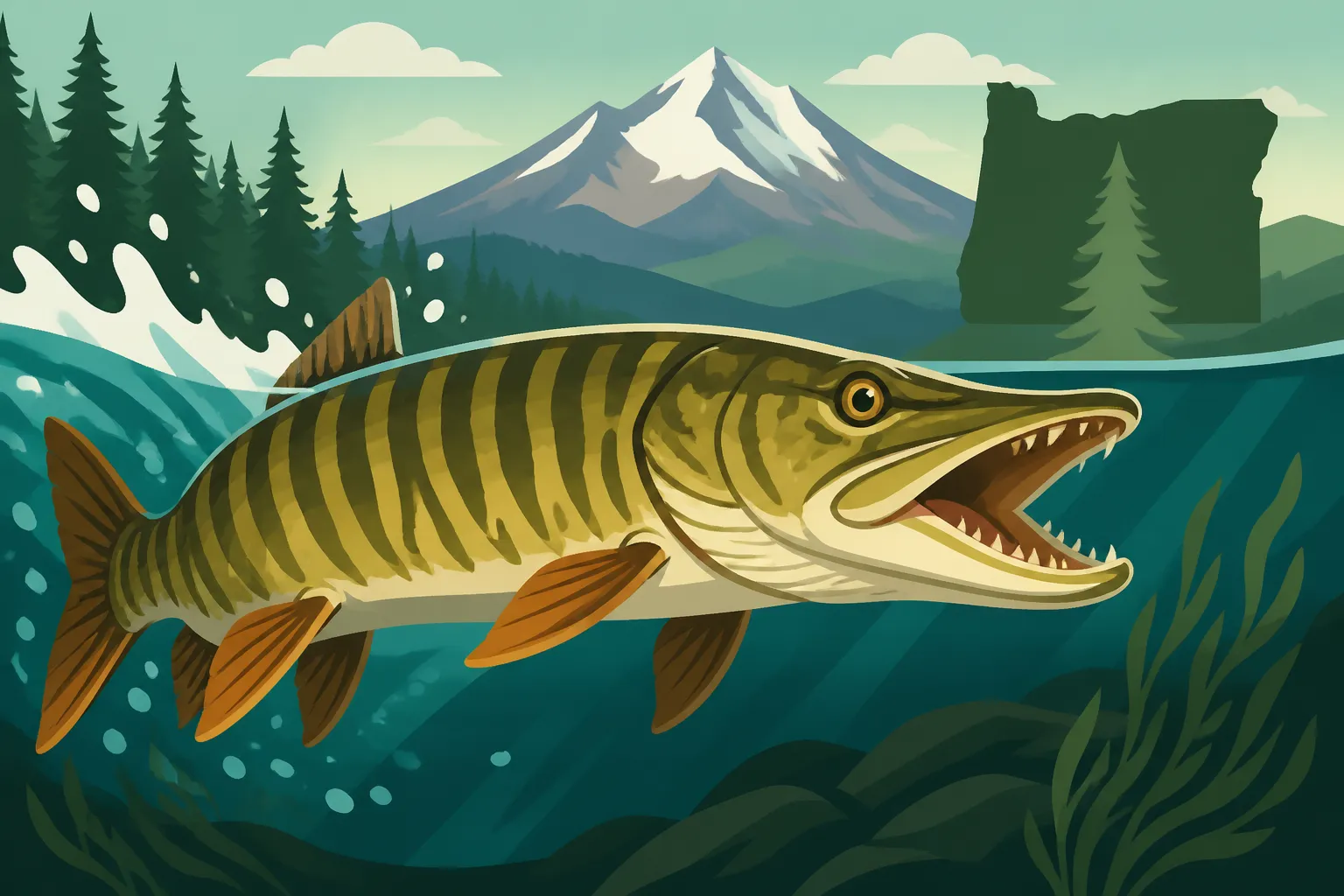
A tiger muskie is the sterile hybrid offspring of a true muskellunge ( Esox masquinongy) and a northern pike ( Esox lucius). This cross results in a fish that often inherits the best, or perhaps most formidable, traits of both parents. Visually, they are striking. They typically display a distinct pattern of dark, vertical bars or spots on a lighter background, resembling a tiger's stripes – hence the name. This pattern can vary slightly from fish to fish, but it's usually quite pronounced, making them instantly recognizable once you've seen one.
Beyond their looks, tiger muskies are built for hunting. They possess an elongated, torpedo-shaped body, a broad, duck-billed snout packed with razor-sharp teeth, and powerful fins that allow for explosive bursts of speed. Their size can be impressive, easily reaching lengths of 30-40 inches, and sometimes even larger, pushing past the 50-inch mark in exceptional cases. While they don't grow quite as large as some pure muskellunge, they certainly pack a punch on the end of a line, making them an incredible sport fish.
The Elusive Nature of an Apex Predator
One of the defining characteristics of tiger muskies is their elusive nature. They are often called "the fish of 10,000 casts," a nickname that speaks volumes about the dedication required to catch one. This isn't just angler folklore; it reflects their predatory behavior. As apex predators, they don't need to feed constantly. They are ambush hunters, often lying in wait amidst submerged structure, weed beds, or along drop-offs, patiently waiting for an unsuspecting prey fish to swim by.
Their diet primarily consists of other fish, and they are incredibly efficient at keeping certain populations in check. This efficiency, combined with their solitary tendencies, means they are not found in great numbers, even in waters where they are stocked. They are also incredibly wary. Noise, shadows, or even repetitive casting in the same area can put them off. This makes locating and enticing a strike from a tiger muskie a significant accomplishment, demanding stealth, persistence, and a deep understanding of their habits and preferred habitats. Their presence in Oregon is carefully managed, and understanding How did tiger muskie get into Oregon lakes often reveals a purposeful stocking strategy rather than natural migration.
Where to Find Tiger Muskie in Oregon
Unlike salmon or trout, which can be found in a vast network of rivers and streams across Oregon, tiger muskies are restricted to very specific water bodies. This focused stocking is part of the state's fishery management strategy, aimed at achieving particular ecological outcomes. Knowing these locations is the first crucial step for any aspiring tiger muskie angler.
Oregon's Designated Tiger Muskie Waters
Currently, the primary destination for tiger muskie fishing in Oregon is Crane Prairie Reservoir in Central Oregon. This large, high-desert reservoir, nestled in the Deschutes National Forest, has become synonymous with tiger muskie angling in the state. For years, Crane Prairie has been the cornerstone of Oregon's tiger muskie program, offering anglers the best, and often only, consistent opportunity to target these unique fish. It's a vast body of water, meaning that finding the fish still requires effort, but the fish are definitely there.
While Crane Prairie is the hotspot, it's always wise to check the latest regulations from the Oregon Department of Fish and Wildlife (ODFW). Fishery managers occasionally experiment with stocking in other, smaller impoundments if ecological conditions are right. However, for a reliable tiger muskie experience, Crane Prairie remains the flagship location. Anglers often spend days exploring the reservoir's diverse habitats, from shallow flats with submerged timber to deeper channels and weed lines, all in search of that telltale stripe.
Why Certain Waters Host Them
The decision to stock tiger muskies in specific Oregon waters, like Crane Prairie Reservoir, isn't arbitrary. It's a calculated ecological strategy, primarily aimed at managing populations of suckers, a native rough fish that can become overpopulated in certain reservoirs. Suckers compete with more desirable sport fish, like trout, for food and habitat. Tiger muskies are voracious predators, and their introduction serves as a biological control, preying heavily on these abundant sucker populations. This helps to rebalance the ecosystem, potentially leading to healthier trout populations and overall improved water quality for other species.
Furthermore, tiger muskies are sterile. This is a critical factor in their management. Because they cannot reproduce, their populations are entirely controlled by stocking efforts. This eliminates the risk of them establishing invasive, self-sustaining populations that could potentially outcompete or prey on native salmon or steelhead species, which are highly valued and protected in Oregon. The goal is a controlled introduction to achieve a specific management outcome without unintended long-term ecological consequences. This makes the tiger muskie program in Oregon a fascinating example of how targeted species introduction can be used as a management tool, providing a unique angling opportunity while serving a broader ecological purpose. You can learn more about Why does Oregon want to remove northern pikeminnow to understand similar management strategies.
The Thrill of Fishing for Tiger Muskie
Fishing for tiger muskie is not for the faint of heart, or for those easily discouraged. It's a game of patience, persistence, and power. But the reward – that explosive strike and the ensuing battle with a truly magnificent predator – is an experience that keeps dedicated anglers coming back for more.
Gear Up for a Battle
When targeting tiger muskie, your standard trout rod simply won't cut it. These fish are powerful, aggressive, and can quickly expose weaknesses in inadequate tackle. You need robust gear designed to handle large, strong fish and cast heavy lures repeatedly.
| Gear Type | Recommended Specifications | Why it's Important |
|---|---|---|
| Rod | Heavy or Extra-Heavy power, 7'6" to 9' length, fast action | Provides leverage for casting large lures and fighting powerful fish. Length aids in hook sets and figure-eights. |
| Reel | Heavy-duty baitcasting reel, low gear ratio (5.x:1 or lower) | Built for torque and retrieving heavy baits. Lower gear ratio offers more cranking power. |
| Line | 65-100 lb braided line | Virtually no stretch for solid hook sets, extreme abrasion resistance against rough fish and structure. |
| Leader | 100-150 lb fluorocarbon or wire leader, 12-18 inches long | Muskie teeth are incredibly sharp; a heavy leader is essential to prevent bite-offs. |
| Lures | Large jerkbaits, bucktails, swimbaits, topwaters, lipless cranks | Muskies prefer substantial meals; lures often 6-12 inches or more. |
| Tools | Long-nosed pliers, bolt cutters, jaw spreaders, large landing net | Essential for safe handling, hook removal, and protecting both angler and fish. |
For rods, think heavy or extra-heavy power with a fast action, typically 7'6" to 9' in length. This length gives you the leverage needed to cast big baits long distances and provides a strong backbone for fighting a muskie that decides to make a run for it. Matching that with a heavy-duty baitcasting reel, often with a lower gear ratio (like a 5.x:1 or less), will give you the cranking power required for those big, resistant lures and during a tough fight. For line, braided line in the 65-100 lb test range is standard. It has virtually no stretch, which is crucial for solid hook sets, and offers superior abrasion resistance. Directly tied to your braid, you'll need a leader – and not just any leader. These fish have rows of razor-sharp teeth, so a 100-150 lb fluorocarbon or multi-strand wire leader, 12-18 inches long, is absolutely non-negotiable to prevent bite-offs. It's worth investing in high-quality gear; you can find excellent options for specialized muskie tackle on platforms like Amazon if your local tackle shop doesn't carry the full range.
Lures and Techniques that Tempt
Tiger muskies are drawn to large, erratic, and attention-grabbing lures. Think big topwater baits that create a commotion, noisy bucktails that flash and vibrate, or hefty jerkbaits that dart and glide through the water. Swimbaits, both hard and soft-bodied, mimicking large prey fish, are also highly effective. The key is to present a substantial meal that looks easy to catch but requires effort to retrieve.
Casting is the most common technique. Anglers will fan-cast areas with structure, weed lines, or drop-offs, making sure to work the bait all the way back to the boat or shore. One critical technique for muskie fishing is the "figure-eight." When your lure reaches the boat or bank, rather than pulling it out of the water, quickly make a large figure-eight pattern with your rod tip, keeping the lure in the water. Muskies are known to follow lures right to the very end of the retrieve, and this maneuver can often trigger a strike from a curious but hesitant fish. Trolling is another effective method, especially in large reservoirs like Crane Prairie, covering more water and allowing lures to work at specific depths.
Best Seasons and Conditions
While muskies can be caught throughout the warmer months, certain seasons and conditions tend to be more productive. Generally, late spring, summer, and early fall are prime times. As water temperatures rise, muskies become more active and are more willing to chase down a meal. In Oregon's high-desert climate, summer can be excellent, but be mindful of midday heat. Early mornings and late evenings often offer the best opportunities when the sun isn't as intense and the fish may be more active in shallower water.
Overcast days, or days with a slight chop on the water, are often preferred by muskie anglers. Bright, calm days can make the fish more wary. Pay attention to structure – submerged trees, weed beds, rocky points, and channel edges are all prime muskie ambush spots. On Crane Prairie, the vast areas of submerged timber are famous holding grounds for these fish. Understanding How long does it take to catch a a tiger muskie often comes down to perseverance and hitting these prime conditions.
Understanding Oregon's Tiger Muskie Regulations
Fishing for tiger muskie in Oregon comes with very specific regulations, and understanding them is paramount. These rules are in place not just for angler safety, but more importantly, for the conservation and management of these unique hybrid fish, which are a vital part of the state's ecosystem balance in designated waters.
Size and Bag Limits
Oregon's approach to tiger muskie is quite distinct. Unlike many other sport fish where daily bag limits allow for multiple fish, the ODFW generally imposes a very restrictive bag limit for tiger muskie, often one fish per day and sometimes with an additional annual limit. This is usually coupled with a significant minimum length requirement, typically 36 inches or greater. This minimum length ensures that any fish kept has had ample time to grow and fulfill its role as a predator, especially in managing sucker populations.
However, anglers should always consult the most current Oregon Sport Fishing Regulations handbook or the ODFW website before heading out. Regulations can change, and it's your responsibility to know the rules for the specific waterbody you are fishing, as some waters might have different guidelines or specific seasons. For instance, What is the daily limit for tiger muskie in Oregon and What is the minimum length to keep a tiger muskie in Oregon are critical pieces of information you'll need to confirm directly from ODFW. Ignoring these rules can lead to significant penalties, as outlined in Oregon Fishing Violations and Penalties.
Catch and Release Best Practices
Given the rarity and unique management role of tiger muskies, many anglers practice catch and release, even if a fish is within the legal harvest slot. Properly handling these large, toothy fish is crucial for their survival and the sustainability of the fishery.
Here are some best practices for catch and release:
- Preparation is Key: Before you even cast, have your tools ready: a large, rubberized landing net, long-nosed pliers, bolt cutters (for cutting hooks if necessary), and jaw spreaders.
- Minimize Fight Time: Use heavy tackle to bring the fish in as quickly as possible, reducing stress and exhaustion.
- Use a Large Net: A wide, deep, rubberized net helps contain the fish, protects its slime coat, and prevents it from thrashing.
- Keep it Wet: Try to keep the fish in the water as much as possible. If you must bring it into the boat for a quick photo, keep it over the net and minimize its time out of the water.
- Handle with Care: Support the fish horizontally, ideally with one hand under the gill plate (avoiding the gills themselves) and the other supporting the tail. Never hold a large muskie vertically by the gill plate or jaw as this can damage its internal organs.
- Quick Hook Removal: Use your long-nosed pliers or jaw spreaders to quickly and carefully remove the hooks. If a hook is deeply embedded or difficult to remove, cut the hook with bolt cutters rather than tearing the fish's flesh.
- Revive Properly: If the fish seems stressed, hold it gently in the water, facing into a current or moving it slowly back and forth to force water over its gills, until it regains strength and swims away on its own.
These practices are vital for ensuring that these magnificent fish continue to thrive in Oregon's designated waters, allowing future generations of anglers to experience the thrill of a tiger muskie encounter. More general guidance on safe practices can be found in Oregon Catch-and-Release Rules.
The Ecological Role and Management of Tiger Muskie in Oregon
The presence of tiger muskie in Oregon is a direct result of strategic fisheries management. These fish aren't native to the state, and their introduction serves a very specific ecological purpose, carefully weighed against potential risks to native ecosystems. Understanding this balance is key to appreciating their role.
Why Oregon Stocks Tiger Muskie
The primary driver behind Oregon's tiger muskie stocking program, particularly in places like Crane Prairie Reservoir, is biological control of undesirable fish species. In many large reservoirs, especially those with relatively shallow, productive waters, certain species of "rough fish," like various types of suckers, can proliferate to the point of overpopulation. These suckers, while native, can compete directly with more prized sport fish, such as rainbow and brook trout, for food resources and habitat. When sucker populations become too dense, they can negatively impact the health and size of trout populations, making for a less desirable recreational fishery.
Enter the tiger muskie. As an extremely efficient apex predator, tiger muskies are voracious piscivores – fish eaters. They are particularly effective at preying on abundant, slower-moving fish like suckers. By stocking sterile tiger muskies, ODFW can introduce a natural predator that helps to thin out these overabundant sucker populations. This, in turn, reduces competition, potentially allowing trout and other sport fish to thrive. It's a calculated intervention, using a non-native, sterile predator to restore a more balanced ecosystem without the risk of uncontrolled reproduction, which would be a concern with fertile non-native species.
Concerns and Conservation Efforts
While the benefits of tiger muskie as a biological control are clear, their introduction is not without careful consideration and ongoing monitoring. Any time a non-native species is introduced, even a sterile hybrid, there are potential concerns about its impact on the existing ecosystem, particularly on native fish. ODFW actively monitors the tiger muskie populations and their impact on other species within Crane Prairie and any other waters they might be stocked in.
Concerns generally revolve around:
- Predation on desirable species: While the primary target is suckers, a large muskie could, in theory, prey on trout or other desirable sport fish. However, studies and observations generally show they focus on the most abundant and easiest-to-catch prey, which often means suckers.
- Competition: Even if they aren't eating them, could muskies compete for habitat or food resources with other predators? This is another factor closely watched by fisheries biologists.
- Accidental introduction: While they are sterile, there's always a theoretical risk of an angler illegally moving a tiger muskie to an unapproved waterbody, though this is heavily discouraged and punishable.
Oregon's strategy emphasizes regular assessments to ensure that the tiger muskie program is achieving its intended ecological benefits without causing undue harm. This commitment to careful management and conservation underscores the value placed on all of Oregon's aquatic resources. Anglers play a critical role in these efforts by adhering to Oregon Fishing Regulations Explained and practicing responsible fishing ethics, especially strict catch-and-release for species like tiger muskie, if they are not specifically targeting them for harvest under the legal limits.
Disclaimer
This article is for general informational purposes only and does not constitute professional advice. Laws, prices and regulations vary by location and change over time. Consult a qualified professional for guidance on your specific situation.