Albacore Tuna Fishing Season
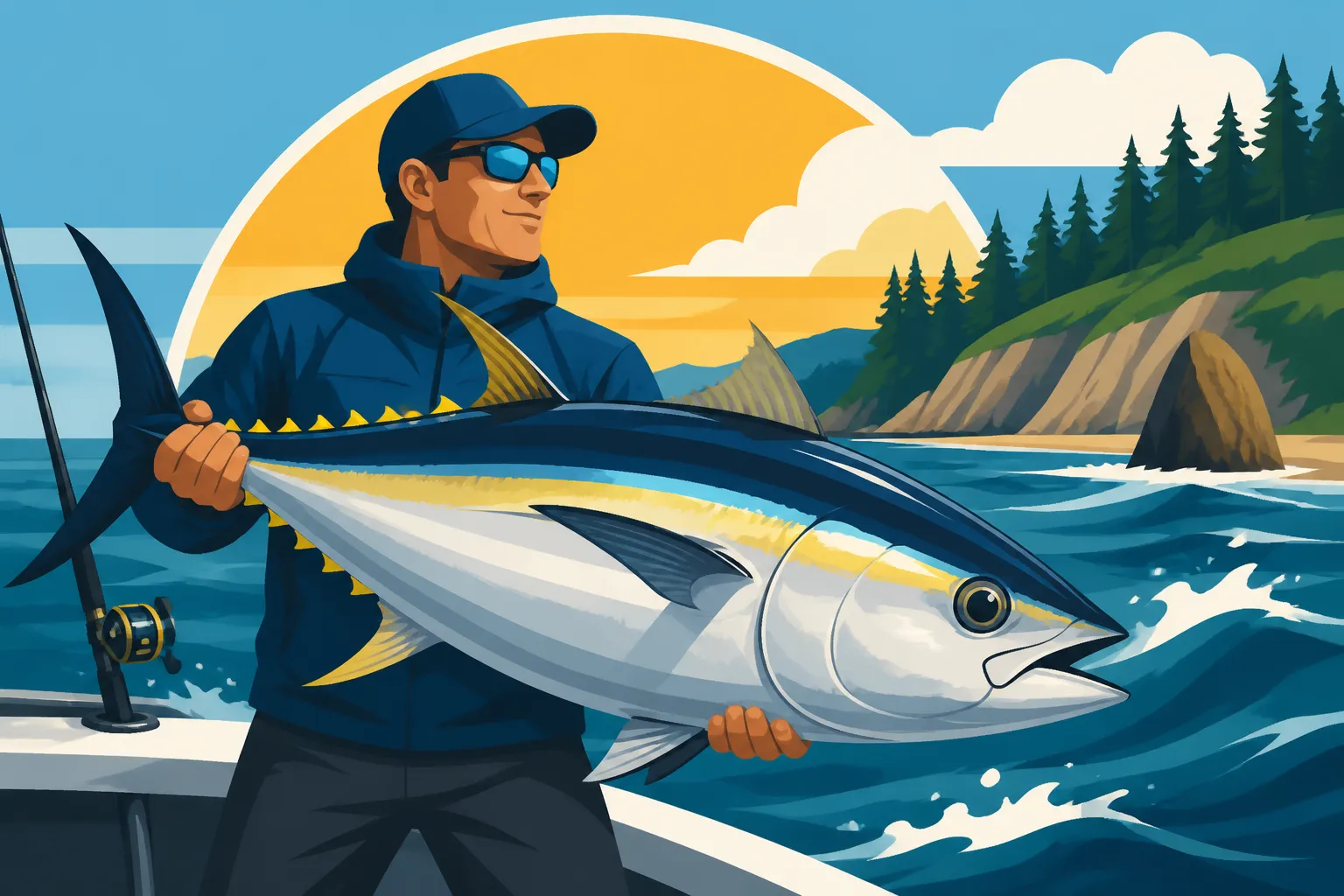
If you’ve ever dreamed of battling a powerful, ocean-going pelagic fish off the Oregon coast, chances are albacore tuna is at the top of your list. The sheer excitement of a "tuna run," when these torpedoes of the sea converge offshore, is something many anglers live for. But pinning down the exact Albacore Tuna Fishing Season in Oregon can feel like chasing a ghost – it's an ever-moving target, highly dependent on the whims of the ocean. This guide is here to demystify the factors that dictate when and where these incredible fish show up, helping you prepare for your best chance at a successful tuna adventure.
Understanding Oregon's Albacore Tuna Season Dynamics
The timing of the albacore tuna season off Oregon isn't set in stone like a trout opener in a local lake. It's a complex dance influenced by global ocean currents, baitfish migrations, and a host of environmental variables that make each year unique. This unpredictability is both the challenge and the allure of tuna fishing here.
The Migratory Patterns of Albacore
Albacore tuna are highly migratory, pelagic species, meaning they spend their lives in the open ocean, constantly on the move. They typically follow warmer water masses as they traverse vast distances across the Pacific. For us anglers off the Oregon coast, we're keenly interested in their seasonal push northward from their equatorial breeding grounds into the cooler, food-rich waters of the North Pacific. These younger, smaller albacore, often referred to as "footballs" due to their stocky build, are the ones that typically come within striking distance of our shores. They're driven by an insatiable hunger, following schools of anchovies, sardines, and other baitfish that congregate where ocean currents create upwellings and nutrient-rich zones. Understanding this basic migratory drive is key to appreciating why their arrival times can fluctuate.
Key Environmental Factors Influencing Tuna Presence
So, what specifically triggers these incredible fish to show up off Oregon? It's primarily about water temperature and clarity. Albacore prefer water temperatures generally ranging from 58 to 64 degrees Fahrenheit (around 14.5 to 18 degrees Celsius). If the ocean currents push warmer water, often associated with the California Current, closer to our coast, the tuna will follow. Conversely, if we experience strong upwellings of cold, deep water or persistent cool weather patterns, the warm water edge might stay much further offshore, or even never quite establish itself. Ocean chlorophyll levels, which indicate the presence of phytoplankton and thus baitfish, also play a huge role. Look for distinct temperature breaks and clear, blue water as primary indicators. These are the lifeblood of a good tuna season.
Historical Trends and Unpredictability
While there are historical patterns, relying solely on last year's calendar for this year's tuna forecast is a recipe for disappointment. Historically, Oregon's albacore tuna season generally kicks off in late June or early July, often peaks in August and September, and can extend into October, weather permitting. However, anomalies are common. Some years, early fish show up in mid-June; other years, a cold spring means the bite doesn't really get going until late July. This unpredictability is precisely why local fishing forums and charter reports become invaluable resources as the season approaches. It's about being flexible and ready to seize the opportunity when the conditions align.
When to Expect Albacore Tuna Offshore
While the exact dates are never guaranteed, we can talk about the general windows and what to expect during different parts of the season. Think of it less as a fixed schedule and more as a dynamic forecast, constantly shifting with the Pacific's moods.
Peak Season Window
For most Oregon anglers, the sweet spot for albacore tuna typically falls between late July through September. This is when the warm water mass is most consistently pushed towards the coast, often bringing large schools of baitfish and, consequently, hungry tuna. During this peak period, the weather tends to be more stable, with calmer seas making the offshore run more manageable for smaller boats. It's also when charter boats are running nearly daily, and private boat ramps are bustling with eager anglers. If you're planning your first tuna trip or hoping for the best chance at multiple fish, this is generally the window to target.
Early Season Opportunities and Challenges
The early season, typically mid-June to mid-July, can be feast or famine. Sometimes, a warm water eddy breaks off the main current and pushes close to shore, bringing early schools of albacore within reach. These early fish are often the biggest of the season, aggressive and eager to bite. However, the weather during this time can be notoriously unpredictable, with more frequent strong winds and rougher seas that can make the long run offshore challenging or even dangerous. Plus, the fish might be scattered, requiring more searching. Early season success often requires more patience, better weather forecasting skills, and a willingness to run further if needed. If you're itching to be the first to land a tuna, keep a close eye on oceanographic charts starting in June.
Late Season Fishing and Weather Considerations
As the calendar turns to October and sometimes even into early November, the late season offers another shot at albacore, but with its own set of challenges. The fish might still be present, often gorging themselves before their southern migration, and can be found closer to shore in some years. However, the weather becomes the dominant factor. Storm systems become more frequent, bringing high winds, heavy seas, and short weather windows. For this reason, late season tuna fishing is often best left to experienced boaters with larger, more capable vessels who can safely navigate changing conditions. If you're considering a late-season trip, prioritize safety, monitor marine forecasts rigorously, and be prepared to cancel if conditions aren't ideal. It can be incredibly rewarding, but it demands respect for the ocean.
Here’s a quick overview of the general characteristics of Oregon's Albacore Tuna seasons:
| Season Phase | Typical Months | Water Temperature Range (F) | Weather Tendency | Tuna Abundance & Size | Key Challenge |
|---|---|---|---|---|---|
| Early Season | June – Mid July | 56-60°F | Unpredictable, potential for rough seas | Scattered, often larger fish | Weather, locating fish |
| Peak Season | Late July – September | 58-64°F | Generally calmer, more stable | Abundant, "football" size | Crowds, finding consistent bite |
| Late Season | October – Early November | 58-62°F | Increasingly unpredictable, storms | Can be good, often larger fish | Weather, short fishing windows |
Gear and Techniques for Oregon Albacore Tuna Fishing
When those albacore finally make their appearance, you want to be ready! This isn't your typical trout fishing setup. Tuna are powerful, fast, and will test your gear and your stamina. Having the right tools and knowing how to use them can make all the difference between a triumphant catch and a heartbreaking bust-off.
Essential Rods, Reels, and Line
For albacore tuna, you're looking at sturdy conventional gear. A good setup typically involves a medium-heavy to heavy conventional rod, usually 6 to 7 feet long, with a fast action to handle the initial powerful strikes and deep bends. Pair this with a robust conventional reel, often a lever drag model, capable of holding at least 300-400 yards of 30 to 50 lb monofilament or braided line. Brands like Penn, Shimano, and Accurate are popular choices among seasoned tuna anglers. Many anglers opt for braided mainline for its sensitivity and incredible strength-to-diameter ratio, then attach a 50-100 foot top shot of fluorocarbon or monofilament leader of around 40-60 lb test. Fluorocarbon offers excellent abrasion resistance and is virtually invisible in the water, which can be an advantage on finicky days. Don't skimp on line quality; a cheap line is often the weakest link in a tuna battle. You might even find good deals on bulk spools of braid on Amazon to stock up for the season.
Lures, Baits, and Spreader Bars
Tuna are aggressive eaters, and a variety of artificial lures can be highly effective. Popular choices include:
- Feather Jigs: These classic lures, often resembling small baitfish, are fantastic for trolling. White, pink, purple, and green are common colors.
- Cedar Plugs: Simple yet deadly, these wooden plugs create a unique swimming action that drives tuna wild. Natural cedar is a favorite, but painted versions also work.
- Hoochies (Squid Skirts): These soft plastic squid imitations are incredibly versatile and can be trolled naked, over a lead head, or behind a dodger.
- Tuna Clones: These are small, weighted plastic lures that imitate anchovies or small baitfish.
- Spreader Bars: These are game-changers, mimicking a school of baitfish with multiple squid or bird teasers leading a main hook lure. They create a huge disturbance and a compelling visual for cruising tuna. Many anglers will deploy several different lure types and colors to see what the fish are keying in on that day. Don't be afraid to experiment! You can often find a wide selection of these specialized lures and rigging supplies on Amazon.
Trolling Strategies and Boat Setup
Trolling is the most common and effective way to cover water and locate albacore. Most boats will run a spread of 4 to 8 lines at varying distances and depths.
- Outriggers: These extend lines away from the boat, creating a wider spread and reducing tangles.
- Downriggers: While less common for albacore, some anglers use them to get lures deeper, especially if tuna are holding lower in the water column.
- Flats and Corners: Lines deployed directly from the stern (corners) and from the sides (flats) of the boat create a pattern.
- Speeds: Typical trolling speeds range from 5 to 9 knots. Experiment to find the "sweet spot" that makes your lures swim naturally.
- Reading Your Electronics: Your fishfinder and GPS are your best friends. Mark every bite, every school of bait, and every temperature break. If you get a bite, don't stop the boat immediately! Keep trolling for a short distance (a "tuna circle" or "boat turn") to see if you can trigger a "jig strike," where multiple fish hit multiple lines. This is when the chaos and excitement really begin! A good Oregon Fishing Charter Guide will be expert at setting up an effective spread.
Locating Albacore Tuna: Reading the Ocean
Finding albacore tuna isn't just about showing up offshore; it's about understanding the ocean's language. These fish are constantly on the move, and successful anglers are those who can interpret the subtle (and sometimes not-so-subtle) clues the marine environment provides.
Water Temperature and Color Breaks
As mentioned earlier, water temperature is paramount. Albacore gravitate to specific temperature ranges. Anglers use marine temperature charts, often available online, to identify "temperature breaks" – areas where water temperature changes rapidly over a short distance. These breaks often indicate current lines where plankton and baitfish concentrate, creating a buffet for tuna. Ideal temperatures are typically in the upper 50s to low 60s Fahrenheit. Similarly, "color breaks" where murky green coastal water meets clear, deep blue oceanic water are also prime areas. The cleaner, bluer water is usually what tuna prefer, especially when it meets a temperature change. Keep a keen eye on your boat's temperature gauge and visually scan for these transitions.
Satellite Imagery and Forecasting Tools
In this modern age, we have incredible tools at our fingertips to help us pinpoint potential tuna zones before we even leave the dock. Satellite imagery, such as those showing sea surface temperature (SST) and chlorophyll concentrations, are invaluable. Services often provide daily updates, allowing anglers to identify warm water eddies, temperature breaks, and areas of high productivity (where baitfish are likely to be). These tools can help you determine How far offshore do you need to go for albacore tuna and reduce wasted fuel and time. Learning to interpret these charts takes a bit of practice, but it's a skill that will dramatically increase your chances of finding fish. Many experienced anglers will study these charts days in advance, looking for patterns and predicting where the "tuna water" might be.
Signs of Life: Birds, Bait, and Structure
Once you're out on the water, your eyes and ears become your most important tools.
- Birds: Diving seabirds, especially shearwaters, terns, and gulls, are often the most obvious indicator of feeding activity. They are usually targeting the same baitfish that tuna are, or picking up scraps from a tuna feeding frenzy. A large flock of birds actively diving is often a sure sign that tuna are in the area.
- Baitfish: Keep a lookout for schools of baitfish, whether jumping on the surface or showing up as dense marks on your fishfinder. If you find the bait, you're likely to find the tuna.
- Floating Debris: Any floating debris, like logs, kelp paddies, or even random trash, can act as an aggregation point for baitfish, which in turn attracts tuna. It’s always worth a troll or two around any significant floating object you encounter.
- Whales and Dolphins: While not always direct indicators, the presence of larger marine mammals often means there's a healthy food chain in the area, which could include tuna. Pay attention to how the ocean is behaving and what other marine life is telling you.
Preparing for Your Oregon Tuna Adventure
A successful tuna trip isn't just about catching fish; it's about a well-planned, safe, and enjoyable experience. The Oregon coast can be unforgiving, so preparation is key, especially when venturing miles offshore.
Safety Gear and Communication
Safety must always be your top priority when heading offshore. Ensure your vessel is in top condition and that you have all required and recommended safety gear. This includes properly sized life jackets for everyone on board, a fully charged VHF marine radio (and knowing how to use it), an emergency position indicating radio beacon (EPIRB) or satellite messenger, flares, a first-aid kit, and a functional bilge pump. It's also critical to file a float plan with a responsible person on shore, detailing your intended fishing grounds, expected return time, and number of people on board. Cell phone service is unreliable or nonexistent far offshore, so don't depend on it for emergencies. Having a good, reliable backup like a satellite phone or messenger, perhaps purchased from Amazon, can provide immense peace of mind. Remember, the ocean doesn't care how big your boat is; it demands respect.
Essential Supplies and Comfort Items
Beyond safety, a comfortable crew is a happy crew, especially on long offshore runs.
- Food and Water: Bring plenty of snacks, sandwiches, and bottled water. Hydration is crucial.
- Layered Clothing: Even on sunny days, offshore temperatures can be chilly, and conditions can change rapidly. Bring waterproof outerwear.
- Sun Protection: Sunglasses, wide-brimmed hats, and high SPF sunscreen are non-negotiable. The sun's reflection off the water can be intense.
- Seasickness Medication: If you're prone to seasickness, take preventive measures well before you depart. Dramamine, Bonine, or prescription patches are popular options.
- Coolers and Ice: You'll need at least one cooler packed with ice specifically for your catch. Some experienced anglers bring a "kill bag" which helps chill the tuna quickly and maintain quality. For longer trips or larger crews, two coolers – one for food/drinks and one for fish – are ideal. Consider a high-quality marine cooler, easily found on Amazon, that can hold ice for days.
- Fuel: Calculate your fuel needs generously, accounting for potential detours, trolling time, and adverse conditions. "The rule of thirds" is a good guideline: one-third fuel to get there, one-third to get back, and one-third in reserve.
Processing Your Catch Onboard and Ashore
Once you've landed an albacore, proper handling is crucial for maintaining meat quality.
- Bleeding and Icing: Tuna should be bled immediately after being brought on board. A quick slit behind the pectoral fin or a spike to the brain (iki jime) followed by bleeding in a bucket of seawater will ensure the best quality. Then, get the fish into a cooler packed with ice as quickly as possible. Rapid chilling prevents spoilage and preserves the delicate flavor.
- Filleting and Storage: Many anglers fillet their tuna at the dock or even on the boat if conditions allow. Larger operations like Newport Oregon Fishing Charters often offer fish cleaning services. Aim to remove the bloodline from the fillets. Vacuum sealing and freezing the fillets is the best way to preserve them for longer periods. Albacore is fantastic fresh, but having a freezer full of your own, perfectly processed tuna is a huge reward.
Regulations and Responsible Tuna Fishing
Part of being a good angler is understanding and adhering to the rules, as well as practicing ethical fishing. Albacore tuna populations are generally healthy, but responsible practices ensure they remain that way for future generations. For comprehensive details, always consult the official Oregon Fishing Regulations Explained from the Oregon Department of Fish and Wildlife (ODFW).
Daily Bag Limits and Possession Rules
While albacore tuna are generally considered a robust fishery with generous limits, it’s still critical to be aware of current regulations. Unlike some salmon and steelhead fisheries with very specific and often changing daily bag limits, albacore tuna regulations are typically more consistent year-to-year for recreational anglers. However, these can change. Always check the latest ODFW sport fishing regulations before you head out. These regulations will specify the daily bag limit – how many tuna you can keep per person per day – and sometimes possession limits, which dictate the maximum amount of fish you can have in your possession, including at home. The general rule is to respect these limits; they are there for a reason. For instance, you can typically learn more about these specifics in the Oregon Daily Bag Limits Explained section of the ODFW regulations.
Understanding Recreational vs. Commercial Seasons
It's important to distinguish between recreational and commercial tuna seasons. While recreational anglers are often targeting younger "football" tuna, commercial fleets pursue albacore on a much larger scale, often further offshore, using different gear like trollers or longlines. Their seasons, quotas, and regulations are entirely separate from those for sport anglers. As a recreational angler, your focus should be solely on the sport fishing regulations. You do not need any special commercial permits for recreational tuna fishing, beyond your standard Oregon Ocean Endorsement if you plan to fish in federal waters (which is where albacore tuna are almost always found).
Sustainable Practices and Conservation
Albacore tuna are a remarkable resource, and our actions as anglers can contribute to their long-term sustainability.
- Targeting Healthy Stocks: Albacore in the Pacific are generally considered a healthy stock, but avoiding wasteful practices is still key. Only keep what you will eat or can properly store.
- Proper Catch and Release (if applicable): While most albacore caught by recreational anglers are kept, if you find yourself with an overabundance or need to release a fish for any reason, do so quickly and carefully. Minimize handling time, use wet hands, and support the fish horizontally.
- Reduce Bycatch: Trolling with appropriate lures and maintaining proper speeds helps minimize the chances of hooking non-target species.
- Report Tags: Occasionally, you might catch a tagged tuna. If you do, report the tag number and location to the relevant authorities (usually indicated on the tag itself). This data is incredibly valuable for scientists studying tuna migration and population dynamics.
- Leave No Trace: Always pack out everything you pack in. No trash, no discarded fishing line or gear. Keep our oceans clean for everyone.
This article is for general informational purposes only and does not constitute professional advice. Laws, prices and regulations vary by location and change over time. Consult a qualified professional for guidance on your specific situation.