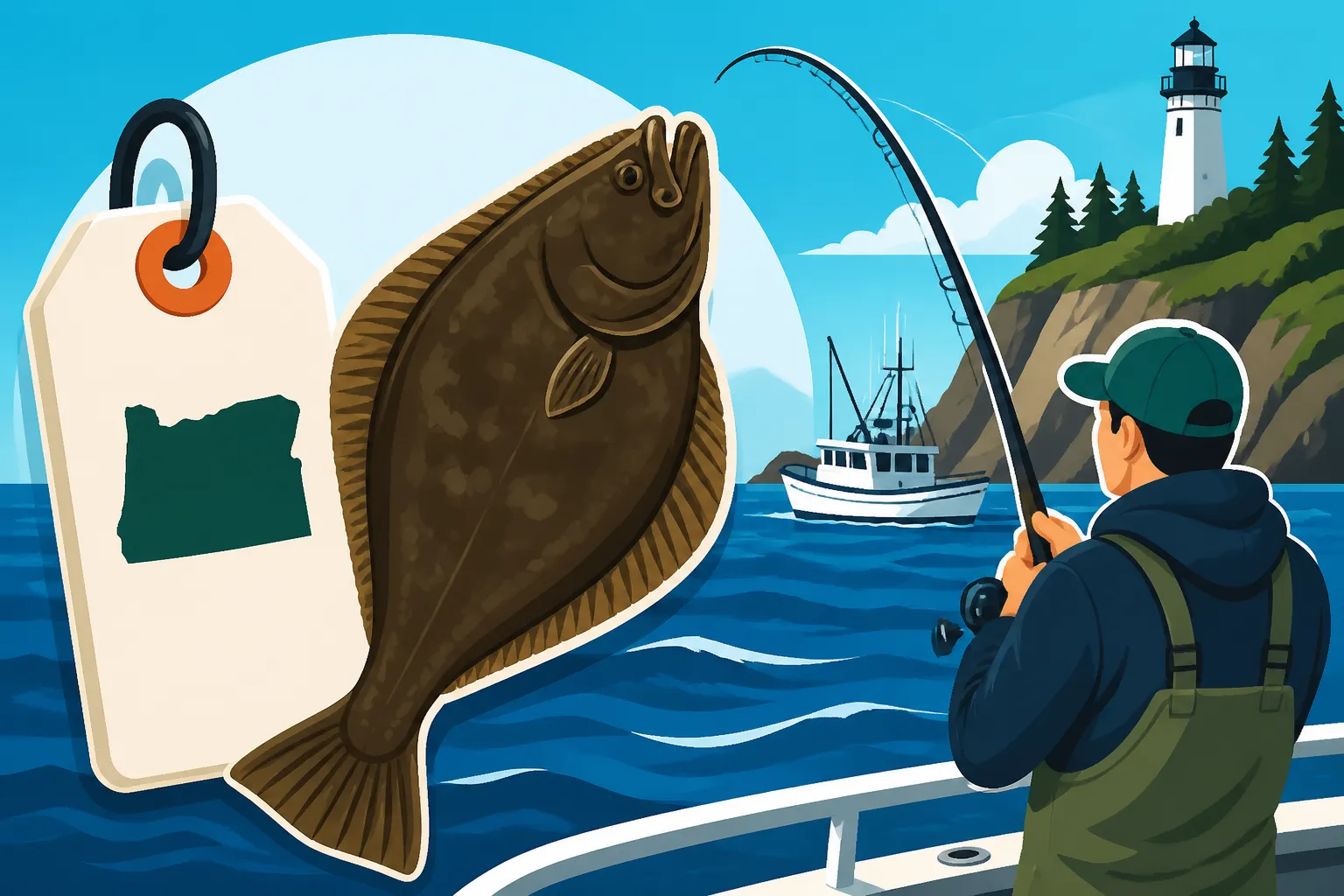
Oregon halibut tag requirements for ocean fishing
The world of fishing regulations can feel like a labyrinth, especially when you’re venturing into the vast expanse of the Pacific for a prized catch like halibut. Many anglers find themselves scratching their heads, wondering if their standard fishing license is enough or if there's a special hoop to jump through for these flat-bodied giants. This comprehensive guide is here to untangle the specifics of Oregon's halibut tag requirements, ensuring you're fully prepared and legally compliant for your next ocean fishing adventure.
Understanding Oregon's Halibut Fishing Regulations
When you're out on the big blue, whether it's near Newport, Garibaldi, or Astoria, chasing after Pacific halibut, it’s crucial to know the rules. Oregon’s approach to managing its fisheries is designed to protect these incredible resources for future generations, and that often means special requirements for certain high-value or vulnerable species.
The Basics: Why a Halibut Tag is Essential
Many folks assume that once they have their general Oregon fishing license, they’re good to go for anything that swims. And for a lot of species, that’s largely true! But when it comes to Pacific halibut, Oregon takes a more granular approach. You see, the Oregon Department of Fish and Wildlife (ODFW) manages halibut cooperatively with federal agencies and other states, given that it’s a migratory species and a highly sought-after one.
The halibut tag isn't just another piece of paper; it's a vital tool for conservation and data collection. By requiring a specific tag, the ODFW can precisely track the number of halibut caught and retained by recreational anglers. This data is absolutely essential for understanding population health, setting future season dates, and ensuring that fishing pressure remains sustainable. Without this detailed information, it would be much harder to make informed decisions about how many halibut can be harvested each year without depleting the stock. It helps them manage the resource effectively, preventing overfishing and ensuring there are still plenty of halibut for your grandkids to chase. Think of it as a personalized accounting system for a very valuable fish. This level of detail goes beyond what you might find in a general Oregon Fishing License Guide; it's about species-specific management.
While your general Oregon Annual Angling License covers a broad spectrum of fish, specific tags or endorsements are required for certain species, much like you might need an Oregon Combined Angling Tag Guide for salmon or steelhead. For halibut, this isn't an "endorsement" that gets added to your license like the Oregon Ocean Endorsement (which is also needed for most ocean fishing, but is separate from the halibut tag itself). Instead, it's a physical tag you buy and affix to the fish. The core idea is that each halibut you retain needs its own unique identifier.
Who Needs a Halibut Tag and When
This is where some confusion often arises. Let’s break down exactly who needs this tag and under what circumstances.
Firstly, if you are planning to retain a Pacific halibut in Oregon’s ocean waters, you absolutely need a halibut tag. There's no getting around this. This applies to all anglers, regardless of whether you're fishing from your own boat, a charter, or even if you manage to hook one from a pier (though that's a rare feat for halibut!). The rule is simple: if you keep it, you tag it.
What about age requirements? Generally, in Oregon, anglers 18 years of age and older need a valid fishing license and any required tags or endorsements. For youth anglers under 18, while they don't always need a general angling license for many freshwater species, the requirements for ocean species like halibut can be a bit more nuanced. Typically, if a youth is old enough to be actively participating and retaining their own catch, they would need the appropriate tag. However, the primary license requirement applies to those 18 and older. It's always best practice to check the current Oregon Fishing Regulations Explained booklet or the ODFW website, as rules can occasionally change. The spirit of the rule is that the person retaining the fish is responsible for its legal tagging.
Now, a common question: what if you’re only planning on catch-and-release fishing for halibut? If your sole intention is to release all halibut you catch, then technically, you do not need to purchase a halibut tag. The tag is specifically for fish that are retained. However, it's incredibly important to understand that halibut seasons are often very short and can close suddenly. If you go out intending to catch and release, but then the season closes or you decide you do want to keep a legal fish, you must have that tag purchased beforehand. You cannot retroactively purchase a tag once the fish is in your possession. Many seasoned anglers opt to buy the tag just in case, even if they initially plan on releasing, because you never know what the day will bring.
Are there any exceptions, like "free fishing days"? While Oregon does offer Oregon Free Fishing Days where a general angling license might not be required for certain species, these days typically do not waive the requirement for special tags like the halibut tag. These specialized tags are revenue generators for specific conservation efforts and are usually still required even on free fishing days. Again, always double-check the specific announcements for those days, but assume a halibut tag is always necessary for retention.
Obtaining Your Oregon Halibut Tag
Getting your halibut tag is generally a straightforward process, but knowing where and how to do it can save you a lot of hassle and prevent any last-minute scramble before your fishing trip.
Where to Purchase Your Halibut Tag
Just like with your general fishing license, there are a few convenient ways to acquire your Oregon halibut tag:
- Oregon Department of Fish and Wildlife (ODFW) Online License System: This is by far the most convenient method for many anglers. The ODFW's online portal allows you to purchase your fishing license, any necessary endorsements, and specific tags from the comfort of your home, 24/7. You simply log in (or create an account if you're new), select the licenses and tags you need, and pay with a credit card. You can then print your license and tags right away, or even display them on your smartphone as proof, though having a physical copy is often recommended for tags. This is detailed further in guides like Where to Buy an Oregon Fishing License.
- Authorized License Agents: Across Oregon, numerous sporting goods stores, bait shops, marinas, and even some general stores are authorized to sell ODFW licenses and tags. Places like Bi-Mart, Fred Meyer, and independent tackle shops commonly serve as agents. This is a great option if you prefer an in-person transaction, want to chat with local experts for tips, or need to pick up some last-minute gear (like a quality fillet knife, or maybe a new reel from a brand like Shimano, available at most sporting goods stores or online at Amazon).
- ODFW Offices: While less common for everyday purchases, you can also purchase licenses and tags directly from an ODFW office during business hours. This is usually reserved for more complex licensing situations or if you need to speak directly with staff.
What You'll Need and the Purchase Process
The process is generally simple, especially if you already have an ODFW account.
For Online Purchase:
- Access the ODFW Licensing System: Go to the official ODFW website and navigate to their online licensing system.
- Log In or Create Account: If you’ve purchased an Oregon fishing license before, you’ll have an account. You'll need your Hunter/Angler ID (often printed on your previous license) and password. New users will need to create an account, which typically involves providing personal information like your full name, address, date of birth, and possibly your driver's license number.
- Select Your Licenses and Tags: Once logged in, choose "Buy Licenses, Tags & Endorsements." Make sure you have a valid general angling license first, as the halibut tag is an add-on. Then, select the Pacific Halibut Tag. Remember to also get your Oregon Ocean Endorsement if you haven't already, as it's required for most ocean fishing.
- Review and Pay: Confirm your selections, proceed to checkout, and pay using a credit or debit card.
- Print or Save: You'll receive a confirmation and a printable version of your license and tags. It’s a good idea to print it out and keep it in a waterproof bag, along with a pen, so you can fill out the tag details immediately upon retaining a halibut. While digital proof on your phone is often accepted, a physical tag for affixing to the fish is non-negotiable.
For In-Person Purchase at an Agent:
- Bring Identification: You'll need a valid form of identification, typically an Oregon driver's license or state ID. Non-residents will need their home state's driver's license or another valid ID. Knowing What ID do you need to buy an Oregon fishing license in advance will save you time.
- Specify Your Needs: Clearly state that you need an Oregon fishing license (if you don't already have one), the Oregon Ocean Endorsement, and specifically the Pacific Halibut Tag.
- Fill Out Information: The agent will guide you through the process, often entering your details into their system. You may need to fill out a short form.
- Pay and Receive: Pay for your purchase, and you’ll receive printed copies of your license and tags on the spot. Make sure all information is correct before you leave the store.
A common pitfall is waiting until the last minute. Halibut seasons, particularly for the recreational fishery, can be incredibly short and sometimes even sporadic, depending on quota attainment. Being prepared with your tag in hand before you head out is crucial. You don't want to miss a prime fishing day because you're stuck trying to get a tag.
Using Your Halibut Tag and Adhering to Rules
Having the tag is just the first step. Knowing how to properly use it and understanding the associated regulations is equally important to ensure a legal and responsible fishing trip.
Proper Tagging Procedures and Reporting
Once you've successfully landed and decided to retain a legal-sized Pacific halibut, the clock starts ticking. The tag must be immediately validated and affixed to the fish. This isn't something you do back at the dock; it needs to happen as soon as the fish is brought into possession and you decide to keep it.
Here’s the typical procedure for proper tagging:
- Date and Time: Using a waterproof pen, clearly mark the date and time of catch on the tag. This is crucial for enforcement purposes, proving when the fish was taken.
- Affix to Fish: The tag usually has an adhesive backing or a self-locking mechanism. It must be attached to the fish itself. The most common and accepted method is to affix it firmly to the operculum (gill plate) or the anterior dorsal fin area of the halibut. The goal is for the tag to be clearly visible and securely attached so it cannot be easily removed or transferred.
- No Transferring: Each tag is assigned to a specific angler and is valid for only one halibut. You cannot share tags or transfer an unused tag to another angler. This is part of why understanding Oregon Fishing License Types Explained is so critical.
- Possession Limit: Remember, your tag covers a single halibut. If daily bag limits allow for more than one, you would need an additional tag for each subsequent fish retained. Be aware of Oregon Daily Bag Limits Explained for halibut, which are often very restrictive (e.g., one fish per person per day).
Unlike salmon or steelhead, which often require you to fill out a separate Oregon Catch Record Card Requirements for detailed harvest reporting, the halibut tag itself serves as the primary harvest record. However, you should always keep your fishing license and the validated tag with you until the fish is processed or consumed. Game wardens can and will ask to see your license and inspect your tagged fish.
Understanding Seasons, Bag Limits, and Size Restrictions
Halibut fishing in Oregon is highly regulated, and for good reason. The seasons are often short, specific, and subject to change based on federal quotas and actual catch rates. This is arguably the most critical aspect to understand, even more so than the tag itself, as it dictates when you can actually fish for and keep halibut.
- Season Timing: Recreational halibut seasons are typically set in specific "all-depth" and "nearshore" quotas and generally run for limited days between May and September. These seasons are not static; they can open and close with little notice if the quota is met. For example, some years the all-depth season might only be open for a few specific days a month, while the nearshore season (closer to shore) might have different opening dates and regulations. It is absolutely essential to check the latest ODFW sport fishing regulations, typically published annually in their physical booklet and always updated on their website. You need to know How to check Oregon emergency fishing closures before every trip.
- Daily Bag Limits: For Pacific halibut, the daily bag limit is almost always one fish per angler. This is a strict limit, and violating it can result in significant penalties.
- Annual Bag Limits: In addition to daily limits, there might also be an annual bag limit. For instance, an angler might be allowed to retain a certain number of halibut per year across all seasons. Again, this information is critical and can be found in the official regulations.
- Size Restrictions: Halibut also have minimum and sometimes maximum size limits. These are put in place to protect juvenile fish and ensure breeding-age adults can contribute to the population. You need to be able to accurately measure your halibut immediately upon landing it. The standard measurement is usually from the tip of the snout to the farthest tip of the tail, with the fish lying flat. Make sure to have a reliable measuring device on your boat. If a fish is undersized or oversized (if a maximum length is in place), it must be released immediately and unharmed.
Here's a quick reference table for general halibut regulations, but remember these are examples and subject to change. Always consult the official ODFW regulations for the most current information.
| Requirement / Rule | General Guideline | Important Notes |
|---|---|---|
| General Angling License | Required (Age 18+) | Foundation for all fishing in Oregon. Oregon Fishing License Cost varies. |
| Ocean Endorsement | Required (Age 18+) | Necessary for any ocean fishing. |
| Halibut Tag | Required for retention | One tag per halibut kept. Must be immediately affixed. |
| Season Dates | Variable (May-Sept typical) | Check ODFW website DAILY before fishing. Quotas often close seasons early. |
| Daily Bag Limit | One halibut | Very strict. No exceptions. |
| Annual Bag Limit | Variable (often 6 per year) | Consult current ODFW regulations for precise number. |
| Minimum Size Limit | Variable (often 22-26 inches) | Measure accurately from snout to tail. |
| Measuring Tool | Recommended on board | Essential for verifying legal size immediately. |
| Waterproof Pen | Essential for tagging | For clearly marking date and time on tag. |
The most common mistake anglers make with halibut fishing is not checking the specific season openings and closures immediately before their trip. Unlike some other fisheries that have predictable, long seasons, halibut seasons can be very dynamic, opening and closing with little warning when harvest quotas are reached. Using the ODFW's online resources or their dedicated hotline is non-negotiable for a successful and legal halibut trip.
Common Questions and Troubleshooting for Halibut Anglers
Even with all the information at hand, questions can pop up when you're preparing for or out on the water. Let’s tackle some of those common concerns.
What Happens if You Lose Your Halibut Tag?
Losing your halibut tag can definitely throw a wrench in your fishing plans, and it's a frustrating situation that unfortunately happens. Imagine you're packing up your gear, heading out to the coast, and suddenly realize your carefully tucked-away tag is nowhere to be found. What then?
If you lose your halibut tag before you go fishing, the process for replacement is similar to replacing a lost fishing license. You'll typically need to go back to the ODFW online licensing system or an authorized vendor. There will likely be a small fee associated with printing a duplicate tag, just as there would be for a duplicate license. It's not usually a full price repurchase, but it's an administrative cost. You cannot just write down the tag number on a piece of paper; you need the actual, official tag. This highlights the importance of making sure your license and tags are secure. Consider a waterproof wallet or a dedicated fishing tackle box compartment for these crucial documents.
Now, if you're out on the water and somehow lose your tag after you've caught a legal halibut but before you've affixed it, you're in a tough spot. Without a valid tag, you cannot legally retain that fish. It would have to be immediately released, assuming it's still alive and releasable. If you've already kept it and cannot produce a tag when checked by a game warden, you could face significant penalties for fishing without the required documentation. These penalties can range from substantial fines to confiscation of gear and catch, and even loss of future fishing privileges. These are the kinds of serious Oregon Fishing Violations and Penalties that everyone wants to avoid. The golden rule is: no tag, no retention. This is why many experienced anglers always carry their tags, along with their Oregon Fishing License Guide, in a secure, waterproof pouch or a dedicated spot on their boat.
To prevent this kind of headache, always treat your halibut tag like a valuable document. Print a spare if possible (check if the system allows multiple prints for one purchase), keep it dry, and make sure it's easily accessible but also secure. Some anglers even laminate their tags (after signing and filling out any permanent information, but leaving the validation spaces clear for on-the-water use) to prevent damage.
Combining Halibut Fishing with Other Ocean Adventures
Oregon's coast offers a smorgasbord of fishing opportunities. Many anglers venture out not just for halibut but also for rockfish, lingcod, or even crabbing. The good news is that these trips can often be combined, but you need to be meticulous about your licensing and tagging.
Firstly, for any ocean fishing, you'll need your general Oregon fishing license and the Oregon Ocean Endorsement. The Ocean Endorsement covers your ability to fish in the ocean for species beyond the mouth of rivers. It’s a blanket requirement for saltwater angling but doesn't specifically grant you permission to keep halibut; that's where the individual tag comes in.
If you're planning a combo trip – say, starting the day trying for halibut and then switching to bottom fishing for rockfish – you'll need:
- Your general Oregon fishing license (or relevant Oregon Fishing License Types Explained)
- The Oregon Ocean Endorsement
- Your Pacific Halibut Tag (if you intend to keep halibut)
- Any other specific tags or endorsements required for other species, though for general rockfish and lingcod, the ocean endorsement typically covers it, within their own specific daily bag and size limits.
When booking a charter, it's a common misconception that the charter company provides your license and tags. This is almost never the case. While many reputable charter companies, especially those in popular ports like Newport, Depoe Bay, or Astoria, will provide all the necessary fishing gear, bait, and often even clean your catch, it is always the angler's responsibility to have their own valid fishing license, ocean endorsement, and any required tags (like the halibut tag) before stepping on the boat. Always clarify this with your charter company when booking, but assume you need to purchase these yourself in advance. If you're wondering How long is an Oregon fishing license good for, remember that most annual licenses expire on December 31st, regardless of when you purchased them during the year, so ensure yours is current.
Some charter operations might offer group packages that include specific fishing types, but the personal licensing and tagging requirements always fall to the individual angler. Make sure you also understand the specific Oregon Daily Bag Limits Explained for all species you target on a combined trip, as these limits apply per angler, even on a charter boat. Being well-prepared means more time fishing and less time worrying about regulations.
Disclaimer
Please note: Fishing regulations in Oregon are subject to change. Always consult the official Oregon Department of Fish and Wildlife (ODFW) website or their current printed regulations booklet before heading out on your fishing trip. This guide is for informational purposes only and does not constitute legal advice.