Do you need a fishing license to fish from a dock in Oregon?
Many anglers, especially those new to Oregon or just looking for a casual afternoon outing, often wonder if they need a fishing license when casting a line from a dock. It seems like such a simple act, right? You're not on a boat, not really "out there" in the wilderness. But the regulations can be surprisingly intricate, leading to confusion and potential fines. This guide will clarify exactly when and why you need an Oregon fishing license for dock fishing, and address those tricky exceptions and common misunderstandings.
The Basics: Fishing from a Dock in Oregon
The Simple Answer: Yes, You Usually Do
Let's get straight to it because this is often where the confusion begins and ends for many people. In Oregon, if you are 12 years of age or older and attempting to catch any fish, shellfish, or marine invertebrates from any public water – and that includes docks, piers, jetties, or even the bank of a river – you are required to have a valid Oregon fishing license. It doesn't matter if you're targeting a trophy salmon, a small panfish, or just trying to snag a crab. The act of "angling" for any aquatic species typically triggers the requirement for a license. The Oregon Department of Fish and Wildlife (ODFW) defines angling broadly, so even if you're just dipping a line with a worm for fun, if you're over the age threshold, you need that license in hand. This often catches people off guard because they assume a dock is somehow different, a more casual environment where rules might be relaxed. Unfortunately, that's rarely the case.
Think of it this way: the state manages these natural resources for everyone, and the funds generated from license sales go directly back into conservation, habitat restoration, fish stocking programs, and enforcement. So, while it might feel like a minor detail, that license is a small but crucial contribution to keeping Oregon's fisheries healthy and vibrant for future generations. Ignoring it, even for a quick cast from a dock, could land you in trouble, and nobody wants their relaxing day by the water ruined by a citation. It's truly a foundational requirement for almost any fishing activity in the state. For a comprehensive overview, you might want to check out our Oregon Fishing License Guide and Oregon Fishing Regulations Explained.
Why the Confusion Exists
It's completely understandable why so many folks are confused about this, and you're definitely not alone if you've pondered this exact question. The confusion often stems from a few different places. First, there's the perception that fishing from a dock is less impactful than, say, going out on a boat. People might think, "I'm just standing here, not really affecting the fish population." However, from a regulatory standpoint, the location of your fishing (dock, boat, bank) doesn't change the fundamental need to manage who is taking from the resource.
Secondly, some other states might have different rules, perhaps allowing unlicensed fishing from public piers in certain areas. This can lead to folks moving to Oregon or visiting and making assumptions based on past experiences elsewhere. Oregon's rules are pretty consistent across the board: if you're going for fish or shellfish, you need a license, regardless of where your feet are planted. Lastly, there's a common misconception that "catch and release" fishing doesn't require a license since you're not keeping anything. But again, the act of attempting to catch a fish is what matters to the ODFW, not whether you retain it. So, even if your plan is to carefully release every fish you hook, that license is still a must-have. It’s these subtle distinctions that often trip people up, making a seemingly simple question much more complicated than it appears.
Exceptions and Nuances: When You Might Not Need One
Oregon's Free Fishing Days
Alright, so we've established that generally, you need a license. But, as with most rules, there are some really welcome exceptions, and knowing about them can save you some cash and make for a fantastic day out! The biggest and most popular exception in Oregon is the annual "Free Fishing Days." The Oregon Department of Fish and Wildlife designates a few specific days each year when both residents and non-residents can fish, crab, and clam without needing a license or a combined angling tag. These days are usually spread throughout the year, often coinciding with popular holidays or key fishing seasons, making them a perfect opportunity for families or newcomers to try out fishing without any upfront investment in a license.
During these designated free fishing days, you can absolutely fish from a dock, pier, or the bank of a river or lake without a license. It's a fantastic program designed to introduce people to the joys of fishing and outdoor recreation. However, and this is a big "however," all other fishing regulations still apply. This means you still need to adhere to bag limits, size restrictions, gear requirements (like barbless hooks where mandated), and any seasonal closures for specific species or areas. For example, if you're trying to catch salmon, you'd still need to check if that species is open for retention on that particular free fishing day in your chosen location. So, while the license requirement is waived, don't just assume it's a free-for-all! Always check the Oregon Free Fishing Days schedule and the current regulations before you head out. These days are a real gift to anglers, so mark your calendar when they're announced!
Special Circumstances for Kids
This is another area where many parents or guardians often get confused, and it’s important to get it right, especially if you're planning a family outing. In Oregon, children under the age of 12 are generally exempt from needing a fishing license to angle for fish or shellfish. That's right – if your child is 11 years old or younger, they can cast a line from any public dock without their own license, as long as they are otherwise following all other fishing regulations. This is a wonderful policy that really encourages youngsters to get outdoors and develop a love for fishing without the barrier of purchasing a license. Imagine taking your little one to a dock on the Oregon Coast, like at Newport's Historic Bayfront, to try crabbing or perch fishing. They can do so legally and freely.
However, there's a crucial caveat for children: if a child under 12 catches a salmon, steelhead, or sturgeon, those fish must be recorded on the catch card of a licensed adult who is present and actively supervising. This prevents overharvesting and ensures accountability for these highly regulated species. So, while the kids don't need their own license, an adult often needs one to "cover" those specific trophy fish. As soon as a child turns 12, they fall under the standard adult regulations and must purchase their own license, whether it's an annual license or a short-term option. For a full breakdown, check out the Oregon Fishing Rules for Kids and Seniors guide to ensure you're compliant. It's really about balancing accessibility for youth with responsible resource management.
Private Property vs. Public Access
Now, this particular nuance can be a bit trickier and depends heavily on the specifics of the water you're fishing and the land you're standing on. Generally, if you're fishing in waters that are considered "public waters" – which most rivers, lakes, bays, and the ocean are in Oregon – you need a fishing license, regardless of whether you're standing on private or public land. The license requirement is tied to the act of taking fish from public resources, not necessarily the ownership of the ground beneath your feet.
However, there can be exceptions for truly private ponds or lakes that are entirely enclosed within private property and have no inlet or outlet to public waters. If a body of water is genuinely private and stocked solely by the landowner, and there's no chance of fish migrating to or from public waters, then the state might not require a fishing license. But these situations are rare and often require very specific conditions to be met. For instance, if you're fishing in a small farm pond on private land that has no connection to a creek or river, you might not need a license. But if that pond drains into a stream that eventually leads to a larger river, then it's almost certainly considered public water, and a license would be required. The key is the connectivity to public waterways. Always, always err on the side of caution and assume a license is needed unless you have absolute confirmation from the ODFW or the landowner that the water is truly private and exempt. It's a complex area, so if you're ever in doubt, just get the license.
Understanding Oregon's Licensing Requirements
Different Types of Licenses
Navigating the various types of fishing licenses in Oregon can feel a bit like trying to solve a puzzle, especially with all the endorsements and different durations. But don't worry, it's actually designed to offer flexibility for different angling needs. The most common type, and what most folks get, is the Annual Angling License. This covers you for a full calendar year, usually from January 1st through December 31st, for general freshwater and marine finfish. If you're a resident, it's quite affordable, and for non-residents, while pricier, it's still a good value if you plan multiple trips.
Beyond the annual option, Oregon also offers short-term licenses, which are incredibly popular for visitors or those just looking for a quick outing. You can often purchase a Oregon 1-day fishing license, or even multi-day options, which are perfect if you're only spending a weekend or a week fishing. These short-term licenses are super convenient for dock fishing scenarios, like a quick crabbing trip from a public pier in Tillamook Bay. Then there are specialized endorsements that might be needed depending on what you're targeting. For example, if you want to keep salmon or steelhead, you'll need a Combined Angling Tag in addition to your basic angling license. If you're going for halibut or venturing further offshore for specific marine species, an Ocean Endorsement might be required. And, of course, if crabbing or clamming is your jam, you'll need a Shellfish License, which can be purchased separately or often combined with an angling license. It’s always best to figure out what you plan to fish for before you buy, so you don't end up with the wrong coverage. You can find more details on all these options in the Oregon Fishing License Types Explained guide.
Where to Purchase Your License
Getting your Oregon fishing license is thankfully pretty straightforward these days, with several convenient options available. Gone are the days when you had to track down a specific government office! The easiest and often quickest way for many people is to buy their license online directly through the Oregon Department of Fish and Wildlife (ODFW) licensing system. Their website is user-friendly, and you can print your license right from home or save an electronic copy to your phone, which is typically accepted as proof. This is a huge convenience, especially if you decide last-minute to head out to a dock for some fishing.
If you prefer a more traditional route or just want to chat with someone knowledgeable, you can also purchase licenses in person at various ODFW license agents located throughout the state. These agents are typically sporting goods stores, tackle shops, marinas, and even some general stores that cater to outdoor enthusiasts. Big box retailers like Amazon don't sell actual fishing licenses directly, but they are an excellent place to grab all the gear you might need before you head to an authorized vendor for your license. Imagine picking up a new crab pot or some fishing line from Amazon and then swinging by a local Bi-Mart or Fred Meyer to get your license. This combination makes preparation super easy. Just make sure the place you're buying from is an authorized ODFW vendor. You can usually find a list of these agents on the ODFW website or check out our Where to Buy an Oregon Fishing License article for more specific locations.
Carrying and Displaying Your License
Okay, you've done your due diligence, understood the rules, and purchased your Oregon fishing license. Fantastic! But your responsibility doesn't end there. You also need to ensure you're carrying and, when requested, displaying that license correctly while you're out fishing. It might sound like a small detail, but it's a critical one that often gets overlooked. When you're actively engaged in angling, crabbing, or clamming, your valid license, along with any necessary tags or endorsements, must be immediately available for inspection by an authorized ODFW representative, such as a game warden.
This means having a physical copy that you can pull out of your wallet or tackle box, or an electronic copy on your smartphone or other device. Many anglers find it convenient to laminate their paper license to protect it from the elements, especially when fishing near the salty spray of the ocean from a dock. While an electronic copy on your phone is usually accepted, it's always a good idea to have a charged phone! Imagine a game warden asking for your license, and your battery is dead. That could lead to an uncomfortable situation, even if you did purchase it. The purpose of this requirement is simple: it allows law enforcement to quickly verify that you are legally permitted to harvest fish or shellfish, ensuring fair play and the protection of resources. Don't risk a fine just because your license was tucked away in your car or at home. Be prepared!
Common Dock Fishing Scenarios and What You Need
Crabbing or Clamming from a Dock
Oregon's docks aren't just for catching fish; they're incredibly popular spots for crabbing and clamming, especially along the coast. Think about the bustling docks at Garibaldi or Newport, where families line the railings with crab rings and buckets. It's a quintessential Oregon experience! However, if you're participating in these activities, the license requirements are just as strict, if not more so, than for finfish. If you're 12 years or older, you absolutely need a Shellfish License to harvest Dungeness crabs, red rock crabs, or any type of clams from a public dock or beach. This is a separate license or endorsement from the general angling license, though they can often be purchased together as a package.
It's vital to remember that even if you're just using a simple crab ring dropped from a dock, the rules apply. You'll also need to be aware of the specific regulations for shellfish, which include daily bag limits, size restrictions (especially for Dungeness crabs, where males must be a certain size and females must be released), and season closures. For example, some bays might have temporary closures due to biotoxins. You can find comprehensive information about these specific requirements in our Oregon Shellfish License guide. So, whether you're dangling a chicken leg in a crab pot or digging for clams in the mudflats accessible from a low-tide dock, make sure your shellfish license is valid and readily accessible. Don't let a missing piece of paper ruin your delicious seafood dinner!
Catch-and-Release Fishing
This is a point of frequent misunderstanding that we touched upon earlier, and it's worth reiterating with more depth because it trips up a lot of well-intentioned anglers. Many people believe that if they only plan to practice catch-and-release, they don't need a license. The logic goes: "I'm not keeping any fish, so I'm not impacting the resource." While the spirit of conservation behind catch-and-release is commendable and a fantastic practice for sustainable fisheries, the Oregon Department of Fish and Wildlife's regulations are clear: the act of angling itself triggers the license requirement.
Even if you're using barbless hooks, carefully handling fish, and releasing every single one unharmed, you still need a valid Oregon fishing license if you are 12 years of age or older. The state defines angling as "attempting to take" fish, and that attempt is what the license covers. Game wardens aren't waiting to see if you put a fish in a cooler before checking your license; they can check you as soon as your line is in the water. So, whether you're targeting small panfish from a local pond's dock for fun or practicing your fly-casting technique for trout on a river dock with no intention of harvesting, that license is a must-have. Don't gamble on this one; the penalties are the same whether you kept a fish or not.
Specific Docks and Their Rules
While the general rule is "license required," it's worth noting that certain docks or piers, particularly those managed by cities, counties, or private entities, might have their own additional rules or suggestions, though these typically don't override state licensing requirements. For example, some municipal docks might prohibit certain types of bait, require specific tackle to protect sensitive areas, or have hours of operation.
Take the popular fishing piers in places like Newport or Astoria, for instance. These are fantastic public access points, bustling with activity, but they are still subject to all state regulations. You'll need your Oregon fishing license there, just like anywhere else. Some private marinas might have their own rules about public access to their docks or whether fishing is allowed at all from their specific structures. It's always a good idea to look for signage at the entrance to a dock or pier. These signs often provide information about local regulations, special closures, or specific rules for that location. While a sign might say "No fishing for salmon," it won't exempt you from needing your basic license to fish for, say, perch. It's about layers of rules: the state license is the foundation, and local rules might add further restrictions. Always be observant and respect posted signs, in addition to carrying your valid state license.
The Risks of Fishing Without a License
Penalties and Fines
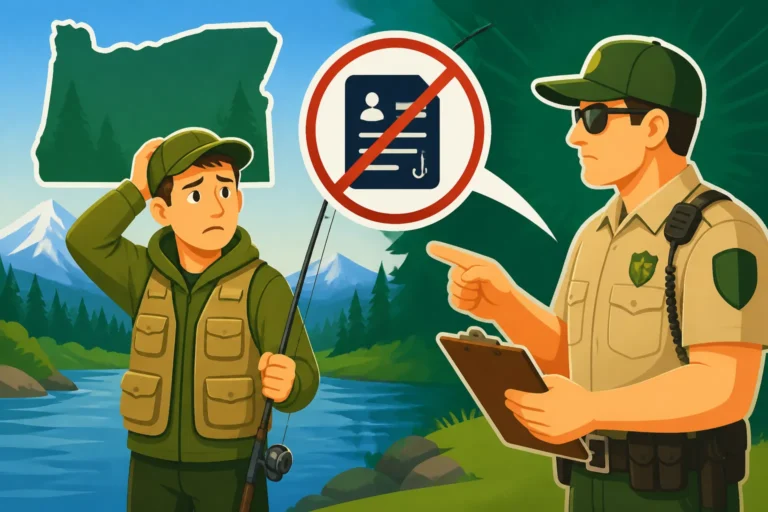
Let's be blunt: getting caught fishing without a license in Oregon is not just an embarrassing situation; it can also be a costly one. This isn't a minor infraction that law enforcement takes lightly. The Oregon Department of Fish and Wildlife (ODFW) and Oregon State Police (OSP) take fishing regulation enforcement very seriously because it's crucial for managing and conserving the state's precious natural resources. If a game warden approaches you on a dock and you're unable to produce a valid fishing license (and any required tags or endorsements), you're likely going to receive a citation.
The penalties can vary depending on the specifics of the violation, your history of infractions, and whether you were also caught violating other rules (like exceeding bag limits or fishing out of season). A common initial fine for fishing without a license can range from a couple of hundred dollars or more. Beyond the monetary fine, you might also face other consequences, such as forfeiture of your fishing gear, or even suspension of future hunting and fishing privileges. It's truly not worth the risk for the cost of a license, especially when day or multi-day options are available and relatively inexpensive. Think about it: a one-day license costs less than a decent meal out, and it saves you the headache and financial hit of a penalty. For more specific details on what you might face, our guide on Fishing Without a License Penalties in Oregon can offer further insights.
The Role of Game Wardens
If you've spent any time fishing in Oregon, chances are you've encountered an Oregon State Police (OSP) Fish and Wildlife Trooper, often referred to as a game warden. These dedicated professionals are the frontline guardians of Oregon's natural resources, and their job includes ensuring that everyone fishing, crabbing, or clamming is doing so legally and responsibly. Game wardens have the authority to approach anglers on docks, boats, riverbanks, or anywhere else fishing is taking place, and request to see their fishing license, any required tags, and even inspect their catch and gear.
Their presence isn't meant to intimidate, but rather to ensure compliance with regulations that protect fish populations and habitats. When a game warden approaches, it's always best to be courteous, cooperative, and have your license readily available. They are well-versed in all the nuances of Oregon fishing regulations, including those specific to various species and locations. They're also an excellent source of information if you have questions about current rules, although their primary role is enforcement. Don't be surprised if they ask you about your fishing success, what bait you're using, or just generally strike up a conversation before asking for your papers. It's all part of their routine patrol to maintain fair and legal angling opportunities for everyone. For a deeper dive into their authority, check out our piece on Can a game warden check your fishing license in Oregon?. They are an essential part of keeping Oregon's fisheries healthy and enjoyable.
Quick Reference: Oregon Dock Fishing License Scenarios
To help clear up any lingering questions, here's a quick reference table summarizing common dock fishing scenarios and whether a license is required.
| Scenario | Age Group (12+) | Age Group (Under 12) | License Required? (12+) | License Required? (Under 12) | Notes |
|---|---|---|---|---|---|
| Fishing for Finfish (Trout, Perch, Bass) | Yes | No | Yes (Angling License) | No | If under 12, no license needed. If targeting salmon/steelhead (even C&R), a licensed adult must cover the tag for the child if the child is targeting these species and the fish is retained. |
| Crabbing from a Public Dock | Yes | No | Yes (Shellfish License) | No | All crab and shellfish regulations (size, bag limits) still apply regardless of age. |
| Clamming from a Public Dock/Adjacent Beach | Yes | No | Yes (Shellfish License) | No | Check for biotoxin closures and specific bay regulations. |
| Catch-and-Release Only | Yes | No | Yes (Angling License) | No | The act of angling requires a license, regardless of intent to keep fish. |
| During Oregon's Free Fishing Days | All | All | No | No | All other fishing regulations (bag limits, size, gear) still apply. Check specific dates with ODFW. |
| Fishing on Private Property Pond | Yes | No | Potentially No | Potentially No | Only if pond is truly enclosed, privately stocked, and has no connection to public waterways. Always verify this with ODFW or landowner. Assume license is required otherwise. |
| Observer/Helper (not actively fishing) | N/A | N/A | No | No | If you're only assisting, baiting hooks for others, or holding a net, and not actively holding a rod or attempting to catch yourself, you typically don't need a license. However, if you touch the rod while a fish is on, or cast for someone, it counts as angling. |
Disclaimer
The information provided in this guide is for general informational purposes only and is not a substitute for official Oregon Department of Fish and Wildlife (ODFW) regulations. Fishing laws and regulations can change frequently. Always consult the most current ODFW Sport Fishing Regulations booklet or their official website before you head out to fish. Your adherence to official regulations is your responsibility.