Can you keep a wild steelhead in Oregon?
Oregon fishing regulations prohibit keeping wild steelhead, requiring anglers to release these native fish immediately unharmed.
Know what’s on the line.
Gamefish and panfish profiles — identification, behavior, feeding habits, and species-specific strategies for every catch.
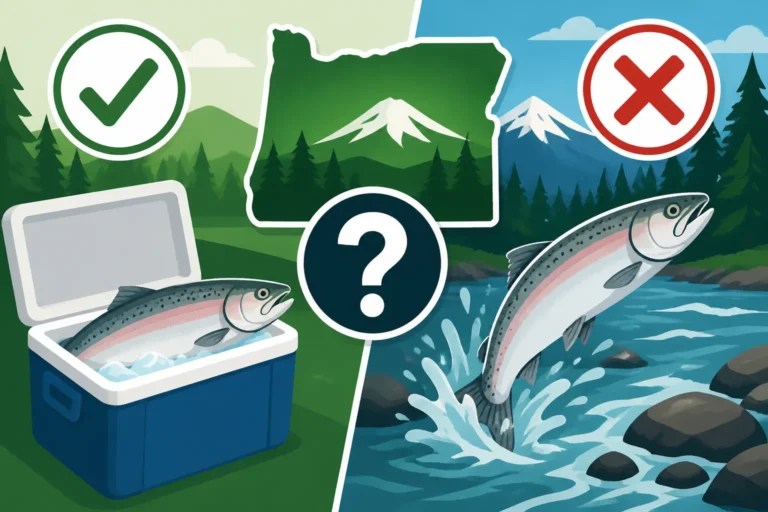
Oregon fishing regulations prohibit keeping wild steelhead, requiring anglers to release these native fish immediately unharmed.
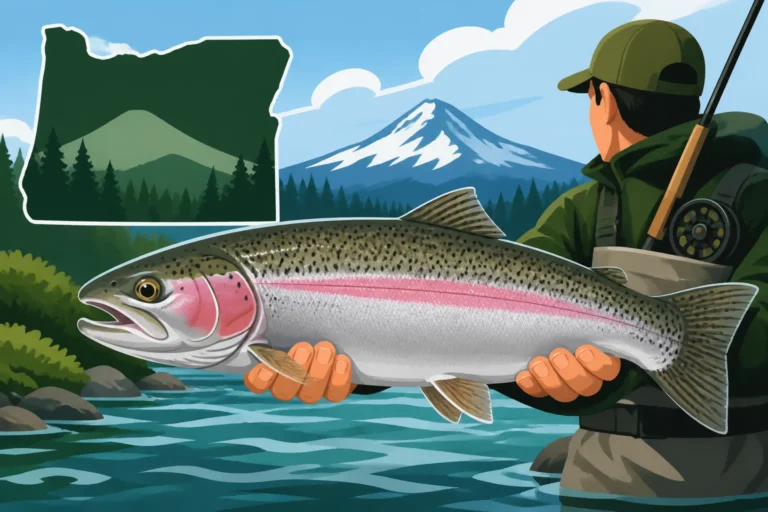
Oregon steelhead size potential, covering winter and summer runs, ocean foraging periods, and wild versus hatchery genetics.
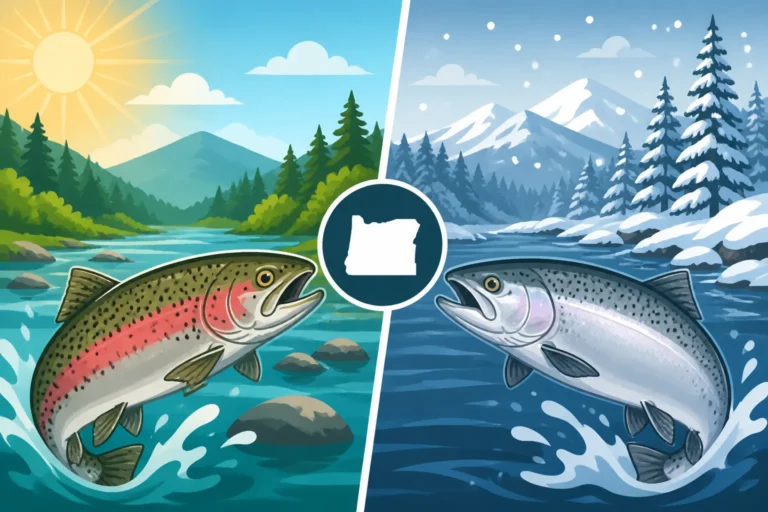
Oregon summer and winter steelhead differ in river entry timing, body size, and sexual maturity stages before spawning.
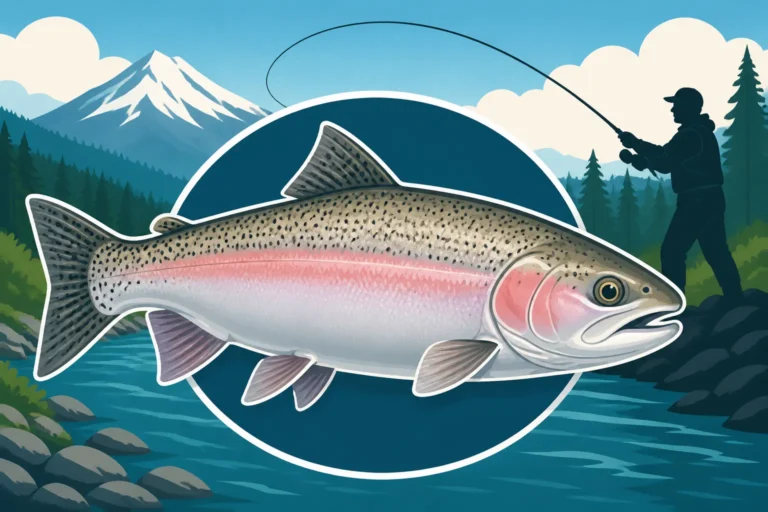
Summer steelhead physical appearance, including streamlined bodies, distinctive black spots on the tail, and coloration changes.
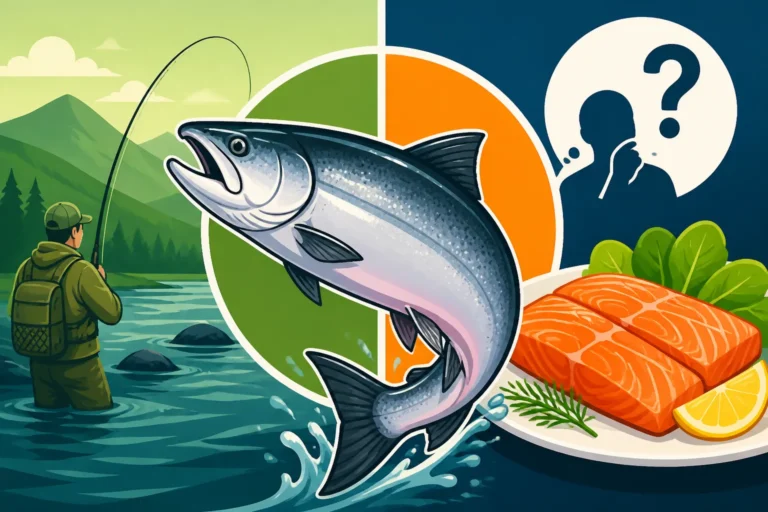
Coho salmon flavor and texture profiles, wild versus hatchery differences, and nutritional health benefits for your diet.
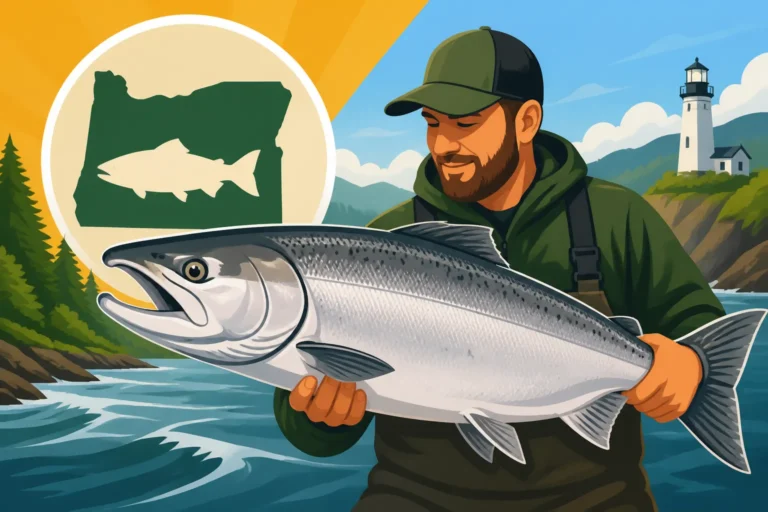
Coho salmon measure twenty to twenty six inches on average, while rarer trophy fish reach lengths of thirty inches or more.
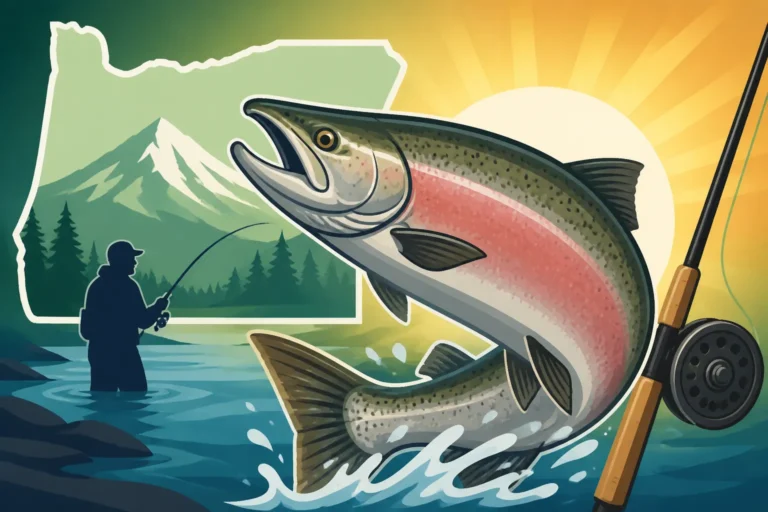
The world record Chinook salmon caught by Les Anderson in Alaska weighed ninety-seven pounds and four ounces in 1985 on the Kenai River.
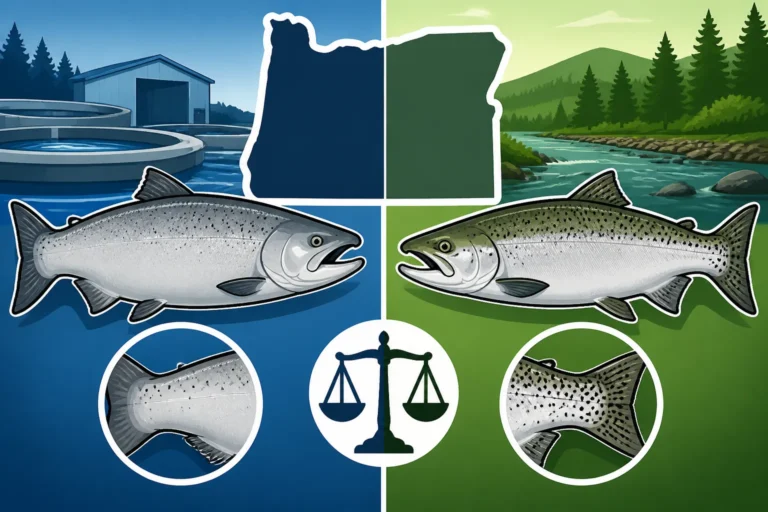
Oregon anglers can identify hatchery Chinook salmon by examining specific visual cues and fin clips to follow fishing regulations.
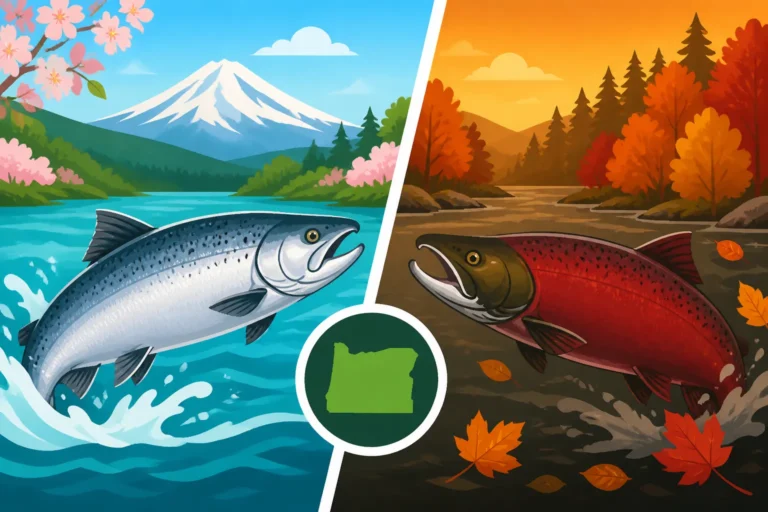
Oregon spring and fall Chinook salmon differ in migration timing, behavior, and physical traits, impacting river fishing.
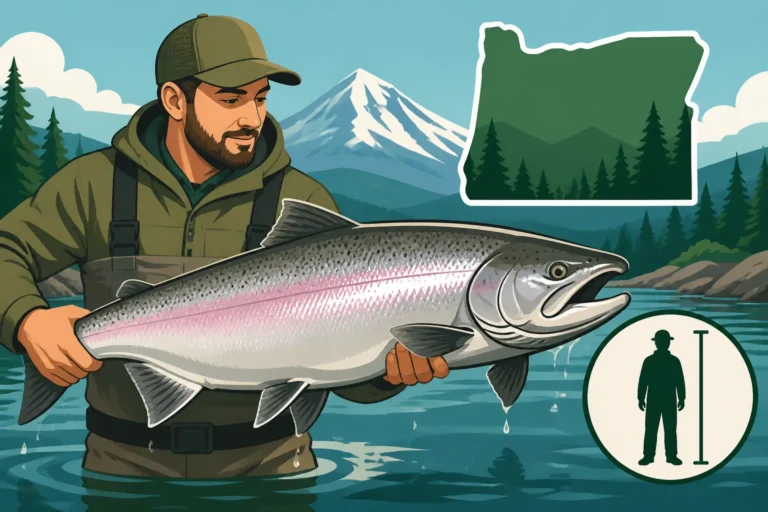
Oregon spring Chinook salmon average 10 to 25 pounds, while fall runs reach 20 to 40 pounds with rare trophies up to 70 pounds.