Best lures for fall Chinook on the Columbia
Catching fall Chinook salmon on the mighty Columbia River can be one of the most exhilarating experiences for any angler, but let's be honest, it often feels like you're trying to find a needle in a haystack. These powerful fish are notorious for being a bit finicky once they enter fresh water, and figuring out what lures will trigger a strike can feel like a constantly shifting puzzle. This guide is all about cutting through the confusion, helping you understand the best lures and tactics to use so you can increase your chances of landing that trophy fall Chinook.
The Allure of Fall Chinook on the Columbia River
There’s nothing quite like the raw power of a Columbia River fall Chinook. These magnificent fish, often referred to as "Kings," represent the pinnacle of salmon fishing for many, and their sheer size and fighting spirit make them a prized catch. But successfully targeting them requires more than just luck; it demands a deep understanding of their behavior and a strategic approach to lure selection.
Understanding Their Migration and Feeding Habits
When fall Chinook leave the ocean and begin their epic journey up the Columbia River, their primary focus shifts dramatically. They’re no longer actively feeding in the same way they were out in the saltwater, where they gorged themselves on baitfish like herring and anchovies. Instead, their biological imperative becomes reproduction. This means their feeding drive diminishes significantly.
However, just because they aren't "hungry" in the traditional sense doesn't mean they won't strike. What we're often trying to trigger with our lures is a reaction strike – an aggressive, territorial response to something irritating or intruding on their space, or perhaps an instinctive chase from a lingering predatory instinct. They might hit a lure out of aggression, curiosity, or even just because it looks like an easy meal they can't pass up. This is why lures that provide a lot of flash, vibration, or erratic movement are so effective. They're designed to annoy, provoke, or simply get noticed in the often-turbulent waters of the Columbia. Understanding this shift is crucial when you're deciding what to tie on.
Key Factors Influencing Lure Choice
The Columbia River is a dynamic environment, and what works one day might not work the next. Several factors play a huge role in how fish react to your lures, and smart anglers constantly adapt.
Firstly, water clarity is paramount. After a heavy rain, the river can become murky with sediment, drastically reducing visibility. In these conditions, lures with bright, contrasting colors and strong vibration become essential. Think fluorescent greens, chartreuse, or even fire tiger patterns that stand out against the murk. Conversely, in clearer water, more natural or muted colors often perform better, mimicking natural prey.
Current speed is another big one. The Columbia can have powerful currents, especially in certain sections. A lure designed for slow-moving water will simply not perform correctly in a fast rip; it won't dive, or it will blow out of the water. You'll need heavier, more aggressive diving lures or those designed to hold their depth and action in strong flows.
Depth is also critical. Fall Chinook might hold in deep holes, along ledges, or in shallower runs depending on river conditions, water temperature, and their stage of migration. Your lure choice and how you present it need to match the depth where the fish are holding. This often involves using downriggers, heavy lead, or specific diving plugs designed to reach the desired depth.
Finally, pressure from other anglers shouldn't be overlooked. If a particular spot has seen a lot of fishing activity, fish can become "educated" and shy away from common presentations. This is when subtle changes in color, size, or even lure action can make all the difference, tricking a wary fish into biting. Being able to adapt on the fly is a hallmark of successful Columbia River salmon anglers.
Top Lure Categories for Columbia River Fall Chinook
When it comes to fall Chinook on the Columbia, there are a few tried-and-true lure categories that consistently produce. Each has its strengths, and knowing when and how to deploy them is key.
Classic Spinner Baits for Aggressive Bites
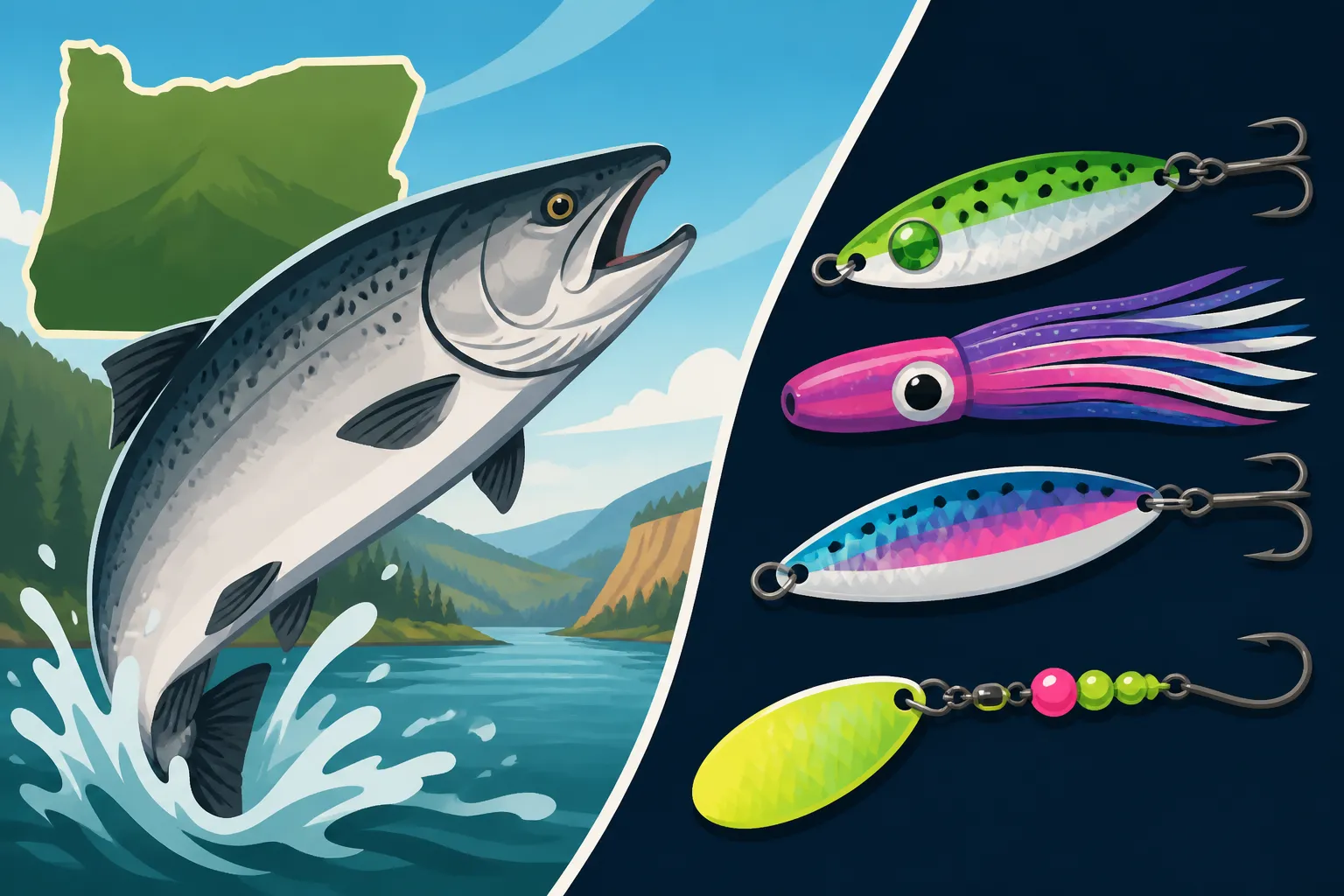
Spinner baits, or just "spinners" as most folks call them, are a go-to for many salmon anglers, and for good reason. They combine flash, vibration, and often a bit of color to create a highly attractive package that can really irritate a territorial Chinook into striking. The rotating blade, whether it's an Indiana, Colorado, or Willowleaf style, sends out those crucial vibrations that fish can detect even in murky water or low light.
Popular choices often include classic designs like Blue Fox Vibrax, Luhr-Jensen, or Mepps. You’ll find these on Amazon and at most local tackle shops. For fall Chinook, you’ll typically be looking at larger sizes, anywhere from a #4 up to a #6 or even #7 blade, often with a heavy body to help them sink and stay in the strike zone in the Columbia's strong currents. Colors are incredibly important: chartreuse, fluorescent orange, bright green, or combinations with silver or gold blades are consistent producers, especially in stained water. In clearer conditions, try more natural tones like silver or brass. Many anglers also tip their spinners with a piece of cured coon shrimp or a commercially available scent to add an olfactory attractant, making it even more irresistible.
Wobbly Plugs for a Consistent Presentation
Wobbly plugs are another superstar for Columbia River fall Chinook, particularly when trolling. These lures are designed to dive to a specific depth and then produce a strong, erratic wobbling action that perfectly imitates an injured or disoriented baitfish – exactly the kind of easy meal or annoying intruder a salmon might strike at.
Brands like Kwikfish (especially the K15 and K16 sizes), FlatFish, and Yakima Bait Company's Mag Lips (the 3.5, 4.0, and 4.5 sizes are particularly popular for salmon) dominate this category. The beauty of these plugs is their consistent action at various trolling speeds. You can often fine-tune them by bending the eye-tie ever so slightly to make them run straight. Common colors that shine on the Columbia include anything with a "flame" pattern (red/orange), metallic green, blue, black, or purple, often with contrasting bellies or spots. Pearlescent finishes can also be deadly. Like spinners, plugs are almost always enhanced with liberal amounts of scent, either applied directly to the lure or through an internal cavity if the plug has one. Experiment with different colors and sizes until you find what the fish are keying in on that day.
Diving or Trolling Flashers with Bait or Hoochies
When you're trolling for fall Chinook, particularly in deeper water or when trying to attract fish from a distance, flashers are indispensable. These aren't lures themselves, but rather attractants that create a huge amount of flash and vibration in the water, drawing salmon towards your actual lure or bait, which is typically trailed behind it on a leader.
Popular flashers include the large, rectangular Pro-Troll E-Chip models, Les Davis Fish Flash, or various types of "rotators." They come in different sizes and colors, with chrome, chartreuse, and sometimes blue or green often being top choices. The flasher rotates or wobbles as it moves through the water, mimicking a school of baitfish or an irritated predator.
Trailing behind the flasher, usually on a 30- to 60-inch leader, you'll attach your actual offering. This is most often a herring or anchovy, cut to create a wounded baitfish spin, or a soft plastic hoochie (a squid imitation). Hoochies come in a dizzying array of colors, with green, blue, purple, and chartreuse being consistent winners, often with glow-in-the-dark properties for low-light conditions or deep water. Many anglers opt for pre-tied hoochie rigs from brands like Brad's or Puget Sound Hoochies, readily available on Amazon or at any well-stocked tackle store. The combination of the flasher's attraction and the bait/hoochie's tantalizing movement and scent (when using bait) is often irresistible to fall Chinook. It's a classic setup for a reason! For more detailed insights on specific techniques, you might want to check out our guide on "How to Fish for Fall Chinook on the Columbia".
Spoon Lures for a Broad Appeal
Spoon lures have been catching fish for generations, and they remain highly effective for fall Chinook on the Columbia. Their strength lies in their versatility and the erratic, wounded baitfish action they create as they flutter and flash through the water. Whether cast from shore, trolled behind a boat, or even jigged vertically, spoons can mimic a struggling baitfish, making them an enticing target for a salmon.
You'll find a vast array of spoon designs, from wider, more buoyant spoons like a Little Cleo or Pixie that have a slower wobble, to thinner, more streamlined spoons like the Coho Killer or Silver Horde that offer a tighter, faster action. Sizes vary, but for Columbia Chinook, you're usually looking at spoons from 3 to 6 inches in length. Color patterns range from simple metallic finishes like silver, gold, or copper, to elaborate painted designs in green, blue, orange, or black, often with contrasting stripes or dots.
One of the great advantages of spoons is their simplicity. They don't require complex tuning like plugs, and their action is inherent in their design. They can be incredibly effective when cast into holding water from a boat or bank, or trolled as part of a spread. Many anglers find success by tipping the hook with a small piece of shrimp or a scent-soaked fabric tab to add an extra layer of attraction. You can easily stock up on a variety of spoons through Amazon or your local fishing outfitter to be ready for any condition.
Mastering Lure Presentation and Rigging for Success
Having the best lures in your tackle box is only half the battle. Knowing how to present them effectively and rig them correctly for the powerful Columbia River fall Chinook is what separates consistent anglers from the occasional lucky ones.
Trolling Strategies for Max Coverage
Trolling is arguably the most popular and effective method for targeting fall Chinook on the vast stretches of the Columbia. It allows you to cover a tremendous amount of water, searching for active fish and presenting your lure at a consistent depth and speed.
The key to successful trolling is maintaining your lure in the "strike zone," which is often dictated by depth and current. Many anglers rely on downriggers to precisely position their lures at a specific depth, especially when fish are holding deep. Alternatively, divers (like a Dipsy Diver or Pink Lady) or even just heavy lead cannonballs attached to your main line are used to get lures down. Boat speed is paramount; typically, 2 to 3 miles per hour is a good starting point, but you'll want to experiment. Pay attention to how your lure is performing behind the boat – is it wobbling correctly? Is your spinner rotating? A quick check periodically can prevent you from dragging a non-fishing lure.
Many experienced anglers employ a zig-zag pattern while trolling. This changes the speed and depth of your lures slightly, making them appear more erratic and often triggering a strike from a following fish. Running multiple rods, each with a different lure or color, can help you identify what the fish are preferring on a given day. Don't forget that the type of gear you use is also critical; for insights on what works best, you can read up on "Best rod and reel setup for Columbia River salmon".
Anchored Fishing and Back-Trolling Techniques
While trolling covers ground, sometimes anchoring or back-trolling is the most effective way to fish a specific piece of structure, a deep hole, or a narrow channel where fish are known to hold.
Anchored fishing, often referred to as "plunking," involves positioning your boat upstream of a known holding area and casting heavy-weighted lures or bait into the current, allowing them to settle on the bottom or near it. The current then gives the lure or bait action. This is particularly effective in sections of the river with distinct current seams or eddy lines where fish stack up. Common lures for plunking include Spin-N-Glos with bait, or large Mag Lips with heavy lead. The challenge is ensuring your gear stays put and presents naturally.
Back-trolling involves using your boat’s motor to slowly move downstream, slightly slower than the current, allowing your lures to "walk" along the bottom or at a desired depth. This technique gives you incredible control over your lure presentation and is fantastic for working specific runs or targeting fish that are hugging the bottom. Wobbly plugs or bait rigs are often deployed with this method, presented on a short leader behind a heavy lead sinker. The goal is to keep your lure ticking the bottom periodically, creating puffs of sand or gravel, which can often provoke a strike from a curious Chinook. Regardless of the technique, always ensure your hooks are razor-sharp; these powerful fish require a strong hookset to penetrate their bony jaws.
Selecting the Right Gear for Heavy Hitters
Fall Chinook are stout fish, often ranging from 15 to 30 pounds, with some exceeding 50 pounds! Trying to land one on inadequate gear is a recipe for heartbreak. Your rod, reel, and line need to be up to the task.
For rods, you'll generally want a medium-heavy to heavy action rod, typically 8.5 to 10.5 feet long. These longer rods provide better line control, absorb the shock of powerful head shakes, and help steer large fish. For reels, a good quality baitcasting or levelwind reel with a strong drag system is essential. Something that can hold at least 200-300 yards of line is ideal, as these fish can make blistering runs. Shimano and Penn are popular choices, offering durable and reliable options.
When it comes to line, many anglers opt for braided mainline in the 40- to 65-pound test range. Braid offers incredible strength, minimal stretch (which means better hooksets and sensitivity), and a thinner diameter for its breaking strength. However, you'll always want to use a monofilament or fluorocarbon leader for abrasion resistance and reduced visibility. For more specific details on line choices, refer to our comprehensive article on "What pound test line for Chinook salmon". Matching your gear to the size of the fish and the conditions of the Columbia is not just about landing the fish, but also about ensuring a clean, ethical fight.
Adapting to Columbia River Conditions
The Columbia River is a living, breathing body of water, and its conditions are constantly in flux. What worked yesterday might not work today, so being adaptable is a crucial trait for any successful fall Chinook angler.
Water Clarity and Color Choices
As mentioned earlier, water clarity is perhaps the most significant factor influencing lure color. Think of it this way: how visible is your lure to a fish underwater?
In murky or stained water, where visibility is low (after a big rain event, for example), you need colors that stand out. Fluorescent hues like chartreuse, bright orange, and fire tiger patterns with a lot of contrast are your best friends. These colors are highly visible in low light or turbid conditions. Additionally, lures with UV properties can be incredibly effective, as UV light penetrates deeper into the water column than other colors, making the lure "pop" even when it's dark.
Conversely, in clear water, where fish have a better chance to scrutinize your offering, more natural and subtle colors tend to perform better. Think metallics like silver, chrome, or brass, often paired with natural greens, blues, or black. These mimic natural baitfish more closely and are less likely to spook wary salmon. Sometimes, a pearl or white finish can also be deadly in clear, bright conditions. Always have a variety of colors on hand, and don't be afraid to switch until you find what the fish are reacting to.
Current Speed and Lure Weight
The Columbia River's current can be deceptively powerful, and it plays a huge role in how your lure performs. If your lure isn't reaching the desired depth or isn't exhibiting its intended action, the current is likely the culprit.
For fast currents, you'll need heavier lures or significantly more weight to get your presentation down. Diving plugs like Mag Lips are designed to dig in and hold their depth even in strong flows, but you might still need to add extra lead ahead of them. Spinners need heavy bodies to prevent them from "blowing out" of the water or not reaching the bottom. The goal is to get your lure to the fish while still allowing it to perform its natural action.
In slower currents or slack water, you can often downsize your lead or use lighter lures. A lighter spinner might have a more enticing flutter, or a smaller plug might provide a more subtle wobble. Always pay attention to how your lure is behaving once it's in the water; if it's not working correctly, adjust your weight, lure size, or even your boat speed until you get it right. Understanding how river flow influences fishing, even for different species, can be incredibly helpful; consider reading "How river flow affects steelhead fishing" for broader insights.
Depth and Finding the Strike Zone
Finding the exact depth where fall Chinook are holding is often the biggest challenge. They might be anywhere from just below the surface to hugging the bottom in 60 feet of water or more.
A good fish finder is an invaluable tool for identifying both fish and structure (like ledges, drop-offs, or submerged logs) where they might be holding. However, even with the best electronics, experimentation is key. Start by covering a range of depths, perhaps running different lures at different depths simultaneously if you have multiple rods out. If you get a strike, immediately focus your efforts on that specific depth.
Fall Chinook often relate to structure or temperature breaks, though the latter is less pronounced in the lower Columbia. As they move upstream, they tend to hold in deeper, cooler water, especially during warmer fall days. Knowing the "Fall Chinook Season Timing on the Columbia" can help predict typical holding patterns based on their migration stage. Don't be afraid to adjust your depth frequently until you dial in on where the fish are active.
Timing Your Attack: Best Windows
While you can technically fish for fall Chinook throughout their season, there are definitely peak windows of opportunity that can significantly improve your chances.
Tide cycles are incredibly important, especially in the lower Columbia River near the estuary (like the famous Buoy 10 fishery). Incoming tides can bring in fresh waves of salmon, while outgoing tides can concentrate fish in channels and create feeding opportunities. Many anglers swear by fishing the "tide change" – the slack water period between the incoming and outgoing tide – as this often triggers a bite.
Beyond tides, time of day plays a role. Early mornings and late evenings, when light levels are lower, are often prime times. Fish can be more active and less wary during these periods. However, fall Chinook can bite all day, especially if conditions (like water clarity or current) are favorable. Keeping an eye on the weather and river conditions will help you predict the best times. Our guide on the "Best time of day to fish for fall Chinook" offers more specific advice on this. Ultimately, being on the water when the fish are present and active is the most important "timing" factor.
| Lure Type | Ideal Conditions | Key Features | Popular Columbia Colors | Pros | Cons |
|---|---|---|---|---|---|
| Spinner Baits | Aggressive fish, varied water clarity | Flash, strong vibration, easily scented | Chartreuse, Orange, Green, Silver | High visibility, strong attraction, versatile | Can twist line, less effective in slack water |
| Wobbly Plugs (Kwikfish, Mag Lips) | Steady current, deeper runs, trolling | Erratic wobble, consistent dive depth, tunable | Green/Chartreuse, Red/White, Black/Purple, Pearl | Consistent depth, good for subtle bites | Requires tuning, can snag on bottom |
| Flashers & Hoochies/Bait | Trolling, attracting from distance, low visibility | Massive flash, vibration, scent (with bait) | Chrome, UV Green, Chartreuse, Blue | Irresistible combination, covers wide area | More complex rigging, requires more gear |
| Spoon Lures | Varying conditions, casting or trolling | Erratic flutter, strong flash, mimics injured baitfish | Silver, Gold, Copper, Half & Half | Versatile, good for imitating prey | Can tangle, may require precise retrieves |
Disclaimer
Fishing inherently involves risks and uncertainties. The information provided in this guide is for informational purposes only and is based on general fishing practices and historical data. Fishing conditions, regulations, and fish behavior can change rapidly. Always consult the latest Oregon Department of Fish and Wildlife (ODFW) regulations before fishing, wear appropriate safety gear, and exercise caution on the water. We are not responsible for any incidents or outcomes resulting from the use of this information.