What is the Columbia River Basin Endorsement for Oregon anglers
It's incredibly frustrating when you're just trying to enjoy a peaceful day on the water, but the rules and regulations surrounding fishing licenses in Oregon seem to twist and turn like a snaking river. Many anglers, even those who've been casting lines for decades, often scratch their heads trying to decipher what specific tags or endorsements they truly need. If the phrase "Columbia River Basin Endorsement" has left you feeling a bit bewildered, wondering if it applies to you and why it's even a thing, you're absolutely not alone. This guide is designed to thoroughly demystify this particular endorsement, ensuring you understand its purpose, who needs it, and how to get it, so you can fish with confidence and without a worry.
Understanding the Columbia River Basin Endorsement
Let's cut right to the chase: the Columbia River Basin Endorsement isn't just another piece of paper; it's a vital component of Oregon's commitment to managing and conserving some of our most iconic fish species. Think of it as a specialized permit that works in conjunction with your standard Oregon angling license, allowing you to legally fish for certain anadromous species—that’s fish that migrate between saltwater and freshwater—within a very specific and important region. It’s designed to ensure that anglers who benefit from these unique fisheries contribute directly to their ongoing health and sustainability.
This endorsement specifically applies to fishing for salmon, steelhead, and sturgeon within the Columbia River Basin. This isn't just the main stem of the Columbia River itself, but also its many tributaries that flow into it. The Columbia River Basin is a vast and ecologically critical area, and the funds generated by this endorsement are earmarked for conservation, restoration, and management efforts that directly benefit these migratory fish populations. Without this extra layer of funding and regulation, the incredible fisheries we enjoy in this basin would be at a much higher risk, making it a crucial element for responsible angling.
The Specifics of the Endorsement
The Columbia River Basin Endorsement is a supplemental purchase, meaning it’s in addition to your base annual, daily, or multi-day Oregon Fishing License Guide. You can't just buy the endorsement by itself; you need a valid angling license first. The core idea behind it is to capture revenue from anglers who specifically target species like Chinook salmon, Coho salmon, steelhead, and sturgeon in these sensitive waters. These fish embark on incredible journeys, migrating from the Pacific Ocean, up the Columbia River, and often into its many tributaries to spawn. This extensive travel makes them vulnerable to various environmental pressures, and the endorsement helps fund programs that mitigate these challenges.
The revenue collected through this endorsement goes directly back into the Columbia River Basin’s fish management programs. This includes everything from hatchery operations that supplement wild runs, to habitat restoration projects that improve spawning and rearing grounds, and even crucial research that helps biologists understand fish populations better. It's not just about regulating who can fish; it's about ensuring that the act of fishing itself helps support the very resource you're pursuing. Without these dedicated funds, many of the conservation initiatives that keep these runs healthy and viable simply wouldn't be possible.
Beyond the Basic Angling License
You might be thinking, "I already bought my Oregon Annual Angling License, isn't that enough?" And for many types of fishing in Oregon, it absolutely is! If you're chasing trout in a high mountain lake, catching bass in a warm-water reservoir outside the Columbia Basin, or even surf fishing for perch on the coast, your standard angling license often covers you. However, the Columbia River Basin Endorsement exists because fishing for salmon, steelhead, and sturgeon in this specific river system presents unique management challenges and costs.
These anadromous species require intensive management across multiple jurisdictions (Oregon, Washington, and federal agencies) due to their migratory patterns. They face complex issues like dam passage, habitat degradation, and fluctuating ocean conditions. The resources required to monitor these populations, manage fisheries, conduct research, and implement recovery efforts are substantial. Therefore, this endorsement acts as a dedicated funding stream, ensuring that those who specifically participate in these valuable fisheries contribute to their specialized management. It's about direct support for the unique demands of these highly valued fish runs within this critical watershed.
When and Where You Need This Endorsement
One of the biggest sources of confusion for anglers is knowing exactly when and where this endorsement is required. It's not a blanket requirement for all fishing in Oregon, nor is it needed for every fish you might catch in a river that eventually flows into the Columbia. The key lies in both the species you're targeting or possessing and the specific waters you're fishing. It's all about responsible resource management in a very particular, high-value fishery.
If you're casting lines for salmon, steelhead, or sturgeon in any water that is part of the Columbia River Basin, you need this endorsement. This applies whether you're actively trying to catch these species or if you accidentally catch and then release one. The regulations are designed to prevent anglers from "accidentally" targeting these species without the proper endorsement, so it’s always best to be prepared. This includes everything from the main stem of the Columbia itself to popular tributaries like the Sandy, Clackamas, Hood, Deschutes, and many more upriver. It’s essential to consult the current Oregon Fishing Regulations Explained booklet to be absolutely sure about specific boundaries and species.
Defining the Columbia River Basin Waters
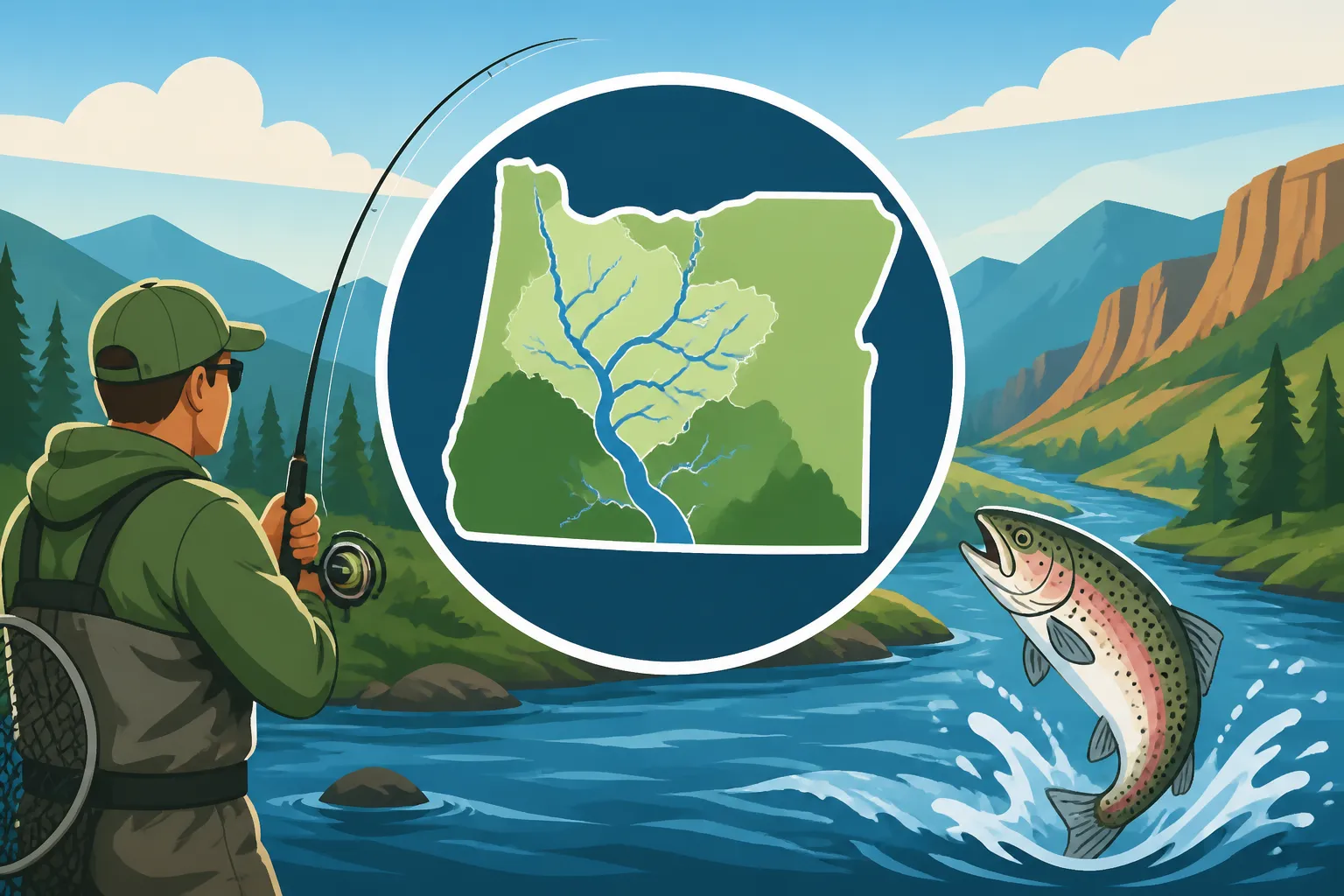
So, what exactly constitutes "Columbia River Basin waters" for the purpose of this endorsement? It generally refers to the main stem of the Columbia River, from its mouth all the way up through Oregon's border with Idaho. Crucially, it also includes all tributaries that flow directly or indirectly into the Columbia River within Oregon. This means rivers like the Willamette River, the Clackamas River, the Sandy River, the Hood River, the Deschutes River, the John Day River, and the Snake River (and their respective tributaries within Oregon) are all part of the Columbia River Basin for this endorsement's requirement.
This extensive reach means that if you plan to fish for salmon, steelhead, or sturgeon in any of these rivers, even if they're far from the main Columbia, you'll need the endorsement. For instance, if you're targeting spring Chinook on the Willamette River near Portland or summer steelhead on the Deschutes River, the Columbia River Basin Endorsement is mandatory. It acknowledges that these fish are part of a larger, interconnected ecosystem, and management efforts need to span the entire basin. For a clear understanding of the boundaries, sometimes a detailed map, which you can easily find on Amazon, paired with the official ODFW regulations, is incredibly helpful.
Scenarios Requiring the Endorsement
Let’s walk through some real-world scenarios to make this crystal clear:
- Scenario 1: Salmon Fishing on the Columbia Main Stem: You're heading out to Buoy 10 for fall Chinook. Absolutely, 100% you need the Columbia River Basin Endorsement. Your base angling license covers you for general fishing, but for salmon in this iconic stretch, the endorsement is non-negotiable.
- Scenario 2: Steelhead Fishing on the Sandy River: You're planning a winter steelhead trip to the Sandy River, a tributary of the Columbia. Yes, you need the endorsement. Even though you're not on the main stem, the Sandy is part of the Columbia River Basin, and steelhead are one of the covered species.
- Scenario 3: Sturgeon Fishing in the Willamette River: You're targeting white sturgeon in the lower Willamette River, which flows into the Columbia. You guessed it – the endorsement is required here too, even though it feels further removed from the "main" Columbia.
- Scenario 4: Trout Fishing on the Deschutes River: You're dry-fly fishing for redside trout on the upper Deschutes, far from the Columbia. While steelhead also use the Deschutes, if your sole intent is trout, and you're not possessing salmon, steelhead, or sturgeon, you might technically not need it. However, if you accidentally hook a steelhead, or if regulations change to require it for all fishing in parts of the Deschutes, it’s safer to have it. Many anglers choose to get it just to be on the safe side, especially when fishing waters known to hold multiple species.
The table below provides a quick overview to help clarify the requirements:
| Requirement | Standard Angling License | Columbia River Basin Endorsement |
|---|---|---|
| Who needs it? | Most anglers (age 12 and up) for general freshwater/saltwater fishing | Anglers targeting or possessing salmon, steelhead, or sturgeon in specific Columbia River Basin (CRB) waters |
| Purpose | General fishing access, broad conservation | Specific conservation & management for migratory salmon, steelhead, and sturgeon in the CRB |
| Cost | Varies by residency, duration, and type | Additional fixed fee (check ODFW for current rates) |
| Where to get it | ODFW online, licensed vendors, sporting goods stores | ODFW online, licensed vendors, sporting goods stores (requires valid angling license first) |
| What it covers | Trout, bass, panfish, marine species (outside CRB specific species/areas) | Salmon, steelhead, sturgeon within designated CRB waters (on top of your base license) |
| Additional Tags Needed? | May require a Oregon Combined Angling Tag Guide for certain species statewide | Often required in conjunction with a Combined Angling Tag for these species in the CRB |
Why the Endorsement Matters: Conservation and Management
It's easy to look at an extra fee and feel a bit of a pinch, but the Columbia River Basin Endorsement is more than just another line item on your receipt. It's a critical financial tool that underpins a vast network of conservation and management efforts for some of Oregon's most cherished and ecologically vital fish species. These funds don't just disappear into a general budget; they're specifically directed towards ensuring the long-term health and abundance of the fisheries that draw us to the water.
The Columbia River system is an incredibly complex and dynamic environment, facing pressures from development, climate change, and historical impacts. Managing its fisheries requires constant monitoring, research, and intervention. Without dedicated funding streams like this endorsement, the Oregon Department of Fish and Wildlife (ODFW) and its partners would struggle to maintain the robust programs necessary to sustain these fish populations. It's a direct investment by anglers into the future of their sport, ensuring that generations to come can also experience the thrill of catching a Columbia River salmon or steelhead.
Funding Fisheries Conservation
Every dollar spent on a Columbia River Basin Endorsement directly contributes to the conservation and enhancement of salmon, steelhead, and sturgeon in this critical watershed. These funds are often channeled into a variety of initiatives, including scientific research to better understand fish migration patterns, population dynamics, and habitat needs. They also support habitat restoration projects, such as improving water quality, removing barriers to migration, and restoring riparian zones along riverbanks, which are crucial for healthy fish ecosystems.
Furthermore, a significant portion of these funds supports hatchery programs. While wild fish are always the priority, hatcheries play a vital role in supplementing fish runs, particularly in areas where natural spawning habitat has been compromised. This ensures there are enough fish for both sport and commercial harvest, while also providing critical conservation benefits by reducing pressure on wild populations. Before heading out, many anglers like to pick up a waterproof regulations booklet, often available on Amazon, to keep handy in their tackle box, knowing their purchase helps support the very system described within its pages.
Managing Migratory Species
The migratory nature of salmon, steelhead, and sturgeon means their management is inherently complex. These fish don't stay in one place; they travel hundreds, sometimes thousands, of miles throughout their life cycles, crossing state and even international borders. This requires extensive coordination between Oregon, Washington, and various tribal governments and federal agencies. The Columbia River Basin Endorsement helps fund Oregon's share of these collaborative efforts.
Managing these species involves delicate balancing acts: setting Oregon Daily Bag Limits Explained, establishing seasons, monitoring fish runs in real-time, and responding to changing environmental conditions. This rigorous oversight ensures that enough fish escape to spawn, while also providing recreational opportunities for anglers. Without the dedicated resources provided by this endorsement, it would be incredibly difficult to implement the nuanced and adaptive management strategies required to protect these iconic, wide-ranging fish populations. It truly is an investment in the journey of these magnificent creatures.
Acquiring Your Columbia River Basin Endorsement
Getting your Columbia River Basin Endorsement is a straightforward process once you have your base angling license in hand. It’s designed to be easily accessible, whether you prefer the convenience of online purchasing or the personal touch of a local vendor. The most important thing is to ensure you have it before you head out to fish in any of the designated waters for salmon, steelhead, or sturgeon. Getting caught without it can lead to fines, which is a headache no one wants.
Remember, this endorsement is an add-on to your existing angling license. It’s not a standalone permit that lets you fish by itself. Think of it like adding a special feature to your main fishing package. The Oregon Department of Fish and Wildlife (ODFW) has streamlined the process over the years to make it as simple as possible for anglers to comply with the regulations and contribute to conservation. Just make sure your general angling license is valid for the period you intend to fish!
Purchasing Options and Timing
You have a few convenient ways to purchase your Columbia River Basin Endorsement:
- Online through ODFW: This is often the quickest and easiest method. You can visit the ODFW licensing system on their website, log in to your account (or create one if you're new), and add the Columbia River Basin Endorsement to your cart along with or after purchasing your angling license. You can then print a physical copy or save a digital version to your phone. Check out our guide on How to Renew an Oregon Fishing License Online for more tips on digital management.
- Licensed Vendors: Many sporting goods stores, tackle shops, and even some grocery stores across Oregon are licensed to sell ODFW licenses and endorsements. Places like Fred Meyer, Bi-Mart, and dedicated fishing stores often have knowledgeable staff who can help you navigate the options. This is a great choice if you prefer face-to-face assistance or want to pick up some last-minute bait or tackle. For a deeper dive, check out Where to Buy an Oregon Fishing License for a comprehensive list of vendors.
- ODFW Offices: While less common for simple purchases, you can also acquire licenses and endorsements directly from ODFW regional offices during business hours.
The timing is crucial: purchase your endorsement before you start fishing in Columbia River Basin waters for the specified species. It's not something you can buy retroactively. If you realize you need it while you're already on the river, pull out your phone, and if you have service, you might be able to purchase it instantly online.
What to Carry with You
Once you’ve purchased your Columbia River Basin Endorsement, you need to be able to present proof of it if requested by an Oregon State Police Trooper or an ODFW fish and wildlife biologist. Just like with your main angling license, you have options for how you carry this proof:
- Physical Copy: The most traditional method is to print out your license and endorsement and keep it with you, preferably in a waterproof wallet or tucked into your fishing vest. Many anglers like to laminate their licenses for durability.
- Digital Copy: Oregon allows you to carry proof of your license and endorsements on your smartphone or other electronic device. A screenshot or a PDF saved to your phone is perfectly acceptable. This is often the most convenient option for many modern anglers. Just ensure your device is charged and accessible. Before heading out, many anglers like to pick up a waterproof regulations booklet, often available on Amazon, to keep handy in their tackle box.
- ODFW App: ODFW has a dedicated mobile app that often allows you to view your licenses and tags directly, providing a quick and easy way to show proof.
The key is immediate accessibility. If a game warden asks to see your license and endorsement, you need to be able to produce it quickly. Being unable to do so can result in a citation for fishing without the proper authorization, even if you genuinely purchased it. So, double-check before you leave home that your proof is with you, in whatever format you choose.
Common Questions and Clarifications
Even with a clear understanding, certain scenarios around the Columbia River Basin Endorsement can still cause a bit of a head-scratch. Anglers often have very specific questions about how it interacts with other tags, what happens with interstate waters, or when they might actually not need it. Addressing these common queries can save you a lot of hassle and ensure your time on the water is spent fishing, not fretting about regulations.
One of the biggest areas of confusion revolves around the shared waters of the Columbia River with Washington State. It’s a common misconception that if you have a Washington license, it automatically covers everything on the Oregon side, or vice versa. The reality is a bit more nuanced and requires careful attention to specific agreements and individual state requirements. Knowing these details is vital for avoiding unexpected penalties.
Reciprocity and Washington State
The Columbia River forms a significant boundary between Oregon and Washington, creating unique situations for anglers. While there are certain reciprocal agreements between the states, especially concerning the main stem of the Columbia River, the Columbia River Basin Endorsement is specifically an Oregon requirement.
Here's the deal: If you are fishing in the main stem of the Columbia River, and you possess a valid Washington freshwater fishing license with a Columbia River Salmon/Steelhead Endorsement, you may be allowed to fish for salmon, steelhead, and sturgeon from either the Oregon or Washington side of the river (check current regulations for specific rules regarding tributaries and exact boundaries). However, even with a Washington license, if you're fishing in Oregon tributaries to the Columbia (like the Willamette or Deschutes) for salmon, steelhead, or sturgeon, you must have an Oregon angling license and the Oregon Columbia River Basin Endorsement. The two states maintain separate endorsement requirements for their respective tributary systems. Always consult the latest Oregon and Washington License Reciprocity on the Columbia guide and both states' regulation booklets. For a comprehensive read, a detailed regulations book, easily found on Amazon, can clarify these inter-state nuances.
When You DON'T Need It
Understanding when the endorsement isn't required is just as important as knowing when it is, potentially saving you an unnecessary purchase.
You generally do not need the Columbia River Basin Endorsement if:
- You are only fishing for species other than salmon, steelhead, or sturgeon within the Columbia River Basin. For example, if you're exclusively targeting smallmouth bass in the John Day River, or catching walleye on the Columbia itself, and have no intention of keeping or even attempting to catch salmon, steelhead, or sturgeon, the endorsement is not required. However, be aware of specific regulations in certain areas where intent might be hard to prove, or where special rules apply if you accidentally hook a protected species.
- You are fishing for any species outside of the Columbia River Basin. If you're surf fishing for Dungeness crab off the Oregon Coast, trout fishing in a lake in Southern Oregon that doesn't flow into the Columbia, or crabbing in Tillamook Bay, the Columbia River Basin Endorsement is irrelevant. Your standard Oregon angling license (and potentially a Oregon Shellfish License for crabbing/clamming) would be sufficient.
- You are fishing during Oregon Free Fishing Days. During designated Oregon Free Fishing Days, the Oregon Department of Fish and Wildlife waives the requirement for a fishing license and most endorsements, including the Columbia River Basin Endorsement. However, all other regulations regarding species, bag limits, and gear still apply. This is a fantastic opportunity to try out fishing in the Columbia Basin without the extra cost!
It really boils down to where you're fishing and what you're fishing for. If there's any doubt in your mind, the safest and most responsible course of action is always to purchase the endorsement. The cost is minor compared to the potential fines and the peace of mind knowing you're fully compliant and contributing to the conservation of these incredible fish.
Disclaimer
The information provided in this guide is for informational purposes only and is subject to change. While we strive to provide accurate and up-to-date content, fishing regulations, license requirements, and fees can be modified by the Oregon Department of Fish and Wildlife (ODFW) at any time. It is always the angler's responsibility to consult the most current official ODFW fishing regulations and license information before fishing. This content does not constitute legal advice.