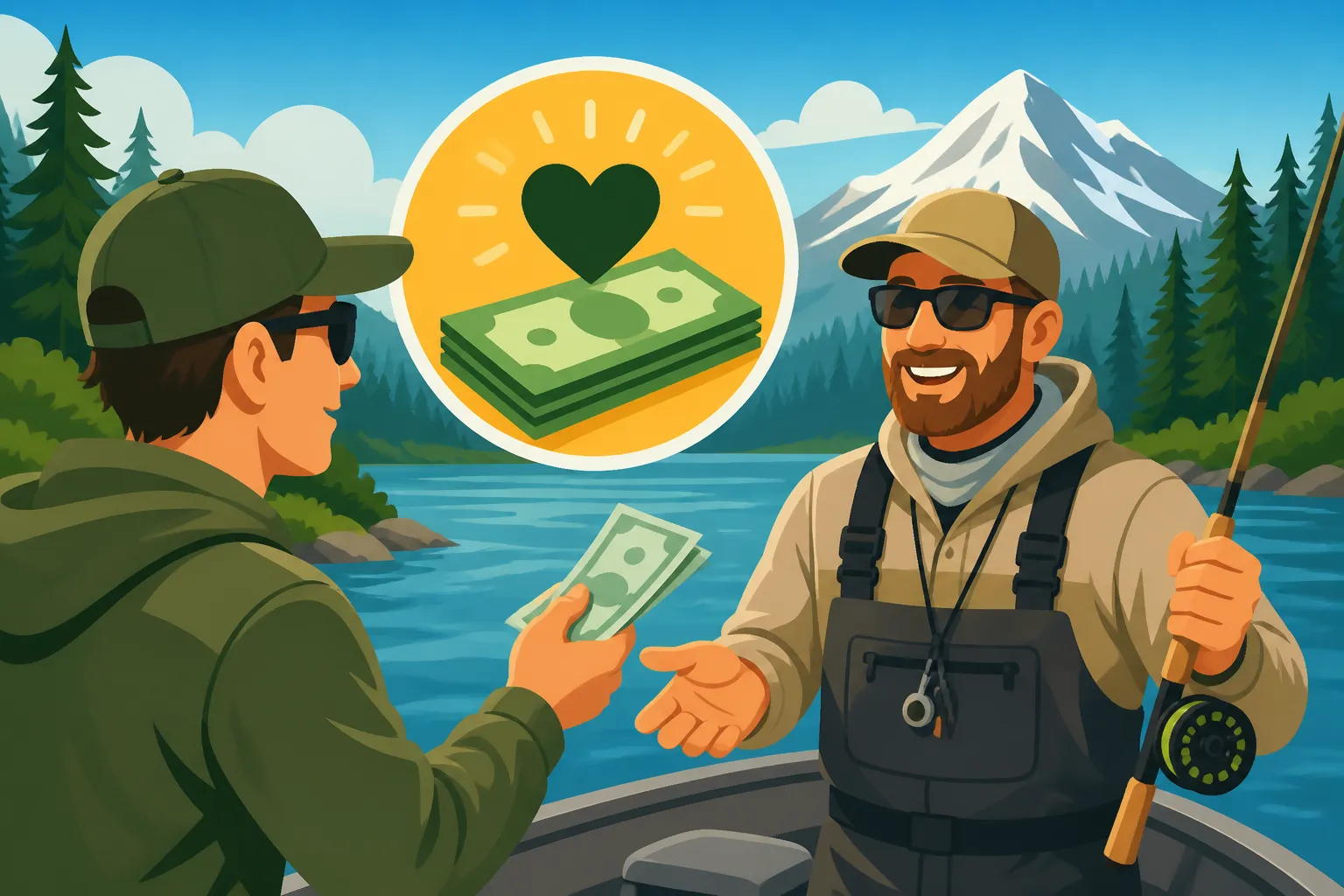
How much do you tip an Oregon fishing guide
One of the most common unspoken questions I hear from folks heading out for an amazing day on the water in Oregon is, "How much should I tip my fishing guide?" It’s a tricky thing, isn’t it? You want to show appreciation for their hard work, expertise, and dedication, but you also don't want to overpay or, worse, underpay. This guide is here to clear up that confusion, giving you a clear, empathetic, and realistic understanding of tipping etiquette for fishing guides and charters across the beautiful state of Oregon.
Understanding the Tipping Etiquette for Oregon Fishing Guides
Let's be honest, fishing guides work incredibly hard. They're up before dawn, scouting locations, prepping gear, running the boat, sharing their deep knowledge of Oregon's waters, and, if you're lucky, expertly filleting your catch at the end of the day. They're often teachers, storytellers, and impromptu therapists all in one. Tipping is more than just a formality; it's a direct reflection of your appreciation for their service and a vital part of their income.
Why Tipping Matters: It's More Than Just an Extra Dollar
Many people assume a guide's fee covers everything, but that's rarely the full picture. The trip cost primarily covers the guide's operational expenses—boat maintenance, fuel, insurance, tackle, bait, licensing, and countless hours of preparation and scouting. The guide's personal income often heavily relies on tips. Think of it like a server in a restaurant; their base wage might be modest, but tips allow them to make a living. Good guides are professionals who invest heavily in their craft, from continuing education to top-of-the-line equipment. Your tip acknowledges that investment and their effort. It helps them continue offering those incredible experiences on rivers like the Deschutes or out on the Pacific Ocean.
Consider a guide spending hours before your trip tying flies, sharpening hooks, checking water levels, and making sure every piece of safety equipment is in place. Then they spend a full day on the water, often standing, casting, and coaching, sometimes in less-than-ideal weather. After you leave, they still have to clean the boat, organize gear, and prepare for the next day. It's a demanding job, and a thoughtful tip truly makes a difference.
Standard Tipping Percentages: What's the Industry Norm in Oregon?
When it comes to tipping an Oregon fishing guide, the generally accepted range is 15% to 20% of the total trip cost. This is a good starting point for most scenarios. If you had an absolutely phenomenal trip—the guide went above and beyond, found you fish in tough conditions, was exceptional with your kids, or provided truly memorable service—you might consider tipping towards the higher end, or even a bit more.
For example, if your guided full-day trip on the Columbia River for salmon was priced at, say, $600, a 15% tip would be $90, and a 20% tip would be $120. If you're wondering, "Is an Oregon nonresident annual fishing license worth it for one trip?", then a guided trip might make even more sense, and understanding the tipping expectation helps you budget properly.
It's always a good idea to bring cash for tips. While some guides might have digital payment options, cash is usually preferred and is the easiest way to ensure the guide receives their tip immediately and in full. If you booked through a service like FishingBooker, the guide's direct fee is handled, but the tip is still a separate transaction, typically in person.
Factors Influencing Your Tip: When to Give More or Less
While 15-20% is the standard, several factors can (and should) influence where you land within that range, or even if you go outside it.
- Effort and Dedication: Did your guide work tirelessly to put you on fish, even when conditions were tough? Did they stay out a bit longer than planned because the bite was hot? Did they patiently untangle your knots or re-rig your line countless times? High effort, regardless of the catch, deserves a higher tip.
- Knowledge and Expertise: A guide's deep understanding of the local waters, fish behavior, and specific techniques (like Oregon Salmon Fishing Techniques or Oregon Steelhead Fishing Techniques) is invaluable. Did they share fascinating insights, teach you new skills, or simply demonstrate an impressive command of their craft? This specialized knowledge is a huge part of the experience.
- Customer Service and Personality: A great guide makes the day fun, comfortable, and memorable. Were they friendly, engaging, and attentive to your needs? Did they make you feel safe and welcome? A positive demeanor significantly enhances the experience.
- Equipment and Boat Condition: Was the boat clean, well-maintained, and safe? Was the gear (rods, reels, tackle) in excellent condition? A professional guide takes pride in their equipment.
- The Catch (or lack thereof): This is where it gets tricky. It's crucial to remember that fishing is fishing, not catching. A guide cannot control the fish, weather, or water conditions. While a successful day with lots of fish is always a bonus, you should primarily tip based on the guide's effort and quality of service, not solely on the number of fish in the cooler. A guide who worked their tail off in tough conditions, tried every trick in the book, and kept your spirits high deserves a good tip, even if the fish weren't cooperating. On the flip side, if a guide seemed disengaged, didn't try different spots or techniques, or spent more time on their phone than assisting you, a lower tip might be warranted, regardless of a lucky catch.
Practical Scenarios: When and How to Tip Your Guide
Navigating the nuances of tipping can vary depending on the type of trip you book. Oregon offers a diverse range of fishing experiences, from river drift boats to ocean charters, and understanding these differences helps clarify your tipping responsibilities.
Single-Day vs. Multi-Day Trips: Different Expectations for Different Durations
- Single-Day Trips: For most single-day guided trips, whether it's fly fishing for trout on the Metolius River or chasing Chinook on the Willamette, the 15-20% rule applies directly to the cost of that day's trip. It's straightforward. At the end of the day, after you've packed up and the guide has helped with your catch, present the tip directly to them. This is typically done privately, especially if other clients are around, to avoid awkwardness.
- Multi-Day Trips: When you book a multi-day adventure, perhaps a Rogue River Guide Trips for steelhead or a remote Central Oregon float trip, the tipping structure is similar but often calculated per day. You might offer a tip at the end of each day, or provide a lump sum at the conclusion of the entire trip. Discussing this discretely with your guide on the first day, or reviewing details from a booking site like FishingBooker, can clarify expectations. For example, if you're on a three-day, two-night trip, you'd calculate 15-20% of the daily rate for each day, even if the overall package price was discounted. This ensures the guide is compensated for each day's effort.
Tipping on Shared Charters vs. Private Guided Trips: Navigating Group Dynamics
- Private Guided Trips: On a private trip, where you or your group have exclusive access to the guide, the 15-20% calculation is simple, as you're responsible for the entire tip. This applies whether it's a family outing or a dedicated group of friends. If you're on a private Columbia River Salmon Guide Trips, for instance, and the cost for your group is $800, a 20% tip would be $160 for the guide.
- Shared Charters: This is where it can get a little confusing. On a shared charter, like an ocean bottom fishing trip out of Newport, you're often paying a per-person rate and sharing the boat with other anglers you don't know. In this scenario, your tip should still be 15-20% of your individual share of the trip cost. For example, if your spot on a shared charter cost $250, your 20% tip would be $50. It’s not your responsibility to tip for the entire boat, unless you organized the whole group. The total tip collected by the guide from all passengers should hopefully equate to 15-20% of the boat's overall revenue for that trip.
The Role of the Deckhand or Assistant Guide: Don't Forget the Support Crew
Sometimes, especially on larger ocean charters or multi-boat river trips, there might be a deckhand or an assistant guide working alongside the primary guide. These individuals are crucial to the operation, handling lines, netting fish, cleaning the boat, and assisting clients. Their income is also heavily reliant on tips.
If there's a deckhand, it's customary to tip them separately. A good rule of thumb is to give the deckhand $20-$50 per person, per day, depending on the length of the trip and their level of service. Alternatively, if you're giving the main guide a larger lump sum, you can ask them to distribute a portion to the deckhand. However, direct tipping ensures the deckhand receives their due. For instance, if you're on a halibut charter out of Astoria and had a deckhand who was constantly helping you, netting your fish, and keeping things tidy, handing them a separate $30-$40 at the end of the day is a kind and appreciated gesture. Remember, these folks are often working their way up to becoming full-fledged guides themselves, and your support is invaluable.
Going Beyond the Cash: Other Ways to Show Appreciation
While a monetary tip is always the most direct and universally appreciated form of gratitude for an Oregon fishing guide, there are other meaningful ways you can show your thanks that go a long way in supporting their business and career.
Thoughtful Gestures: Reviews, Referrals, and Small Tokens
- Online Reviews: In today's digital age, online reviews are gold. Taking a few minutes to write a detailed, positive review on platforms like Google, the guide's website, or booking sites like FishingBooker, can significantly boost their visibility and attract new clients. Mention specific things you appreciated – their patience, their knowledge of Oregon Fishing Zones Explained, or their ability to make a Beginner-Friendly Guided Fishing Trips in Oregon a success. This is a free yet incredibly powerful way to help their business thrive.
- Referrals: Word-of-mouth is still one of the best forms of advertising. If you had a fantastic experience, tell your friends, family, and fellow anglers about your guide. A personal recommendation carries immense weight and can lead to future bookings for your guide.
- Share Photos (with permission): Guides often love to see the photos you took on the trip, especially those showing happy clients and big fish! Offering to share some of your best shots (and giving them permission to use them for their marketing, if they wish) can be a nice bonus.
- Small Tokens: Sometimes, a small, thoughtful gesture can also be appreciated, though this should never replace a monetary tip. A cooler of cold drinks for the day, or offering to buy lunch at a local spot near the river, can be a nice touch. Just be mindful not to bring items that might interfere with their established routine or preferred gear (e.g., don't bring your own bait unless cleared beforehand).
Handling Less-Than-Ideal Trips: When the Fish Aren't Biting, But the Guide Worked Hard
This is perhaps the trickiest scenario. We all dream of a day with endless bites and full fish boxes, but the reality of fishing means some days are just tough. The weather turns, the fish aren't cooperating, or conditions are simply challenging. When this happens, it's vital to separate the guide's effort from the outcome.
If your guide worked diligently, tried different spots (maybe scouting some new Best Rivers to Fish in Oregon or Best Lakes to Fish in Oregon), changed tactics, remained positive, and genuinely did everything in their power to make the trip successful, they still deserve a tip within the standard 15-20% range. Their expertise and hard work are constant, even when the fish aren't cooperating. It's not their fault the fish didn't bite. A true professional delivers a great experience, even without a huge catch.
However, if a guide seemed disinterested, put in minimal effort, was unprepared, or lacked the necessary skills, then a lower tip, or even no tip, might be warranted. This is rare among professional guides who depend on their reputation, but it can happen. In such cases, a polite but direct conversation might also be in order, perhaps after the trip, to provide constructive feedback. But generally, assume good intent and reward effort, not just luck. If you're wondering Are guided fishing trips in Oregon worth the cost for beginners?, the answer is almost always yes, because a good guide will teach you, even if the fish are playing hard to get.
Frequently Asked Questions About Tipping Guides in Oregon
It's natural to have lingering questions about tipping, especially when you're trying to do the right thing and show respect for someone's livelihood. Let's tackle some of these common inquiries.
What if I didn't catch anything?
This is a recurring concern, and it ties back to the fundamental principle: tip for the effort and the experience, not just the harvest. A professional Oregon fishing guide's job is to use their knowledge, skills, and equipment to maximize your chances of success and provide an enjoyable day on the water. They can't control Mother Nature or the fish's appetite.
If your guide worked tirelessly, navigated challenging conditions, offered excellent instruction (perhaps teaching you some Oregon Fishing Techniques for Beginners), and maintained a positive attitude despite slow fishing, they absolutely deserve a standard tip. Think about the value of the scenery, the peace of being on the water, and the knowledge you gained. That's worth something, regardless of fish in the cooler. A good guide's efforts are the constant; the fish count is a variable.
Is it rude to ask about tipping beforehand?
Not at all! In fact, it's often a sign of thoughtfulness and professionalism. You can certainly ask when you book your trip, either with the guide directly or through a booking service. A simple, "What's the customary tipping range for your services?" or "Do you prefer cash tips at the end of the trip?" is perfectly acceptable.
Most guides will appreciate you asking because it shows you're considering their hard work and want to be prepared. It helps avoid any awkwardness at the end of the day. This is especially useful if you're booking through a platform like FishingBooker, where you might have initial communication via message or email. Just like asking What should I bring on an Oregon fishing charter, knowing about tipping is part of being a prepared and respectful client.
Can I tip with something other than cash?
While cash is almost universally preferred by guides because it's immediate and free of processing fees, other options might be available, but it's always best to ask before the end of the trip.
- Digital Payments: Some younger or more technologically savvy guides might accept tips via apps like Venmo or PayPal. However, not all guides use these, and some prefer not to for various reasons. Always confirm this ahead of time.
- Checks: A personal check can work if cash isn't available, but again, confirm with your guide first. Some guides might prefer not to deal with checks, or they might not be able to cash them easily.
- Gift Cards/Vouchers: While a very kind gesture, gift cards to specific stores or restaurants might not be as flexible or useful for a guide whose income is often varied. A cash tip allows them to use the funds as they see fit for their personal or business needs.
The bottom line: if you plan on tipping with anything other than cash, always communicate with your guide beforehand to ensure it's a suitable and convenient option for them. Preparing for your tip, just like preparing for the Oregon Fishing Season Dates and Limits, ensures a smooth and enjoyable experience for everyone involved.
| Service Quality / Effort | Recommended Tip Range (of trip cost) | Notes |
|---|---|---|
| Exceptional | 20% or more | Guide went above and beyond, truly memorable experience, outstanding effort in tough conditions, expert instruction, exceptional hospitality. |
| Excellent | 18-20% | Guide was professional, worked hard, provided great service, put you on fish (or tried every trick), enjoyable day overall. |
| Good / Standard | 15-17% | Guide was competent and courteous, provided the expected service, decent effort, ran a safe trip. This is the baseline for satisfactory service. |
| Below Average | < 15% (or none) | Guide lacked effort, was unprofessional, unhelpful, or compromised safety. This should be rare with licensed guides. Consider providing feedback directly. |
Disclaimer
This article is for general informational purposes only and does not constitute professional advice. Laws, prices and regulations vary by location and change over time. Consult a qualified professional for guidance on your specific situation.