Why are hatchery fish fin-clipped in Oregon
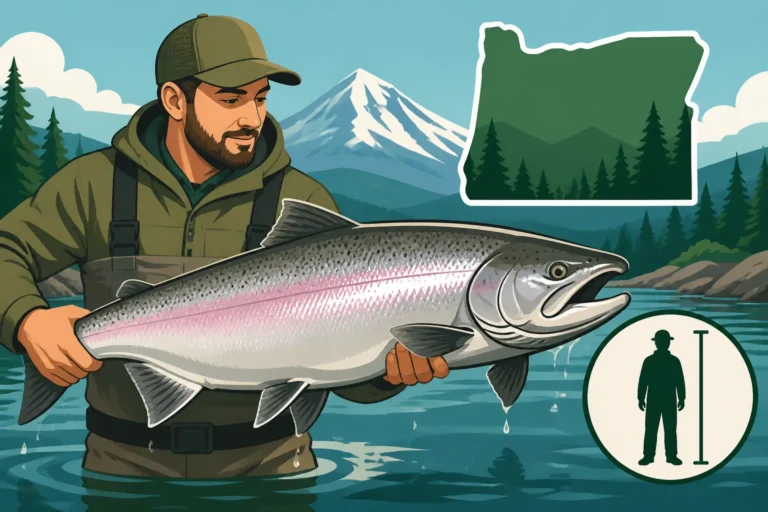
It can be pretty confusing out there on the water, can't it? You're reeling in a beautiful salmon or steelhead, and then you notice something… or rather, something missing. A small fin, usually on its back near the tail, is gone. You might wonder if it's an injury, or maybe just a genetic quirk, but there's actually a very deliberate reason for it. This guide is going to dive deep into why hatchery fish are fin-clipped in Oregon, unraveling the mystery behind this common practice and explaining exactly what it means for you, the angler, and for the fish themselves.
The Big Picture: Why Distinguish Hatchery from Wild
You might be thinking, "A fish is a fish, right? Why does it matter where it came from?" But in the world of fisheries management and conservation, especially here in Oregon with our iconic salmon and steelhead runs, knowing the origin of a fish is absolutely crucial. The difference between a hatchery-raised fish and one born in the wild stream isn't just a fun fact; it's a foundation for how we manage our precious fish populations.
Protecting Vulnerable Wild Stocks
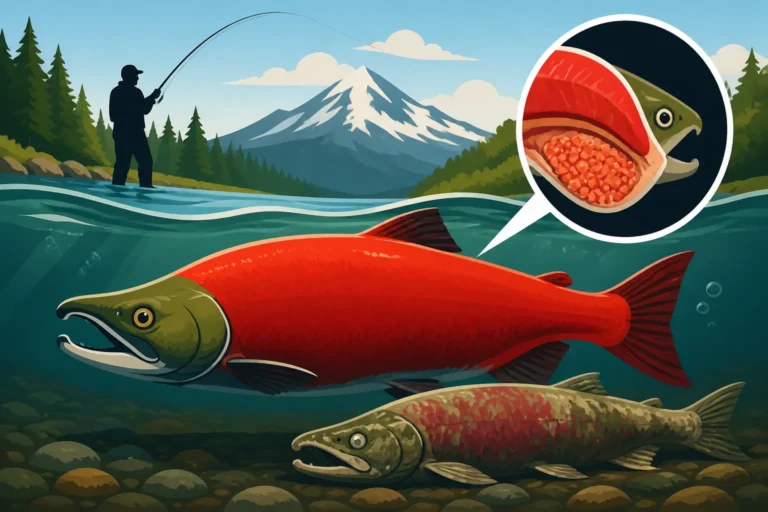
One of the primary, most vital reasons for fin clipping is to protect our wild fish populations. Wild salmon and steelhead, those incredible creatures that have navigated our rivers for millennia, are often facing a gauntlet of challenges – habitat loss, pollution, and climate change, just to name a few. Many of these wild stocks are struggling, and some are even listed under the Endangered Species Act. Hatchery fish, while they look similar, are raised in a controlled environment and are meant to supplement fishing opportunities, not to replace the genetic diversity and resilience of wild populations.
By clipping a fin, usually the adipose fin, fisheries managers give us anglers a clear visual cue. If a fish has its adipose fin, it's wild, and in many areas, those wild fish are protected, meaning they must be released unharmed. If it's clipped, it's a hatchery fish, and often fair game to keep within bag limits. This distinction is critical for ensuring that fishing pressure doesn't inadvertently decimate wild, struggling runs. Without this simple clip, it would be nearly impossible for the average angler to tell the difference, leading to potentially devastating impacts on conservation efforts. It's really about being good stewards of our natural resources.
Managing Fishing Opportunities and Harvest
Beyond conservation, fin clipping serves a very practical purpose for managing recreational and commercial fishing. Let's face it, many of us love to catch fish to take home and enjoy! Hatchery programs are designed to create fishing opportunities, producing millions of fish that are released into our rivers and oceans. These fish are essentially "disposable" from a management perspective – they're intended to be caught.
By marking hatchery fish, ODFW (Oregon Department of Fish and Wildlife) can allow anglers to retain these hatchery-origin fish, providing a meaningful harvest, while simultaneously protecting the more sensitive wild populations. Imagine trying to set Oregon Daily Bag Limits Explained for salmon without knowing if you were allowing people to keep critically endangered wild fish or abundant hatchery stock. It would be a nightmare! The fin clip provides that clear, black-and-white rule right there on the water. This allows for specific regulations, like "hatchery fish only," which are common on many of our renowned fishing rivers, ensuring that we can still enjoy fishing without compromising the future of the wild runs.
The Physical Act: What Fin Clipping Entails
So, what exactly is fin clipping, and how is it done? It's not some ancient tribal ritual or a random act of mutilation. It's a scientifically applied marking technique that has been refined over decades to be efficient and, as much as possible, stress-free for the young fish.
The Adipose Fin: The Most Common Clip
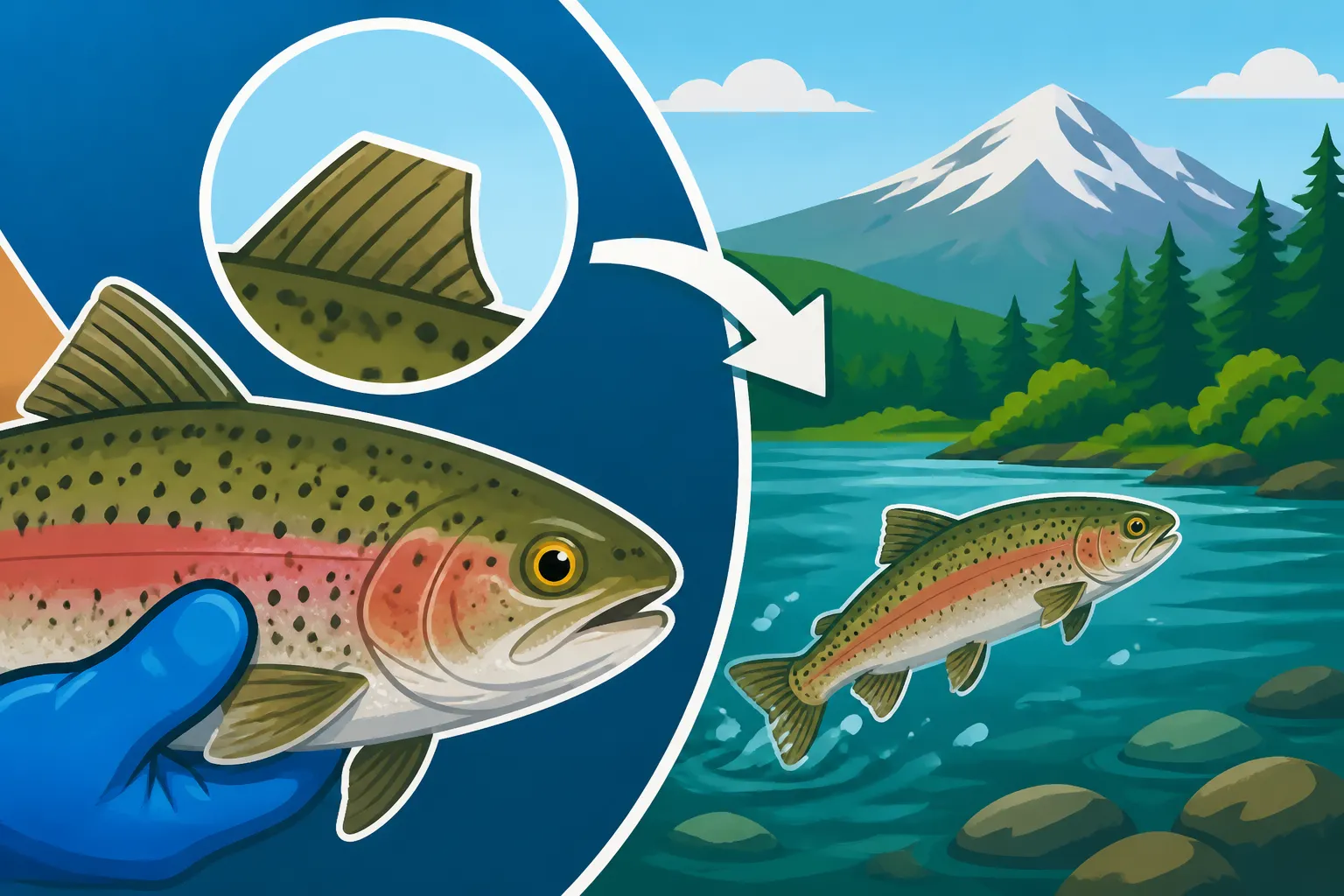
When we talk about fin clipping for salmon and steelhead here in Oregon, we are almost always referring to the removal of the adipose fin. If you're new to fishing, the adipose fin is that small, fleshy, rayless fin located on the back of the fish, between the dorsal fin (the main fin on its back) and the tail fin. It looks a bit like a tiny extra nub of flesh.
Why the adipose fin? Well, it's non-essential. Unlike the pectoral, pelvic, dorsal, or caudal (tail) fins, the adipose fin doesn't have any bony rays or significant muscle structure. Its removal causes minimal trauma to the fish and doesn't appear to affect their swimming ability, survival, or overall health once they're released into the wild. It also doesn't grow back, making it a permanent and unambiguous mark. This makes it an ideal choice for a permanent, easily identifiable mark that doesn't compromise the fish's ability to survive in its natural environment.
The Process at the Hatchery
The actual clipping happens when the fish are very young, typically as smolts, which are juvenile salmon or steelhead that are preparing to migrate to the ocean. At this stage, they are small enough to be handled efficiently. The process can be done in a couple of ways:
- Manual Clipping: For smaller batches or specific research needs, individual fish are carefully picked up, and the adipose fin is precisely removed using surgical scissors or specialized clippers. This is often done by trained technicians who work quickly and efficiently to minimize stress to the fish. After clipping, the fish are usually held in recovery tanks for a short period before being returned to their raceways.
- Automated Clipping Systems: For the vast numbers of fish produced in large hatcheries, automated systems are often employed. These systems can sort and clip fish at a much faster rate, using sophisticated machinery to remove the adipose fin. While faster, these systems still prioritize precision and minimizing stress.
It's a huge logistical undertaking to clip millions of fish each year across Oregon's hatchery system, but it's a testament to the commitment to responsible fisheries management. While it might sound harsh, the process is designed to be as humane as possible, recognizing the value of each fish. You can even find guides and resources on platforms like Amazon that delve into the biological and ethical considerations of fish marking techniques if you want to learn more about the science behind it.
How Fin Clipping Shapes Angling Regulations
Once those fish are released, either clipped or unclipped, they become part of the greater ecosystem, and their fins – or lack thereof – directly influence what you can and can't do when you're out fishing. Understanding this is key to being a responsible and successful angler in Oregon.
The "Wild Must Be Released" Mandate
This is perhaps the most significant impact of fin clipping on anglers: the "wild must be released" rule. If you're fishing in an area where wild fish are protected, and you hook a salmon or steelhead that has an intact adipose fin, you are legally required to release that fish immediately and unharmed. This is where Oregon Catch-and-Release Rules become incredibly important. You need to know how to properly handle and release a fish to give it the best chance of survival.
This regulation isn't about making your fishing trip harder; it's about safeguarding the genetic future of our fish. Wild fish have adapted over countless generations to their specific rivers, developing unique traits that make them resilient. Protecting them ensures that this invaluable genetic legacy continues. So, when you see a whole fin, think "future generations," and practice your best catch-and-release techniques.
Hatchery Fish for Harvest: Expanding Opportunities
Conversely, if you hook a fish with a missing adipose fin – a "fin-clipped" fish – it generally means it's a hatchery fish, and in many situations, you can keep it as part of your daily bag limit. This is the payoff for the hatchery programs and the reason many anglers head out. These hatchery fish provide abundant opportunities for harvest, taking pressure off the wild stocks.
Knowing the difference allows you to enjoy the thrill of catching a fish and bringing it home for dinner, all while knowing you're doing your part for conservation. Always double-check the current Oregon Fishing Regulations Explained before you go, as specific rules for hatchery retention can vary by river, zone, and time of year. Sometimes an area might be "hatchery-only" for a particular species, or there might be specific size limits that apply differently to hatchery versus wild fish. It’s always best to be informed.
Practical Identification Tips for Anglers
So, how do you quickly and confidently identify a fin-clipped fish when it's thrashing at the side of your boat or bank?
- Location, Location, Location: Remember, it's that small, fatty fin between the dorsal fin and the tail. Don't confuse it with a damaged dorsal or pectoral fin.
- Feel for the Scar: On some fish, especially if the clip was done a while ago, the area where the adipose fin once was might have healed over smoothly. You might just feel a slight depression or a clean, healed line where the fin should be.
- Look Closely: Especially in low light, it can be tricky. A headlamp or a good pair of polarized sunglasses (which you can often find great deals on through retailers like Amazon) can help you see the absence of the fin more clearly.
- When in Doubt, Release: This is the golden rule. If you can't definitively tell if the adipose fin is missing, treat the fish as wild and release it. It's better to be safe than sorry and protect a potentially wild fish.
Here's a quick comparison of the visual cues:
| Feature | Wild Fish | Hatchery Fish (Adipose Clipped) |
|---|---|---|
| Adipose Fin | Present and fully intact | Completely absent |
| Other Fins | Usually pristine, undamaged | May show some wear or minor damage from hatchery rearing (not always) |
| Nose/Jaw | Often more pointed, less worn | Can sometimes be more rounded or worn from concrete raceways (not always) |
| Coloration | Typically vibrant, varied | Can sometimes be slightly paler or more uniform (not always) |
| Overall Condition | Often sleek and robust | Varies, but generally healthy |
Remember, the adipose clip is the definitive marker for hatchery status. Other features are less reliable for legal purposes.
More Than Just a Clip: Other Fish Identification Methods
While the adipose fin clip is the most visible and common method for anglers to distinguish hatchery from wild salmon and steelhead, it's far from the only way fisheries biologists track fish. These other methods provide even more granular data, helping scientists understand fish migrations, survival rates, and population dynamics with incredible detail.
Coded Wire Tags (CWTs)
Think of a Coded Wire Tag (CWT) as a tiny, microscopic bar code implanted in the nose of a fish. These tags are absolutely miniscule – about the size of a pencil lead fragment – and contain a unique code that identifies the hatchery of origin, the release year, and even specific genetic groups. They're usually inserted into juvenile fish at the same time the adipose fin is clipped.
The catch? You can't see a CWT with the naked eye. When a fin-clipped fish is caught and retained, it's often sampled at check stations, processing plants, or even by dedicated port samplers. These individuals use a special magnetic wand to detect the CWT in the fish's snout. If a tag is present, that section of the fish's head might be removed and sent to a lab, where the tiny tag is extracted and read under a microscope. This information is invaluable for biologists, providing crucial data on stock performance, migration patterns, and the effectiveness of hatchery programs. These tags help scientists understand the journey of individual fish far better than just a fin clip alone. For avid anglers interested in the science, there are numerous resources, including books and documentaries, which can sometimes be found via online platforms like Amazon, detailing the fascinating world of CWTs and fisheries research.
PIT Tags (Passive Integrated Transponders)
If CWTs are microscopic barcodes, then Passive Integrated Transponders (PIT tags) are like tiny microchips, similar to what you might put in a pet. These small glass-encased tags are injected into the body cavity of fish. The beauty of PIT tags is that they can be detected electronically without harming the fish.
PIT tag arrays are installed in many rivers, especially at fish ladders, dams, and critical migration points, like on the Deschutes River or sections of the Columbia. As a fish swims past an antenna, the PIT tag transmits its unique ID code, allowing researchers to track its movement, assess passage rates, and estimate survival. This "real-time" (or near real-time) data is incredibly valuable for understanding fish behavior and the challenges they face during their migrations. Unlike CWTs, which require the fish to be harvested, PIT tags allow for continuous monitoring of live fish, making them a powerful tool for Oregon Steelhead Guide research and conservation efforts.
Genetic Sampling
Sometimes, even without a clip or a tag, biologists can determine a fish's origin through genetic sampling. By taking a small tissue sample (often a piece of fin tissue, carefully collected without harming the fish), scientists can analyze the DNA. Each hatchery has unique genetic markers, and wild populations also have distinct genetic signatures tied to their specific river or even specific tributary.
Genetic sampling is particularly useful for assessing stray rates (how often hatchery fish end up in wild spawning grounds) and for understanding the genetic health and diversity of wild stocks. It's a non-invasive way to get a lot of information and complements fin clipping and tagging efforts, especially when monitoring vulnerable populations or resolving questions about fish origins that can't be answered visually.
All these methods, from the simple adipose clip to complex genetic analysis, work together to provide a comprehensive picture of our fish populations. They allow ODFW to set precise Oregon Fishing Season Dates and Limits, protect our most precious wild resources, and ensure that future generations can continue to enjoy the incredible fishing opportunities Oregon has to offer. Understanding "why" behind the clip makes you a more informed, and ultimately, a more effective conservation-minded angler.
Disclaimer
This article is for general informational purposes only and does not constitute professional advice. Laws, prices and regulations vary by location and change over time. Consult a qualified professional for guidance on your specific situation.