How to measure a legal Dungeness crab
There's nothing quite like pulling up a crab pot, the anticipation building as you see those dark shapes scuttling inside. The thrill of a successful crabbing trip along the Oregon coast is truly something special. But once that pot is on the deck or dock, a crucial step begins: measuring your catch. Many folks, especially newcomers, can feel a bit overwhelmed or confused about exactly how to measure a Dungeness crab legally, and mistakenly keeping an undersized crab can quickly turn a fun outing into a frustrating experience with potential penalties. This guide is here to walk you through the precise, tried-and-true method for measuring Dungeness crab in Oregon, ensuring your crabbing adventures are always compliant and enjoyable.
Why Accurate Crab Measurement is Absolutely Essential
You might think, "It's just a crab, what's the big deal if it's a little small?" But the size limits for Dungeness crab aren't arbitrary rules designed to make your life harder. They are foundational to the sustainable management of this incredible resource. When you measure accurately and adhere to the regulations, you're not just avoiding a potential citation; you're actively participating in the conservation efforts that ensure healthy crab populations for future generations of anglers and crabbers.
Protecting the Future of Dungeness Crab
Think about it this way: Dungeness crabs have specific growth patterns and reproductive cycles. The size limits are carefully determined to allow male crabs enough time to mature and reproduce multiple times before they are harvested. Females, which are always released regardless of size, also play a critical role, and by only keeping mature males, we ensure the continuation of the species. Harvesting undersized crabs before they've had a chance to contribute to the next generation directly impacts the overall health and abundance of the stock. It's a delicate balance, and every crabber plays a part in maintaining it.
Avoiding Unwanted Fines and Penalties
Let's be realistic: getting caught with undersized crabs is not just a slap on the wrist. Oregon has clear regulations, and marine patrol or ODFW wardens regularly check catches. The penalties for fishing violations, including keeping illegal crabs, can be significant. This isn't just about financial fines; it can also include forfeiture of your gear or even your catch. Imagine spending a beautiful day crabbing, only to have your entire catch confiscated and a hefty fine issued because you mismeasured a few crabs. It's a buzzkill, to say the least. Understanding and correctly applying the measurement rules is the easiest way to protect your wallet and your peace of mind. For more on this, check out Oregon Fishing Violations and Penalties.
Understanding the Legal Measurement Point: Carapace Width
When we talk about measuring a Dungeness crab, we're not talking about its leg span or its total length. The specific measurement that matters is the "carapace width." This is a crucial distinction that often trips up new crabbers. It’s the rigid upper shell of the crab, and understanding where to measure on this shell is key to getting it right every time.
Pinpointing the Carapace Widest Point
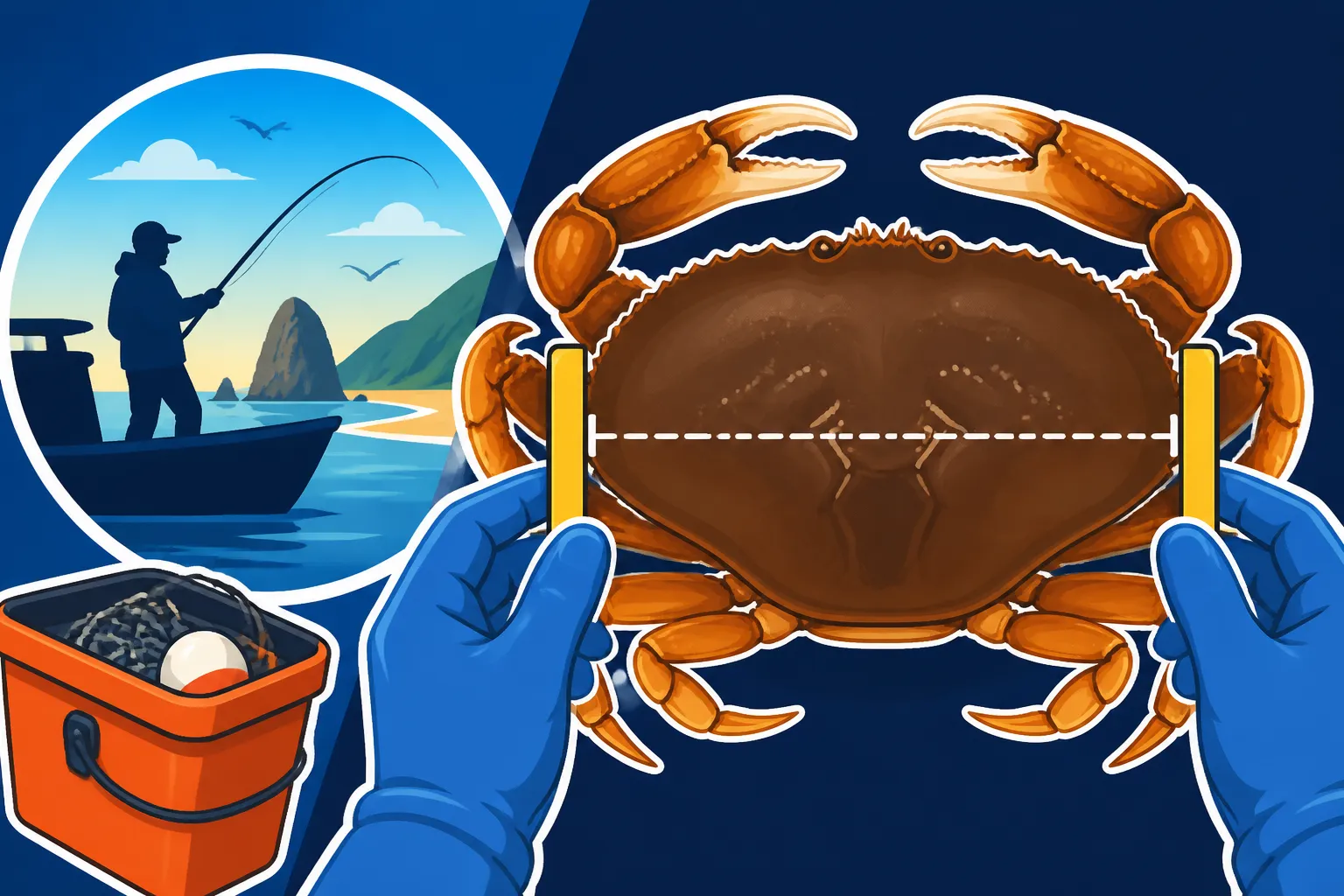
The carapace width refers to the straight-line distance across the crab's back, from point to point, directly in front of the 10th lateral spines. Now, that sounds a bit technical, doesn't it? Let's break it down. If you look at a Dungeness crab, you'll notice that the sides of its shell are not smooth. They have a series of jagged, pointed protrusions or "spines." You need to find the outermost points of the shell, located on either side, just before the last pair of spines. These are the two points you'll measure between. It's not the overall widest part of the crab if you include the legs, and it's certainly not the width from the front eye-stalks. It's those specific spine tips.
Why This Specific Measurement?
This particular measurement point is standardized for a reason. It's the most consistent and reliable way to measure the crab's growth and maturity, as the carapace is the rigid, non-flexing part of the crab that indicates its size. Other measurements, like leg length or even different points on the carapace, can be inconsistent or harder to accurately measure with a simple gauge, especially with a crab that's probably trying to pinch you! This standard helps ensure everyone is measuring the same way, creating a level playing field for compliance and conservation.
Step-by-Step Guide to Measuring Your Dungeness Crab
Now for the practical part! Actually measuring a live, potentially feisty Dungeness crab requires a bit of technique and a suitable tool. Don't worry, it's not rocket science, but a steady hand and a clear understanding of the steps will make all the difference.
The Right Tool for the Job: Your Crab Gauge
First things first, you need the right tool. A dedicated crab gauge is absolutely essential. These are typically simple, sturdy devices, often made of plastic or metal, with a fixed opening that represents the minimum legal size. You can usually find these at local tackle shops, marine supply stores, or even online retailers like Amazon. Many come as part of a crabbing kit or can be purchased individually. Avoid using a standard measuring tape or ruler, as they make it much harder to get an accurate, consistent reading on a squirming crab, and a warden will definitely want to see you using a proper gauge.
Safe Handling and Positioning of the Crab
This is where some people get nervous! Dungeness crabs have powerful claws, and getting pinched is no fun. Here’s how to handle them safely:
- Approach from the Rear: Always approach a crab from behind or from above. Their primary defense is to use their front claws.
- Grip Firmly: Hold the crab by the rear of its carapace, just above its back legs. Place your thumb on one side and your fingers on the other, pressing down firmly but gently enough not to damage the shell. This immobilizes the crab and keeps its claws away from your hands. Some experienced crabbers will grab one or both of the large claws from behind the crab, securing them before handling the body. Whatever method you choose, practice safety.
- Position for Measurement: With the crab securely held, orient it so its back (carapace) is facing upwards and its legs are pointing downwards. You want a clear, unobstructed view of the lateral spines you'll be measuring between.
The Precise Measuring Technique
Once you have your gauge and your crab is safely in hand, it's time to measure:
- Align the Gauge: Take your crab gauge and position it so that the fixed opening fits over the carapace. You want the inner edges of the gauge to align with those outermost points of the 10th lateral spines we discussed earlier.
- Straight-Line Measurement: Ensure the gauge is perfectly straight across the carapace, not angled. This is critical. An angled measurement will give you a shorter reading, potentially causing you to keep an undersized crab that you thought was legal.
- Does It Fit?
- If the crab's carapace width fits completely within the gauge's opening (meaning the gauge slides over it without resistance), the crab is undersized and must be immediately returned to the water.
- If the crab's carapace width is wider than the gauge's opening (meaning the gauge cannot slide over it, or it just barely touches the outside edges of the gauge), then the crab is legal size.
It’s really that simple: if the gauge slips over, it goes back. If it doesn't, it's a keeper (assuming it meets other regulations like sex and shell condition). Remember, practice makes perfect, and soon you'll be a pro at quickly and accurately measuring your crabs. You can find robust, easy-to-read gauges, sometimes even with a female crab identifier on the back, from reputable brands sold on Amazon or your local outdoor store.
Beyond the Measure: Other Critical Dungeness Crab Regulations
While measuring the carapace width is paramount, it's just one piece of the puzzle. Oregon has a few other non-negotiable rules you must follow to ensure your Dungeness crabbing trip is fully compliant and sustainable. Overlooking these can be just as problematic as keeping an undersized crab.
Sex Identification: Males Only!
This is a huge one: only male Dungeness crabs can be kept in Oregon. Females, regardless of their size, must always be released immediately and unharmed. Why? Because they are the future! Protecting female crabs ensures continued reproduction and healthy populations. Identifying the sex of a Dungeness crab is relatively easy once you know what to look for, and it's something you should always do before measuring.
The key is to look at the "apron" on the crab's underside. This is a flap that folds underneath the body.
- Male Crabs: Have a narrow, pointed, and usually triangular apron.
- Female Crabs: Have a much wider, rounded, or oval-shaped apron. This wider apron is designed to hold their eggs when they are "berried."
Once you've determined it's a male, then proceed with the measurement. If it's a female, it goes back into the water, even if it's huge! Check out Dungeness Crab in Oregon for more details on these fascinating creatures.
Soft-Shell Crabs: A No-Go Zone
Sometimes you'll pull up a crab that feels strangely light or soft to the touch, even if it's a legal male. These are often "soft-shell" crabs, and they are illegal to keep in Oregon. Soft-shell crabs are individuals that have recently molted (shed their old shell to grow a new, larger one). During this period, their new shell is still soft and pliable, and they are incredibly vulnerable. Keeping soft-shell crabs is detrimental to their survival and the health of the fishery.
How to identify a soft-shell:
- Feel: Gently press on the carapace. If it feels spongy, flexible, or easily yields to pressure, it's a soft-shell. A legal keeper will have a hard, rigid shell.
- Appearance: Their color might also seem duller or less vibrant than a hard-shell crab.
Soft-shell crabs need time to harden their new shell, replenish their body mass, and recover from the energy-intensive molting process. Releasing them allows them to do this and ensures they can continue to grow and reproduce. Always check for soft-shell status, even if it's a legal-sized male.
Other Important Considerations
Beyond size and sex, always be mindful of:
- Daily Bag Limits: There's a limit to how many legal Dungeness crabs you can keep per person per day. Make sure you know the current daily limits by checking the Oregon Department of Fish and Wildlife (ODFW) regulations.
- Crabbing Season and Closures: Crabbing seasons can vary, and specific areas might have temporary closures due to environmental factors or conservation needs. Always verify that the area you're crabbing in is open. Oregon Crabbing Season Timing is a good resource for this.
- Crab Pot/Ring Regulations: There are also rules about the type, size, and marking of crab pots and rings you can use, including escape rings and biodegradable rot cords. These are designed to minimize bycatch and prevent "ghost fishing" from lost gear. You'll find a variety of compliant gear, from basic crab rings to full traps, on Amazon or at any well-stocked tackle shop.
- Shellfish License: Don't forget, you absolutely need an Oregon shellfish license to harvest Dungeness crab. This is a separate license or endorsement from a standard angling license. Read more about it in Oregon Shellfish License.
By diligently following all these regulations, you're not just being a responsible crabber; you're also ensuring that your trips to the beautiful Oregon coast continue to be filled with the excitement of a successful catch for many years to come. Whether you're pulling a pot from a boat in Yaquina Bay or crabbing from a dock, knowing the rules is your best tool. If you're new to the game, you might find some useful tips in How to crab from a dock in Oregon.
Quick Reference: Legal Dungeness Crab Checklist
To help summarize the key points when you're out on the water, here's a handy checklist for your Dungeness crab:
| Characteristic | Legal (Keep) | Illegal (Release Immediately) |
|---|---|---|
| Sex | Male (narrow, pointed apron) | Female (wide, rounded apron) |
| Size | Carapace width exceeds legal minimum | Carapace width fits within legal minimum |
| Shell | Hard, rigid, firm to the touch | Soft, spongy, pliable to the touch |
| Condition | Appears healthy and intact | Injured, missing claws (unless naturally molted) |
This table is a quick reminder, but always refer to the current Oregon Department of Fish and Wildlife regulations for the most up-to-date specific measurements and rules.
Disclaimer
This article is for general informational purposes only and does not constitute professional advice. Laws, prices and regulations vary by location and change over time. Consult a qualified professional for guidance on your specific situation.