Odell Lake mackinaw fishing
Catching a Mackinaw, also known as a Lake Trout, is a bucket-list item for many Oregon anglers. These formidable predators lurk in the cold, deep waters of a select few lakes, making them notoriously challenging to find and hook. If you've been dreaming of battling one of these giants but aren't sure where to start, you're not alone. This guide focuses on Odell Lake, Oregon's premier Mackinaw fishery, offering proven strategies and insights to help you land that trophy lake trout.
Unraveling the Mystery of Odell Lake Mackinaw
Odell Lake, nestled high in the Cascade Mountains of central Oregon, is a gem for cold-water fishing. While many think of trout when they think of Oregon, Odell Lake holds a special place as the state's most prominent Mackinaw fishery. These aren't your typical stocked rainbows; Mackinaw are an entirely different beast, requiring specific strategies and a deep understanding of their habitat.
Why Odell Lake Reigns Supreme for Lake Trout
Odell Lake isn't just a place to catch Mackinaw; it's the place in Oregon. Its unique characteristics create an ideal environment for these large, predatory fish to thrive. First and foremost is its depth. Odell Lake plunges to over 280 feet in some areas, providing the frigid, oxygen-rich waters that Mackinaw absolutely depend on. Unlike many shallower lakes that warm significantly in summer, Odell maintains consistent cold temperatures in its deeper pockets year-round, which is crucial for these cold-water species.
Beyond depth, the lake boasts a robust forage base, primarily kokanee salmon and various smaller fish, which allows Mackinaw to grow to impressive sizes. A healthy food chain means healthy, large predators. The lake's clear, deep waters also contribute to their elusive nature; Mackinaw are visual hunters but prefer low light conditions found at significant depths, making them a true challenge for anglers. This combination of deep, cold water and abundant food sources makes Odell Lake the perfect home for trophy-sized Lake Trout, drawing dedicated anglers from all over the Pacific Northwest.
Understanding Mackinaw Behavior and Habitat
To successfully target Mackinaw, you have to think like one. These fish are essentially the apex predators of their deep-water domain. They are highly attuned to temperature, light, and the presence of their prey. During most of the year, especially outside of early spring and late fall, Mackinaw will be found in the deepest, coldest parts of the lake, often near structured bottoms like underwater ledges, drop-offs, and humps. They aren't going to be cruising the shallows unless they're actively spawning or chasing an easy meal in very specific, low-light conditions.
Their diet largely consists of other fish, particularly the abundant kokanee salmon in Odell Lake. This means that successful Mackinaw presentations often mimic these baitfish in size, shape, and action. They are also known to be opportunistic, sometimes taking advantage of injured or disoriented prey. Their preference for low light conditions means that the best fishing often occurs at dawn, dusk, or on overcast days, even in deep water. Understanding these fundamental behaviors is the first step in unlocking the secrets to Odell Lake mackinaw fishing. For a broader understanding of different species, you might want to check out our comprehensive guide on Oregon Trout Species Guide.
Essential Gear and Proven Techniques for Odell Lake
You can't just show up to Odell Lake with your standard trout rod and expect to land a Mackinaw. These fish are powerful, and the methods used to catch them are specialized. Think heavy-duty equipment and precise presentation.
Robust Rods, Reels, and Lines
When targeting Mackinaw, you need gear that can handle a serious fight from a large fish, often brought up from significant depths. A medium-heavy to heavy action rod, typically 7 to 8.5 feet long, is ideal. Look for rods with a strong backbone to set hooks and muscle large fish, but with a sensitive tip to detect subtle bites when trolling or jigging. Popular choices include specific trolling rods from brands like Shimano or Ugly Stik, known for their durability.
Pair your rod with a sturdy baitcasting reel, often a level-wind model, capable of holding a substantial amount of line. Line capacity is key when you're targeting depths of 60 to 150 feet or more. For line, many serious Mackinaw anglers opt for braided line as their main line (50-80 lb test) due to its zero-stretch properties, which allows for better bite detection and more powerful hook sets in deep water. This is then typically connected to a fluorocarbon leader (20-40 lb test) via a strong knot like an Albright or double uni. Fluorocarbon is less visible in clear water and offers good abrasion resistance against the Mackinaw's sandpaper-like teeth. The use of heavy line and leaders is a must, as anything less often results in lost fish and broken dreams.
Master the Art of Trolling
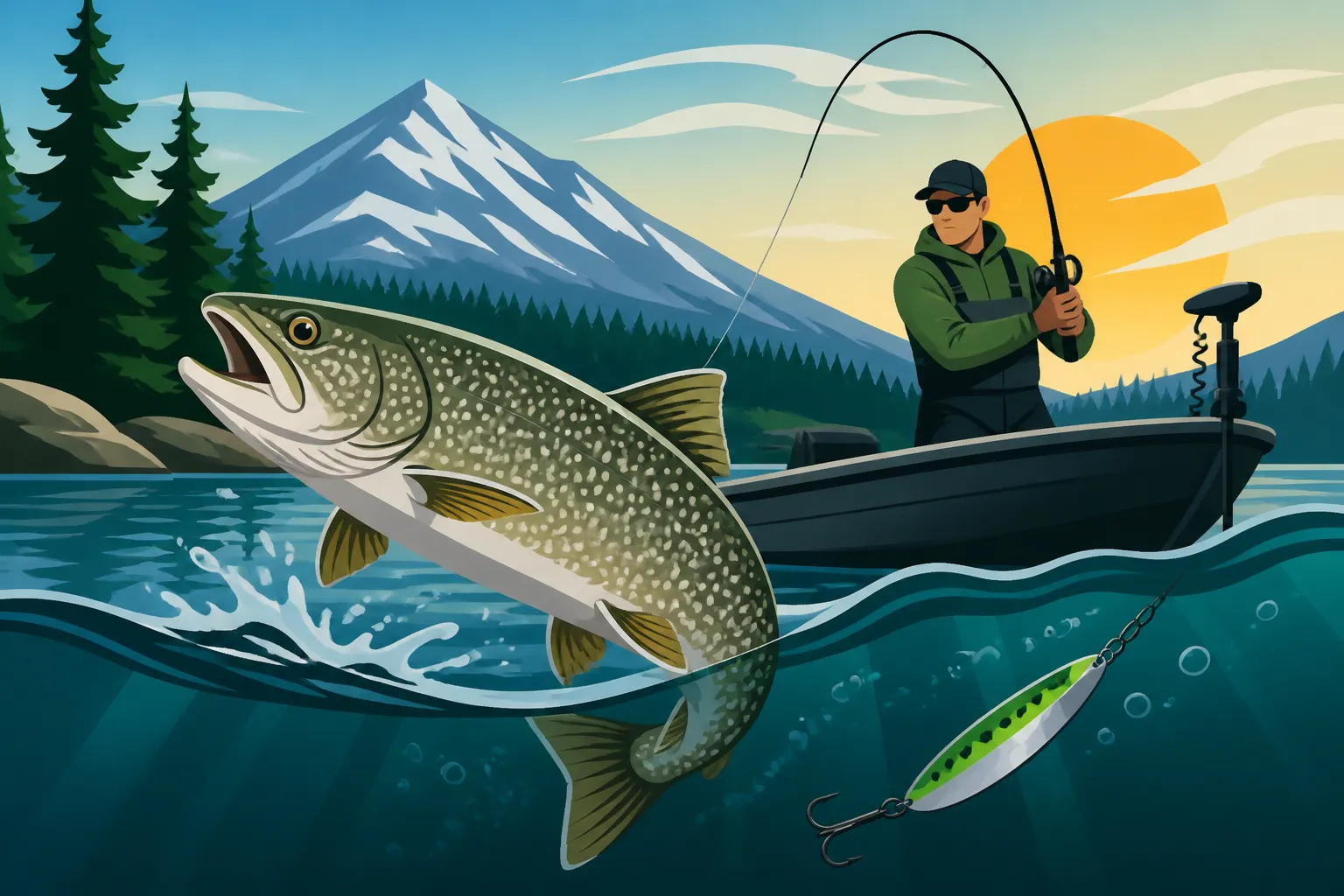
Trolling is hands down the most popular and often most effective method for catching Mackinaw in Odell Lake. It allows you to cover vast amounts of water and present your lure at the precise depth where the fish are holding. This often requires specialized equipment like downriggers, which are essential for getting your lures consistently into the deep water where Mackinaw reside.
- Downriggers: These devices allow you to clip your fishing line to a heavy ball that's lowered to a specific depth, keeping your lure at that exact level as you troll. When a fish strikes, the line pops free from the clip, allowing you to fight the fish directly without the weight of the downrigger ball.
- Dodgers and Flashers: These are attraction devices used in conjunction with your main lure. They create vibration and flash, mimicking a school of baitfish or attracting attention from a distance. Dodgers have a more erratic, side-to-side action, while flashers rotate. They should be rigged a few feet in front of your lure, creating an enticing presentation.
- Lures and Bait: Large spoons (like Luhr Jensen Kwikfish, Yakima Bait Trolling Spoons, or Dick Nite spoons), heavy plugs (such as FlatFish or U-20 Flatfish), and large leadhead jigs tipped with bait are excellent choices. Tipping your lure with a piece of anchovy, herring, or even a small piece of Mackinaw belly meat can significantly increase your strike rate. The scent trail can be irresistible to these deep-water predators. Experiment with different colors and sizes based on light conditions and what the fish are keying in on.
- Trolling Speed and Pattern: Slower trolling speeds, typically 1.5 to 2.5 mph, are often most effective for Mackinaw. Pay close attention to your sonar to identify schools of baitfish or larger fish arches, and adjust your depth and path accordingly. Zig-zag patterns or making wide turns can cause your lure to speed up or slow down, triggering strikes from following fish. More in-depth tactics can be found in our article on Oregon Trolling and Boat Fishing Techniques.
The Precision of Deep-Water Jigging
While trolling covers water, deep-water jigging is about precision. Once you've marked fish on your sonar, or if you're fishing a known hotspot like a submerged hump or rocky point, vertical jigging can be incredibly effective. This method involves dropping a heavy jig directly down to the fish's depth and working it with an up-and-down motion.
- Jigs: Heavy lead-head jigs, often 1 to 3 ounces, or blade baits are preferred to get down quickly. Again, tipping with bait like a small piece of cured herring or a Gulp! minnow imitation can make a huge difference.
- Sonar is Key: Your fish finder becomes your best friend here. You need to be able to identify fish near the bottom or suspended in the water column and drop your jig right to them. Watch your screen closely for any changes in fish behavior or followers.
- Technique: Drop your jig to the desired depth, then use a series of sharp lifts and drops, varying the cadence and height of your jigging motion. Let it pause for a few seconds on the fall, as strikes often occur when the lure is descending. This technique requires patience and a good feel for what's happening hundreds of feet below the surface.
Seasonal Strategies for Maximizing Your Catch
Mackinaw behavior in Odell Lake changes with the seasons, mainly influenced by water temperature and the availability of their prey. Adapting your approach throughout the year is crucial for consistent success. You'll also need to be aware of the Oregon Fishing Season Dates and Limits for Mackinaw.
Spring and Early Summer: The Shallow Pursuit
As the ice melts in late spring and early summer (typically April through June), Mackinaw can be found in relatively shallower waters compared to other times of the year. The entire water column is still cold, and baitfish like kokanee might be more active closer to the surface or along shallower ledges. This is often a great time to target fish in the 30-70 foot range.
During this period, Mackinaw are often recovering from the rigors of winter or beginning to feed aggressively. Trolling with downriggers at varying depths along underwater points, rocky ledges, and transition zones can be highly effective. Look for areas where the lake bottom quickly drops off into deeper water. Early mornings and late evenings are prime times, as the light is low, and the fish might be more willing to move into slightly shallower areas to feed. Lures that imitate kokanee, such as silver or iridescent spoons and plugs, work wonders.
Mid-Summer to Fall: Going Deep
Once the summer heat sets in (July through September), the surface waters of Odell Lake warm significantly, forcing Mackinaw to retreat to the deepest, coldest parts of the lake. During these months, you'll be primarily targeting fish in the 80 to 150+ foot range. This is where your downriggers and precise sonar readings are absolutely indispensable.
Focus your efforts on the deepest basins, distinct humps, and steep drop-offs. The thermocline, the layer where water temperature rapidly changes, will be well-established, and Mackinaw will typically be found below it. Trolling slower and paying very close attention to your electronics to pinpoint suspended bait balls or individual fish is critical. Sometimes, they'll be suspended just above the bottom, other times they might be cruising in mid-water following kokanee. This is also a good time for deep-water jigging once you locate a concentration of fish. As fall progresses and water temperatures begin to cool uniformly, Mackinaw might start to disperse slightly, potentially moving into slightly shallower feeding areas before their spawning period.
Winter Ice Fishing: A Unique Opportunity
Yes, Odell Lake freezes over, providing a fantastic, albeit challenging, opportunity for ice fishing, particularly for Mackinaw. The lake's high elevation ensures consistent ice cover, making it a popular destination for those brave enough to embrace the cold. If you're interested in cold-weather angling, be sure to consult our Oregon Winter Fishing Options guide.
Ice fishing for Mackinaw involves drilling holes over deep structure and vertical jigging. You'll need sturdy ice fishing rods, powerful reels, and robust line to handle the potential for a large fish in a confined space. Portable fish finders (like those from Humminbird or Garmin) or Vexilars are absolutely essential for locating fish and presenting your jig at the correct depth. Heavy spoons, tube jigs, and minnow-imitating baits, often tipped with a piece of cut bait, are effective. Patience is key, as bites can be subtle, and you might have to move around to find active fish. Always prioritize safety on the ice and check ice thickness before venturing out.
Navigating Odell Lake for Your Trophy Mackinaw
Odell Lake is a big piece of water, and knowing where to start can feel overwhelming. Having a plan for access and understanding key fishing zones will significantly increase your chances of success.
Access Points and Boat Ramps
There are several key access points around Odell Lake, making it fairly convenient for anglers with boats.
- Odell Lake Lodge & Resort: This is a popular spot on the north shore, offering boat rentals, a store, and a public boat ramp. It's a great base of operations.
- Princess Creek Campground: Located on the south shore, Princess Creek offers camping and a boat ramp, providing good access to different parts of the lake.
- Shelter Cove Resort & Marina: Situated on the west side of the lake, Shelter Cove also has a marina, boat rentals, and a boat launch.
- Thielsen Campground: This smaller campground on the east side has limited access but can be another option for launching smaller craft.
Always check current conditions and ramp availability, especially during early spring or late fall, as some facilities may close seasonally.
Identifying Prime Mackinaw Fishing Zones
While Mackinaw are found throughout the lake, certain areas tend to hold higher concentrations due to their preferred habitat. Your sonar is your most valuable tool for identifying these zones.
- The Deep Basin: The central and western portions of Odell Lake hold the deepest water. These expansive deep basins are where Mackinaw often cruise in search of kokanee, especially during warmer months. Focus on trolling grids or long passes through these areas.
- Underwater Ledges and Drop-offs: Mackinaw love structure. Look for where the lake bottom quickly transitions from shallower areas to deep water. These ledges provide ambush points and cover. Mapping out these contours with your GPS and sonar is crucial.
- Submerged Humps and Points: Any underwater feature that rises from the bottom can attract baitfish and, consequently, Mackinaw. Trolling over and around these features, or jigging directly on them, can be highly productive. The areas around Shelter Cove and the main body near Odell Lake Lodge often feature good structure.
- Kokanee Schools: The presence of kokanee is a huge indicator. If your sonar lights up with baitfish schools, Mackinaw are likely nearby, either below them or actively feeding on them. Adjust your depth to match the baitfish and slightly below. This is where a good Oregon Combined Angling Tag Guide comes in handy, as you might hook into other species.
Consider a Guided Fishing Trip
For those new to Odell Lake or specifically to Mackinaw fishing, hiring a local guide can be an invaluable investment. An experienced guide knows the lake intimately, understands the seasonal patterns, and can provide all the specialized gear you'll need. They can cut down your learning curve significantly, increasing your chances of success and teaching you the nuances of the fishery.
Many excellent guides operate on Odell Lake. You can find reputable services through local tackle shops, resorts, or by using online platforms like FishingBooker, which connects anglers with professional fishing guides. A guided trip will not only maximize your chances of catching a trophy but also educate you on the best practices, from reading your electronics to proper fish handling. Before you go, make sure you understand the Oregon Fishing Charter Guide and know what to expect.
Table: Odell Lake Mackinaw Seasonal Tactics Overview
To help you visualize the seasonal changes and appropriate tactics, here's a handy table:
| Season | Typical Depths (Feet) | Preferred Techniques | Recommended Lures/Bait | Key Considerations |
|---|---|---|---|---|
| Spring | 30-70 | Trolling, Jigging | Spoons, Plugs (Kokanee patterns), Bait-tipped Jigs | Fish moving shallower, aggressive feeders. Low light best. |
| Early Summer | 50-100 | Trolling, Jigging | Spoons, Plugs, Minnow imitations, Anchovies/Herring | Transition period, fish begin moving deeper. |
| Mid-Summer | 80-150+ | Deep Trolling, Jigging | Large Plugs, Heavy Spoons, Lead-head Jigs (w/ bait) | Fish deep in thermocline. Sonar crucial. |
| Fall | 60-120 | Trolling, Jigging | Plugs, Spoons (natural colors), Live/Cut Bait | Fish dispersed, pre-spawn aggression. |
| Winter | 60-120 | Ice Jigging | Heavy Spoons, Tube Jigs, Minnow imitations (w/ bait) | Requires ice safety knowledge. Sonar essential for locating fish. |
Remember, these are general guidelines, and Mackinaw can be unpredictable. Always be prepared to adapt your depths and techniques based on what your sonar is telling you and the conditions on the water. For overall regulations, it's a good idea to refresh yourself with the Oregon Fishing Regulations Explained. Also, don't forget to secure your Oregon Fishing License Guide before heading out!
Conclusion
Odell Lake offers an incredible experience for anglers seeking the challenge and reward of Mackinaw fishing. It's a fishery that demands respect, patience, and the right approach, but the potential for landing a truly magnificent lake trout makes every effort worthwhile. By understanding the unique characteristics of Odell Lake, equipping yourself with the right gear, and adapting your tactics to the changing seasons, you'll be well on your way to a successful Mackinaw adventure. Whether you're trolling with downriggers in the summer depths or jigging through the ice in winter, Odell Lake consistently delivers some of Oregon's most thrilling cold-water fishing.
Disclaimer
Fishing conditions and regulations in Oregon can change. Always consult the latest Oregon Department of Fish and Wildlife (ODFW) regulations before you head out on the water. This guide is for informational purposes only and should not be considered a substitute for official ODFW publications.