Fall Chinook daily bag limit on the Columbia River
One of the biggest head-scratchers for any angler hitting the mighty Columbia River, especially when those prized Fall Chinook start making their glorious return, is figuring out the exact daily bag limit. It's not always as simple as "two fish," and the nuances can lead to real frustration or, worse, unintended violations. This guide is here to untangle the complexities of the Fall Chinook daily bag limit on the Columbia River, ensuring you can focus on the thrill of the catch with confidence.
Understanding Fall Chinook on the Columbia River
The Columbia River is an iconic waterway, a lifeline for both fish and anglers. When we talk about Fall Chinook, we're discussing one of the most sought-after salmon species in Oregon, renowned for its size, strength, and delicious meat. These powerful fish embark on an incredible journey from the Pacific Ocean, up the Columbia River, and into its many tributaries, drawing anglers from all corners of the country.
Why Fall Chinook Are So Popular
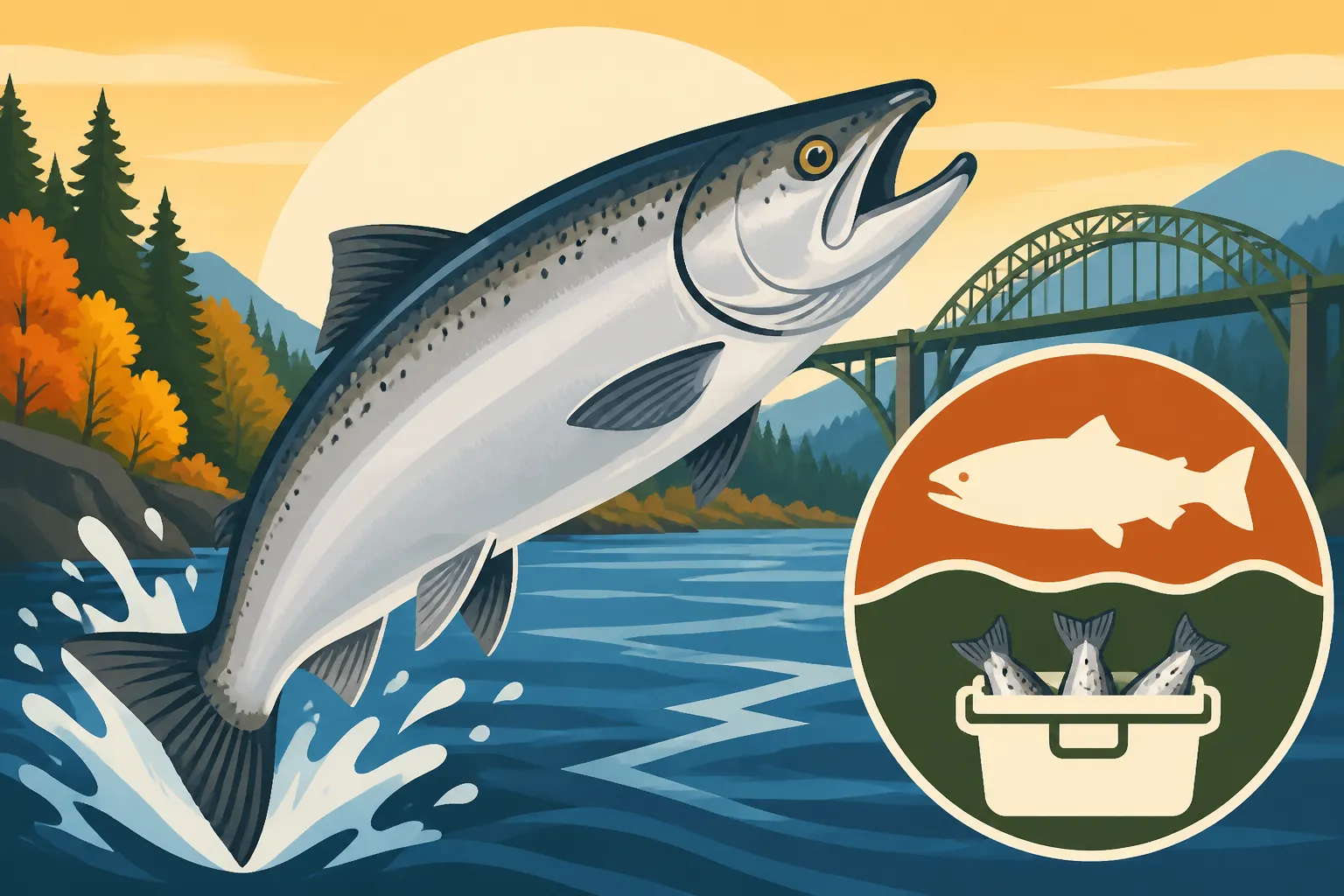
The allure of Fall Chinook is undeniable. Imagine hooking into a chrome-bright king salmon, sometimes pushing 30, 40, or even 50 pounds, fresh from the ocean, battling it out in the powerful currents of the Columbia. It's an experience that gets your heart pounding and your reel screaming. Beyond the sheer thrill of the fight, these fish are legendary on the dinner table. Their rich, red-orange flesh is highly prized, making them a top target for anglers looking to fill their freezer with quality protein. The annual Fall Chinook run, particularly in areas like Buoy 10 near Astoria, can be nothing short of a spectacle, with hundreds of boats vying for position, all hoping to land that trophy salmon. It's a true tradition for many Oregon fishing enthusiasts.
The Importance of Regulation
While the excitement of the Fall Chinook run is infectious, it's crucial to remember that these fisheries are carefully managed. The Oregon Department of Fish and Wildlife (ODFW) and its Washington counterpart (WDFW) work tirelessly to set and enforce regulations, including daily bag limits, to ensure the long-term sustainability of salmon populations. These regulations aren't designed to be burdensome; they're vital tools for conservation, allowing current and future generations to enjoy these incredible fish. Factors like overall run size forecasts, jack returns, hatchery versus wild fish proportions, and treaty Indian fishing allocations all play a role in determining the season structure and daily limits. Without these controls, overfishing could quickly deplete these precious resources, making understanding and adhering to the rules paramount for every responsible angler. If you're new to the area, it's a good idea to familiarize yourself with the broader Oregon Fishing Regulations Explained.
Navigating the Daily Bag Limit for Fall Chinook
Alright, let's get down to brass tacks: what's the actual limit? This is where it can get a little tricky, primarily because the Columbia River is a shared fishery between Oregon and Washington, and regulations can sometimes vary slightly by zone or even change mid-season based on updated run forecasts. It's always a moving target, so staying informed is key.
General Daily Limits for Columbia River Fall Chinook
Typically, the daily bag limit for adult salmon on the Columbia River, especially during the peak Fall Chinook season, is a specific number of adult fish. For Fall Chinook specifically, a common regulation might be something like two adult salmon per day. However, this is rarely just "any two salmon." Often, there are specific rules about how many of those can be Chinook, how many can be hatchery (fin-clipped) versus wild (unclipped), and sometimes even restrictions on other salmon species like Coho that might be present in the same waters. For example, during a strong Fall Chinook run, you might be allowed to keep two adult salmon, but only one of those can be a wild adult Chinook, with the rest needing to be hatchery fish. The specifics can vary greatly from year to year and section to section of the river, so always check the most current ODFW Sport Fishing Regulations for the Columbia River Zone. You can usually find these booklets at any licensed vendor or easily download them online.
What complicates things further is that different stretches of the Columbia River, from the mouth at Buoy 10 all the way upriver past the Bonneville Dam, can have slightly different regulations. It's crucial to know exactly which zone you're fishing in and what the rules are for that specific area. Sometimes, limits might be more restrictive in certain areas or during certain periods to protect specific spawning populations or to ensure conservation goals are met. This often means carefully reading the fine print for the Fall Chinook Season Timing on the Columbia and corresponding bag limits for each segment of the river.
The "Adult Salmon" Definition
One of the most critical distinctions in salmon fishing regulations, particularly for Chinook, is the difference between an "adult" and a "jack." A "jack" salmon is a male salmon that returns to spawn a year or two earlier than its adult counterparts. For Chinook, this typically means a fish that measures less than 24 inches in length. Adult Chinook are 24 inches or greater. Why does this matter for your daily limit? Because jacks are often counted differently, or sometimes not at all, towards your daily adult salmon limit.
For instance, a common regulation might state: "Two adult salmon per day. Jacks may be retained in addition to the adult salmon limit." This means you could potentially keep two adult Chinook (24 inches or larger) plus any number of jack Chinook (under 24 inches) that you catch, up to a separate jack limit if specified. Or, sometimes, jacks might count as part of your overall "salmon" limit, but not specifically against the "adult salmon" portion. This distinction is vital for accurate compliance and can dramatically impact how many fish you can legally take home. Always carry a tape measure or a fishing ruler (many are available on Amazon for easy purchase) to accurately determine if your catch qualifies as a jack or an adult. This seemingly small detail is one of the most common points of confusion for anglers, so don't overlook it!
Special Endorsements and Tags
Beyond the basic fishing license, targeting salmon and steelhead in Oregon, especially on the Columbia, usually requires additional endorsements and tags. The most common is the Oregon Combined Angling Tag Guide. This tag is not just a piece of paper; it's essential for legally retaining salmon and steelhead, including Fall Chinook. It acts as a catch record, requiring you to record your catch immediately after retention. For fishing specifically on the Columbia River, you might also need to consider the What is the Columbia River Basin Endorsement for Oregon anglers. This endorsement supports management and conservation efforts in the Columbia River Basin and is generally required for anglers fishing for anadromous species (like salmon and steelhead) in that zone.
These tags and endorsements are crucial because they directly track harvest data, which in turn helps ODFW manage the resource effectively. Failing to have the correct tags or failing to properly fill out your Oregon Catch Record Card Requirements can lead to fines and penalties, even if you are otherwise within the bag limit. Think of them as your personal accountability log, proving you're doing your part for sustainable fishing. Ensure you have all the necessary paperwork before you even cast your first line.
Practical Scenarios and Common Questions about Limits
Fishing isn't always cut and dry; there are plenty of situations that can pop up on the water that might make you scratch your head about bag limits. Let's tackle some of those real-world scenarios.
Combining Limits with Other Species
The Columbia River is a diverse fishery. While you might be targeting Fall Chinook, it's not uncommon to hook into other species like Coho salmon, Steelhead, or even various trout species. So, what happens when you're trying to figure out your total daily catch? Generally, regulations will specify limits for each species, or categories of species. For example, you might have a limit of two adult Chinook, plus a separate limit of two adult Coho, plus a limit of two Steelhead. However, there's often an aggregate limit for "salmon and steelhead" combined.
Let's imagine a scenario: The regulation states a daily limit of 2 adult salmon and steelhead, of which only 1 can be a Chinook. You catch and retain an adult Fall Chinook. Now you have one slot left. You then catch a beautiful hatchery Coho. You can keep that Coho. Your limit is now met for "adult salmon and steelhead." You couldn't then keep a Steelhead or another Chinook. If you caught a smallmouth bass or a walleye, those would fall under different regulations entirely and would likely not count against your salmon/steelhead limit. The key here is understanding the layered nature of the Oregon Daily Bag Limits Explained and how they apply to each species or group of species you might encounter. Always check the regulations booklet for the specific section of the Columbia you're fishing, as these aggregate limits can be complex and are often subject to in-season changes.
Fishing Multiple Days
Planning a multi-day fishing trip on the Columbia River is a fantastic way to fully immerse yourself in the experience. But what about possession limits? If the daily bag limit for Fall Chinook is two adult salmon, does that mean you can only ever have two in your cooler, even after three days of fishing? Not necessarily. Daily limits apply to a single calendar day (midnight to midnight). Possession limits, however, refer to the maximum number of fish you can have in your possession at any given time, regardless of how many days it took to catch them.
Often, the possession limit for salmon on the Columbia River is the same as the daily limit, meaning you must consume or process your fish to reduce your possession down to the daily limit before fishing the next day. Sometimes, it might be double the daily limit, or a specific number that encompasses fish caught over a couple of days. For example, if the daily limit is two adult Chinook and the possession limit is four, you could catch two on Monday and two on Tuesday, having four in your possession at the end of Tuesday. But you couldn't catch three on Monday and three on Tuesday. This is especially relevant if you're staying at a lodge or camping for several days. If you're traveling home after a multi-day trip, your possession limit should still be respected. Always verify the possession limit for the specific species you're targeting in the Columbia River zone to avoid any issues, particularly when storing fish in coolers, freezers, or transporting them.
What Happens if You Exceed the Limit?
This is a scenario no angler wants to face, but it's important to understand the consequences of accidentally or intentionally exceeding the daily bag limit. Fishing regulations are laws, and violating them can lead to serious repercussions. Getting caught with more fish than legally allowed, or with fish of the wrong size or species, can result in significant fines. These fines can range from a few hundred dollars to thousands, depending on the severity of the violation and the number of fish involved.
Beyond monetary penalties, you could also face the forfeiture of your fishing gear, including rods, reels, and even your boat. In more egregious cases, or for repeat offenders, your fishing license could be suspended or revoked, preventing you from enjoying the sport for a period. Wildlife officers and game wardens have the authority to check your catch, your license, and your compliance with all regulations. They're out there to protect the resource, and they take violations seriously. It's far better to err on the side of caution, release a fish if you're unsure, and always refer back to your regulations booklet. Ignorance of the law is generally not considered an excuse. For a detailed breakdown, you can review information on Oregon Fishing Violations and Penalties.
Staying Current with Regulations
The world of fishing regulations isn't static. It's dynamic, responding to fish returns, environmental conditions, and management needs. What was true last year might not be true this year, and what's true today might change next week.
Where to Find the Most Up-to-Date Information
Your absolute best sources for the most current Fall Chinook daily bag limits on the Columbia River are the official agencies: the Oregon Department of Fish and Wildlife (ODFW) and the Washington Department of Fish and Wildlife (WDFW). Both agencies maintain comprehensive websites where you can download the latest sport fishing regulations. They also issue in-season updates, advisories, and emergency closures or regulation changes through press releases and dedicated "recreational fishing reports" sections on their sites. Many local tackle shops and guides also stay on top of these changes, and they can be invaluable resources for real-time information, often posting updates on their social media pages or in their stores.
It's a good habit to check these sources frequently, especially right before you head out for a fishing trip. You don't want to rely solely on a printed booklet from the beginning of the year, as in-season changes, particularly for popular fisheries like Fall Chinook on the Columbia, are common. Some anglers even subscribe to email or text alerts from ODFW to receive immediate notifications about regulation shifts. Having the ODFW app on your phone (if available and reliable for real-time updates) can also be a game-changer.
Cross-State Reciprocity
The Columbia River, being a border between Oregon and Washington, naturally brings up questions of reciprocity. Can you use an Oregon license to fish on the Washington side, or vice-versa? And how do the limits compare? Generally, a valid fishing license from either Oregon or Washington, with the appropriate Columbia River endorsements, allows you to fish in the mainstem Columbia River where it forms the boundary between the two states. This is a huge convenience for anglers.
However, while licenses are often reciprocal on the mainstem, the specific daily bag limits for certain species can still vary between state regulations, or specific rules for tributaries might differ. It's critical to understand that even with reciprocity, you are always bound by the most restrictive rule that applies to the area you are fishing. For example, if Oregon's limit is two Chinook and Washington's is one, and you're fishing from the Oregon bank but your line is in the mainstem, you need to abide by the more restrictive rule if that is deemed to apply by state law enforcement (though generally, a valid license from either state usually means you abide by that state's rules, it's safer to follow the most conservative one). A quick check of both states' regulations for Oregon and Washington License Reciprocity on the Columbia before your trip will clear up any ambiguities. Don't assume that because your license works, all the other rules are identical.
| Regulation Aspect | Common Columbia River Rule (Fall Chinook) | Key Considerations |
|---|---|---|
| Daily Bag Limit | 1-2 Adult Salmon/Steelhead | Varies by season, zone, and run forecast. Check daily. |
| "Adult" Chinook Size | 24 inches or greater | Jack Chinook (under 24") may have separate limits. |
| Hatchery vs. Wild | Wild fish often Catch-and-Release or 0 | Hatchery (fin-clipped) fish are generally retainable. |
| Required Tags/Endorsements | Oregon Combined Angling Tag, Columbia River Basin Endorsement | Mandatory for retaining salmon/steelhead. |
| Possession Limit | Often same as daily limit (or 2x) | Keep fish processed or consumed if fishing multiple days. |
| Source for Updates | ODFW & WDFW websites | Check frequently for in-season changes and emergency rules. |
Disclaimer
Fishing regulations, including daily bag limits and seasons, are subject to change at any time by the Oregon Department of Fish and Wildlife (ODFW) and the Washington Department of Fish and Wildlife (WDFW). While every effort has been made to provide accurate information in this guide, it is the sole responsibility of the angler to consult the most current official regulations before engaging in any fishing activity. Always verify rules and limits directly with ODFW/WDFW publications or websites.