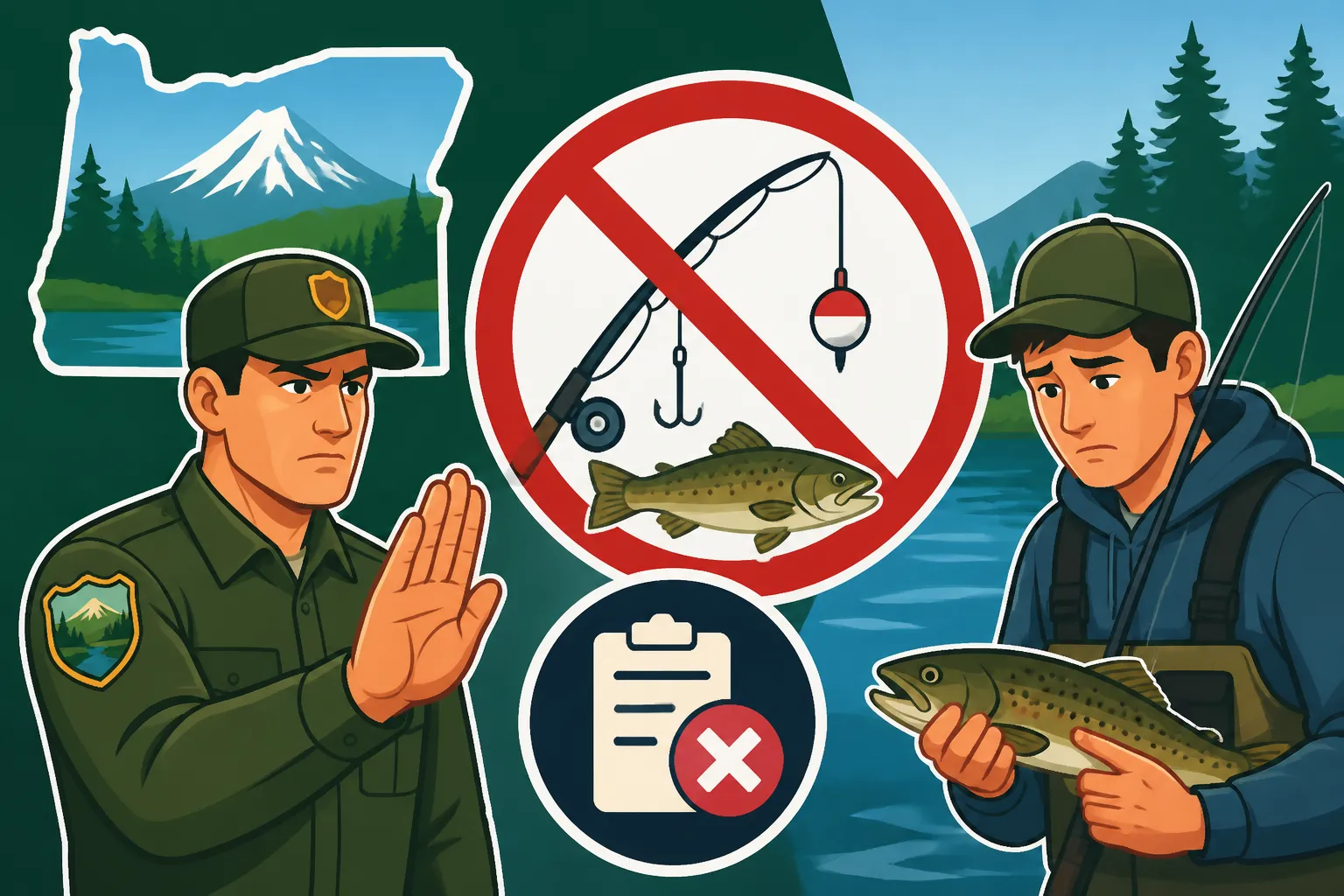
Oregon Fishing Violations and Penalties
There’s nothing quite like the anticipation of a perfect cast, the tug of a fish on the line, and the serene beauty of Oregon’s rivers, lakes, and coastline. But let's be honest, the peace can quickly turn to panic if you realize you might have unknowingly crossed a line with the rules. The world of fishing regulations in Oregon, while designed to protect our precious resources, can feel like a labyrinth, and the thought of facing an Oregon fishing violation and its penalties is enough to make anyone’s stomach drop. This comprehensive guide is here to demystify those rules, help you understand the common pitfalls, and prepare you for what to do if you ever find yourself in a sticky situation, ensuring your time on the water remains worry-free.
Understanding Oregon Fishing Laws: It's More Than Just a License
It’s easy to think that if you just have a valid fishing license, you’re good to go. Oh, how I wish it were that simple! The truth is, fishing in Oregon involves a complex web of regulations that go far beyond just buying a piece of paper. From specific gear restrictions to daily catch limits, and even rules about how you handle a fish once it's caught, there's a lot to keep track of. And believe me, the Oregon Department of Fish and Wildlife (ODFW) game wardens aren't shy about enforcing these rules, no matter how innocent your mistake might seem.
The Importance of Knowing the Rules: Ignorance is No Excuse
Many anglers, especially those new to Oregon or just visiting, often fall into the trap of thinking "I didn't know" will get them off the hook. Unfortunately, ignorance of the law is rarely, if ever, considered a valid defense when it comes to fishing violations. The onus is entirely on you, the angler, to be fully aware of every applicable rule before you even think about wetting a line.
Imagine planning a dream trip to the Deschutes River for some summer steelhead. You've got your gear, your friends, and your enthusiasm. But what if you're using bait in a "fly-fishing only" section, or you didn't realize there's a barbless hook requirement in certain areas for steelhead? Even if you truly had no idea, a game warden could still issue a citation. This isn't just about protecting fish; it's about fairness to other anglers who do follow the rules, and about maintaining the long-term health of our fisheries. The system is designed to hold everyone accountable, and that often means a steep learning curve for those who don't do their homework beforehand. It's a tough lesson to learn when you're facing a fine and potentially losing your fishing privileges.
Where to Find Official Regulations: ODFW is Your Best Friend
So, if ignorance isn't bliss, where do you find this crucial information? The Oregon Department of Fish and Wildlife (ODFW) is your absolute go-to resource. They publish comprehensive regulations that cover everything you need to know. Ignoring this primary source is like trying to bake a complicated cake without reading the recipe – you're almost guaranteed to make a mess.
The most common and accessible way to get the full rundown is through their annual sport fishing regulations booklet. This isn't just a pamphlet; it's a thick, detailed guide that outlines statewide regulations, specific zone rules, species-specific limits, and so much more. You can pick up a physical copy at most ODFW offices, fishing license vendors, or even sometimes at local tackle shops. For those who prefer digital, the ODFW website offers a complete PDF version that you can download to your phone or tablet. I actually recommend keeping a digital copy handy on your phone, even if you have a physical one, because emergency closures or rule changes can happen, and the ODFW website is always the most up-to-date source. For example, if you're trying to figure out Oregon Fishing Season Dates and Limits, the ODFW booklet will be invaluable. You can also purchase print copies of these guides, along with other fishing literature, through online retailers like Amazon, making it easy to have a reference at home. These resources also provide critical details for specialized fishing, like Oregon Catch Record Card Requirements for certain species.
Common Oregon Fishing Violations You Might Not Even Know You're Committing
It's astonishing how many well-meaning anglers find themselves on the wrong side of the law without intentionally trying to break any rules. Often, it's a small oversight or a misunderstanding of a nuanced regulation. These aren't always malicious acts; sometimes, it's simply a lack of thorough preparation. Let's delve into some of the most frequent violations that can turn a peaceful day on the water into a frustrating encounter with law enforcement.
License and Tag Infractions: The Basics You Can't Forget
This might seem like the most obvious one, but it's where many people stumble. A fishing license isn't just a suggestion; it's a legal requirement for almost everyone fishing in Oregon. And it's not enough to just have a license; you need the right license and any necessary tags for the species you're pursuing.
Perhaps you bought your annual license back in January, but now it's late December, and you've forgotten that it expires at the end of the calendar year, not a year from purchase. Or maybe you're targeting salmon and didn't realize you needed an Oregon Combined Angling Tag Guide in addition to your basic license. Out-of-state visitors often trip up here, failing to understand the distinction for Oregon Nonresident Fishing License Cost compared to resident rates, or thinking their home state license might have reciprocity beyond the immediate Columbia River boundary. Even if you just moved to Oregon, you need to be sure you qualify for a resident license before purchasing one. The ODFW website has a clear breakdown of Oregon Fishing License Types Explained, which is crucial. These are easily preventable mistakes that can result in a "fishing without a license" citation, which is a common and often costly penalty. A game warden can check your license at any time, so having it readily accessible and valid is paramount.
Gear and Method Violations: Beyond the Hook and Line
Oregon has very specific rules about the gear you can use and the methods you can employ, particularly in certain waterways or for particular species. These regulations are often put in place to reduce incidental catches of protected species, minimize harm to fish, or ensure fair chase.
For instance, many rivers and streams in Oregon have strict barbless hook requirements, especially for salmon and steelhead. If you're on the Deschutes River chasing trout or steelies, and you've got barbed hooks, even if you intend to release the fish, you're in violation. Similarly, there are "fly-fishing only" zones on rivers like the Metolius where using bait or even spinning lures is strictly prohibited. It’s not just about the hook, either. Rules dictate how many rods you can fish with at one time – usually two in most areas, but always double-check the local regulations. There might also be restrictions on weighted lines, treble hooks, or even the use of certain types of bait in specific areas. Anglers venturing into sensitive habitats need to be especially mindful. Imagine being caught with an illegal net or snagging device; these are severe violations with serious consequences. To avoid confusion, I often find it helpful to consult the ODFW regulations for specific areas, as rules can change depending on the body of water.
Bag and Size Limit Breaches: The Rules for Keeping Your Catch
This category is probably the most common source of well-intentioned but illegal fishing. We all want to bring home some delicious fish, but every species, in every zone, usually has a strict daily bag limit and often a minimum or maximum size limit. These rules are fundamental to conservation, preventing overfishing and ensuring sustainable populations.
Let's say you're having an incredible day catching rainbow trout in a stocked lake near Bend. You've caught five, which is often the daily limit for trout, but you're so excited, you keep one more. Boom! That sixth fish puts you over the limit. Or perhaps you're targeting Chinook salmon, and you excitedly keep one that's just under the legal minimum length. This can happen particularly with Oregon Daily Bag Limits Explained for various species. Game wardens are very adept at measuring fish and counting catches. It’s also important to remember that some species, like wild steelhead or certain bull trout, are strictly catch-and-release only. Keeping one of these, even accidentally, is a significant violation. Moreover, regulations often distinguish between hatchery and wild fish, identifiable by a missing adipose fin. Misidentifying a fish and keeping a wild one when only hatchery fish are allowed can also lead to a penalty. The best practice is to know your limits, know your fish, and if in doubt, release it gently. Always make sure to check Oregon Catch-and-Release Rules to understand what you can and cannot keep.
The Legal Process: What Happens When a Game Warden Shows Up
Encountering a game warden can be an unnerving experience, especially if you're unsure whether you've done anything wrong. It's not like a casual chat with a fellow angler; these are law enforcement officers with the authority to issue citations, seize property, and even make arrests. Knowing what to expect and how to respond can make a significant difference in how the situation unfolds. It’s best to approach these interactions with respect and cooperation, even if you feel you’ve done nothing wrong.
Initial Contact and Investigation: Your Rights and Responsibilities
When a game warden approaches you, whether you're actively fishing, packing up, or even just walking to your vehicle, they are typically initiating an investigation. They will usually identify themselves and state their purpose. At this point, it's crucial to remain calm and respectful. Getting defensive or argumentative will almost certainly make things worse.
They have the authority to ask for your fishing license, any required tags (like a Columbia River Basin Endorsement or a Combined Angling Tag), and a valid form of identification. They can also ask to inspect your fishing gear, your catch (including checking coolers or live wells), and your catch record card if you have one. This is part of their job to ensure compliance with Oregon Fishing Regulations Explained. You are generally required to comply with these requests. While you have the right to remain silent regarding self-incriminating statements, you are typically required to provide identification and display licenses and your catch. It’s not a debate; it’s an inspection. If you have nothing to hide, demonstrating cooperation will usually lead to a more pleasant (and quicker) interaction. If you're caught without a required item, like a valid Oregon Fishing License Guide, the conversation will inevitably shift to a potential violation. Remember, they are there to protect Oregon's natural resources, and doing so often means enforcing rules that might feel cumbersome to an individual angler.
Issuance of Citations: Understanding the Paperwork
If the game warden determines a violation has occurred, they will issue a citation, often referred to as a "ticket." This isn't just a friendly reminder; it's a legal document that formally charges you with an offense. Understanding what's on this piece of paper is vital for your next steps.
The citation will typically include the specific statute you allegedly violated, the date and location of the incident, the issuing officer's name, and details about your alleged offense. Crucially, it will also state whether the violation is a violation (an infraction, like a traffic ticket) or a misdemeanor (a more serious criminal offense). The citation will also inform you of your options: either pay the fine by a certain date or appear in court to contest the charge. Do not ignore a citation! Ignoring it can lead to further penalties, including warrants for arrest or increased fines. If the citation is for something like Fishing Without a License Penalties in Oregon, it will lay out the expected fine and the court date. Always make sure to get a clear copy of the citation and ask the officer if you have any immediate questions about the process or the court date.
Court Appearances and Pleas: Navigating the Legal System
Once you have a citation, you have a decision to make: either admit guilt and pay the fine, or contest the charge in court. For most minor fishing violations, paying the fine is often the path many choose, especially if they know they were in the wrong. However, if you believe you were wrongly cited, or if the violation is more serious, a court appearance might be necessary.
If you choose to appear in court, you'll be given an opportunity to plead guilty, not guilty, or no contest. A "not guilty" plea will lead to a trial, where you and the state will present your cases to a judge. This can be a complex process, and for more serious charges, it might be wise to seek legal counsel. For simpler violations, you might be able to explain extenuating circumstances to the judge, who may have the discretion to reduce a fine or offer alternatives like community service, especially for first-time offenders. However, it's essential to have a clear and factual account of events, not just an emotional appeal. Remember that appearing in court for a criminal misdemeanor related to fishing could have broader implications beyond just a fine, potentially affecting your record.
Penalties for Fishing Violations in Oregon: It's Not Just a Slap on the Wrist
When we think of penalties for fishing violations, the first thing that usually comes to mind is a fine. And while fines are certainly a significant part of the consequences, they are far from the only thing you might face. Oregon takes its fishing regulations seriously, and the penalties reflect that commitment to conservation and fair play. Depending on the severity and nature of the offense, the consequences can range from a hefty bill to a complete loss of fishing privileges for years, or even jail time for the most egregious violations.
Fines and Monetary Penalties: The Immediate Hit to Your Wallet
This is the most common and immediate consequence of a fishing violation. The amount of the fine varies significantly based on the specific offense, its severity, and whether it's a first-time offense or a repeat violation. While minor infractions might carry fines in the $100-$300 range, more serious violations can easily run into thousands of dollars.
For example, fishing without a license might be a few hundred dollars, but keeping an endangered or protected species, or illegally taking a large quantity of fish, could result in fines of several thousand dollars. On top of the base fine, you'll also likely be responsible for various court fees and surcharges, which can add a substantial amount to the total. These fees often go towards court administration, victim compensation funds, and other state programs. It's not uncommon for a "simple" violation to end up costing $400-$800 once all the fees are tacked on. The penalty for Oregon Fishing Without a License Penalties in Oregon can be quite a shock if you're unprepared. These fines are not meant to be trivial; they are designed to be a deterrent and a serious consequence for breaking the rules.
License Suspensions and Revocations: Losing Your Privilege
Perhaps even more impactful than a fine for many passionate anglers is the loss of their ability to fish. Oregon's game commission has the authority to suspend or revoke your fishing license and tags for a period, ranging from a few months to several years, depending on the nature and history of your violations.
If you're caught with multiple rod violations, over-limit catches, or using illegal methods, you could find yourself unable to legally fish in Oregon for an extended period. For instance, a serious violation like poaching salmon could easily lead to a multi-year suspension. This means you cannot purchase or possess an Oregon fishing license or any required tags during that period. For someone who lives and breathes fishing, this is a truly devastating penalty. It’s not just about missing out on a few trips; it’s about being cut off from a cherished pastime and a connection to nature. Furthermore, if you are convicted of a wildlife violation, that conviction may be reported to other states through interstate compacts, potentially affecting your fishing privileges nationwide. This underscores the long-term ramifications of neglecting Oregon Fishing Regulations Explained.
Seizure of Gear and Fish: Losing Your Property
Another direct and often painful consequence is the seizure of your fishing gear and any illegally taken fish. If you're caught using illegal netting, for example, not only will you face fines and license suspension, but the net itself will be confiscated. This isn't just about a cheap item; it could be a high-end rod and reel setup, a boat, or other expensive equipment.
Any fish caught illegally will also be seized. This means if you've gone over your bag limit, those extra fish will be taken by the warden. If you've caught a protected species, it too will be confiscated. This measure serves a dual purpose: it removes the evidence of the crime and acts as a direct financial punishment by depriving the angler of their ill-gotten gains and valuable equipment. For some, the loss of a prized rod or boat can sting more than the fine itself, especially if it's gear purchased through a platform like Amazon and represents a significant investment.
Potential Jail Time: For Severe or Repeat Offenses
While most minor fishing violations are treated as civil infractions, certain serious offenses, particularly those classified as misdemeanors or felonies, can carry the very real possibility of jail time. This is not common for a first-time, accidental over-limit, but it's a possibility for egregious acts or repeat offenders.
Examples of violations that could lead to jail time include:
- Commercial poaching: Illegally taking large quantities of fish for sale.
- Repeated or willful violations: Consistently breaking fishing laws after previous warnings or citations.
- Taking protected or endangered species: Especially if done intentionally or in large numbers.
- Assaulting or obstructing a game warden: Any physical confrontation or interference with a law enforcement officer is a serious criminal offense.
Even for a misdemeanor, jail time might not be the primary outcome, but probation, community service, and a permanent criminal record certainly are. This can impact employment, travel, and other aspects of your life. It’s a stark reminder that these aren’t just "fish laws"; they are criminal statutes with serious legal teeth.
Specific Violations and Their Consequences: A Deeper Dive
Let's break down some specific scenarios you might encounter and the typical consequences you could face. Understanding these details can help you avoid making critical mistakes and fully appreciate why these rules are in place. These examples highlight the nuanced nature of Oregon's fishing regulations and the importance of being meticulously prepared.
Fishing Without a License or Appropriate Tags: The Most Common Offense
This is perhaps the most frequent violation encountered by ODFW wardens. Many anglers, especially those new to the sport or visiting from out of state, simply don't realize a license is required, or they misunderstand the specific tags needed for certain species or areas.
Scenario: You're visiting family in Oregon and decide to spend a relaxing afternoon fishing for trout in a local pond. You don't buy a license, assuming it's only required for more serious fishing. A game warden approaches, asks for your license, and you admit you don't have one.
Consequences: For a first offense, fishing without a basic Oregon Fishing License Guide is typically a Class A violation, carrying a fine that can range from $160 to $500, plus court costs. While it might not lead to immediate license suspension, repeat offenses will almost certainly result in your fishing privileges being revoked for a period. If you were also targeting species that require additional tags (like salmon or steelhead), and you didn't have those, that could add further violations and increase the fines. The state sees this as a fundamental failure to contribute to the conservation efforts funded by license sales. It's a clear-cut rule, and wardens have very little discretion on this one.
Exceeding Bag Limits or Keeping Prohibited Species: Impact on Conservation
These violations directly undermine conservation efforts and can have significant ecological impacts, especially for sensitive fish populations. Over-limits deplete fish stocks, and keeping protected species can jeopardize recovery efforts.
Scenario A (Over Limit): You’re fishing for kokanee salmon at Lake Billy Chinook, and the daily limit is 25. You’ve had an incredible day and ended up with 28 kokanee in your cooler, thinking a few extra won't hurt.
Consequences: Exceeding the bag limit is a serious violation. The fines can vary depending on how many fish you are over the limit and the species involved. For a few fish over, you might be looking at fines in the hundreds of dollars per fish, plus seizure of all illegally caught fish. For example, if you're caught with an extra 3 kokanee, that could be an additional $100-$200 per fish, on top of other fees. Repeat offenses or significantly exceeding the limit could lead to license suspension.
Scenario B (Prohibited Species): You're fishing a coastal river for winter steelhead. You catch a beautiful, bright wild steelhead (identifiable by its intact adipose fin), but mistakenly think it's a hatchery fish and keep it. Wild steelhead are strictly catch-and-release in most Oregon waters.
Consequences: Keeping a prohibited species, especially a wild steelhead or certain protected native trout, can result in substantial fines, often starting at $500 and going much higher, plus court costs. Crucially, it will almost certainly lead to a mandatory license suspension, typically for at least one year, and potentially longer. The fish will be seized. ODFW takes violations against protected fish populations very seriously because these species are often struggling. This is why it's so important to know your Oregon Catch-and-Release Rules and how to identify hatchery vs. wild fish by checking for a fin clip.
Using Illegal Gear or Methods: Barbless Hooks and Beyond
These rules are often in place to reduce harm to fish that are intended to be released or to ensure fair angling practices.
Scenario: You're fly fishing on the Metolius River, which is a famous "fly-fishing only" river where bait is prohibited and barbless hooks are required. You decide to try a small worm on your fly rod to see if you can entice more bites.
Consequences: Using illegal bait or barbed hooks in a restricted area is a Class A violation, often resulting in fines starting at $260 and going upwards. All gear being used in violation, including your rod and reel, could be seized. A repeat offense or the use of more egregious illegal gear (like gillnets or snagging hooks) would escalate the penalties significantly, including longer license suspensions and potentially even jail time. The rationale here is that such methods can harm fish populations, especially in catch-and-release sensitive areas, or give an unfair advantage, disrupting the integrity of the sport.
Waste of Game Fish: Respecting Your Catch
Oregon, like many states, has laws against the waste of game fish. This means you cannot simply catch fish and discard them without utilizing the edible portions. These rules are designed to ensure that fish are harvested respectfully and for a legitimate purpose.
Scenario: You catch several legal-sized rainbow trout, but after cleaning a couple, you decide you don't really want the rest. You leave the remaining uncleaned fish on the bank to rot or simply throw them back into the water after they've died or been severely injured.
Consequences: Waste of game fish is considered a Class A violation, with fines similar to fishing without a license, typically in the range of $260 or more, plus court costs. In addition to the fine, your license could be suspended, especially if it's a significant quantity of fish. The game warden will likely seize any fish involved. The spirit of these laws is to prevent recreational anglers from carelessly killing fish without intent to consume them, treating them as disposable items rather than valuable natural resources. It's about respecting the life you take and the resource itself.
| Violation Type | Typical First Offense Fine Range | Potential Additional Consequences |
|---|---|---|
| Fishing Without a License/Tags | $160 – $500 + court costs | License suspension (repeat offenses) |
| Exceeding Bag Limits | $100 – $200+ per fish over limit + court costs | Seizure of illegal catch, license suspension (severe/repeat) |
| Keeping Prohibited Species (e.g., wild steelhead) | $500 – $1,000+ per fish + court costs | Mandatory license suspension (1+ year), seizure of fish |
| Using Illegal Gear/Methods (e.g., barbed hooks in C&R area) | $260 – $500+ + court costs | Seizure of illegal gear, license suspension (severe/repeat) |
| Waste of Game Fish | $260 – $500+ + court costs | Seizure of fish, license suspension (severe/repeat) |
| Commercial Poaching | $1,000s – $10,000s + court costs | Felony charges, multi-year license suspension, jail time, asset forfeiture |
Note: Fines and penalties are subject to change and can vary based on specific circumstances, district attorneys, and judicial discretion. This table is for informational purposes only.
Navigating the Appeals Process and Mitigating Penalties
Receiving a fishing citation can be stressful, but it's important to remember that you have legal rights and options. You don't necessarily have to roll over and accept the full penalty, especially if you believe there was a misunderstanding or if you have extenuating circumstances. Navigating the legal system can be daunting, but with the right approach and sometimes a bit of help, you might be able to reduce the impact on your wallet and your fishing privileges.
Contesting a Citation: Gathering Evidence and Seeking Advice
If you genuinely believe you were cited in error, or if there's a significant factual dispute, you have the right to contest the citation in court. This means pleading "not guilty" and presenting your case to a judge. But simply saying "I didn't do it" often isn't enough; you need to be prepared.
Your first step should be to gather any evidence that supports your claim. Did you have a valid Oregon Combined Angling Tag Cost that the warden overlooked? Was the fish measured incorrectly? Did you document the situation with photos or video? Did you have witnesses? Any documentation can be crucial. For example, if you were cited for fishing without a license, but you purchased it online through the ODFW licensing system, having a printout or digital copy of your receipt or temporary license is paramount. It's also wise to review the exact regulation you're accused of violating to understand its nuances. For more serious or complex cases, or if you're simply unsure how to present your case effectively, consulting with an attorney who specializes in wildlife law is highly recommended. They can advise you on the strength of your case, the best legal strategy, and represent you in court. Don't go in unprepared; the state will have its own clear argument.
Seeking Reduced Penalties: First-Time Offenders and Extenuating Circumstances
Even if you admit guilt, there might still be avenues to mitigate the penalties, particularly for first-time offenders or if there were extenuating circumstances surrounding the incident. Judges often have a degree of discretion, especially for minor violations.
If this is your very first fishing violation and your record is otherwise clean, you might be able to plead with the judge for a reduced fine or an alternative penalty. Showing genuine remorse, demonstrating that you've educated yourself on the rules (perhaps by having recently reviewed Oregon Fishing Regulations Explained), and explaining any factors that contributed to your mistake (without making excuses) can sometimes sway a judge. For example, if you were cited for fishing with the wrong lure type, but you immediately corrected it and can show you tried to adhere to rules, that might be considered. Some courts might offer a "diversion program" for minor offenses, where if you complete certain requirements (like attending a class or performing community service) and have no further violations for a set period, the charge might be dismissed or reduced. It's always worth exploring these options, but remember that the ultimate decision rests with the court.
Understanding Restitution and Community Service
Beyond fines and license suspensions, courts sometimes order restitution or community service as part of the penalty for fishing violations. These are not always options, but they can be part of a sentence, especially for more significant offenses where there's quantifiable damage or a need for educational deterrents.
Restitution means you are ordered to compensate the state for the value of the resources you illegally took or damaged. For example, if you illegally caught a trophy-sized salmon, the court might order you to pay the ODFW the estimated market or biological value of that fish, which can be substantial. This goes beyond the fine and is meant to recover the economic loss to the state's natural resources. It’s a way to put a monetary value on the impact of illegal fishing.
Community service involves performing unpaid work for a certain number of hours, often for government agencies or non-profit organizations, as part of your sentence. In the context of fishing violations, this might involve working for the ODFW on habitat restoration projects, fish stocking efforts, or assisting with other conservation-related activities. This can be seen as a way to "pay back" the community and the resource you impacted, and it can also serve as an educational experience that fosters a greater appreciation for conservation. Sometimes, a judge might offer community service as an alternative to a portion of a fine, particularly if you are experiencing financial hardship.
Protecting Yourself: Best Practices for Ethical and Legal Fishing in Oregon
Nobody wants to get a fishing violation. It’s a frustrating, often expensive, and avoidable experience. The best way to deal with Oregon fishing violations is to simply not commit them in the first place. By adopting a proactive and informed approach, you can significantly reduce your risk of running afoul of the law and ensure your time on the water is truly enjoyable and stress-free.
Double-Checking Regulations Before You Go: Seasonal Changes and Emergency Closures
The number one rule for staying legal is to always check the current regulations before every fishing trip. And I mean every trip. This isn't just a suggestion; it's non-negotiable for responsible angling. Regulations are not static; they change frequently, sometimes even on short notice, due to factors like fish runs, water levels, environmental conditions, and conservation needs.
It's not enough to rely on the printed booklet you picked up in January, because How often do Oregon fishing regulations change can be quite dynamic. Emergency closures or special regulations can be enacted quickly, especially for sensitive species like salmon and steelhead in specific river systems or bays like Tillamook Bay. Always visit the ODFW website or call their local office for the most up-to-date information right before you head out. Check the specific zone you plan to fish, the species you intend to target, and any special gear restrictions. Even a quick scan of the "Recreational Sport Fishing Regulation Updates" page on the ODFW site can save you a huge headache. An easy way to access this information on the go is to download the "MyODFW" app, which offers quick access to regulations and updates.
Documenting Your Fishing Activity: Photos, Logbooks, and Receipts
While not a legal requirement, keeping a detailed log of your fishing activity can be a powerful tool for self-protection and education. It can serve as evidence if you ever need to contest a citation, and it helps you become a more informed and compliant angler.
Consider keeping a fishing logbook where you note the date, location, species caught, sizes, number kept/released, and even the gear used. This isn't just for fond memories; if a game warden ever questions your catch, having a detailed, contemporaneous record can back up your story. Similarly, if you fish for species requiring a catch record card, make sure you fill it out immediately and accurately after harvesting a fish, as required. Snap photos of your catch, especially if you're releasing fish or if there's any ambiguity about size or species. Keep receipts for your fishing license and any tags, even if you have a digital version. For those who frequently buy gear or licenses, saving digital copies of purchases from sites like Amazon can be a good habit. These small habits create a verifiable timeline of your activities and demonstrate your diligence as an angler.
When to Seek Professional Legal Advice: Don't Go It Alone
For most minor fishing citations, you might be able to handle it yourself, either by paying the fine or by representing yourself in court. However, there are definitely situations where seeking professional legal advice is not just helpful, but absolutely essential.
If you are facing a misdemeanor or felony charge, if the potential fines are very high, if there's a risk of significant license suspension (especially if fishing is a major part of your life or livelihood), or if your case is particularly complex with conflicting evidence, you should consult with an attorney who has experience in wildlife law. They can assess the strength of the case against you, identify any procedural errors made by law enforcement, negotiate with prosecutors, and represent your best interests in court. Trying to navigate a complex legal system on your own, especially when facing criminal charges, can lead to much worse outcomes. Don't let pride or a desire to save money now lead to more severe long-term consequences.
Disclaimer
The information provided in this article is intended for general guidance and informational purposes only and does not constitute legal advice. Fishing regulations in Oregon are subject to change, and interpretations can vary. Always consult the official Oregon Department of Fish and Wildlife (ODFW) regulations, current proclamations, and seek professional legal counsel for specific advice regarding your situation. Reliance on any information in this article is solely at your own risk.