Yaquina Bay crabbing and fishing spots
Navigating the myriad of fishing and crabbing opportunities in a bustling place like Yaquina Bay can feel a bit overwhelming, especially when you're just looking for that perfect spot to drop a pot or cast a line. You want to make the most of your time on the water, whether you're a seasoned local or visiting Newport for the first time. This comprehensive guide is here to cut through the confusion, offering you the best crabbing and fishing spots in Yaquina Bay, along with crucial tips to ensure a successful and enjoyable outing.
Understanding Yaquina Bay: A Crabbing and Fishing Mecca
Yaquina Bay, nestled on the Oregon Coast with the vibrant city of Newport as its gateway, is far more than just a pretty estuary. It's a dynamic ecosystem, a bustling port, and, most importantly for us, a prime destination for anglers and crabbers alike. Its unique blend of freshwater inflow and tidal oceanic influence creates an incredibly rich environment that attracts a diverse array of marine life.
The Unique Allure of Yaquina Bay
What makes Yaquina Bay so special for crabbing and fishing? Well, for starters, it's a relatively large, protected bay that offers shelter from the often-turbulent Pacific Ocean. This makes it accessible even when ocean conditions are rough, and it provides calmer waters perfect for both small boats and shore-based activities. The bay stretches inland, receiving freshwater from the Yaquina River, which mixes with the salty ocean water entering through the jettied mouth. This mixing creates brackish zones that are ideal habitats for various species, particularly juvenile salmon and bottom-dwellers.
Newport itself, with its historic Bayfront, adds to the appeal. You'll find a lively atmosphere with seafood markets, processing plants, and charter operations all contributing to the fishing culture. There's a real sense of community around the docks, and it’s a place where you can easily find supplies, advice, or even jump on a guided trip. The sheer biodiversity here is impressive, from the prized Dungeness crab to various species of rockfish, lingcod, and migratory salmon. It’s truly a jewel on the Oregon Coast for anyone looking to get their hands dirty with some incredible seafood.
Tides and Their Impact on Success
If you're going to have any real success in Yaquina Bay, you absolutely must understand the tides. The bay's productivity is intrinsically linked to the ebb and flow of the ocean. Ignoring the tide chart is like trying to drive a car with your eyes closed – you might get somewhere, but it won't be efficient or safe, and you'll likely miss your target.
For crabbing, the sweet spot is typically during a "slack tide." This is the period of about 30 minutes to an hour around the high tide or low tide when the water movement is at its slowest. Why is this important? When the tide is running hard, your crab pots or rings can get swept away or simply become less effective as crabs struggle against the current. During slack tide, crabs are more active and willing to forage for food, making them much more likely to wander into your baited traps. The incoming tide, just before high slack, can also be productive as it brings in fresh ocean water and nutrients, stimulating crab activity.
Fishing is a bit different, but still heavily influenced by the tides. Many fish species become more active during tidal changes, particularly on a strong incoming or outgoing tide. For instance, an incoming tide can bring baitfish into the bay, drawing in larger predatory fish like salmon or lingcod. The moving water also dislodges food from the bottom, creating a buffet for various species. For estuary fishing, knowing when the water is moving fast, or when it's just starting to turn, can be the key to finding active fish. Always check the tide charts for Newport before you head out; it’s the single best piece of preparation you can do.
Top Crabbing Spots in Yaquina Bay
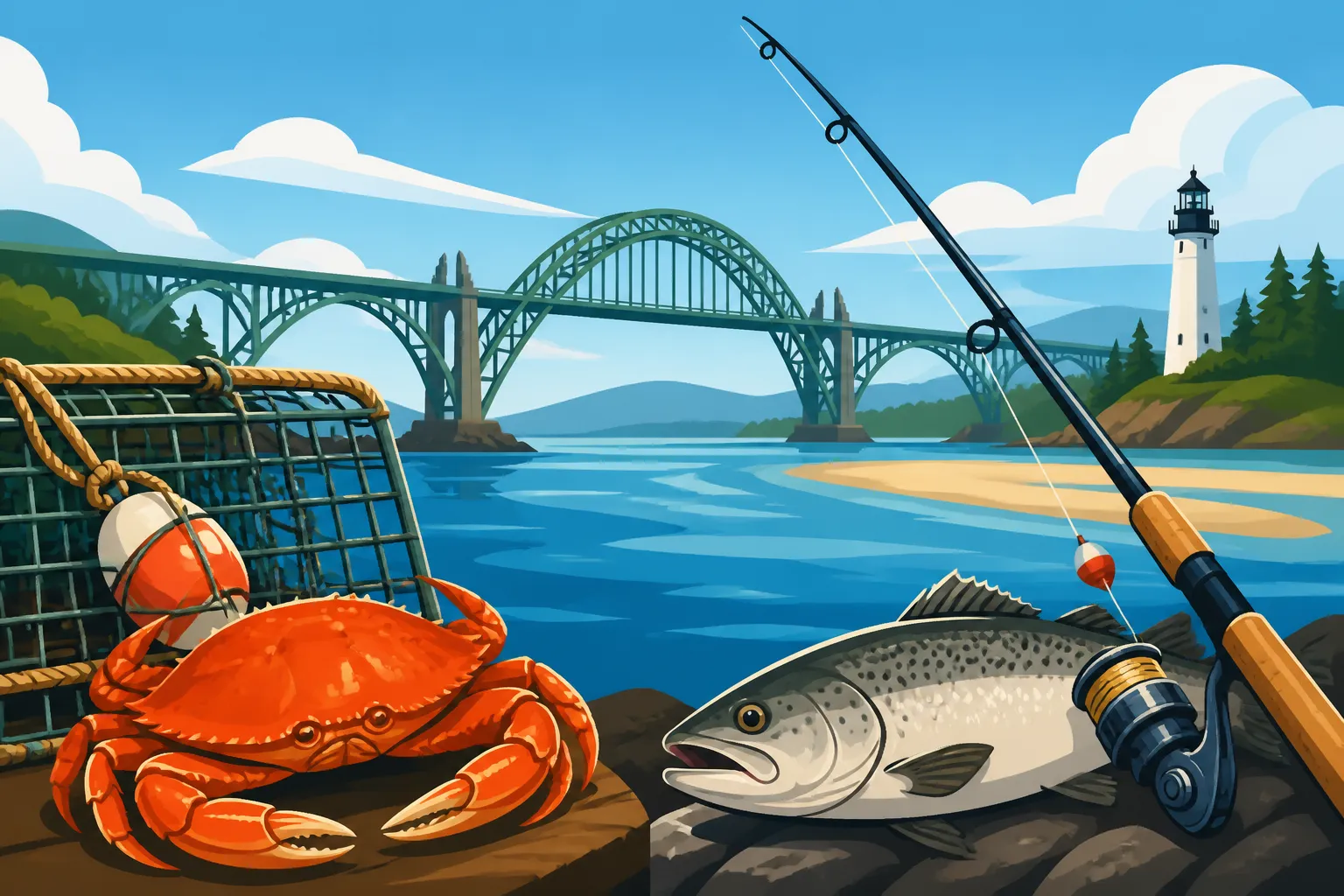
Crabbing in Yaquina Bay is legendary, and for good reason. The bay is teeming with Dungeness crab, and there are plenty of spots, both public and boat-accessible, to try your luck. What you choose depends on your gear, your comfort level, and whether you prefer the convenience of shore access or the freedom of a boat.
Public Docks and Piers for Easy Access
For many, especially those new to crabbing or families with kids, public docks and piers are the go-to. They're accessible, often have amenities, and you don't need a boat to enjoy the thrill of pulling up a pot.
- Newport's Bayfront: This is perhaps the most famous spot. Along the historic Bayfront, you'll find multiple public docks and piers where you can drop crab rings or small pots. The docks around the Newport Marina Store & Charters or near Rogue Ales Bayfront Public House are particularly popular. These areas are bustling with activity, offering a great atmosphere. The convenience here is unmatched; you can rent gear, buy bait, and even grab a bite to eat without venturing far. Remember, these spots can get crowded, especially on weekends and during peak season, so arriving early is a good strategy.
- Port of Newport Public Fishing Pier: Located just east of the Yaquina Bay Bridge, this pier is another fantastic option. It's spacious and generally offers good access to deeper water without needing a boat. It’s a bit less congested than the main Bayfront docks but still provides ample opportunity. There's usually plenty of parking, and it's a very family-friendly spot. You might also find some helpful local advice from fellow crabbers here.
- Empathy: It’s easy to get discouraged if you don’t immediately pull up a limit. Crabbing takes patience, and sometimes the crabs just aren't biting in one specific spot. Don’t be afraid to move your gear a little, or try different depths if possible from the dock. Small changes can make a big difference.
When crabbing from public docks, you're typically using crab rings or smaller collapsible traps that are easier to deploy and retrieve without a winch. Always be mindful of other users, and keep your gear from impeding navigation or others' enjoyment of the space. It’s also important to be familiar with the "Oregon Shellfish License" requirements, as everyone over the age of 12 needs one.
Boat-Accessible Crabbing Zones
If you have access to a boat, Yaquina Bay really opens up. You can explore deeper channels and less pressured areas, often leading to better hauls.
- Main Channel of Yaquina Bay: The primary navigation channel, especially from the Bayfront out towards the jetties, holds excellent numbers of Dungeness crab. These deeper waters provide more consistent habitat. Look for spots just outside the main shipping lane where the bottom transitions from mud to sand. Many boaters focus on the area west of the Yaquina Bay Bridge and closer to the mouth of the bay, but still within the protected waters.
- South Beach Area: Near the Oregon Coast Aquarium and Hatfield Marine Science Center, the waters along the south shore can also be productive. This area often has less boat traffic than the central Bayfront, offering a bit more peace and quiet. The key is to find those subtle depressions or channels on the bottom where crabs tend to congregate. If you’re not familiar with the bay, a good marine chart or a fish finder can be invaluable for identifying these prime spots.
- Boat Rentals: Don't have your own boat? No problem! Several outfits along the Newport Bayfront offer boat rentals, often small, easy-to-operate craft perfect for crabbing. Companies like Newport Marina Store & Charters or Dockside Charters not only rent boats but can also provide all the necessary crabbing gear, including pots and bait, making it an incredibly convenient option for visitors. This allows you to get out into those prime boat-accessible zones without the commitment of owning your own vessel.
Remember, when operating a boat, always be aware of marine traffic, especially commercial fishing vessels and larger ships. Safety first! And ensure you understand the "Dungeness Crab in Oregon" regulations, including size and bag limits, which are strictly enforced.
Essential Crabbing Gear and Techniques
Having the right gear and knowing how to use it is fundamental to successful crabbing. It’s not just about tossing a pot in the water; there’s a bit of finesse involved.
- Crab Pots vs. Crab Rings:
- Crab Pots (Traps): These are sturdy, cage-like traps that crabs can enter but find difficult to exit. They are fantastic for leaving in the water for longer periods (up to 24-48 hours, though check local regulations) and are generally more effective for catching multiple crabs. They require a weighted line and buoy.
- Crab Rings: These are circular nets that lie flat on the bottom when deployed, then cinch up around the crabs when pulled up. They are excellent for active crabbing from docks or boats, allowing you to check them frequently (every 15-30 minutes). They’re also less likely to get lost in heavy currents. For a detailed look at techniques, check out our guide on "How to crab from a dock in Oregon".
- Bait Selection: Crabs are scavengers, and they love strong-smelling, oily bait. The classic choice is raw chicken, especially chicken legs or backs, which are cheap and hold up well. Other popular options include fish carcasses (salmon, tuna, or bottom fish scraps), clam necks, or even specialized crab bait pellets. Some crabbers swear by placing bait in a mesh bag to prevent small crabs or fish from quickly stripping it clean. For more options, refer to "Best crab pot bait for Yaquina Bay".
- Deploying and Retrieving: For pots, ensure your buoy line is long enough to reach the bottom at high tide, plus some extra to account for current and wave action. A bright, clearly marked buoy with your ODFW ID number is crucial. For rings, drop them straight down, let them soak for a bit, then pull them up with a steady, swift motion to prevent crabs from escaping.
- Measuring and Handling: Once you bring up your haul, the critical step is to quickly measure each crab across the back, just in front of the points. Only male Dungeness crabs of a legal size (currently 5 ¾ inches) can be kept. Females and undersized males must be immediately and carefully released. Handle crabs gently to avoid injuring them or yourself! A pair of sturdy gloves is always a good idea.
Premier Fishing Spots in Yaquina Bay and Beyond
While crabbing often steals the spotlight, Yaquina Bay offers fantastic fishing opportunities too, for a variety of species. Whether you prefer casting from shore or venturing out on a boat, there’s something for every angler.
Fishing from Shore and Public Access Points
Shore fishing offers a relaxing and accessible way to enjoy the bay, especially if you don't have a boat or just want a casual outing.
- Yaquina Bay South Jetty: This is a prime location for those willing to walk out. The jetty provides access to deeper water and strong currents, which attract a variety of fish. You can cast for surfperch, small rockfish, and sometimes even a stray lingcod or salmon, especially during tidal exchanges. Be extremely cautious of slippery rocks and large waves, especially during incoming tides or stormy weather. Safety should always be your top priority when fishing jetties.
- Under the Yaquina Bay Bridge: The pilings and riprap beneath the iconic Yaquina Bay Bridge create excellent structure that attracts baitfish and, consequently, predatory species. This area is good for casting jigs or bait for bottom fish like greenling or various rockfish species. Access can be a bit tricky, but there are usually paths leading down from near the Port of Newport Public Fishing Pier or from the South Beach side. Always be aware of passing boat traffic.
- Newport Bayfront Docks: While primarily known for crabbing, the public docks along the Bayfront also offer opportunities for fishing. Kids often have a blast catching small perch or sculpins, and sometimes you can hook into a larger flounder or even a small rockfish. A simple bobber and bait setup or a small jig can be very effective here. It's a great spot for beginners or a quick, casual cast. You can also explore other "Oregon Coast Fishing Spots" to see what different experiences other bays offer.
When fishing from shore, a medium-action rod, 10-20 lb test line, and a variety of baits (squid, shrimp, herring) or lures (jigs, spinners) will usually cover your bases.
Boat Fishing for Estuary and Nearshore Species
For those with a boat, the entire bay opens up, and you can also venture out across the bar into the nearshore ocean waters when conditions permit.
- Yaquina Bay Estuary: Within the calmer waters of the bay, boaters can target a mix of species. The deeper channels near the mouth of the bay are excellent for bottom fishing for flatfish like flounder or sole. During salmon runs, particularly for fall Chinook, salmon can be caught trolling or mooching in the main channel, especially in the areas closer to the ocean. The bay also sees runs of Coho (silver) salmon, though their presence varies year to year. For effective techniques, check out our guide on "Oregon Salmon Fishing Techniques".
- Nearshore Ocean Waters (Just Outside the Bar): When the ocean is calm (a big "if" on the Oregon coast!), venturing just outside the Yaquina Bay bar can be incredibly rewarding. Here, you'll find excellent opportunities for rockfish (such as black rockfish, blue rockfish, and vermilion rockfish) and lingcod. These fish congregate around rocky reefs and submerged structures. Jigging with heavy metal jigs or using bait on a bottom rig are popular methods. Always be extremely cautious when crossing the bar, as conditions can change rapidly. Check the bar conditions report before heading out. Our guide on "Rockfish off the Oregon Coast" has more details.
- Crabbing and Fishing Combos: A popular strategy for boaters is to combine crabbing and fishing. You can drop your crab pots in a good spot and then spend an hour or two fishing nearby before checking your pots. It’s a fantastic way to maximize your time on the water and potentially bring home a diverse catch.
If you don't own a boat, remember that several Newport Oregon Fishing Charters operate out of Yaquina Bay, offering trips for salmon, bottom fish, and even tuna further offshore. Using a service like FishingBooker can help you find and book experienced local guides for these adventures.
Targeting Specific Species: What to Expect
Yaquina Bay offers a fantastic range of target species, each requiring slightly different approaches.
- Dungeness Crab: This is the undisputed star of Yaquina Bay. You'll find them throughout the bay, from public docks to deeper channels. They respond well to smelly bait and are most active during slack tides. Remember the regulations for "Dungeness Crab in Oregon".
- Surfperch: Easily accessible from jetties and sandy beaches just outside the bay, surfperch are a fun target for light tackle. They love small pieces of bait like sand shrimp, clam necks, or Gulp! sandworms, fished on a Carolina rig near the bottom.
- Rockfish (Black Rockfish, Blue Rockfish, Vermilion Rockfish, etc.): Found in rocky areas and around jetties or reefs just outside the bay. They readily hit jigs, swimbaits, or bait like squid and herring. They're excellent eating and put up a good fight. Learn more in "Lingcod off the Oregon Coast".
- Lingcod: These aggressive bottom dwellers lurk around rocky structures, particularly near the jetties and offshore reefs. Large jigs, swimbaits, or live bait (like a large surfperch) are effective. They are a prized catch for their delicious meat.
- Salmon (Chinook and Coho): Primarily targeted by boaters, salmon enter the bay during their migratory runs. Trolling with bait (herring, anchovies) or artificial lures (spoons, spinners) is the most common method. The timing of these runs varies, so keeping an eye on local fishing reports is crucial.
| Species | Primary Method(s) | Best Locations | Best Time of Year | Notes |
|---|---|---|---|---|
| Dungeness Crab | Pots, Rings | All over bay (docks, channels) | Year-round (peak Fall) | Slack tide best; check size/gender |
| Surfperch | Shore casting, Bait | Jetties, sandy beaches | Spring-Fall | Small baits; good for light tackle |
| Rockfish | Jigging, Bait Fishing | Jetties, offshore reefs | Year-round | Near rocky structure; excellent eating |
| Lingcod | Jigging, Live Bait | Jetties, offshore reefs | Year-round | Aggressive; large jigs/bait |
| Chinook Salmon | Trolling, Mooching | Main bay channel, offshore | Late Summer/Fall | Migratory; check runs/limits |
| Coho Salmon | Trolling, Mooching | Main bay channel, offshore | Late Summer/Fall | Migratory; check runs/limits |
Navigating Regulations and Maximizing Your Experience
Oregon's fishing and crabbing regulations are designed to protect resources and ensure sustainable recreational opportunities. It's crucial for every angler and crabber to understand and follow these rules.
Yaquina Bay Specific Regulations and Seasons
While many regulations are statewide, specific rules can apply to certain areas like Yaquina Bay. Always consult the current Oregon Department of Fish and Wildlife (ODFW) sport fishing regulations booklet. This can be found online or at any ODFW license vendor. Our "Oregon Fishing Regulations Explained" guide can also help demystify the general rules.
- Licenses and Endorsements: Anyone 12 years or older needs an "Oregon Fishing License Guide" to fish and an "Oregon Shellfish License" to crab. If you plan to fish for salmon or steelhead, you'll likely need a Combined Angling Tag in addition to your license. For ocean fishing, some species might require an Ocean Endorsement.
- Size and Bag Limits: These are perhaps the most important rules. Dungeness crab has a strict minimum size (currently 5 ¾ inches) and a daily bag limit (typically 12 male crabs). Fish species also have varying size and bag limits depending on the species and location. For example, rockfish often have aggregate bag limits, meaning you can only keep a certain number of different rockfish combined.
- Season Dates: While crabbing for Dungeness is generally open year-round in the bay, ocean crabbing and certain fish species have specific seasons. Salmon seasons, in particular, are highly regulated and can change based on run forecasts and conservation needs. Always verify open seasons before you head out, especially for highly sought-after species like salmon or halibut.
- Gear Restrictions: Some areas or fisheries might have restrictions on gear, such as barbless hooks or limits on the number of rods you can use. Ensure your gear complies with all local rules.
It’s your responsibility as a responsible angler and crabber to know and adhere to these regulations. They are there to protect the resource for everyone, including future generations.
Local Resources and Charters
Even with all the information in the world, nothing beats local knowledge. Yaquina Bay is well-equipped with resources to help you succeed.
- Bait & Tackle Shops: Newport has several excellent bait and tackle shops right on the Bayfront or nearby. Places like Englund Marine & Industrial Supply or the Newport Marina Store & Charters are fantastic resources. Not only do they sell bait, tackle, and gear rentals, but the staff are usually a treasure trove of current conditions, hot spots, and species-specific advice. Don't be shy about asking for tips – most folks are happy to share their wisdom. They can tell you what bait is working best or if there are any recent changes in local fishing patterns.
- Gear Rentals: If you're visiting and don't want to haul your own gear, many shops and marinas offer crab pot and ring rentals. This is an economical way to get started without a significant investment. Make sure to get a quick tutorial on how to use the gear and what bait to choose.
- Fishing Charters and Guides: For an even deeper dive into the local fishing scene, consider hiring an experienced guide or booking a fishing charter. Companies like Dockside Charters or Newport Marina Store & Charters offer guided trips for crabbing, bay fishing, and ocean fishing (salmon, halibut, bottom fish). They provide all the gear, know the best spots, and often put you right on the fish. This is especially valuable for beginners or those targeting specific, harder-to-reach species. Booking platforms like FishingBooker can help you find reputable "Oregon Fishing Charter Guide" options in Newport, allowing you to compare services and prices easily. Their local captains are true experts, and a guided trip is often the quickest way to learn the ropes and increase your chances of a memorable catch. Plus, they handle all the boat navigation and safety, letting you focus on the fun!
Disclaimer
Fishing and crabbing activities carry inherent risks. Always prioritize safety, check local weather and bar conditions, and be aware of tides and currents. Regulations can change, so consult the most current Oregon Department of Fish and Wildlife (ODFW) regulations before any outing. This guide is for informational purposes only and does not constitute professional advice.