Can a Washington fishing license be used on the Oregon side of the Columbia?
It’s a tale as old as the Columbia River itself: you’re standing on the bank, or maybe drifting in your boat, and you look across the water, wondering if that sweet spot on the other side requires a whole new set of paperwork. Anglers frequently find themselves scratching their heads over whether their Washington fishing license holds up when they're technically on the Oregon side of the mighty Columbia. It’s a completely valid frustration, and the answer isn't always as straightforward as we'd like. This guide is here to untangle that knot of confusion, explaining exactly when your Washington license is good to go in Oregon's mainstem Columbia waters, and when you absolutely need to grab an Oregon license.
Understanding Columbia River Reciprocity for Anglers
The Columbia River isn't just a natural border; it's a bustling highway for fish and a favorite playground for anglers from both Oregon and Washington. Recognizing this shared resource and the impracticality of requiring two separate licenses for the same stretch of water, the two states have a long-standing agreement. This reciprocity is a huge relief for many, but it's crucial to understand its precise boundaries.
The Specifics of Oregon and Washington Agreements
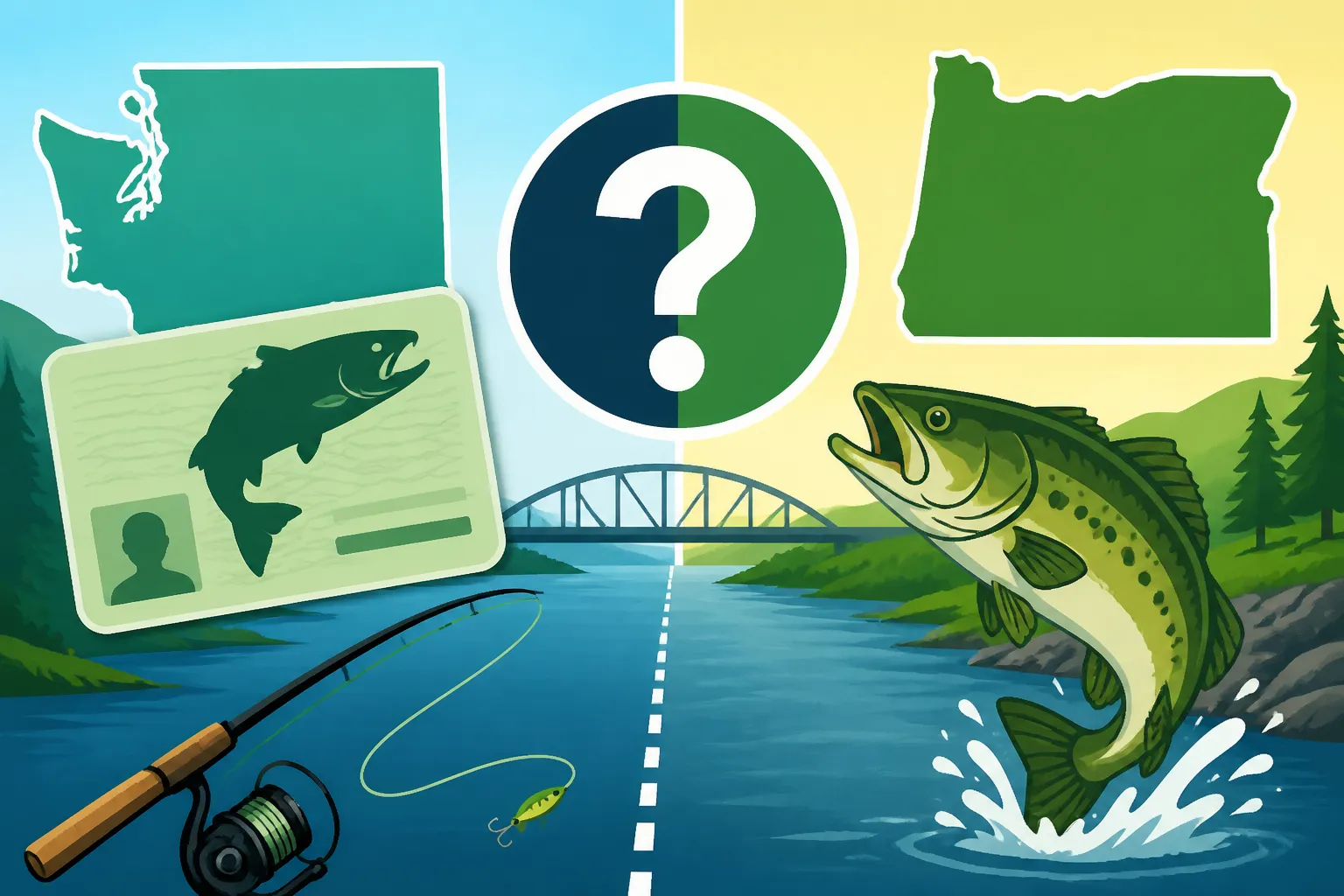
For the vast majority of the mainstem Columbia River, a valid fishing license from either Oregon or Washington is honored by both states. This means if you're legally licensed to fish in Washington, you can fish the mainstem Columbia River, even if your boat drifts into what's technically Oregon waters, or if you're casting from an Oregon bank that borders the main channel. It's a fantastic convenience, allowing anglers to pursue salmon, steelhead, sturgeon, and other species without constantly worrying about which side of the invisible line they're on. This agreement covers the main channel itself, from its mouth at the Pacific Ocean all the way up to McNary Dam. Beyond McNary, the reciprocity typically ceases, and you'd need the license for the state whose waters you're in. This unique arrangement is a testament to shared fisheries management and a recognition of the river's integral role for both states. You can dive deeper into these nuances by checking out our Oregon and Washington License Reciprocity on the Columbia guide.
Historically, this agreement came about because trying to enforce a strict state line in a dynamic river like the Columbia was a logistical nightmare for game wardens and an endless headache for anglers. Imagine trying to stay perfectly centered in the river all day, or having to turn back just because a fish pulled your line over an invisible boundary! The states wisely chose cooperation over confusion, creating a seamless experience for those targeting the river's migratory fish runs. This ensures that a single license is sufficient for the primary act of fishing within the agreed-upon stretch of the shared waterway.
This flexibility is incredibly valuable, especially for anglers who live near the border towns or those who prefer to launch from one state but fish areas closer to the other. For instance, if you launch your boat from Cathlamet, Washington, you can comfortably fish across to the Oregon side near Skamokawa without needing an additional Oregon license, as long as you remain in the main channel. It streamlines the experience and keeps the focus on the fishing itself, rather than complex jurisdictional debates.
What the Reciprocity Agreement Doesn't Cover
Here's where many anglers get tripped up, and it's absolutely vital to pay attention. While your Washington license is generally valid on the mainstem Columbia River, it does not extend to the tributaries or smaller side channels that are wholly within Oregon's borders. Think of it like this: the main highway is shared, but the local roads off the highway belong exclusively to the state they're in.
This means if you decide to venture off the main Columbia to fish the lower reaches of an Oregon tributary like the Willamette River, the Sandy River, or any other stream that flows into the Columbia but is clearly within Oregon's landmass, your Washington license won't cut it. For those waters, you absolutely need a valid Oregon Fishing License Guide. This is a common point of confusion, especially when targeting popular runs of spring Chinook that push into these tributaries.
So, while you might be fishing for salmon in the main Columbia with your Washington license, if you suddenly decide to chase some trout up the lower Clackamas River – an Oregon tributary – you’d need to switch gears, legally speaking. This often requires buying a specific Oregon Fishing License Types Explained relevant to your fishing plans for those waters. This distinction is paramount to avoid fines and ensure you're fishing legally. Always keep this boundary in mind when planning your fishing adventures on or around the Columbia.
Essential Endorsements and Tags for Columbia River Fishing
Even with reciprocity on the mainstem Columbia, both states have additional requirements, often in the form of endorsements or tags, especially for prized species like salmon and steelhead. These aren't just extra fees; they're vital for funding conservation efforts and managing specific fisheries. It's not enough to just have the base license; you need to make sure you've got all the right "add-ons" for the species you're targeting.
The Oregon Columbia River Basin Endorsement
If you're fishing on the Columbia River using an Oregon fishing license, and you plan to target salmon, steelhead, or sturgeon, you are almost certainly going to need the Oregon Columbia River Basin Endorsement. This endorsement is specific to Oregon and is required for anglers fishing in the mainstem Columbia River, as well as its tributaries upstream from the mouth of the river to the Hood River Bridge. It helps fund important conservation, monitoring, and management programs for these critical fisheries within the basin.
Now, here's the key point regarding reciprocity: if you're fishing the mainstem Columbia with your Washington license, you do not need to purchase Oregon's Columbia River Basin Endorsement. Instead, you would adhere to Washington's specific endorsement requirements for salmon and steelhead within that same stretch of river. This is where it can get a bit tricky, because while your license is recognized, the associated "add-ons" are tied to the state that issued your license. Essentially, you're playing by the rules of the state whose license you're carrying, even if you're on the "other" side of the mainstem. Our guide on What is the Columbia River Basin Endorsement for Oregon anglers offers a detailed breakdown.
This means an Oregon angler fishing with an Oregon license on the Columbia needs the Oregon Columbia River Basin Endorsement, while a Washington angler fishing with a Washington license on the Columbia needs Washington's equivalent. They don't cross over. So, if you're using your Washington license, you'll need to ensure you've met all of Washington's specific requirements for fishing those migratory species in the Columbia. This might involve checking the Washington Department of Fish and Wildlife (WDFW) regulations for their "Columbia River Salmon/Steelhead Endorsement" or similar.
Washington's Equivalent Requirements and Species Tags
Just as Oregon has its Columbia River Basin Endorsement, Washington has its own set of requirements, often called endorsements or catch record cards, that accompany a basic fishing license, especially for anadromous fish like salmon and steelhead. When you're fishing the mainstem Columbia with a Washington license, you are operating under Washington's rules, which means you need to ensure you have their specific endorsements if required for the species you're targeting.
For example, Washington typically requires a "Columbia River Salmon/Steelhead Endorsement" if you're fishing for these species in the Columbia. They also utilize "Catch Record Cards" (CRCs) for salmon and steelhead, which are critical for tracking harvests and managing populations. These cards must be in your possession and filled out correctly as soon as you retain a fish. Not having the correct Washington endorsement or failing to properly fill out your CRC while fishing with a Washington license can lead to penalties, even if you're technically on the Oregon side of the mainstem Columbia. These rules for Oregon Salmon and Steelhead Tag Requirements are mirrored by Washington's own strict guidelines.
The important takeaway here is that reciprocity applies to the base license, allowing you to fish. However, for specific species like salmon and steelhead, you must comply with the endorsement and tagging requirements of the state that issued your base license. This ensures that catch data is collected correctly by each state and that the necessary funds are raised for their respective management programs. So, double-check your WDFW regulations for any specific Columbia River endorsements or catch record card requirements before heading out.
Navigating Regulations: Which State's Rules Apply?
This is perhaps the most critical distinction to understand when fishing the mainstem Columbia River with a reciprocal license. It's not just about which license you have, but whose rules you must follow while you're out there. The general rule of thumb is that the regulations of the state that issued your license are the ones you must adhere to, even when fishing on the "other" side of the river's main channel.
When Fishing with a Washington License on the Oregon Side
Let's clarify this common scenario. If you possess a valid Washington fishing license and you are fishing the mainstem Columbia River, even if you are anchored closer to the Oregon bank or drifting through what would normally be considered Oregon's jurisdiction, you are bound by Washington's fishing regulations. This includes daily bag limits, size restrictions, gear restrictions (like barbed vs. barbless hooks), and season dates. You'll need to consult the WDFW Sport Fishing Rules pamphlet or their website for the specific rules pertaining to the section of the Columbia you are fishing.
This means that if Oregon has a particular daily limit for Chinook salmon on a given day, but Washington's limit is different, and you're fishing with your Washington license, you must abide by the Washington limit. It might seem counter-intuitive at first glance, but it's how the reciprocity agreement is structured to provide clarity and prevent anglers from having to constantly switch between two sets of rules mid-trip. So, make sure you're well-versed in the Oregon Daily Bag Limits Explained from Washington's perspective, not Oregon's, when using a Washington license.
This principle extends to all aspects of fishing. If Washington mandates barbless hooks for steelhead in a certain section of the Columbia, and you're using a Washington license, then you must use barbless hooks, even if Oregon's regulations for that exact spot might allow barbed hooks for their licensees. It truly is about adhering to the rules of the license you hold. This simplification aims to make cross-state fishing less confusing, but it puts the onus on the angler to know the regulations specific to their license-issuing state.
The Importance of Knowing the Specific Zones
The Columbia River is a massive and diverse waterway, and its regulations are often broken down into specific zones or sections, with different rules applying to each. This can be true for both Oregon and Washington regulations. It’s not a one-size-fits-all rulebook for the entire river. For example, the lower Columbia near Astoria might have different rules than the sections further upstream near The Dalles or Bonneville Dam.
To complicate matters slightly, while your Washington license allows you to fish the mainstem, the specific rules you follow (Washington's rules) will still depend on the zone you're in. This means you need to consult the WDFW regulations and locate the specific zone you'll be fishing in to understand their bag limits, seasons, and gear restrictions for that area. Ignorance of zone-specific rules, even from your home state's regulations, is not an excuse for violations. Anglers often find waterproof maps and regulation booklets helpful; you can even find some on Amazon.
This zoning is put in place for precise fishery management, allowing state agencies to react to fish runs, environmental conditions, and conservation needs in a localized way. So, before you even cast a line, make sure you know which Columbia River zone you're in and what the most current regulations are for that particular zone as published by the Washington Department of Fish and Wildlife, assuming you're using a Washington license. Always double-check Oregon Fishing Season Dates and Limits but through the lens of Washington's equivalent rules if you hold a Washington license.
Practical Advice for Cross-State Anglers
Fishing the Columbia River is an incredible experience, but the cross-state regulations add a layer of complexity. To ensure your trip is smooth, enjoyable, and completely legal, here’s some straightforward, practical advice gleaned from years of navigating these waters. Don't leave things to chance – a little preparation goes a long way.
Always Check Current Regulations
This cannot be stressed enough: regulations change! Fish runs, conservation concerns, and environmental factors can lead to emergency closures, bag limit adjustments, or gear modifications at any time. What was legal last week might not be legal tomorrow. Relying on outdated information is a surefire way to run into trouble with enforcement. Both the Oregon Department of Fish and Wildlife (ODFW) and the Washington Department of Fish and Wildlife (WDFW) maintain up-to-date websites and hotlines specifically for regulation changes.
Before every trip to the Columbia River, regardless of which side you plan to favor, make it a habit to check the latest regulations from the state that issued your license. If you have a Washington license, check WDFW. If you have an Oregon license, check ODFW. Many anglers even download the current rule pamphlet to their phones or print out key sections and laminate them to keep them handy and dry while on the water. A quick search on Amazon for a waterproof tackle box or a compact dry bag can ensure your physical copy of the rules stays safe.
Checking regulations isn't just about avoiding a ticket; it's also about understanding the best times and places to fish for a successful outing. Knowing which species are open, what the limits are, and any special restrictions can help you plan your day effectively. Don't just assume; verify every single time you head out onto the river.
When in Doubt, Get Both Licenses
Let's be realistic: while the reciprocity agreement is incredibly helpful, it can still lead to moments of uncertainty, especially for anglers who are new to the area or who like to explore. If you frequently fish the Columbia River, and particularly if you enjoy venturing into the lower reaches of tributaries on both sides, the simplest and most stress-free solution is often to purchase a fishing license for both Oregon and Washington.
While it's an added expense, the peace of mind knowing you're fully covered, regardless of where your boat drifts or which tempting tributary mouth you decide to explore, is often worth the cost. This is especially true if you plan extended trips or multiple visits throughout the year. For example, if you plan to fish for steelhead on the mainstem Columbia with your Washington license, but also want to try for some trout in Oregon's John Day River later in the season, you'll definitely need an Oregon license for that specific pursuit. Our guide on How much is a fishing license in Oregon for 2026 can help you budget for the Oregon side.
Think of it as an investment in flexibility. Having both licenses means you can pursue fish in the Willamette River, a major Oregon tributary to the Columbia, or switch gears to fish the Cowlitz River, a major Washington tributary, all without having to worry about jurisdictional lines. You can easily purchase an Oregon license online through the ODFW website or at various licensed vendors, including many sporting goods stores like those you'd find via a search on Amazon for "fishing supplies near me." This freedom allows you to focus purely on the angling experience, rather than constantly consulting maps and rulebooks.
Here’s a quick summary table to help clarify the main points:
| Scenario | License Needed | Rules to Follow | Notes |
|---|---|---|---|
| Mainstem Columbia River (e.g., fishing from an Oregon bank, or in Oregon waters) | Washington OR Oregon License | Rules of Issuing State | If you have a WA license, follow WA rules (limits, seasons, gear). If you have an OR license, follow OR rules. |
| Oregon Tributary (e.g., Willamette River, Sandy River, Clackamas River) | Oregon License | Oregon Rules | Washington license is NOT valid here. |
| Washington Tributary (e.g., Cowlitz River, Kalama River, Lewis River) | Washington License | Washington Rules | Oregon license is NOT valid here. |
| Species Endorsements (e.g., Salmon, Steelhead) | Specific to Issuing State | Rules of Issuing State | If using a WA license, you need WA endorsements (e.g., Columbia River Salmon/Steelhead endorsement, Catch Record Card). If using an OR license, you need OR endorsements (e.g., Oregon Combined Angling Tag Guide, Columbia River Basin Endorsement). |
Remember, this table is a general guide. Always, always check the latest, official regulations from ODFW or WDFW before you head out.
Disclaimer
Please note that fishing regulations can change frequently. While we strive to provide the most accurate and up-to-date information, it is ultimately the angler's responsibility to consult the official Oregon Department of Fish and Wildlife (ODFW) and Washington Department of Fish and Wildlife (WDFW) regulations before engaging in any fishing activities. This guide is for informational purposes only and does not supersede state laws or official publications.