Oregon fishing license reciprocity with Washington on the Columbia River
Navigating the unique fishing opportunities of the Columbia River can often feel like a bureaucratic puzzle, especially when you're trying to figure out which state's fishing license you actually need. Many anglers, eager to cast a line, get tripped up by the seemingly complex rules that govern the border waters between Oregon and Washington. This guide is here to untangle those confusing threads, offering clear, actionable information so you can enjoy your time on the water without worrying about license violations.
Understanding the Columbia River's Unique Status
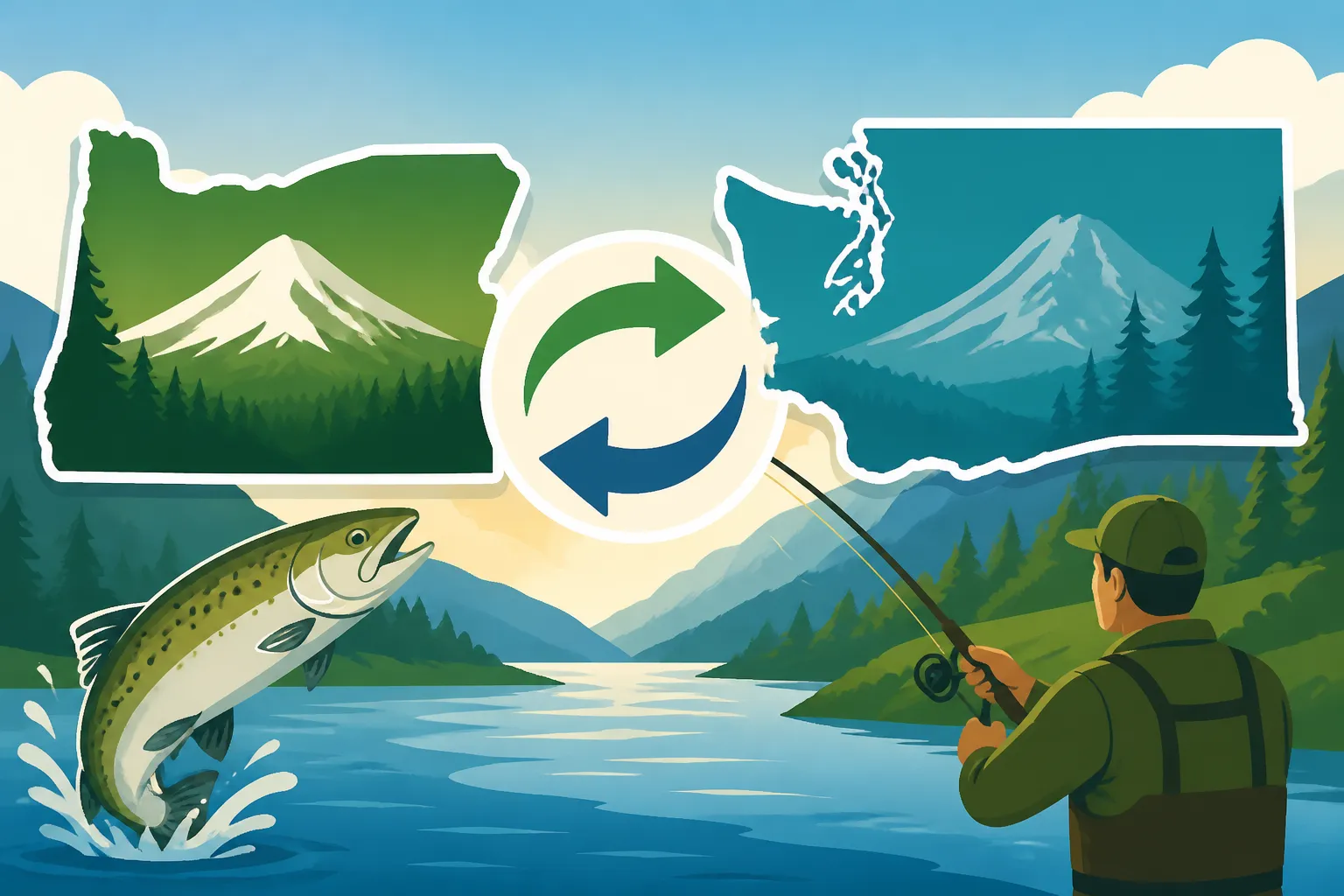
The Columbia River isn't just any river; it's a majestic waterway that forms a significant portion of the boundary between Oregon and Washington. This shared identity makes it a special case in the world of fishing regulations. Instead of one state having exclusive jurisdiction, both Oregon and Washington have an agreement in place to manage the fisheries, which includes a reciprocal licensing policy. This policy aims to make it easier for anglers to enjoy the river without needing to buy two full state licenses just to fish the mainstem.
Defining the Border Waters
For the purposes of this reciprocity agreement, the "mainstem Columbia River" refers to the entire river from its mouth at the Pacific Ocean all the way upstream to the point where the Oregon-Washington border leaves the river near McNary Dam. This stretch is where the special rules apply. It’s a vast area, offering incredible opportunities for salmon, steelhead, sturgeon, and various other species. Understanding these boundaries is the first crucial step because the moment you venture into a tributary or any water not part of the mainstem Columbia, the reciprocity rules typically vanish, and you're back to needing the license for the state whose waters you are in.
Why the Confusion Exists for Anglers
It's completely understandable why anglers often feel a headache coming on when trying to decipher these rules. You've got two different state departments—the Oregon Department of Fish and Wildlife (ODFW) and the Washington Department of Fish and Wildlife (WDFW)—each with its own set of laws, forms, and enforcement officers. While they collaborate extensively on the Columbia, their individual state laws don't always perfectly align. For instance, an Oregon fishing license might look different from a Washington one, and the fees certainly vary. The core frustration comes from the desire to simply fish without accidentally breaking a rule because you crossed an invisible line in the water or forgot a specific tag. It’s not about anglers trying to skirt the rules; it's about trying to follow them when they can be genuinely intricate.
Key Reciprocity Rules for Oregon and Washington
At its heart, the Oregon-Washington fishing license reciprocity agreement for the Columbia River is designed to simplify things, but there are important caveats. It's not a blanket "one license fits all" situation across every aspect of fishing. You really need to pay attention to the details to ensure you're fully compliant.
The Basic Reciprocity Rule: Mainstem Angling License
Here’s the good news: generally speaking, if you possess a valid annual angling license from either Oregon or Washington, you are legally permitted to fish for finfish in the mainstem Columbia River. This means an Oregon annual angling license is valid for fishing the mainstem Columbia, regardless of whether you're technically on the Oregon or Washington side of the river. The same holds true for a Washington annual angling license. This makes planning a trip much simpler for general angling purposes on this specific stretch of water. It's a fantastic benefit for residents of both states and non-residents who've purchased a full annual license. You don't need to double up on your base license. For a broader overview, you can check out the Oregon Fishing License Guide which details the various license types available.
Species-Specific Tags and Endorsements: Where It Gets Tricky
This is often the major stumbling block for anglers. While your base angling license might be reciprocal, many of the additional tags and endorsements required for specific species or areas are not reciprocal. This is a crucial distinction that can lead to fines if overlooked.
For instance, if you plan to fish for salmon, steelhead, or sturgeon, you will need to purchase the appropriate tags from the state in which you plan to land and retain your catch. So, if you're an Oregon resident fishing the mainstem Columbia and you intend to keep a salmon that day, you'll need an Oregon salmon/steelhead tag. Similarly, a Washington resident planning to keep a sturgeon would need a Washington sturgeon tag.
Furthermore, there are specific endorsements that are required by one state but may not be recognized by the other. A prime example is the Oregon Columbia River Basin Endorsement. This endorsement is required for Oregon anglers (both residents and non-residents) when fishing for salmon, steelhead, and sturgeon in the Columbia River and its tributaries, regardless of whether you have a Washington license. Washington has its own Columbia River Salmon/Steelhead Endorsement, which is similar but applies to Washington license holders. It's vital to remember that these endorsements are often tied to conservation efforts and specific regulations within each state's jurisdiction.
To put it simply:
- Base Angling License: Reciprocal on the mainstem Columbia River.
- Species Tags (Salmon, Steelhead, Sturgeon, Halibut, etc.): Generally not reciprocal. You need the tag from the state where you intend to land your fish.
- Area Endorsements (e.g., Columbia River Basin Endorsement): Generally not reciprocal. You need the endorsement from the state issuing your base license if that state requires it for fishing the Columbia.
This nuance is incredibly important for anyone planning a trip, especially when targeting popular species like Chinook or Coho salmon. You might have your base license covered, but forgetting that Oregon Salmon and Steelhead Tag Requirements means you need to buy that specific Oregon tag could land you in trouble, even if you're technically fishing on the "Washington side" of the mainstem with an Oregon base license.
| License/Tag Type | Reciprocal on Mainstem Columbia? (Oregon <-> Washington) | Important Notes |
|---|---|---|
| Annual Angling License | YES | A valid annual angling license from either Oregon or Washington allows you to fish for finfish in the mainstem Columbia River. This applies to both residents and non-residents holding an annual license. |
| 1-Day/Multi-Day License | YES (for the specific dates) | Similar to annual licenses, a valid 1-day or multi-day license from either state is typically reciprocal on the mainstem Columbia for the duration of its validity. For options, you could look into an Oregon 1-Day Fishing License. |
| Salmon/Steelhead Tag | NO | You must purchase a salmon/steelhead tag from the state where you intend to land and retain your catch. If you have an Oregon license and keep a salmon, you need an Oregon tag. If you have a Washington license and keep a salmon, you need a Washington tag. This also applies to catch record card requirements. |
| Sturgeon Tag | NO | Similar to salmon/steelhead, sturgeon tags are state-specific. You need the tag from the state where you plan to land and keep a sturgeon. |
| Columbia River Basin Endorsement | NO (State-specific) | Oregon requires its license holders to purchase the Oregon Columbia River Basin Endorsement to fish for salmon, steelhead, or sturgeon in the Columbia River and its tributaries. Washington has its own equivalent endorsement for its license holders. These are generally not interchangeable between states for license holders. |
| Shellfish License | NO | Shellfish licenses (for crabbing, clamming) are strictly state-specific and are not reciprocal. If you are crabbing in Oregon waters, you need an Oregon Shellfish License, even if you have a Washington fishing license. The mainstem Columbia River reciprocity only applies to finfish, not shellfish. |
| Ocean Endorsement | NO | An Oregon Ocean Endorsement is required for certain fishing activities in Oregon's ocean waters. This is specific to ocean fishing and has no reciprocity with Washington's ocean regulations. The Columbia River reciprocity is primarily for the river itself, not the ocean. |
Tributaries and Other State-Specific Waters
It cannot be stressed enough: the reciprocity agreement is primarily for the mainstem Columbia River only. The moment you venture into any tributary of the Columbia River, such as the Willamette River in Oregon or the Cowlitz River in Washington, you are no longer in reciprocal waters. At that point, you absolutely must possess a valid fishing license from the state whose tributary you are fishing.
For example, if you are an Oregon resident with an Oregon license and you're fishing for salmon on the Willamette River, you're good to go. However, if you then decide to drive up to Washington and fish the Cowlitz River, your Oregon license will not suffice for the Cowlitz. You would need to purchase a Washington fishing license (and relevant tags/endorsements) to legally fish there. The same applies in reverse for Washington anglers visiting Oregon tributaries. This is a very common oversight and a quick way to find yourself facing penalties.
Practical Scenarios: Who Needs Which License?
Let's break down some common scenarios that illustrate the intricacies of Oregon-Washington reciprocity on the Columbia River. These real-life examples highlight why understanding the rules beyond just the base license is so important.
Oregon Resident Fishing on the Washington Side of the Mainstem
Imagine you're an Oregon resident, you've got your annual Oregon angling license, and you decide to launch your boat from Cathlamet, Washington, to fish for salmon on the mainstem Columbia.
- Scenario 1: Just fishing, catch-and-release only. If you're strictly catch-and-release for finfish on the mainstem Columbia, your Oregon annual angling license is generally sufficient. You are covered by the reciprocity agreement for the base license.
- Scenario 2: Keeping a salmon. If you hook a beautiful Chinook and decide to keep it, you must have an Oregon salmon/steelhead tag and, if applicable, the Oregon Columbia River Basin Endorsement on your Oregon license. Even though you launched from Washington and might be physically closer to the Washington shore, because you are an Oregon license holder and intend to retain the fish, you follow Oregon's tag and endorsement requirements.
- Scenario 3: Fishing a Washington Tributary. Let's say you decide to take your boat up the Cowlitz River for some steelhead. Your Oregon license is not valid here. You would need to purchase a Washington fishing license and the appropriate Washington steelhead endorsement and catch card to fish the Cowlitz. This is a common point of confusion that game wardens regularly address.
Washington Resident Fishing on the Oregon Side of the Mainstem
Now, let's flip the script. You're a Washington resident with your annual Washington angling license, and you're visiting Astoria, Oregon, launching from a ramp there to fish the mainstem Columbia.
- Scenario 1: Just fishing, catch-and-release only. Your Washington annual angling license covers you for catch-and-release finfishing on the mainstem Columbia due to reciprocity. No Oregon license is needed for just the base privilege.
- Scenario 2: Keeping a sturgeon. If you hook into a legal-sized white sturgeon and decide to keep it during a retention season, you must have a Washington sturgeon tag. Even if you're pulling the sturgeon out of water that might be considered "Oregon's side" of the mainstem, as a Washington license holder, you adhere to Washington's specific tag requirements for retention. You would also need to record it on your Washington catch record card.
- Scenario 3: Fishing an Oregon Tributary. You decide to explore the lower Willamette River, which flows into the Columbia near Portland. Your Washington license does not cover you here. You would need to purchase an Oregon fishing license (and any required Oregon tags or endorsements, like the Columbia River Basin Endorsement if targeting salmon/steelhead/sturgeon) to legally fish the Willamette. This is a crucial distinction, as many anglers enjoy exploring these feeder rivers.
The Day Tripper and Short-Term Licenses
What about visitors or those who only fish once or twice a year? Oregon offers options like an Oregon 1-Day Fishing License, and Washington has similar short-term options.
- If you purchase an Oregon 1-day or multi-day license, it is reciprocal for finfishing on the mainstem Columbia River for the duration it is valid. However, you will still need to purchase any Oregon-specific tags (like salmon/steelhead or sturgeon tags) and the Oregon Columbia River Basin Endorsement if you plan to retain those species.
- The same logic applies if you purchase a Washington 1-day or multi-day license. It's reciprocal for the base privilege on the mainstem Columbia, but you'll need Washington-specific tags and endorsements for retention.
The key takeaway is always to check the specific regulations and your license's limitations, especially when it comes to species you plan to keep.
Beyond Licenses: Other Shared Regulations
While license reciprocity is a big hurdle, it's just one piece of the regulatory puzzle when fishing the Columbia River. Both states work hard to harmonize regulations, but there can still be subtle differences or specific rules that anglers need to be aware of. Neglecting these details can lead to unexpected penalties, even if your license is perfectly in order.
Gear, Bait, and Method Rules
It's common for fishing methods and gear restrictions to have specific rules on the Columbia River, and sometimes these can vary or be interpreted differently, even if the general rule is concurrent. For example, barbless hooks are often required for salmon and steelhead fishing on the mainstem Columbia, particularly during certain seasons, to promote catch-and-release survival. Both states usually enforce this concurrently. However, specific bait restrictions, fly-fishing-only zones, or gear limitations (like the number of rods allowed) might sometimes have nuances that you'd only find by consulting both the ODFW and WDFW regulation booklets.
Imagine a situation where a stretch of the river is designated "fly-fishing only" by one state's regulations, but perhaps the other state's regulations are less explicit for that exact spot. While ODFW and WDFW strive for consistency on the mainstem, always double-check the most current regulations for the specific area and species you're targeting. For a general understanding of rules, you can consult Oregon Fishing Regulations Explained.
Catch Limits and Seasons
This is another critical area where concurrency is usually strong but vigilance is still required. For major fisheries like salmon and steelhead, both Oregon and Washington typically agree on the daily bag limits and season dates for the mainstem Columbia. These agreements are often the result of extensive joint management meetings. However, emergency closures, in-season adjustments, or specific sub-area rules can sometimes be announced by one state and affect fishing, even if the other state is still open.
For instance, the retention season for certain species, like sturgeon, might open and close based on harvest quotas that are jointly managed. Daily bag limits, minimum size limits, and even the maximum size for slot limits (common for sturgeon) are usually concurrent. However, it's always prudent to check both state agencies' official publications or websites for the most up-to-date information before you head out. These details are frequently updated, sometimes even weekly, based on fish returns and harvest data. The Oregon Fishing Season Dates and Limits guide and specific Oregon Daily Bag Limits Explained will provide excellent context for Oregon's rules, but don't forget to cross-reference with WDFW for the Columbia.
Reporting Requirements
Catch record cards are an integral part of managing salmon, steelhead, and sturgeon populations in both Oregon and Washington. These cards allow wildlife agencies to track angler harvest and make informed management decisions.
If you are an Oregon license holder and you retain a salmon, steelhead, or sturgeon, you must immediately record your catch on your Oregon Catch Record Card. Similarly, a Washington license holder must use their Washington Catch Record Card. These cards are not reciprocal. If you have an Oregon license and keep an Oregon-tagged salmon, you record it on your Oregon card. You don't record it on a Washington card, even if you landed the fish on the Washington side of the mainstem. This is why having the correct tags for the state whose license you hold is so important. For more on this, check out Oregon Catch Record Card Requirements. It’s a bit of extra paperwork, but it’s vital for conservation.
Ensuring You're Compliant and Ready to Fish
The goal here isn't to make fishing complicated; it's to make sure you're well-informed so you can enjoy your time on the water without stress. Knowing these nuances prevents frustrating encounters with enforcement officers and helps ensure the sustainability of our precious fisheries.
Double-Checking Regulations: Your Best Defense
Always, always consult the official regulations from both the Oregon Department of Fish and Wildlife (ODFW) and the Washington Department of Fish and Wildlife (WDFW) before you go fishing on the Columbia River. Their websites are regularly updated, and you can usually download PDF versions of the latest booklets. Don't rely solely on what you heard from a friend or saw in an old forum post. Regulations, especially for migratory species like salmon and steelhead, can change frequently due to in-season management adjustments based on fish returns. A quick check of both state's emergency regulations page can save you a lot of grief. These resources are designed to be angler-friendly, providing clear guidance on everything from season dates to specific gear requirements.
Carrying Proof of License and Tags
Once you've got all your licenses, tags, and endorsements in order, make sure you have physical or verifiable digital proof with you at all times while fishing. Modern technology often allows you to display your license on your smartphone, which is incredibly convenient. However, always ensure your phone is charged and readable, especially in areas with poor signal. While many wardens are equipped to look up licenses digitally, having your physical card or a clear digital copy readily available speeds up the process and demonstrates your preparedness. For more details on this, you can refer to "Can I use my phone as proof of an Oregon fishing license?" or "Do I need to print my Oregon fishing license?"
What Happens if You're Caught Without Proper Licensing?
Getting caught without the proper license, tags, or endorsements on the Columbia River can result in significant penalties. Game wardens from both Oregon and Washington patrol these waters, and they are well-versed in the reciprocity rules. Fishing without a valid license or necessary tags is a serious violation. Depending on the severity and specific circumstances, penalties can range from substantial fines to forfeiture of fishing gear, and even loss of future fishing privileges. These penalties are designed not only to deter illegal activity but also to support the funding of critical conservation and management programs. To understand the potential repercussions, it's worth reviewing Fishing Without a License Penalties in Oregon so you're fully aware of the stakes. No one wants their fishing trip to end with a costly citation.
The Value of Reciprocity
Despite the complexities, the Oregon-Washington reciprocity agreement is a huge benefit to anglers. It allows for incredible flexibility, enabling you to explore one of the Pacific Northwest's most iconic waterways with relative ease. Imagine being able to fish for Oregon Salmon Species Guide or Oregon Steelhead Guide across state lines without needing to buy two identical base licenses. This cooperation between the states ensures that anglers can maximize their experience on the Columbia, promoting shared recreational opportunities while still upholding each state's conservation mandates. Understanding the nuances ensures that this valuable system works for everyone.
Disclaimer
Please note that fishing regulations are subject to change. While every effort has been made to provide accurate and up-to-date information, it is the angler's responsibility to consult the official Oregon Department of Fish and Wildlife (ODFW) and Washington Department of Fish and Wildlife (WDFW) regulations before heading out to fish.