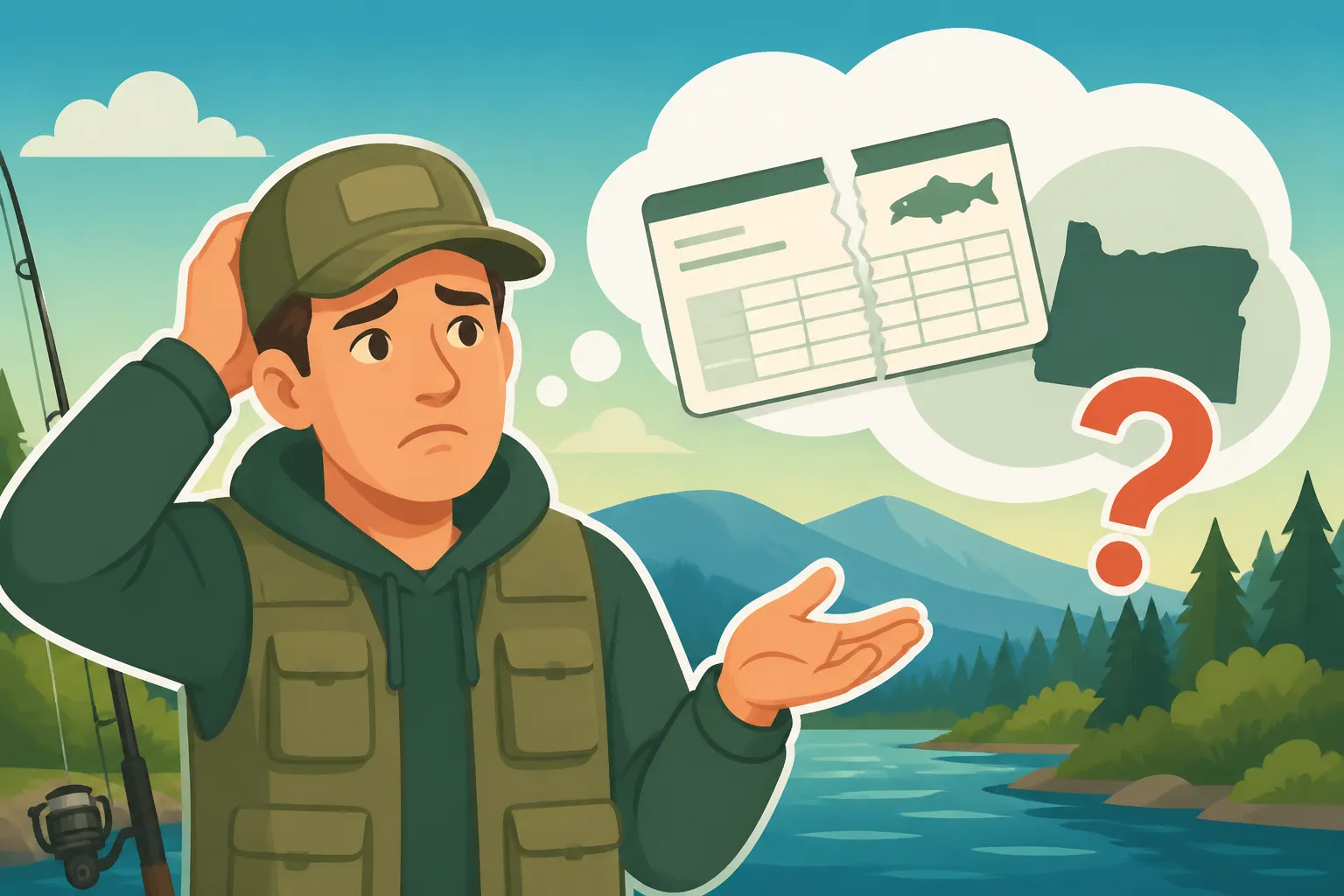
What happens if you lose your Oregon catch record card
Oh, the sinking feeling! You've just finished a fantastic day out on one of Oregon's incredible rivers, maybe the Deschutes chasing some trout, or perhaps you hooked into a beautiful salmon on the Columbia. You're heading home, dreaming of that fresh catch, and then it hits you: where's your catch record card? That moment of panic is real and completely understandable. Losing your Oregon catch record card isn't just a minor inconvenience; it can throw a wrench into your fishing plans and even lead to bigger headaches if not handled correctly. This guide is here to walk you through exactly what happens when that precious card goes missing, how to fix it, and how to avoid losing it again.
The Initial Panic and What it Means
That first wave of dread when you realize your catch record card is gone is a universal angler experience. Maybe it slipped out of your pocket when you were landing a fish, or perhaps it flew out of your tackle box on a bumpy ride. Whatever the scenario, the immediate concern is what it means for your fishing activities moving forward and, more importantly, what the state of Oregon expects you to do about it.
Why Your Catch Card is So Important
Let's be honest, filling out that little card after a successful catch can sometimes feel like a chore. You're excited, maybe a little cold or wet, and just want to get home. But your Oregon catch record card is far more than just a piece of paper; it's a vital tool for fisheries management and a legal requirement for certain species. Think of it as your official ledger for specific fish you harvest, like salmon, steelhead, sturgeon, or halibut. The Oregon Department of Fish and Wildlife (ODFW) relies heavily on the data you provide when you report your catches (or lack thereof) to understand fish populations, assess the health of different runs, and set future seasons and bag limits. Without this accurate information, it's incredibly difficult for them to make informed decisions that ensure sustainable fishing for generations to come. It’s also a key component of your larger Oregon Fishing License Guide.
Every single time you catch and retain one of these regulated species, you are required to immediately record it on your card. This isn't just a suggestion; it's a rule. The card itself, when carried with your fishing license, serves as proof that you are adhering to these reporting requirements. Without it, you lack the official means to record a catch, which brings up serious compliance questions if a game warden happens to check your creel. This isn't about being a stickler for rules; it's about being a responsible steward of Oregon's natural resources.
The Immediate Realization and First Steps
Okay, so the card is definitely gone. You've patted down every pocket, checked the boat's floorboards, and rummaged through your tackle box three times. Deep breaths. The very first thing you need to do is stop fishing for any species that require a catch record card. Continuing to fish for salmon or steelhead, for example, without a valid, physically present catch card (or an immediate replacement in hand) could put you in a precarious position with the law. While you might still have your general angling license, the specific tags for these fish are embedded within that card. If you're on the water and realize it's gone, switch to trout or bass fishing if those species don't require the special tag, or simply pack up for the day.
Your next step should be to retrace your steps carefully. Did you take it out at the gas station? Did it fall out when you were tying a new lure? Sometimes it's right where you last remembered using it, just obscured. If a thorough search yields nothing, it's time to consider it officially lost and move on to getting a replacement. Don't procrastinate on this; the sooner you address it, the less likely you are to encounter issues down the line. Remember, waiting until your next fishing trip to deal with it means you'll miss out on prime opportunities for those tagged species.
Navigating the Replacement Process
Losing your card is a pain, but thankfully, it's not the end of the world for your fishing season. The Oregon Department of Fish and Wildlife understands that accidents happen, and they have a process in place to help you get back on track. It just requires a bit of proactive effort on your part.
Getting a Duplicate from ODFW
The good news is that obtaining a duplicate catch record card is a relatively straightforward process. You have a few options, depending on your preference and immediate needs.
- Online: This is often the quickest and most convenient method. Head over to the ODFW's online licensing system. You'll typically log in with your existing account information (often linked to your hunter/angler ID number). Once logged in, there should be an option to print a duplicate license and associated tags/cards. This allows you to immediately print a new catch record card from home. Many anglers prefer this route because it's available 24/7, meaning you can often get a replacement in hand within minutes if you have access to a printer. Just make sure your printer has ink and that you use durable paper, as this new printout will be your official document.
- In Person: If you prefer face-to-face assistance or don't have immediate access to a printer, you can visit an authorized ODFW license agent. These agents are typically found at sporting goods stores like Fisherman's Marine & Outdoor or even some larger retailers that sell fishing licenses. Just tell them you need a duplicate catch record card. They'll ask for your identification and may charge a small processing fee in addition to any ODFW fee for the duplicate. This option is great if you're already out and about or need some help navigating the process. Find a local agent through the ODFW website before you head out, as not every store will be able to help. For more details on where to get one, check out this guide: Where to Buy an Oregon Fishing License.
- By Mail: While slower, this is still an option. You can contact ODFW directly and request a duplicate be mailed to you. This usually involves filling out a form and sending it in, along with any applicable fees. This method is generally recommended only if the online and in-person options are not viable for you, as it can take several business days to receive your new card, during which you won't be able to legally fish for tagged species.
No matter which method you choose, it's crucial to ensure the information on your new card is accurate and reflects your current license and endorsements. Sometimes, a small fee is associated with issuing a duplicate, so be prepared for that.
Transferring Recorded Catches to the New Card
This is where things can get a little tricky, especially if you had already caught and recorded fish on your lost card. ODFW's system generally tracks your license and endorsements, but the physical catch record card is your personal log.
If you hadn't caught any fish on your lost card, then getting a duplicate is as simple as printing a fresh, blank one. You're good to go.
However, if you did record catches on the lost card, you'll need to transfer those records to your new duplicate. ODFW's online licensing system may sometimes retain a digital record of reported catches if you've submitted your card previously or if the system automatically logs certain license-linked catches. However, for most traditional catch cards, the responsibility falls on you.
Here's how to best approach it:
- Reconstruct Your Records: Immediately sit down and try to remember every single fish you caught and recorded on the lost card. This includes the species (salmon, steelhead, sturgeon), the date, and the specific water body. Be as precise as possible. It helps if you have a fishing journal or a habit of taking photos of your catches with date and location stamps.
- Manual Transfer: Once you have your new duplicate card, carefully and legibly transfer all the remembered catch information to the corresponding sections on the new card. Treat this new card as if it's the original, and ensure all details are consistent with the lost records.
- Contact ODFW if Unsure: If you have multiple catches, or if you're uncertain about how to proceed with transferring records, it's always best to contact ODFW directly. Their licensing or fisheries division can provide specific guidance to ensure you remain compliant. They might be able to cross-reference their records or provide an official method for acknowledging previously recorded catches, especially if you’re concerned about potential discrepancies.
The key here is honesty and accuracy. Attempting to hide or misrepresent catches could lead to more severe problems than simply losing the card. The ODFW emphasizes the integrity of catch reporting for proper resource management.
Potential Consequences of a Lost or Unreported Card
While it might seem like a minor administrative oversight, losing your catch record card and failing to replace or properly report it can actually have significant repercussions, both for you as an individual angler and for the broader conservation efforts in Oregon. It’s important to understand these potential consequences so you can take the necessary steps to avoid them.
Fishing Without a Valid Card (Even Accidentally)
This is perhaps the most immediate and personal consequence. If you continue to fish for species that require a catch record card, such as salmon or steelhead, after realizing yours is lost and before getting a replacement, you are essentially fishing illegally for those species. Even if you have your general Oregon Annual Angling License, the absence of the physical catch card means you cannot legally record a kept fish, nor can you prove compliance with the tagging requirements.
Imagine this scenario: you're out on the Willamette River, targeting Spring Chinook. You hook into a beautiful, hatchery-marked salmon, reel it in, and realize your catch card is nowhere to be found. A game warden, doing their rounds, approaches you. When asked to present your license and tags, you can show your angling license, but not the valid catch card.
- Fines and Penalties: Fishing for tagged species without the proper catch record card can result in a citation, leading to fines. The specific amount can vary depending on the severity and the discretion of the game warden, but fines for fishing violations in Oregon can be substantial. For example, similar infractions for fishing without a license could lead to fines well into the hundreds of dollars, sometimes even more. For detailed information on potential fines, you might want to look at a guide like Oregon Fishing Violations and Penalties.
- Seizure of Equipment/Fish: In more serious cases, or if other violations are present, a game warden might have the authority to seize your fishing equipment or any fish you have in possession that required the missing tag.
- Loss of Future Privileges: Repeated or severe violations could potentially impact your ability to purchase future fishing licenses or endorsements in Oregon, or even lead to a temporary suspension of your fishing privileges. This is rare for a first-time, accidental loss, but it's a possibility to be aware of.
- Embarrassment and Stress: Beyond the legal and financial ramifications, there's the sheer stress and embarrassment of being cited by a game warden. It can quickly turn an otherwise enjoyable day on the water into a very unpleasant memory.
It’s always best to err on the side of caution. If your card is lost, stop fishing for tagged species until you have a valid duplicate in your hands.
The Impact on Conservation Data
Beyond the individual consequences, losing and not properly reporting your catch card also has a broader impact on Oregon's fisheries and conservation efforts. As mentioned earlier, the ODFW uses the data from these cards to make critical management decisions.
- Inaccurate Population Estimates: When anglers fail to report their catches (or simply don't have a card to record them on), it creates gaps in the data. If fewer fish are reported than actually caught, ODFW might underestimate the harvest pressure on a particular run. This could lead to incorrect population estimates, potentially causing them to set harvest limits too high in future seasons, inadvertently impacting the recovery or stability of fish populations.
- Misguided Management Decisions: Fisheries managers rely on comprehensive catch data to understand trends, identify problem areas, and assess the effectiveness of current regulations. For instance, if data for Oregon Salmon Species Guide or Oregon Steelhead Guide is skewed, they might not adjust season dates or bag limits appropriately for a specific river or coastal area. This could hinder conservation efforts or lead to missed opportunities for anglers.
- Resource Allocation Issues: The health of Oregon's fisheries directly influences how resources (funding, personnel, habitat restoration projects) are allocated. If certain species or areas appear to have lower harvest rates due to under-reporting, they might receive less attention or fewer resources, even if they are in greater need.
- Long-term Sustainability: Ultimately, the goal of these regulations and reporting requirements is to ensure the long-term sustainability of Oregon's incredible fishing opportunities. Every unreported fish, or every angler who doesn't replace a lost card and therefore doesn't contribute their data, slightly erodes the accuracy of the picture ODFW is trying to paint. This collective impact can make it harder to protect vulnerable runs or to enhance healthy ones for future generations.
It might feel like one lost card doesn't make a difference, but when you multiply that by thousands of anglers over a season, the data gaps become significant. Reporting your catches, even if it's just a "zero" report at the end of the year if you didn't catch anything, is a civic duty for any responsible angler.
Best Practices for Preventing Future Losses
Once you've gone through the hassle of replacing a lost catch record card, you definitely don't want to repeat the experience. Developing good habits and utilizing smart storage solutions can save you a lot of grief down the line. It's about being prepared, both on and off the water.
Secure Storage and Digital Backups
Your physical catch record card is just as important as your fishing license itself, so treat it with the same level of care. One of the best investments you can make is in a waterproof license holder or wallet. These come in various styles, from simple clear plastic pouches to more rugged, hard-shell cases. Keeping your license and catch card together in such a holder, clipped to your vest or tucked securely into an inside pocket, drastically reduces the chance of it falling out or getting soaked and damaged. Brands like Simms or Patagonia offer excellent waterproof wallets designed for anglers, and you can find many affordable options on Amazon.
Consider creating a digital backup. Before you even head out on your first trip of the season, take a clear photo of your entire catch record card, both front and back. Store this photo in a secure location on your phone, in a cloud storage service, or even email it to yourself. While a digital photo isn't a legal substitute for the physical card in most cases, it can be incredibly useful if you need to remember catch details when trying to reconstruct your records for a duplicate card. It's also handy to have your angler ID number readily accessible if you need to log into the ODFW system from the field. Some anglers even keep a printed photocopy of their blank card in a separate, secure location as an emergency backup.
Here's a quick comparison of storage strategies:
| Storage Method | Pros | Cons | Best For |
|---|---|---|---|
| Waterproof Wallet | Excellent physical protection, keeps all documents together, durable. | Can still be lost if the wallet itself is misplaced. | Active fishing, wet environments. |
| Ziploc Bag | Cheap, readily available, provides basic water protection. | Less durable, prone to tears, easy to misplace within a larger bag. | Budget-conscious, short trips. |
| Dedicated Gear Pouch | Securely attached to vest/pack, less likely to fall out, organized. | Requires remembering to put it back after use, pouch might not be fully waterproof. | Anglers with specific gear setups. |
| Digital Photo/Scan | Immediate access to info, great for remembering details, always with you. | Not a legal substitute for the physical card, relies on phone battery/signal. | Backup for reconstruction, quick reference. |
| Home Folder/Drawer | Secure off-water storage, easy to find when not fishing. | Not accessible when on the water, requires remembering to grab it before a trip. | Long-term storage when not actively fishing. |
Developing a Habit of Immediate Recording
One of the easiest ways to mitigate the stress of a lost card is to make sure your recorded catches are as up-to-date as possible. This means developing a habit of recording your catches immediately after you've landed and decided to keep a fish. Don't wait until the end of the day, or worse, the end of the trip.
Think about it: if you lose your card at 4 PM after recording a salmon at 10 AM, you only have to remember that one catch. But if you've landed three steelhead, two salmon, and a sturgeon throughout a long weekend and haven't recorded any of them, trying to recall all the details accurately from memory becomes a much tougher task.
Here are some tips to build this habit:
- Keep a Pen Handy: Always have a waterproof pen or a pencil attached to your license holder or fishing vest. Those small golf pencils work wonders and don't leak ink like some pens can.
- Designated Spot: Designate a specific, easily accessible pocket for your license and catch card. Make it a routine: fish caught, fish recorded, card back in the pocket.
- "No Record, No Keep" Rule: Adopt a personal rule that if you can't immediately record it, you don't keep it. This reinforces the importance of the action and ensures compliance.
- Review Regularly: Even with immediate recording, it’s a good idea to quickly review your card at the end of each fishing day. Make sure everything is legible and accurate. This also gives you a chance to double-check that the card is securely put away.
By combining secure storage methods with a diligent recording habit, you'll significantly reduce the chances of losing your card and minimize the impact if it ever does go missing again. This proactive approach helps ensure you stay on the right side of the Oregon Fishing Regulations Explained and contribute positively to the future of fishing in Oregon.
Disclaimer
Please note that fishing regulations, license requirements, and fees can change. Always refer to the most current Oregon Department of Fish and Wildlife (ODFW) regulations and official resources before engaging in any fishing activities. This guide is for informational purposes only and should not be considered legal advice.