Is seasickness common on Oregon ocean charters?
Oh, the dreaded question of seasickness on an Oregon ocean charter! It's one of those anxieties that can really loom large when you're planning a fantastic fishing adventure off our beautiful, rugged coast. Believe me, you are absolutely not alone in wondering about this. Many an angler, myself included, has felt that little pang of worry about whether a day on the open Pacific will end in a glorious catch or an embarrassing trip to the rail. This guide is here to tackle that very real concern head-on, giving you an honest look at what to expect and, more importantly, how to minimize the chances of seasickness ruining your long-anticipated trip.
Understanding Seasickness: What Exactly Is It?
Before we dive into how common seasickness is on Oregon's challenging waters, let's get a clear picture of what's actually happening when that queasy feeling starts to creep in. It's not just "being a bad sailor," as some might jokingly put it; it's a very real physiological response to conflicting signals your brain is receiving.
The Inner Ear Connection: Why We Get Dizzy
At its core, seasickness, or motion sickness, is a sensory mismatch. Your body has an incredible internal GPS system that relies on information from your eyes, your inner ear (which handles balance and motion detection), and your proprioceptors (sensory receptors in your muscles and joints that tell your brain about your body's position). When you're on land, all these systems usually work in perfect harmony. Your eyes see the stable ground, your inner ear feels no unusual motion, and your muscles tell your brain you're standing still or walking predictably.
Now, put yourself on a boat on the Pacific. Your inner ear, particularly the fluid-filled canals, is telling your brain that you're moving – rolling, pitching, heaving, yawing. It's a constant, sometimes unpredictable, dance. But if you're below deck, or even just focusing intently on something inside the boat, your eyes might be seeing a static environment. The cabin walls aren't moving, your fishing rod appears still, but your inner ear is screaming "MOTION!" Your brain gets confused, struggling to reconcile these conflicting reports. This sensory overload and confusion can trigger a host of unpleasant symptoms. It's like your brain is trying to solve a puzzle with half the pieces missing or incorrectly matched, and its emergency response is often to make you feel unwell.
Common Symptoms and Their Impact on Your Trip
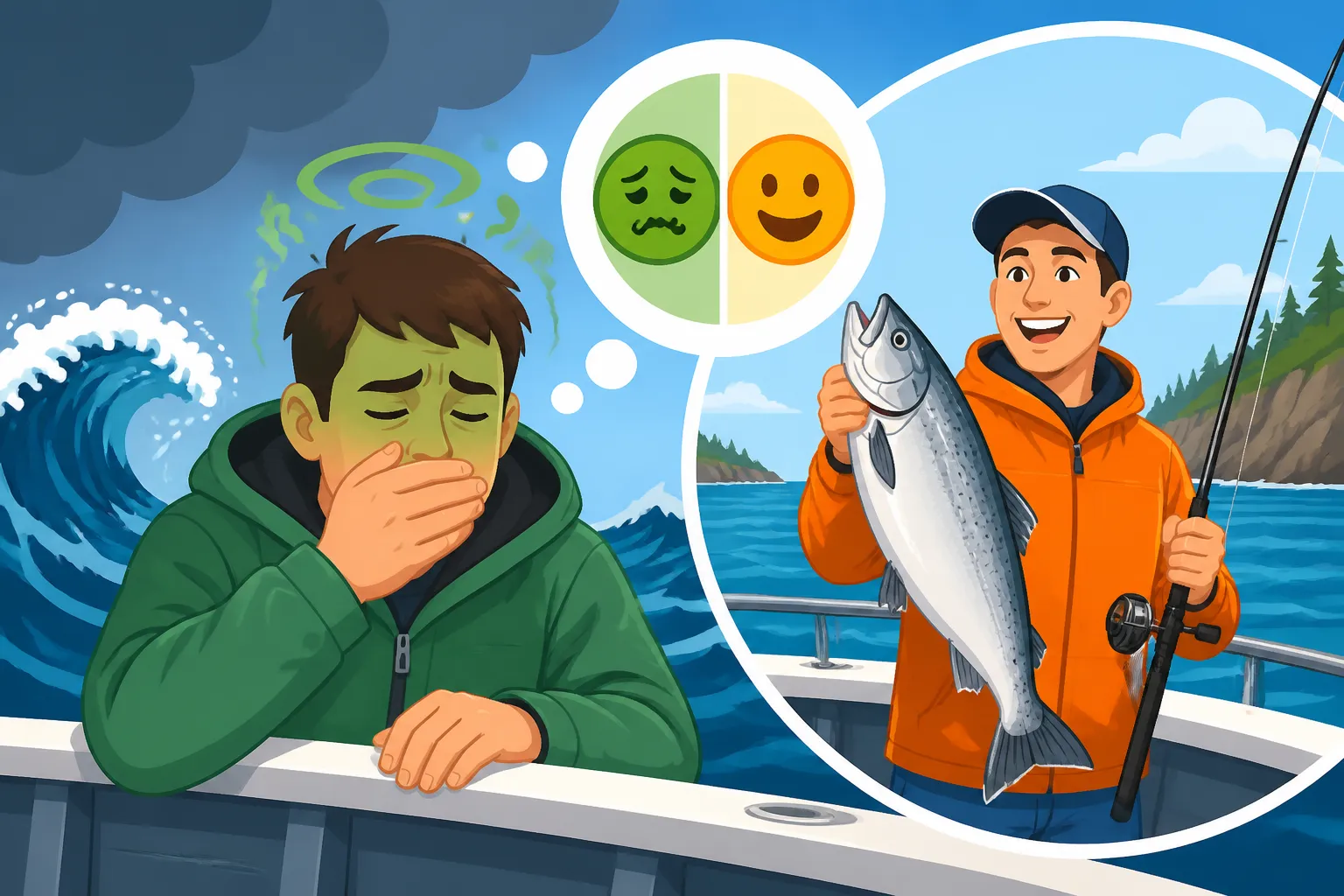
The symptoms of seasickness aren't just limited to the obvious. While most people immediately think of nausea and vomiting, there's a whole spectrum of discomfort that can truly diminish your charter experience. It often starts subtly: a feeling of unease, a slight headache, perhaps a cold sweat or clamminess. You might notice you're yawning excessively, even if you got a full night's sleep.
As it progresses, the nausea can intensify, leading to stomach discomfort, loss of appetite, and that undeniable urge to lean over the side. Dizziness and vertigo can set in, making it hard to focus or even stand steady. Some people experience heightened sensitivity to smells (like diesel fumes or bait), which can exacerbate the nausea. Imagine finally hooking into that trophy Chinook salmon, only to be too green around the gills to fully enjoy the fight or even stand up to reel it in. Or missing out on the incredible views of the Oregon coastline or the camaraderie with your fellow anglers because you're focused solely on not getting sick. It's a real bummer when seasickness steals the joy from what should be an unforgettable day.
How Common is Seasickness on Oregon Ocean Charters?
Let's be realistic: if you're heading out onto the open ocean, especially off the Oregon coast, there's always a possibility of encountering some motion. It’s not like fishing a calm inland lake! So, yes, seasickness can be common, but its prevalence and severity depend heavily on several factors.
The Reality of Oregon's Coastal Waters
Oregon's coastline is renowned for its dramatic beauty, but the Pacific Ocean here can be notoriously unpredictable and, at times, quite rough. This isn't the calm, glassy waters you might find in some tropical destinations. We often have significant swells, even on what might appear to be a "nice" day on shore. These swells are large, rolling waves that can create a lot of motion, especially for smaller vessels. Then there are the wind waves, choppy conditions created by local winds, which can be piled on top of existing swells.
Specific locations along the Oregon coast, like Newport, Depoe Bay, and Astoria, are popular departure points for charters, but they also mean you're quickly out into the open ocean. These ports often involve crossing a bar—the entrance to the harbor where river currents meet ocean swells, creating potentially turbulent conditions. While charter captains are highly skilled at navigating these areas, they can certainly be a spot where motion sickness first kicks in. The weather can also change rapidly; a sunny morning can give way to dense fog or increasing winds that churn up the seas. Oregon Fishing Seasons Explained covers how weather can impact different times of the year, and this directly relates to how calm or rough the ocean might be.
Factors That Increase Your Risk
While the ocean itself plays a big role, many factors influence an individual's susceptibility to seasickness. Understanding these can help you better prepare.
Firstly, personal susceptibility is huge. Some people seem to have an iron stomach, while others get queasy just thinking about a boat. If you've been prone to motion sickness in cars, planes, or amusement park rides, you're likely more susceptible on a boat. It's simply how your particular inner ear and brain process motion.
Boat size and type are also significant. A larger, heavier boat generally rides smoother and is less affected by smaller waves and swells than a smaller, lighter vessel. If you're on a smaller private charter or even a dory boat launching from the beach, you'll likely feel every bump and roll more acutely than on a large party boat out of Newport. When researching Oregon Fishing Charter Guide options, don't hesitate to ask about the size and stability of the boat.
Where you sit on the boat can make a difference. The stern (back) of the boat can sometimes be more stable for rolling motions, but it can also be where diesel fumes are more concentrated, which can be a trigger for some. The bow (front) of the boat tends to feel the pitching (up and down motion) more intensely, especially in choppy conditions. Often, the midship area (middle) near the waterline is considered the most stable.
Finally, your physical state before and during the trip really matters. Going out on a charter after a night of heavy drinking, or with a severely empty or overly full stomach (especially with greasy or acidic foods), is practically an invitation for seasickness. Dehydration and lack of sleep can also lower your resistance. And here’s a kicker: anxiety about getting seasick can actually increase your chances of getting sick. The power of the mind is real, and worrying constantly can heighten your body's sensitivity. That's why having a positive, prepared mindset is almost as important as the physical preparations.
Practical Strategies for Preventing and Managing Seasickness
Okay, so the ocean moves, and you might get queasy – that's the honest truth. But here's the good news: there are many effective strategies to prevent and manage seasickness, so it doesn't have to ruin your Oregon Ocean Charter Fishing experience. A little preparation goes a long way!
Pre-Trip Preparations: Medications and Mindset
The absolute golden rule for seasickness medication is to take it before you feel sick. Once the nausea has set in, it's often too late for oral medications to be truly effective. Most over-the-counter (OTC) options, like Dramamine (dimenhydrinate), Bonine (meclizine), or generic meclizine, are antihistamines that work by calming the signals between your inner ear and brain. Read the instructions carefully, but typically you'll want to take these 30 to 60 minutes before you even step onto the boat. Some cause drowsiness, so you might choose a non-drowsy formula or test it out beforehand.
For those with severe susceptibility, a prescription scopolamine patch (Transderm Scop) can be incredibly effective. This small patch is placed behind the ear and releases medication slowly over several days. You usually apply it 4 to 12 hours before your trip. Always consult your doctor before using prescription medications.
Beyond medication, think about your physical state. Hydration is key; drink plenty of water in the days leading up to your trip, but avoid excessive alcohol. Eat a light, non-greasy meal before you depart. Toast, crackers, or a banana are good choices. Steer clear of heavy, fatty, or spicy foods, and avoid strong coffee or sugary drinks. And please, get a good night's sleep! Being well-rested makes your body more resilient.
Finally, manage your mindset. If you're prone to anxiety about seasickness, try deep breathing exercises or visualize a successful, fun day. Remind yourself that many people go out and have a blast, and you're taking all the right steps to be one of them. It's worth asking your chosen charter company for their advice too; they often have great tips tailored to their specific boats and local waters.
During the Trip: Tips and Tricks to Feel Better
Once you're on the boat and heading out, there are several things you can do to keep that queasiness at bay or minimize its effects.
The most common and often effective strategy is to stay on deck and look at the horizon. This helps your eyes and inner ear send consistent signals to your brain – "yes, we are moving, and here's the proof!" Avoiding enclosed spaces below deck, especially if they're stuffy or smell like diesel, is crucial. That feeling of being trapped can exacerbate symptoms.
Fresh air is your best friend. Position yourself where you can feel the breeze, but avoid direct spray if it's cold. Small sips of water, ginger ale, or clear broths can help settle your stomach. Some people swear by ginger candies or ginger chews. Eat small, bland snacks like crackers if you feel you need something in your stomach.
Absolutely avoid reading, looking at your phone, or focusing on anything up close inside the boat. This immediately creates that sensory mismatch that triggers seasickness. Save the social media scrolling for when you're back on solid ground.
Acupressure wristbands, like Sea-Band, are another non-medication option. These bands apply pressure to a specific point on your wrist, which some people find effective in reducing nausea. They're drug-free, so there are no side effects.
And don't be shy about communicating with the crew. These folks are professionals; they've seen it all, and they genuinely want you to have a good time. If you start to feel unwell, let them know. They might have a special spot on the boat where you'll feel better, or they might offer some helpful suggestions. They also carry extra bags just in case, and there's absolutely no shame in needing one. Most good captains and deckhands are empathetic and will do what they can to make you more comfortable.
When choosing your charter, research boat stability and trip length. For a first-timer, a shorter trip might be a good way to test the waters. Reading reviews on platforms like FishingBooker can offer insights, as past anglers often mention their experience with boat motion or how the crew handled seasickness. This information can be really valuable when trying to determine How to Choose an Oregon Fishing Guide.
| Method | Description | When to Use | Effectiveness (General) | Considerations |
|---|---|---|---|---|
| Oral Medications | Dramamine, Bonine, Meclizine – antihistamines to calm the brain. | 30-60 minutes before boarding | High | Can cause drowsiness (some non-drowsy options available); read labels carefully. |
| Scopolamine Patch | Prescription patch behind the ear, slow-release medication. | Apply 4-12 hours before exposure | Very High | Requires prescription; potential side effects include dry mouth, blurred vision. |
| Ginger (Capsules/Chews) | Natural anti-nausea remedy. | Before and during the trip | Moderate | Non-drowsy; may not work for severe cases; can be found as supplements or candies. |
| Acupressure Bands | Wristbands with a stud that applies pressure to a specific point. | Put on before boarding and keep on | Variable (Personal) | Non-invasive, no drugs; effectiveness varies greatly from person to person. |
| Horizon Gazing | Fix your eyes on a stable point on the horizon. | As soon as motion is felt or for prevention | Moderate | Requires being on deck with an unobstructed view; avoid focusing on anything inside the boat. |
| Fresh Air & Positioning | Stay on deck, in fresh air, avoiding fumes; often midship is best. | Throughout the trip | Moderate | Avoid reading, phone screens, or going below deck; stand or sit where you feel least motion. |
Choosing Your Charter Wisely
One of the best proactive steps you can take is to select your charter strategically. When looking at Newport Oregon Fishing Charters or Depoe Bay Oregon Fishing Charters, don't just consider the target fish. Ask about the size and type of their boat. Larger, heavier boats, especially those designed for offshore fishing, tend to handle swells better than smaller, lighter vessels. A catamaran, with its two hulls, can often offer a more stable ride than a monohull, though this isn't universally true.
Consider the length of the trip. If you're very prone to seasickness or it's your first time on the ocean, a shorter 4-6 hour bottom fishing trip might be a better introduction than an all-day tuna charter that goes far offshore. Many charters will offer different types of trips, from quick crabbing excursions to long-range tuna hunts. Platforms like FishingBooker often allow you to filter by trip duration, which can be helpful.
Also, think about the time of year. Summer months generally offer calmer seas off Oregon than the winter, but even summer can have unexpected swells or afternoon chop. Discussing typical conditions for your preferred dates with the charter office directly can be very insightful. They often know their local waters best and can give you a realistic expectation. For instance, Astoria Oregon Fishing Charters often operate in the lower Columbia River and near its bar, which can be dynamic regardless of the season.
When Seasickness Hits: What to Expect and How Charters Handle It
Despite all your best preparations, sometimes seasickness just happens. The ocean can be a powerful force, and every body reacts differently. If you find yourself succumbing to the queasiness, it's important to know what to expect and how the charter crew will typically handle it.
The Reality of Getting Sick on Board
First and foremost, if you get sick, it's okay. Seriously, it happens to the best of us, and you are not the first person (nor will you be the last) to lean over the rail. There's no need to feel embarrassed. Charter boats are set up for this very possibility. They typically have designated areas for folks to get sick, usually over the side where it can quickly be washed away by the ocean. The crew will have plenty of bags available, so don't hesitate to ask for one if you feel the urge.
The key is to try and maintain your composure and, more importantly, your safety. If you're leaning over the rail, make sure you have a secure grip. Staying upright and in fresh air, even if you're feeling miserable, is usually better than trying to lie down in an enclosed space. The focus should be on getting it out and then trying to recover.
Charter Crew Support and Options
This is where a good charter crew truly shines. Most Oregon charter captains and deckhands are incredibly experienced and empathetic when it comes to seasickness. They've seen it countless times and understand how debilitating it can be. If you let them know you're feeling unwell, they might have some specific advice, like where on the boat might offer a smoother ride, or they might offer you a ginger chew or a cold cloth.
They generally won't turn the boat around and head back to shore just for one person's seasickness unless there's a serious medical emergency, or the weather turns so foul that everyone on board is in distress. Remember, these trips are planned and paid for by multiple passengers, and they have schedules and fishing grounds to reach. However, a good crew will constantly check on you, offer reassurance, and do whatever they can to make you as comfortable as possible so you can still salvage some enjoyment from the trip. Their priority is always the safety and well-being of their passengers. This is one of the many reasons why it's worth the Oregon Fishing Charter Costs to go with a reputable outfit.
Making the Most of Your Trip, Even if Queasy
So, you're a bit green, but the fish are biting, and the scenery is spectacular. How do you make the best of it? Focus on the good things! Try to distract yourself from the nausea by watching the waves, looking for wildlife like whales or seabirds, or even just focusing on the act of fishing, if you can manage it. Even if you're just sitting on deck, feeling the fresh air and watching the world go by, you're still out on the ocean, creating memories.
Remember why you came out in the first place. Was it for that chance at a huge Pacific Halibut off Oregon or a feisty Chinook Salmon in Oregon? Sometimes a little bit of discomfort is a small price to pay for a shot at that bucket-list catch. You might even find that once you get through the worst of it, your body adjusts, and you start to feel better. Many people experience a turning point where the nausea subsides, and they can enjoy the rest of the trip. So, keep an open mind, stay hydrated, and give yourself a break – you’re on an adventure, and a little bump in the road (or wave!) is sometimes part of the journey. For an idea of what to pack, check out What should I bring on an Oregon fishing charter which can include items to help with seasickness.
Disclaimer
This article is for general informational purposes only and does not constitute professional advice. Laws, prices and regulations vary by location and change over time. Consult a qualified professional for guidance on your specific situation.