What is the difference between hatchery and wild fish in Oregon
It can be a bit of a head-scratcher when you’re out on Oregon's beautiful rivers and lakes, pulling in a fish, and then pausing to wonder: "Is this a wild one, born and bred in these very waters, or a fish from a hatchery, raised by human hands?" This isn't just a matter of curiosity; understanding the difference between hatchery and wild fish in Oregon is absolutely critical for every angler, impacting everything from what you can legally keep to how we all contribute to the conservation of our precious aquatic ecosystems. This guide will walk you through the key distinctions, why they matter, and how you can become a more informed and responsible angler in the Beaver State.
The Purpose and Presence of Hatchery Fish in Oregon
Oregon has a long history with fish hatcheries, stretching back generations. These facilities play a significant, if sometimes debated, role in our fisheries. They're designed to supplement fish populations, often for recreational angling, commercial harvest, or to mitigate for habitat loss due to development like dams. For many anglers, hatchery fish represent a consistent opportunity to bring home a meal or simply enjoy a day of successful fishing when wild populations might be too fragile or restricted.
The Role of Hatcheries in Oregon's Waters
Imagine a scenario where a popular fishing river, perhaps the lower Columbia or a coastal stream, has seen its wild salmon or steelhead runs decline due to various environmental pressures. Without intervention, fishing opportunities might dry up entirely. This is where hatcheries step in. They collect adult fish, spawn them in a controlled environment, raise their offspring in protected settings, and then release them into specific waterways when they're strong enough to survive. This process is meant to boost the number of fish available for anglers, ensuring there are enough opportunities even as wild stocks face challenges. It's a complex balancing act, aiming to support recreational fishing while also trying not to negatively impact the genetic fitness or survival of wild fish. These efforts, though well-intentioned, require constant evaluation and adaptation to ensure they serve their purpose without unintended consequences. You'll often hear about different hatchery programs, from those stocking trout in local ponds for kids' fishing events to large-scale releases of salmon and steelhead into major river systems.
Recognizing a Hatchery Fin Clip
One of the most immediate and reliable ways to distinguish a hatchery fish from a wild one in Oregon is by checking for a fin clip. This is probably the most crucial visual cue an angler needs to know, especially when retention regulations come into play. Most hatchery-origin salmon and steelhead released in Oregon (and many other places) have their adipose fin removed. The adipose fin is that small, fleshy fin located on the back between the dorsal fin and the tail. It serves no known functional purpose for the fish, so its removal doesn't harm their swimming ability or survival.
When you land a fish and gently examine it, look closely at this area. If that little fin is missing, it’s a hatchery fish. If it's present and intact, you're likely holding a wild fish. It’s a pretty distinct mark, but sometimes, especially with smaller fish, you might need to look carefully. This practice, often called "adipose fin clipping," is a vital tool for fisheries managers. It allows them to differentiate between hatchery and wild fish in the field, which directly informs regulations. Many regulations are structured to allow the harvest of hatchery fish while requiring the release of wild fish to protect and rebuild natural populations. This distinction is so important that intentionally misidentifying a fish can lead to significant Fishing Without a License Penalties in Oregon, even if you have a license! To delve deeper into this specific identification method, check out How can you tell a hatchery fish by its fin.
The Essence of Wild Fish in Oregon
Wild fish are the backbone of Oregon's natural aquatic ecosystems. They are the descendants of generations of fish that have survived and thrived in their native environments, adapting to the unique challenges and opportunities of their specific waterways. These are the fish that represent the purest form of natural selection, evolving without human intervention to navigate the intricate life cycles of Oregon's diverse rivers, lakes, and coastal waters.
The Resilience of Natural Spawning
Think about a wild spring Chinook salmon making its arduous journey up the Willamette River, or a summer steelhead battling its way through the rapids of the Deschutes. These fish are driven by ancient instincts, returning to the very gravel beds where they were spawned. The entire process, from the adults finding mates and digging redds (nests) to the eggs developing and hatching, is completely natural. The fry emerge, feed, grow, and eventually migrate downstream to the ocean or stay in freshwater, all guided by their innate survival instincts and the conditions of their environment. This natural spawning cycle is incredibly resilient, but also vulnerable. It’s a testament to the power of nature, where only the fittest survive, ensuring a strong, genetically diverse population. When we talk about Oregon Salmon Species Guide or Oregon Steelhead Guide, it’s often these incredible wild runs that capture our imagination and drive our conservation efforts.
Understanding Wild Fish Characteristics
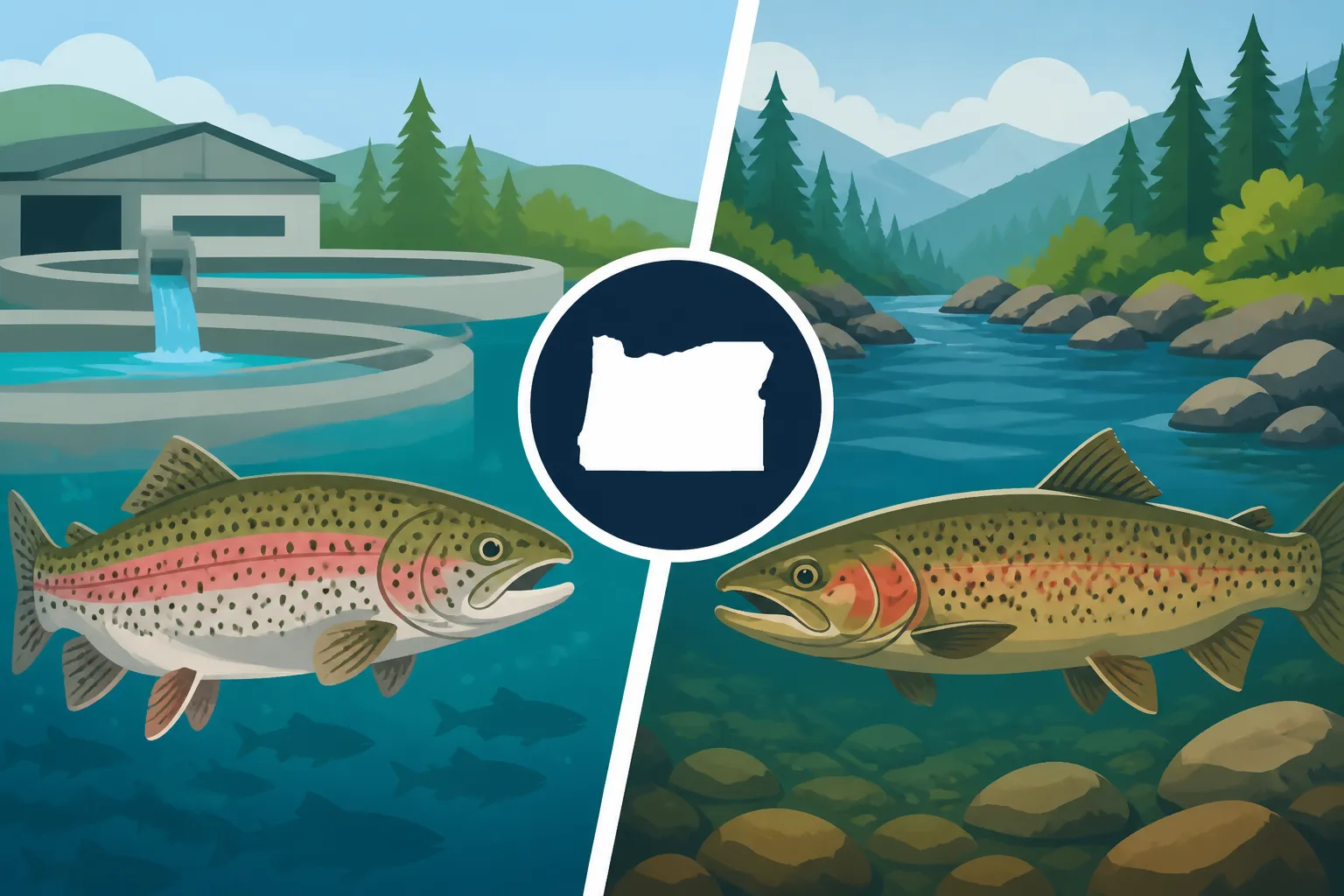
Beyond the absence of a fin clip, wild fish often exhibit several other characteristics that subtly set them apart. Their fins, for instance, are typically in pristine condition – sharp, well-formed, and without the wear and tear that can sometimes be seen on fish raised in crowded hatchery raceways. Their body shape tends to be sleeker, more torpedo-like, reflecting a life spent battling currents and evading predators. Their coloration can also be more vibrant and varied, perfectly camouflaged to their specific native habitat, a stark contrast to the often more uniform, duller tones sometimes seen in hatchery fish.
Furthermore, wild fish are often more wary and elusive. They’ve survived by being smart, by being quick to spook, and by knowing their environment intimately. Catching a truly wild steelhead on a fly, for example, is a challenge that many anglers cherish, precisely because of the fish's cunning and strength. This combination of physical prowess and innate caution is what makes them such a prized catch and a vital component of a healthy ecosystem. If you’re looking to improve your ability to spot these subtle differences, a good pair of polarized sunglasses, easily found on Amazon, can make a huge impact by cutting glare on the water.
Key Differences: Visual, Genetic, and Behavioral
The distinctions between hatchery and wild fish go far beyond just a clipped fin. They encompass deep-seated genetic variations, fundamental behavioral patterns, and even subtle physical attributes that, once you know what to look for, become quite apparent. Understanding these facets is not just for scientific curiosity; it fundamentally shapes how we interact with these fish, especially when it comes to adhering to Oregon Fishing Regulations Explained.
Beyond the Fin Clip: Subtle Distinctions
While the adipose fin clip is the most obvious indicator, there are other visual cues that seasoned anglers and fisheries biologists use. Think of it like comparing a domesticated animal to its wild counterpart.
- Fin Quality: Wild fish generally have perfect, unfrayed fins. Their dorsal, pectoral, pelvic, and caudal (tail) fins are typically sharp-edged and symmetrical. Hatchery fish, on the other hand, especially if they spent a long time in concrete raceways, might show signs of wear, abrasion, or even deformities on their fins due to rubbing against tank walls or other fish. It's a bit like seeing a house cat with immaculate paws versus a stray cat that's been in a few scrapes – the life they lead shows on their bodies.
- Body Shape and Coloration: As mentioned, wild fish often possess a more streamlined, athletic build, optimized for navigating complex natural environments. Their colors can be more intense and natural, reflecting their specific habitat. A wild coastal cutthroat trout from a clear, rocky stream will often have brilliant spots and rich hues that help it blend perfectly. Hatchery fish, having grown up in a more uniform environment, might have a somewhat stockier build and less vibrant, more uniform coloration. Imagine them as having grown up in a "fish gym" rather than a wilderness marathon.
- Snouts and Scales: Sometimes, hatchery fish can have slightly blunter snouts from rubbing against tank walls. Their scales might also appear less uniformly aligned or show slight imperfections compared to the smooth, seamless pattern on a wild fish. These are subtle, to be sure, but cumulatively, they paint a picture. If you're passionate about identifying fish correctly, there are excellent field guides and identification charts available on Amazon that can serve as valuable resources on your fishing trips.
Genetic Diversity and Adaptation
Here's where the differences become truly profound, even if invisible to the naked eye. Wild fish populations are characterized by high genetic diversity. This means there's a wide range of genetic traits within the population, which is crucial for their long-term survival. This diversity allows them to adapt to changing environmental conditions, resist diseases, and evolve over generations. If a river warms up due to climate change, for example, a genetically diverse population might have some individuals with a natural tolerance for warmer water, ensuring the species can continue.
Hatchery populations, by their very nature, often have reduced genetic diversity. When fish are spawned in a controlled environment, even with the best intentions, the breeding stock might not capture the full genetic breadth of the wild population. Furthermore, fish raised in a consistent, predator-free environment aren't subjected to the same selective pressures as their wild counterparts. They don't need to be as wary or as efficient at foraging. This can lead to a "domestication" effect, where hatchery fish are less genetically equipped for survival in the wild. When hatchery fish interbreed with wild fish, there's a concern that these less-adapted genes could dilute the genetic strength of the wild population, potentially making them less resilient in the long run. This is a significant aspect of the conservation debate around hatchery programs, and it's why protecting wild genetic integrity is so vital.
Survival Instincts and Angling Challenge
The behavioral differences are perhaps the most noticeable for an angler. Wild fish are masters of survival. They are inherently more cautious, quicker to detect threats, and more adept at finding prime feeding and holding lies. They've learned to avoid predators, locate natural food sources, and conserve energy in fluctuating river conditions. Catching a wild fish often requires more skill, patience, and a deeper understanding of fish behavior and habitat. There's a certain thrill in outsmarting a creature that has honed its survival instincts over a lifetime in the wild.
Hatchery fish, having grown up in a relatively safe and food-abundant environment, can sometimes be less wary. They may be more accustomed to human presence (think of hatchery workers walking past their tanks daily) and less practiced at avoiding predation. While still powerful and spirited fighters, they might not exhibit the same level of cunning or evasion tactics as their wild cousins. This isn't to say hatchery fish aren't fun to catch – they absolutely are! But the "challenge" factor can feel different. For many anglers, the pursuit of a truly wild fish, knowing it has overcome incredible odds, adds an unparalleled layer of satisfaction to the fishing experience. Using the right tackle, like a sensitive rod and reel combination that allows you to feel even the slightest tap, can enhance your chances with these wary wild fish, and you can find a vast array of options for this kind of gear on Amazon.
Why the Distinction Matters to Anglers and Conservation
Understanding the difference between hatchery and wild fish isn't just an academic exercise; it has real-world implications every time you cast a line in Oregon. For anglers, it directly impacts what you can keep. For the health of our fisheries, it's about the very future of fish populations. This is where regulations, ethical angling, and long-term conservation goals all converge.
Regulations and Retention: What You Can Keep
This is perhaps the most immediate and impactful reason for an angler to know the difference. In Oregon, regulations for many popular species, especially salmon and steelhead, are specifically designed around the distinction between hatchery and wild fish. Why? To protect the more vulnerable wild populations while still allowing for recreational harvest of hatchery-supplemented stocks.
For example, on many rivers, you might be allowed to keep a certain number of adipose fin-clipped hatchery steelhead or salmon, but all wild, unclipped fish must be immediately released unharmed. Fail to identify a wild fish and accidentally retain it, and you could face significant fines and penalties, sometimes including forfeiture of your gear or even your vehicle. Oregon Salmon and Steelhead Tag Requirements often specify whether a tag applies to hatchery or wild fish, or if certain wild fish are off-limits entirely.
It's not uncommon to encounter specific areas, or "zones," that are entirely catch-and-release for wild fish, or have reduced bag limits for hatchery fish once wild fish numbers are low. These rules are in place to ensure that wild fish have the best possible chance to spawn and contribute to future generations. Before any fishing trip, always, always consult the most current Oregon Fishing Regulations Explained and familiarize yourself with the specific rules for the waters you plan to fish. Ignorance of the law is not an excuse, and game wardens are incredibly good at identifying fin clips.
The Future of Oregon's Fish Populations
Beyond the immediate legal implications, the distinction between hatchery and wild fish is central to the ongoing health and sustainability of Oregon's aquatic ecosystems. Wild fish are the genetic repository, the natural engines of our rivers. They represent generations of successful adaptation and hold the key to the long-term resilience of species against environmental changes, diseases, and other threats. Protecting these wild populations is a cornerstone of fisheries management in the state. Are wild salmon endangered in Oregon? is a question that highlights the critical need for this protection.
While hatchery programs serve a purpose in supplementing populations and providing fishing opportunities, particularly in areas impacted by human development, they are not a substitute for healthy wild runs. Conservation efforts often focus on restoring habitat, improving water quality, and removing barriers to fish passage – all measures that directly benefit wild fish. As anglers, our understanding and adherence to selective harvest regulations play a crucial role. By responsibly releasing wild fish and enjoying the harvest of hatchery fish, we directly contribute to the conservation strategy. It's about ensuring that our children and grandchildren will also have the opportunity to experience the thrill of fishing in Oregon, with healthy, vibrant populations of both hatchery and, most importantly, wild fish swimming in our rivers and oceans. Remember, a good practice is to always have a net and de-hooking tool ready, which you can easily find on Amazon, to ensure a swift and safe release of any wild fish you might catch.
| Feature | Hatchery Fish | Wild Fish |
|---|---|---|
| Origin | Bred and raised in human-controlled environments | Born and matured entirely in natural waterways |
| Appearance | Often (but not always) adipose fin-clipped; may show fin wear/damage | Adipose fin intact; pristine, well-formed fins |
| Body Shape | Can be stockier; sometimes less streamlined | Typically sleek, athletic, perfectly adapted |
| Coloration | Can be less vibrant, more uniform, sometimes paler | Often vibrant, rich, natural camouflage to habitat |
| Genetics | Often reduced genetic diversity; adapted to hatchery conditions | High genetic diversity; robust adaptation to wild conditions |
| Behavior | Can be less wary of humans; may exhibit less natural foraging/evasion skills | Highly wary, elusive; strong natural survival instincts |
| Contribution | Augment recreational/commercial harvest; mitigation for habitat loss | Essential for ecosystem health, genetic strength, long-term species resilience |
| Retention | Often legal to keep (check regulations!) | Often catch-and-release only (check regulations!) |
Disclaimer
This article is for general informational purposes only and does not constitute professional advice. Laws, prices and regulations vary by location and change over time. Consult a qualified professional for guidance on your specific situation.