How far offshore do you need to go for albacore tuna
Oh, the call of the open ocean and the thrill of chasing albacore tuna off the Oregon coast! It's a dream for so many anglers, but one of the biggest head-scratchers, especially for those new to offshore fishing, is figuring out just how far you need to motor out there to find these fast-swimming beauties. It's not like trout fishing in a stocked pond where you can practically see the fish from the parking lot, and the uncertainty can definitely feel a little daunting when you're planning a big trip. This guide is here to demystify the distances involved and help you understand what drives these incredible fish so you can better plan your next Oregon albacore adventure.
Understanding the Albacore's Offshore Playground
When you're thinking about how far offshore you need to go for albacore, it's really about understanding their preferred habitat. These aren't your typical inshore dwellers; albacore tuna are pelagic, meaning they live in the open ocean, far from coastal waters. They follow specific conditions that are usually found a good distance from land, and understanding these conditions is key to understanding the "how far" question.
The Influence of Water Temperature and Clarity
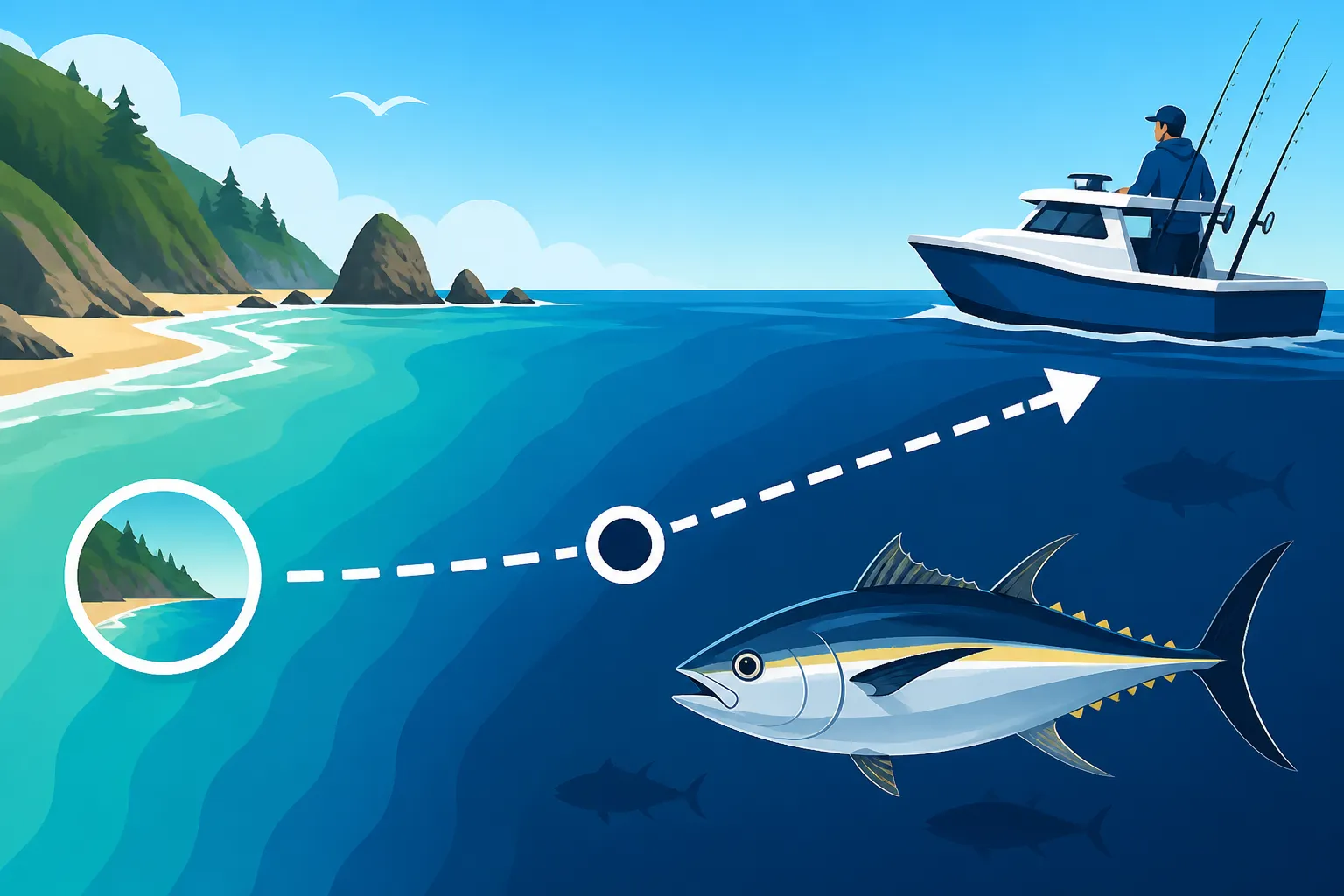
Albacore tuna are incredibly sensitive to water temperature. They thrive in warmer, clear blue water, typically in the 58 to 65-degree Fahrenheit range. The cold, nutrient-rich upwellings that define much of Oregon's coastal waters are fantastic for baitfish, but the tuna themselves prefer to hunt where the water warms up. This warm water usually pushes in from offshore currents, creating distinct "temperature breaks" where the warmer, bluer water meets the cooler, greener inshore water.
Imagine you're driving down the highway and suddenly hit a patch of fog – that's a bit like a temperature break for tuna, but instead of fog, it's a sudden change in water temperature and clarity. These breaks are often where baitfish congregate, and where baitfish are, hungry tuna will follow. Sometimes these breaks might be relatively close, say 15-20 miles out, but often, especially early or late in the season, they can be 40, 60, or even 80+ miles offshore. Checking up-to-date satellite imagery for sea surface temperatures is crucial here; many anglers swear by services that provide real-time thermal charts to spot these breaks before they even leave the dock. You can often find waterproof charts or even subscriptions to advanced marine weather apps on Amazon that help with this.
The Role of Baitfish and Food Sources
Tuna are predators, and they're constantly on the hunt for food. Their diet primarily consists of small schooling fish like anchovies, sardines, and squid. These baitfish often congregate along current lines, temperature breaks, and oceanic features where plankton (their food source) is abundant. If there's no bait, there's usually no tuna, no matter how far out you go.
This means that even if you find the right water temperature, if there's no visible sign of bait (like birds diving, active marine mammals, or bait balls on your sonar), the tuna might not be there. Experienced captains and anglers spend a lot of time "reading the water" — looking for signs of life. Sometimes, what drives the tuna 60 miles offshore one day might shift them to 40 miles the next, all depending on where their food decides to show up. It's a dynamic ecosystem, and the tuna are always on the move.
Typical Offshore Distances for Oregon Albacore
So, to answer the burning question: how far offshore do you typically need to go? The honest answer is, it varies wildly. However, we can give you some general ranges and expectations based on common patterns and historical data.
The General Range: 20 to 80 Miles
For most of the prime albacore season (roughly July through September, sometimes stretching into October), anglers in Oregon can expect to travel anywhere from 20 to 80 nautical miles offshore to find the best concentrations of tuna.
- Closer to Shore (20-40 miles): Sometimes, especially during the peak of summer when warm currents are strong and consistent, the tuna can push closer to the continental shelf. This is when you hear those exciting reports of "local tuna," and it's a fantastic time for smaller boats or those looking for a shorter run. These closer trips are less fuel-intensive and allow for more actual fishing time.
- Mid-Range (40-60 miles): This is a very common distance. Many successful trips originate in this zone, often targeting specific temperature breaks or offshore banks. This requires a well-equipped boat, plenty of fuel, and a good weather window.
- Far Offshore (60-80+ miles): Early in the season (late June/early July) or late in the season (late September/October), when the warm water hasn't fully established itself or is starting to recede, the tuna tend to be much further offshore. This is serious blue-water fishing, requiring large, capable vessels, extensive fuel reserves, and a deep understanding of marine conditions. These longer runs are often undertaken by Oregon Fishing Charter Guide operations specifically designed for such trips.
Starting Points Along the Oregon Coast
The "how far" also depends on where you're launching from, as the continental shelf and oceanography vary along Oregon's expansive coastline.
| Departure Port | Typical Offshore Distance Range | Considerations |
|---|---|---|
| Astoria / Ilwaco | 25 – 70 miles | Buoy 10 area is close, but tuna grounds further out. Strong Columbia Bar crossing. |
| Tillamook / Garibaldi | 30 – 65 miles | Excellent access to offshore waters. Many charter operations. |
| Pacific City | 25 – 60 miles | Dory boat launches can make for quicker access, weather dependent. |
| Depoe Bay | 20 – 55 miles | Known for its smaller, often rougher bar. Good access to relatively close tuna. |
| Newport | 20 – 60 miles | Major fishing hub with many charters. Deep water is accessible quicker. |
| Florence | 30 – 65 miles | Excellent for access to offshore structure and deep water. |
| Winchester Bay | 35 – 70 miles | Good access to ocean, often good tuna runs when conditions are right. |
| Coos Bay / Charleston | 40 – 75 miles | Larger bay, longer run to open ocean, but good access to offshore canyons. |
| Brookings | 40 – 80 miles | Further south, often benefits from warmer California currents. Longer runs. |
Keep in mind these are typical ranges. It's not uncommon to hear reports that fall outside these, either closer or further, depending on the specific season and ocean conditions. Before you even think about heading out, definitely check the latest fishing reports and talk to local bait shops or charter captains.
Factors Influencing Tuna Location Day-to-Day
The ocean is a living, breathing entity, and albacore tuna are constantly moving. There's no magic GPS coordinate that guarantees fish every day. Several dynamic factors can shift their location, even within a single 24-hour period.
Ocean Currents and Upwellings
Major ocean currents, like the California Current, play a huge role in bringing warm water and baitfish north along the Oregon coast. Eddies, which are circular currents, can spin off these main currents, creating areas where bait gets concentrated. Understanding these patterns is often the difference between a successful trip and a long boat ride. Upwellings, where cold, nutrient-rich water rises from the depths, can create sharp temperature contrasts, which tuna love to hunt along.
These powerful forces dictate where the warm, blue water will be, and by extension, where the tuna are likely to be found. A strong push of warm water might bring them closer, while a persistent cold upwelling could keep them further out. Many veteran anglers will study current charts just as intently as temperature charts to predict where the fish might be stacking up. This kind of planning often starts weeks in advance, especially for a Tuna Charter Trips off Oregon.
Weather Patterns and Sea Conditions
You've got to respect the ocean, especially off the Oregon coast. Weather and sea conditions are paramount. While albacore might be 50 miles out in calm seas, those same fish become inaccessible if a storm rolls in or if the swell picks up to dangerous levels. The safety of everyone on board should always be the number one priority.
A heavy northwest swell, even if it's not "stormy," can make for a miserable and unproductive trip, even if the fish are there. Ideal tuna fishing weather usually involves calm seas, light winds, and often clear skies, allowing for easier navigation, comfortable trolling, and better visibility for spotting signs of fish. Always check the marine forecast meticulously before even considering an offshore trip. Remember, the fish will still be there tomorrow or next week, but your safety can't wait.
Seasonal Variations
The "how far" question also changes throughout the albacore season.
- Early Season (June/July): Often, the tuna are further offshore during the early season as the warmer water masses are just starting to push north and establish themselves. This is when you're looking at those longer runs, potentially 60+ miles.
- Peak Season (August/early September): This is typically when you find the most consistent fishing, and the tuna might be found in a wider range of distances, sometimes pushing closer to shore. Reports of excellent fishing 30-40 miles out are more common during this time.
- Late Season (late September/October): As the weather turns and the ocean starts to cool, the tuna can become more scattered or push further offshore again, making them harder to locate and requiring longer runs. This is also when weather windows become much more critical.
Staying informed about current conditions is key. Websites and apps providing marine weather, sea surface temperatures, and chlorophyll charts are indispensable tools for anyone serious about chasing albacore. Consider investing in a good handheld GPS and chartplotter, which you can often find readily available on Amazon, to help with navigation when you're way offshore.
Preparing for an Offshore Albacore Tuna Trip
Alright, so you've got a better handle on the distances and the dynamic nature of albacore tuna. Now, let's talk about what that means for your preparation. Running 30, 50, or even 70 miles offshore isn't a casual affair; it requires serious planning, the right gear, and a healthy respect for the ocean.
Boat and Safety Equipment Requirements
This cannot be stressed enough: your boat needs to be up to the task. Forget about small open skiffs for these runs. You need a stable, seaworthy vessel, ideally 20 feet or longer, with enough fuel capacity to make the round trip plus a significant safety reserve (always factor in extra for trolling, searching, and unexpected detours). A good rule of thumb is to take your estimated fuel burn for the trip and double it.
Beyond the boat itself, your safety gear is non-negotiable. This includes:
- VHF Radio: Essential for communicating with other vessels and the Coast Guard.
- EPIRB or PLB: An Emergency Position Indicating Radio Beacon or Personal Locator Beacon is a must for offshore emergencies.
- Life Jackets: Enough for everyone on board, and ideally offshore-rated ones.
- Flare Kit: Visual distress signals.
- First Aid Kit: Comprehensive, suitable for marine environments.
- Navigation Equipment: Reliable GPS, backup paper charts, and a compass.
- Ditch Bag: A waterproof bag with essential survival items, ready to grab in an emergency.
- Engine Redundancy: Twin engines are ideal for offshore, or at least a reliable kicker motor.
- Bilge Pumps: Multiple, operational bilge pumps.
Skipping on any of these is simply not worth the risk when you're tens of miles from shore. Investing in quality safety gear, even if it feels expensive, is investing in your life and the lives of your crew. Many essential offshore safety items can be sourced through Amazon.
Essential Gear for Tuna Fishing
Beyond safety, you need the right fishing gear. Albacore are powerful fighters, and you'll often be trolling multiple lines.
- Rods and Reels: Heavy-duty trolling rods (often 20-50 lb class) paired with robust lever-drag reels spooled with at least 50 lb braid, often with a monofilament top shot. You'll want multiple setups, as tuna fishing is often a team sport with multiple lines in the water.
- Lures and Bait: Cedar plugs, jet heads, tuna clones, various hoochies, and diving lures are popular choices. Some anglers also use live bait if available. Having a variety is key, as what works one day might not work the next.
- Fish Finder/Sonar: A powerful fish finder is crucial for locating bait balls and sometimes even the tuna themselves.
- Coolers and Ice: You'll need plenty of large coolers filled with ice to quickly chill your catch. Albacore are best eaten fresh, and proper handling starts immediately after the fish hits the deck. Oregon Salmon Fishing Techniques also benefits from good chilling practices.
Finding Current Information and Reports
Don't just head out blindly. Leverage the vast network of information available.
- Marine Forecasts: NOAA marine forecasts are your bible. Pay close attention to swell height, wind speed and direction, and any special marine advisories.
- Sea Surface Temperature (SST) Charts: As mentioned, these are vital for identifying warm water boundaries and temperature breaks. Many commercial services offer daily updates.
- Fishing Reports: Check online forums, local bait and tackle shop reports, and call charter operators in your desired port. While they won't give away their secret spots, they can often give you a general idea of where the bite has been and how far out people are traveling.
- VHF Radio: Once offshore, listen to Channel 68 for "tuna talk" from other boats. This is often the best real-time intelligence you'll get.
Remember, patience and persistence are as important as any piece of gear. You might not find them on your first run, but with good planning and a bit of luck, that long journey offshore for albacore tuna is one of the most rewarding fishing experiences Oregon has to offer. While you're at it, check out Oregon Fishing Season Dates and Limits to make sure you're always fishing within the rules, and consider acquiring your Oregon Ocean Endorsement if you plan to fish in the big blue water.
Disclaimer
This article is for general informational purposes only and does not constitute professional advice. Laws, prices and regulations vary by location and change over time. Consult a qualified professional for guidance on your specific situation.